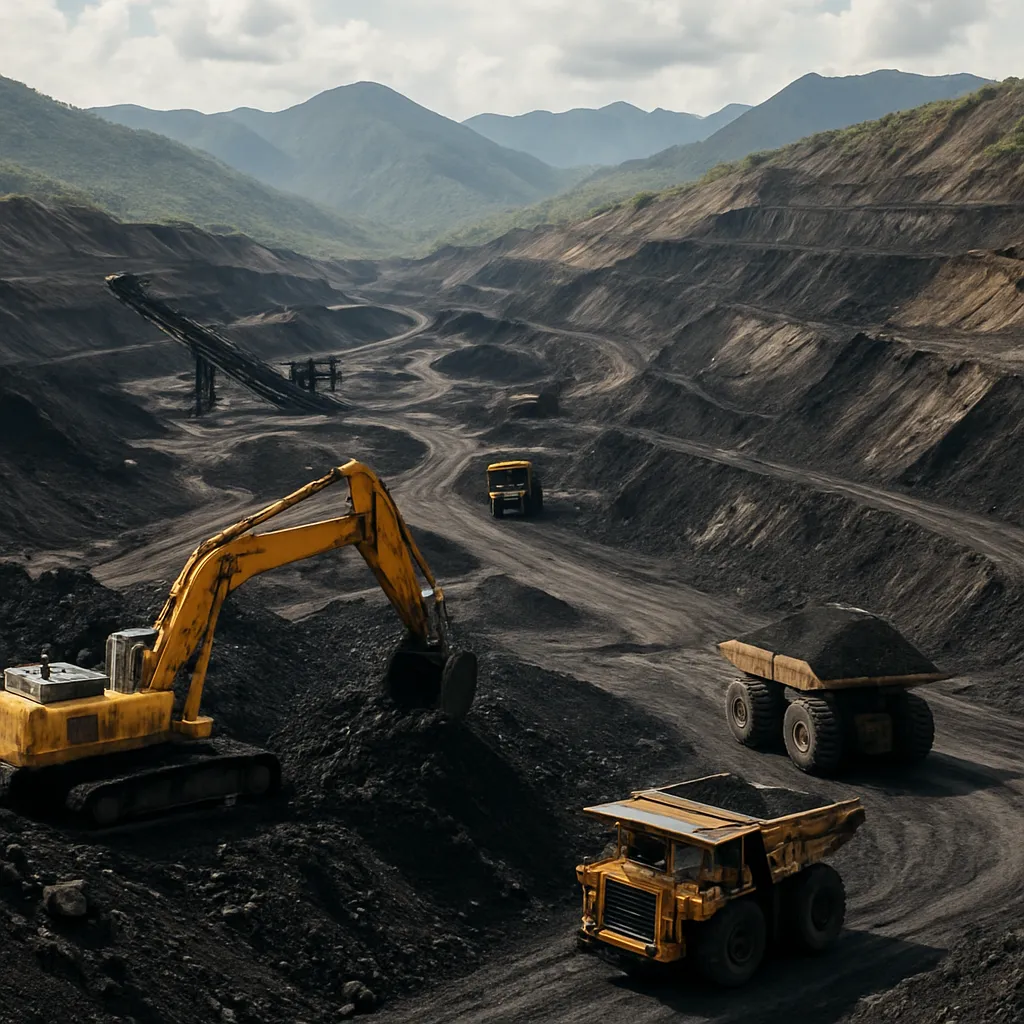
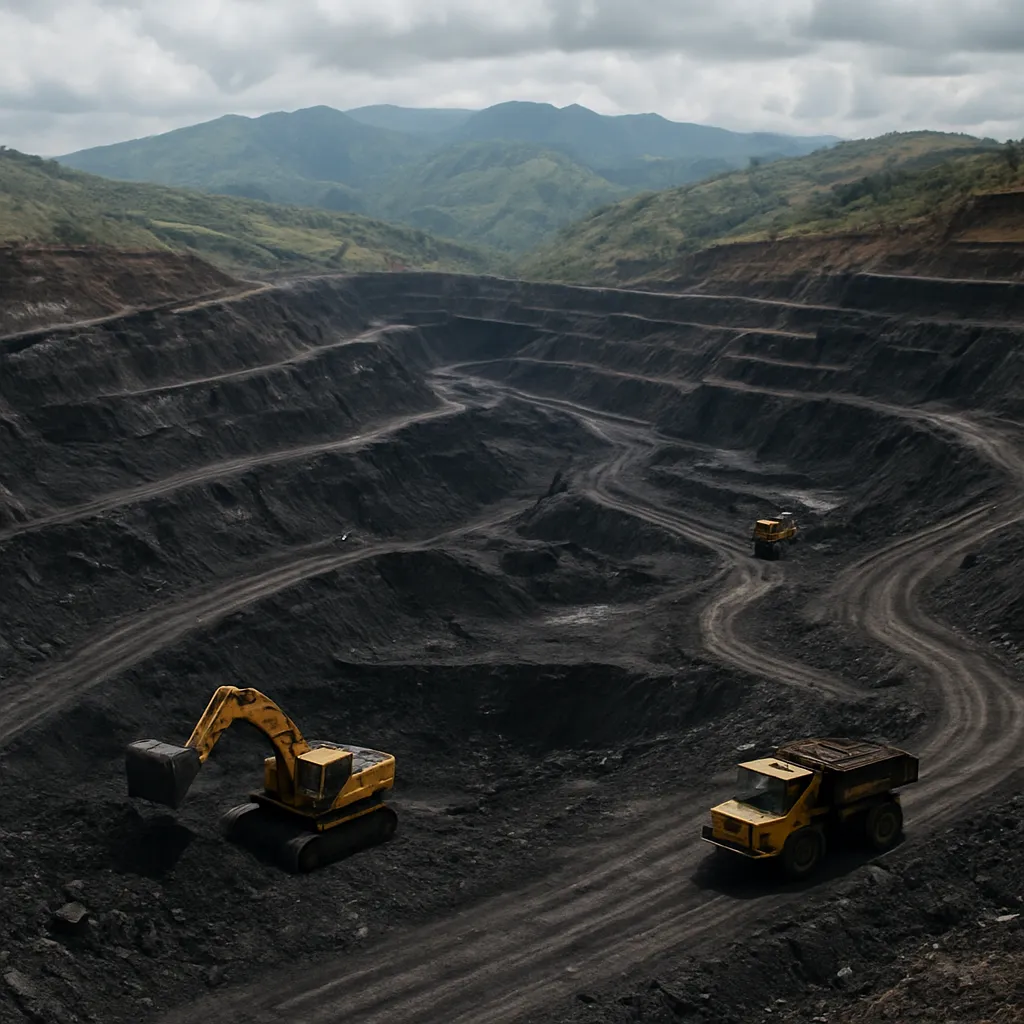
The following article presents a comprehensive overview of the Haerwusu Coal Mine in northern China. It covers the mine’s geographic setting, geology and coal characteristics, production and operations, economic and industrial significance, infrastructure and logistics, and environmental and social aspects. Where available, approximate statistical figures and operational details are provided to give context to the mine’s scale and role in the regional and national energy system.
Location, geology and coal characteristics
The Haerwusu Coal Mine is located in the Inner Mongolia Autonomous Region of northern China, within one of the country’s most important coal-bearing provinces. The mine lies in a region characterized by large, contiguous coalfields formed during the Mesozoic and Cenozoic eras. Haerwusu is an extensive open-pit operation developed where thick, relatively near-surface coal seams permit large-scale surface extraction.
Geologically, Haerwusu extracts mainly thermal coal (steam coal) that is used primarily for power generation and other thermal processes. The coal rank at Haerwusu is generally medium- to low-rank bituminous to sub-bituminous, with variable moisture and ash contents depending on the seam. Such coals are valued in China mainly for electricity generation in coal-fired power plants, and some portions are suitable for coal-fired industrial boilers and for conversion to chemical feedstocks in coal-to-chemicals installations.
Coal seams in the region are often thick and laterally extensive, enabling high-efficiency mechanized mining. Overburden in parts of the mine can be substantial, necessitating large-scale waste-rock removal and sophisticated pit design to ensure safe and economical extraction. The deposit’s scale and seam continuity are among the reasons Haerwusu developed into one of the major surface mines in Asia.
Mining operations and production
Haerwusu operates using large-scale surface mining methods typical of modern Chinese open-pit mines: high-capacity excavators and draglines, fleets of heavy haul trucks, conveyor belts for continuous material movement, and extensive overburden management systems. The mine’s layout is optimized for staged pit progression, allowing continuous coal removal while enabling progressive reclamation in some areas.
Production statistics vary by source and year, but available estimates place Haerwusu’s annual output in the range of approximately 20–30 million tonnes of raw coal per year at times of peak production. This makes the mine one of the larger single-site coal producers in China and Asia. Recoverable reserves have been estimated in the range of several hundred million to over a billion tonnes—figures that depend on technical, economic and regulatory criteria—but all estimates indicate a multi-decade life of mine at sustained production rates.
Typical operational features include:
- Large overburden removal campaigns that precede coal extraction, using draglines and hydraulic shovels.
- High-throughput conveyor systems that transport coal from pit to processing and loading areas.
- On-site coal washing and beneficiation facilities that improve calorific value and reduce impurities for select product streams.
- Stockyard and blending operations to match coal quality with customer specifications, especially for large thermal power plant offtakers.
Because Haerwusu primarily produces thermal coal rather than high-grade metallurgical (coking) coal, most of its product serves the power-generation sector and industrial heat processes. Some volume may feed regional coal gasification, coal-chemicals, or coal-to-liquids projects, especially where strategic investments tie mine output to downstream conversion plants.
Economic and industrial significance
The Haerwusu Coal Mine plays a prominent role in both the local economy of the mining region and in China’s broader energy matrix. Coal remains a dominant primary energy source in China, and large mines such as Haerwusu supply a substantial portion of the thermal coal demanded by coal-fired power stations, district heating and heavy industry.
Key economic contributions include:
- Employment: The mine and its supply chain provide thousands of jobs, directly in mining operations and indirectly in logistics, equipment maintenance, and local services. Employment figures can fluctuate with mechanization level, contracting practices and production rates.
- Local revenues and investment: Haerwusu contributes taxes, royalties and investment inflows that support municipal budgets, infrastructure development and public services in the adjacent counties and prefectures.
- Supply chain multiplier effects: Equipment suppliers, repair shops, transport firms and port-handling operations benefit from steady coal volumes, strengthening the regional industrial base.
- Strategic energy supply: As part of China’s national resource portfolio, Haerwusu supports regional energy security by supplying domestic coal—reducing reliance on imports for thermal generation in northern grid regions.
On an industrial scale, Haerwusu is connected to China’s extensive coal-to-power and coal-chemicals sectors. Thermal coal from the mine is a feedstock for power generation and may also be integrated into conversion projects that produce syngas, methanol, ammonia, or liquid fuels—technologies that China has pursued to leverage its abundant coal resources for diversified energy and chemical outputs.
Infrastructure, logistics and markets
Efficient transport and handling are critical for a mine the size of Haerwusu. The mine is typically linked to regional rail networks, conveyor belts and trucking corridors that allow coal to reach major load-out facilities and power plants. China’s investment in rail capacity to serve large coalfields has historically allowed mines like Haerwusu to ship large tonnages to coastal and inland demand centers.
Logistics commonly involve:
- Dedicated rail spurs and unit trains for long-distance hauling to power stations and industrial customers.
- Local road improvements to handle heavy truck traffic during construction, maintenance and ash/overburden movements.
- On-site washing and blending facilities that produce different product grades tailored to specific market needs—higher-calorific, lower-ash products for distant customers, and standard thermal coal for local plants.
The primary market for Haerwusu coal has been domestic consumption. China’s domestic coal market is large and typically prioritizes national supply chains; export volumes from inland mines tend to be limited compared with coastal producers. Nonetheless, some coal may be routed via northern ports for export or shipped to border areas for cross-border trade when market conditions and logistics permit.
Environmental and social aspects
Large-scale open-pit mining inevitably raises significant environmental and social challenges. Haerwusu, like other major surface mines, presents impacts that require active management:
- Land disturbance: Open-pit mining transforms landscapes, removing topsoil and vegetation across extensive areas. Progressive reclamation and post-mining land use planning are critical to restore productive land where feasible.
- Water resources: Mining operations can affect groundwater and surface water through dewatering, changes to drainage patterns and potential contamination. Water scarcity in parts of northern China makes efficient water use and recycling an operational priority.
- Air quality and dust: Coal handling, truck movements and blasting generate particulate matter. Dust control measures—water sprays, covered conveyors and speed management—reduce impacts on nearby communities.
- Greenhouse gas emissions: Beyond direct mine-site emissions, the combustion of coal produced at Haerwusu contributes to CO2 emissions when used for power and industry. At typical emission factors, consuming tens of millions of tonnes of coal annually corresponds to tens of millions of tonnes of CO2 emitted downstream.
- Social impacts: The mine provides incomes and services but can also bring rapid demographic and economic change that strains housing, health and local governance systems. Responsible community engagement and benefit-sharing are essential.
Regulatory frameworks in China require certain environmental safeguards, and major mining operators often implement mitigation measures such as land rehabilitation, slurry and tailings management, surface-water controls, and dust suppression. Additionally, where coal is connected to industrial conversion plants, there is increasing emphasis on higher-efficiency technologies and emissions control.
Statistics, estimates and operational figures
Available public estimates and industry summaries indicate the following approximate metrics for Haerwusu (figures are indicative and can vary by source and year):
- Annual production: approximately 20–30 million tonnes of raw coal in high-production years (approximate).
- Recoverable reserves: estimated in the range of several hundred million to over one billion tonnes, depending on technical-economic assessment (approximate).
- Mine area: spans several square kilometers of active pit and ancillary facilities; the total operational footprint (including waste dumps and infrastructure) covers a substantially larger area.
- Employment: direct employment in the mine and supporting services likely numbers in the low thousands, with a larger regional employment impact through secondary industries.
- Downstream emissions: burning the mine’s annual production would correspond to many tens of millions of tonnes of CO2 equivalent annually (rough order estimate using common emission factors for thermal coal).
It is important to note that official company reports, government resource surveys and academic studies provide the most precise and up-to-date figures. Production rates and reserve estimates change over time with new exploration, shifts in market demand, technological upgrades and regulatory developments.
Technological trends and future outlook
Several trends will likely shape Haerwusu’s future operations and role in the Chinese energy system:
- Mechanization and automation: Continued adoption of high-capacity mining equipment, remote operation technologies and digital mine management can raise productivity while reducing on-site labor requirements.
- Cleaner coal technologies: Sectors that use Haerwusu coal may invest in higher-efficiency power plants, flue gas treatment, and carbon capture demonstration projects to mitigate emissions.
- Downstream integration: Linking mine output to coal-chemicals and coal-to-liquids facilities can diversify product value and buffer price volatility in the thermal-coal market.
- Environmental governance and reclamation: Strengthened environmental standards may accelerate reclamation efforts, improve water-use efficiency and require more robust impact mitigation plans.
- Market dynamics: National energy policy, global coal demand, and competition from renewables and natural gas will influence long-term production levels. Strategic decisions about capital investment and lifecycle management will reflect these market signals.
Even as China transitions toward a more diversified energy mix, large mines with abundant reserves and efficient logistics—such as Haerwusu—will continue to play a role in meeting base-load thermal demand and supplying feedstocks for industrial processes for years to come. The pace and character of that role will depend on policy, market and technological developments.
Interesting facts and contextual notes
Among the notable aspects of Haerwusu and mines of comparable scale in China are:
- The mine exemplifies China’s capacity to develop very large, mechanized surface operations that supply thousands of kilotonnes of coal annually.
- Strategic mine development has been paired with rail and port investments to link inland coal resources to the national grid and industrial centers.
- Large open-pit mines often attract attention in global comparisons of scale; Haerwusu has been cited in several industry overviews as one of Asia’s larger single-site producers.
- Integrated planning—combining mine design, beneficiation, logistics and local development—helps maximize economic value while attempting to reduce environmental footprint.
Haerwusu’s role in the region highlights the balancing act between energy security, economic development and environmental stewardship that characterizes large-scale coal mining in the 21st century.