The following article examines the Mt Owen coal mine in New South Wales, Australia. It describes the mine’s location and geology, the type and quality of coal produced, operational and economic aspects, environmental management, and its role in regional and global energy markets. Where available, recent figures and statistics are given as estimates or reported values to illustrate the scale and significance of the operation. The article aims to provide a comprehensive, balanced picture of the mine’s contribution to the coal industry and its broader social and environmental context.
Location and geological setting
Mount Owen Mine is situated in the Upper Hunter Valley of New South Wales, Australia, a region long-established as one of the country’s most important coal-producing districts. The mine lies roughly between the towns of Singleton and Muswellbrook, on land characterized by undulating hills and broad valleys. The Hunter Valley is underlain by Permian sedimentary basins that contain extensive seams of black coal formed approximately 250–300 million years ago.
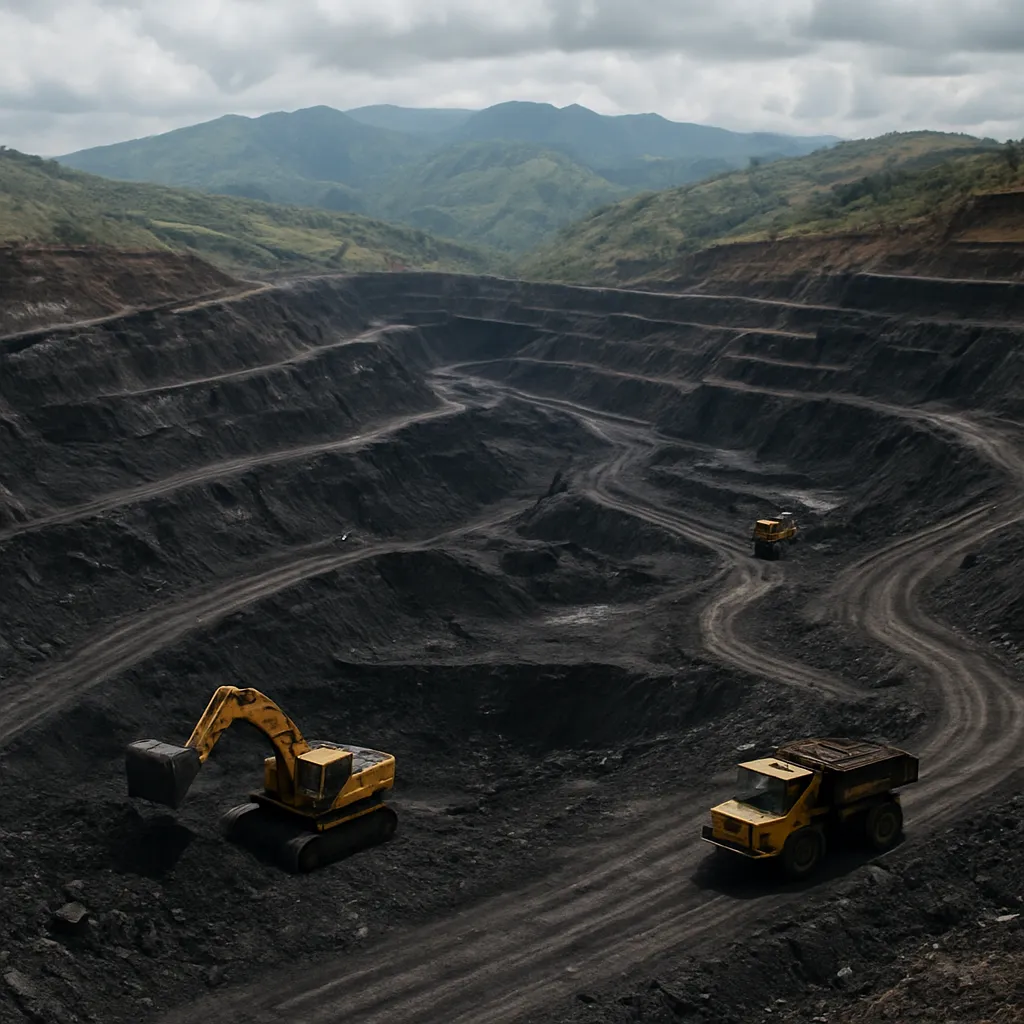
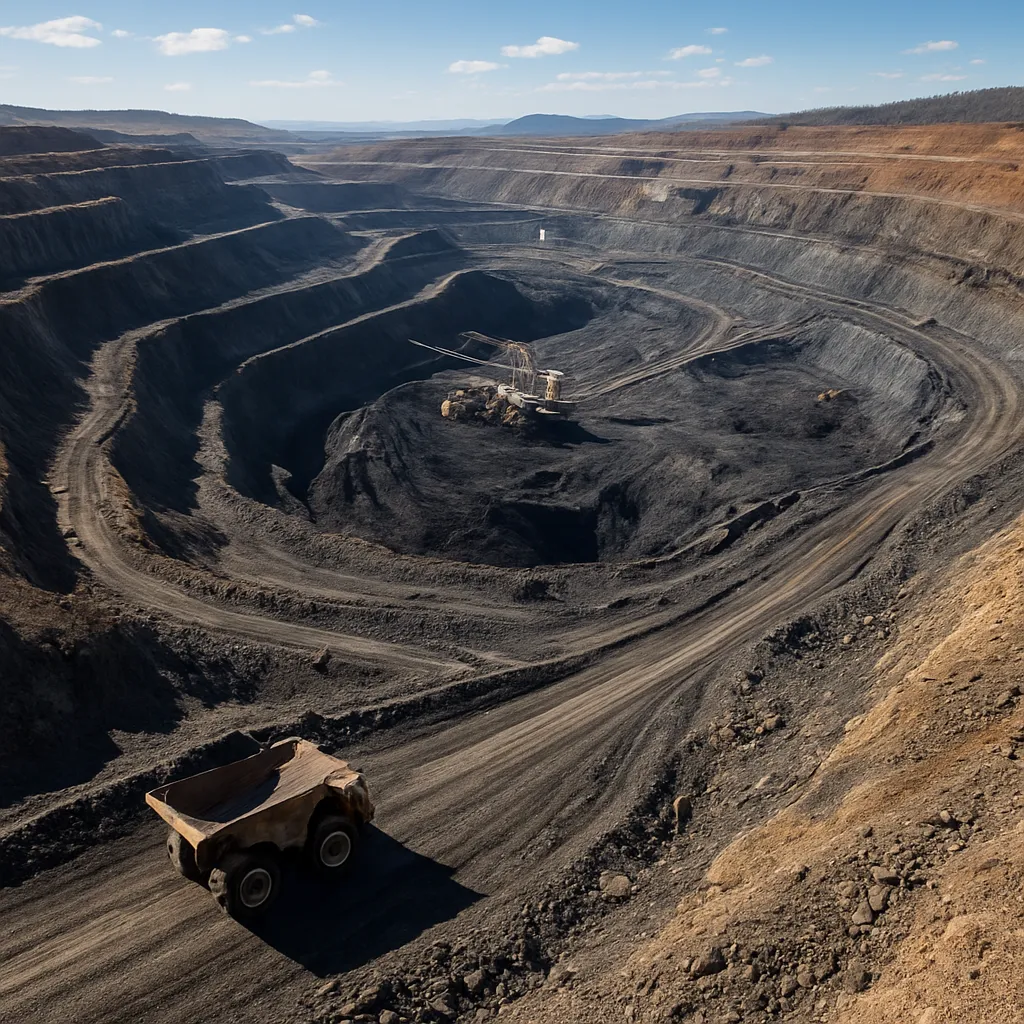
Geologically, the deposit exploited at Mt Owen is part of the larger Hunter Coal Measures. These strata include multiple coal seams of varying thickness and quality, interbedded with sandstones, siltstones and mudstones. The coal seams at Mt Owen are principally at shallow to moderate depth, which has enabled large-scale open-cut (surface) mining methods. The seams targeted are typically laterally extensive, allowing economies of scale through continuous longwall or open-cut extraction and high production rates.
Type of coal and product quality
The Mt Owen operation primarily produces commercial grades of thermal coal used for electricity generation in domestic and export markets. The coal from the mine is commonly marketed as steaming coal (or thermal coal), with a composition and calorific value suited to pulverized coal-fired power stations and some industrial boilers.
Key quality attributes of the coal from Mt Owen include:
- Calorific value: Moderate to high for thermal coal grades, making it competitive in export markets.
- Volatile matter and ash content: Values vary by seam and mining block; modern processing and blending manage variability to meet customer specifications.
- Sulfur: Typically low to moderate, which is advantageous for utilities facing sulfur emissions constraints.
Although the mine’s principal product is thermal coal, coal from Hunter Valley mines can be blended and treated to supply a range of customers including domestic power generators and overseas buyers. Quality management—through washery processes, screening and blending—is an integral part of assuring consistent product specifications and marketability.
Ownership, operations and infrastructure
Mt Owen has been operated by major mining companies within Australia’s coal industry. The operation is an open-cut mine with associated infrastructure including processing/stockpile areas, overburden dumps, internal haul roads, and rail-loading facilities that connect to the regional rail network. Coal from Mt Owen is typically transported by rail to the Port of Newcastle for export, supporting international markets in Asia and elsewhere. The Port of Newcastle is one of the world’s largest coal export ports and is a vital outlet for Hunter Valley production.
On-site operations follow standard large-scale open-cut mining practice:
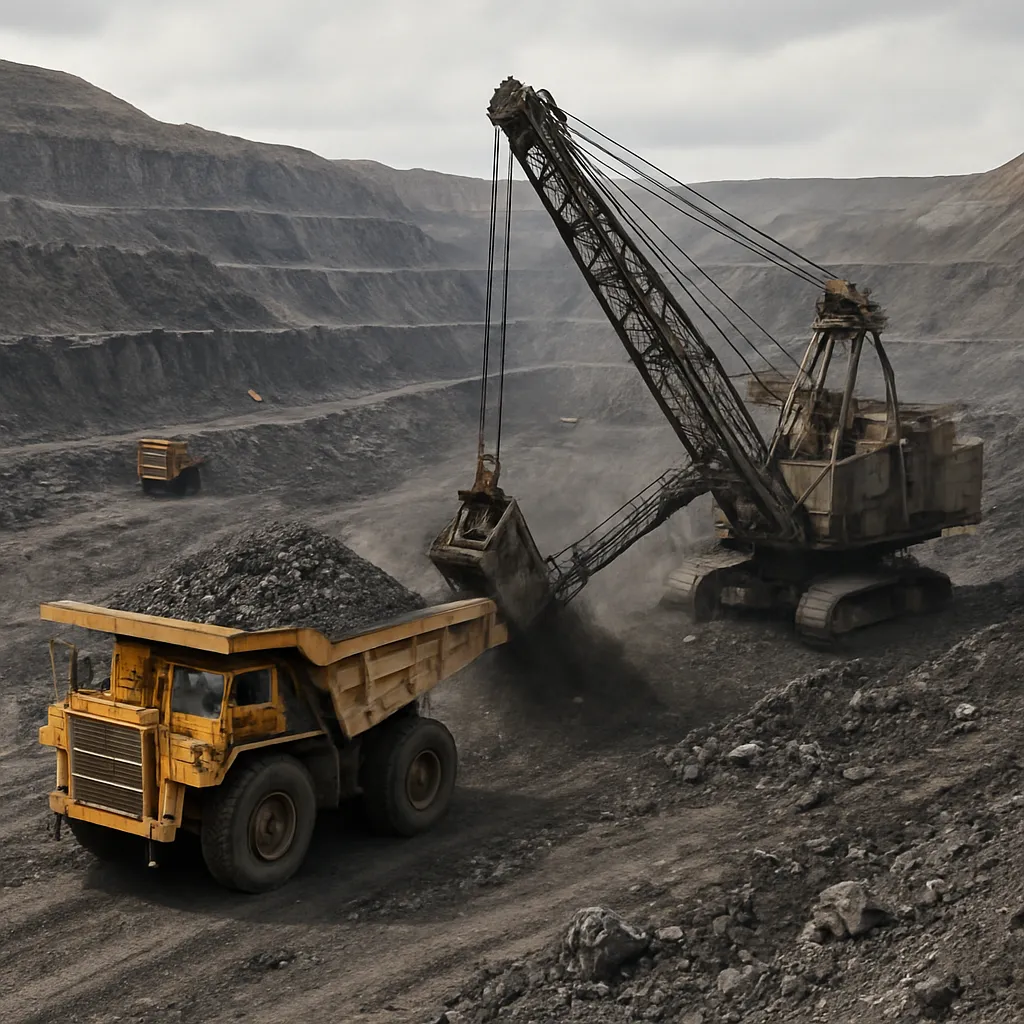
- Removal of overburden using excavators and haul trucks;
- Extraction of coal with large shovels and trucks;
- On-site batching/washing to control ash and improve product quality;
- Stockpiling and rail-loading for export or domestic dispatch.
Mt Owen’s operational model is designed to achieve high throughput and consistent supply. The mine has historically employed a substantial local workforce and contracted many services from local businesses—spanning equipment maintenance, haulage, catering and site services—thus embedding the mine within regional economic networks.
Production, reserves and statistics
Published figures for coal operations vary by year and source, but Mt Owen has been a high-capacity producer within the Hunter Valley. Historical annual production has typically been in the range of several million tonnes. As an example, reported outputs in prior years have often fallen in the ballpark of 7–10 million tonnes per annum (Mtpa), depending on market conditions, approvals and operational changes. Years with ramped-up production sometimes reported output near the upper end of that range.
Reserve and resource estimates are periodically updated as mining advances and new geological information becomes available. Recoverable reserves at open-cut operations in the Hunter region are commonly measured in the hundreds of millions of tonnes collectively across adjacent mines, though individual mineable reserves for any single site vary depending on the remaining seam extents and approvals. Mt Owen’s life-of-mine and remaining reserve base have been managed against rehabilitation commitments and development approvals issued by state authorities.
Other notable statistics and operational metrics related to Mt Owen (typical of large Hunter Valley open-cut mines) include:
- Annual workforce numbers in the hundreds, including direct employees and contractors;
- Large fleet sizes: dozens to hundreds of heavy mining vehicles and support equipment (excavators, haul trucks, dozers, graders);
- Significant overburden-to-coal stripping ratios that influence mining cost structures;
- Heavy use of water for dust suppression and processing, with recycling and water management systems in place;
- Royalties and taxes paid to state authorities, contributing to NSW government revenues—royalty flows vary with coal price and production.
Economic significance and market role
The Mt Owen operation has contributed substantially to the Hunter Valley and New South Wales economies. The mine’s economic footprint includes:
- Direct employment on-site, providing jobs in mining, maintenance and administrative roles;
- Indirect employment through local suppliers and contracting firms (haulage, equipment servicing, accommodation, catering);
- Export earnings from coal sales to overseas markets, which generate foreign exchange and support national trade balances;
- Royalties and taxes paid to state and federal governments, which contribute to public finances and can fund community services and infrastructure;
- Local community investments, sponsorships and contributions to regional projects made by operators and corporate foundations.
Globally, coal remains an important energy commodity despite long-term decarbonisation trends. Thermal coal from Australia—shipped primarily to Asian markets—has been a cornerstone of regional energy supply chains. Mt Owen’s role, therefore, is both local (employment, contracting) and international (supply to utilities and traders). Market conditions, such as global coal prices, shipping costs and demand from large importers (China, Japan, South Korea, India, and Southeast Asian countries), materially influence Mt Owen’s operational tempo and revenue flows.
Environmental management, approvals and community relations
Large open-cut mines like Mt Owen operate under a framework of environmental regulation, planning approvals and community engagement. Key environmental and social considerations include:
- Air quality and dust control: Continuous monitoring and mitigation measures such as water spraying, vegetation buffers and controlled traffic are used;
- Water management: Systems for capturing, treating and reusing mine water; management of surface and groundwater impacts is subject to regulatory limits and monitoring;
- Biodiversity and land rehabilitation: Progressive rehabilitation strategies aim to restore mine-disturbed land to agreed post-mining land uses; biodiversity offsets may be required where native habitats are impacted;
- Noise and blasting: Blast design and timing, noise monitoring and adherence to statutory levels minimize impacts on nearby communities;
- Community consultation: Operator-run community liaison committees, grievance mechanisms and investment programs seek to maintain a social license to operate.
Environmental performance is often scrutinized by local communities, environmental groups and regulators. Over time, operators have increased transparency in environmental reporting, published regular monitoring data and invested in new technologies to reduce impacts. Rehabilitation is typically a legal obligation enforced through state approvals, and mine closure planning is an essential part of long-term environmental management.
Technological practices and efficiency measures
Modern open-cut operations pursue improved efficiency and safety through technology adoption. At Mt Owen and comparable mines, technologies that have been adopted or trialled include:
- Fleet management systems and real-time telematics to optimise haul truck routing and equipment utilisation;
- Drill-and-blast modeling tools to improve fragmentation and reduce overbreak;
- Automated or semi-autonomous equipment in some operations to improve safety and reduce operating costs;
- Advanced washery processes and coal handling systems to manage product specifications and reduce waste;
- Remote sensing and continuous monitoring for environmental parameters (dust, noise, water quality).
Operational improvements focus on lowering unit costs (A$/t), reducing environmental footprint, and improving safety outcomes. Safety management systems and training are core elements of daily working practice on site.
Social impacts, employment and regional development
Mt Owen’s presence has shaped local labour markets and regional development patterns. The mine supports employment both directly and indirectly; many workers are drawn from nearby towns or employed on fly-in fly-out rosters for particular roles. The flow-on effects to local economies include increased demand for housing, retail services and infrastructure. Community investment programs and partnerships with local councils and organisations are commonly used to support social outcomes, including training and education initiatives to develop local skills.
However, mining also places pressure on local services and land use. Balancing mining activity with agriculture, tourism, and conservation is an ongoing policy and planning challenge for regional stakeholders.
Regulatory and policy context
Mt Owen operates within the regulatory framework of New South Wales, which includes environmental approval processes, mining leases, planning conditions, and compliance reporting. State authorities set conditions covering water, air quality, biodiversity, rehabilitation, and community consultation. National environmental laws can also apply where matters of national environmental significance are affected.
Industry policy and energy policy both influence the future of coal mines. International climate policy and domestic decarbonisation trajectories shape demand prospects for thermal coal. In the near to medium term, thermal coal remains a traded commodity with demand varying by region and price; longer-term demand scenarios depend on the pace of energy transition and the deployment of alternative generation technologies.
Challenges and future outlook
Mt Owen and similar coal operations face several interconnected challenges:
- Market volatility: global coal prices and shipping costs can swing widely, affecting profitability;
- Transition risk: policies and market shifts toward lower-carbon energy systems may reduce thermal coal demand over time;
- Environmental compliance: increasing expectations for environmental performance and biodiversity protection can raise operating costs;
- Community expectations: social license pressures require proactive community and stakeholder engagement;
- Workforce transition: as energy systems change, workforce reskilling and future employment planning become important concerns.
Nevertheless, in the short to medium term Mt Owen has the potential to continue contributing to regional employment and export earnings, provided it navigates market dynamics, meets environmental obligations and maintains positive community relationships. Active mine life planning, investment in efficiency and rehabilitation, and clear disclosure of environmental performance will shape investor and community confidence.
Interesting facts and contextual notes
- Historical role: The Hunter Valley has been a coal-producing region for more than a century and supplies both domestic energy needs and international markets.
- Export logistics: Coal from Mt Owen is typically railed to the Port of Newcastle, highlighting the importance of rail and port infrastructure to Australian coal exports.
- Rehabilitation focus: Post-mining land uses may include native vegetation corridors, grazing lands or other community-agreed outcomes; progressive rehabilitation reduces the long-term footprint.
- Community engagement: Operators commonly fund local projects and participate in local planning processes, aiming to distribute some benefits of mining activity.
Data sources and reporting
Operators of major mines publish regular sustainability and financial reports that provide production figures, environmental monitoring data and economic contributions. State agencies in New South Wales also publish approvals, environmental impact statements and compliance reports. Industry bodies provide aggregated statistics on Australian coal production and exports. For the most up-to-date, mine-specific numbers—annual production, remaining reserves, workforce size and royalty payments—consult Mt Owen’s operator reports and NSW government publications, which update these figures regularly.
Summary
Mt Owen is a significant open-cut coal operation in the Hunter Valley that produces thermal coal for domestic and international markets. The mine’s economic role includes employment, export earnings and state royalties, while operational practice requires attention to environmental management, community relations and technological efficiency. Like other thermal coal producers, Mt Owen faces market and policy uncertainties tied to global energy transitions, but it continues to be an important element of the regional mining landscape, supported by major infrastructure such as rail links to the Port of Newcastle and a long history of coal development in the Hunter region.