Tavan Tolgoi is one of the most important and internationally recognized coal deposits in Mongolia and the world. Located in the southern part of the country, it has shaped Mongolia’s modern mining sector, its export profile, and its economic politics for more than a decade. This article describes where the mine sits, what types of coal are produced, how extraction and export are organized, and why Tavan Tolgoi matters economically, socially and geopolitically. It also summarizes available statistical estimates and highlights challenges and future scenarios for the deposit and its surrounding region.
Location, name and geological overview
Tavan Tolgoi sits in the South Gobi region of southern Mongolia, in Tsogttsetsii district of Ömnögovi Province. The name Tavan Tolgoi literally means “Five Hills,” a reference to the cluster of coal-bearing **hills** that make up the entire deposit. Geologically, the deposit lies in a classic Mesozoic basin setting with extensive Permian–Triassic to Cretaceous coal-bearing sequences. The coal seams are found at shallow to moderate depths and are accessible by open-pit mining, which is the method predominantly used across the fields.
Composition of the deposit
Tavan Tolgoi is not a single small seam but a complex of several coal fields commonly referenced in industry literature as the South field (the most commercially developed), East (often referenced with the Tsankhi area), West and other satellite areas. The deposit includes both high-quality **metallurgical** (coking) coal and lower-rank **thermal** coal. The coking coal from Tavan Tolgoi is particularly valued for steelmaking because of its carbon content, low impurities and coke-yield characteristics, making it a strategic commodity for metallurgical industries, especially in neighboring China.
Reserves and quality (widely cited estimates)
- Estimated total coal resources: commonly cited at roughly 6.4 billion tonnes (this is a widely reported estimate and should be treated as an order-of-magnitude figure rather than a single definitive measurement).
- Portions classified as higher-quality coking coal: frequently reported at around 1.5–1.9 billion tonnes within the total resource estimate.
- Mineralization depth and seam thickness: seams are often thick and continuous enough for large-scale open-pit extraction, facilitating low-strip-ratio mining.
These reserve estimates make Tavan Tolgoi one of the world’s largest known coking coal deposits, and the dominant coal resource in Mongolia.
Mining operations, ownership and infrastructure
Development and extraction at Tavan Tolgoi have been organized around a mix of state control, government-created companies and private contractors. The Mongolian state created a dedicated entity to manage its interest in the project and to coordinate sales and revenues.
Institutional structure
- The state company Erdenes Tavan Tolgoi (ETT) was formed to hold and administer the government’s stake in the Tavan Tolgoi assets. ETT is the central public actor handling state sales, royalties and strategic decisions related to the deposit.
- Mining operations in particular pits and adjacent license areas are often operated by a mix of state-managed teams and private or contractor mining companies. Large Mongolian conglomerates and international contractors have been involved in mine development, haulage and services at different times.
Mining method and scale
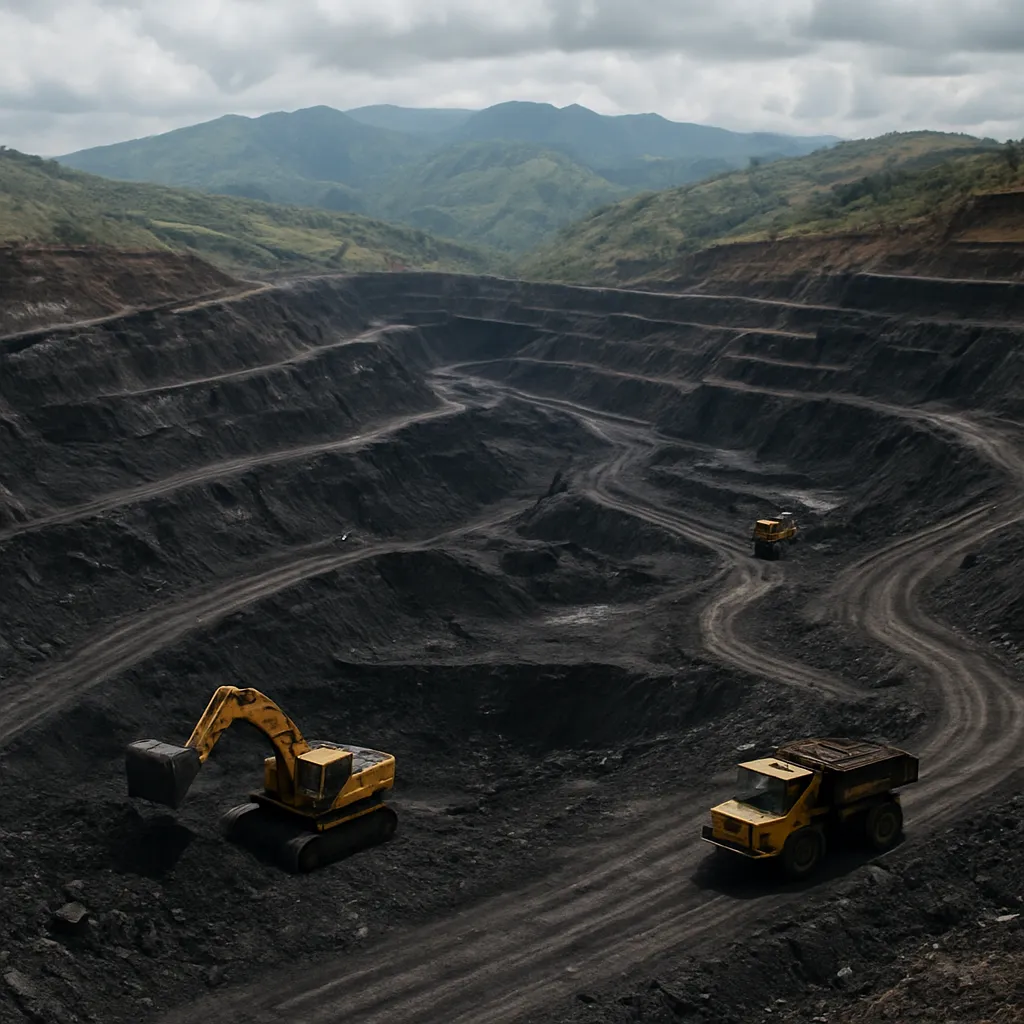
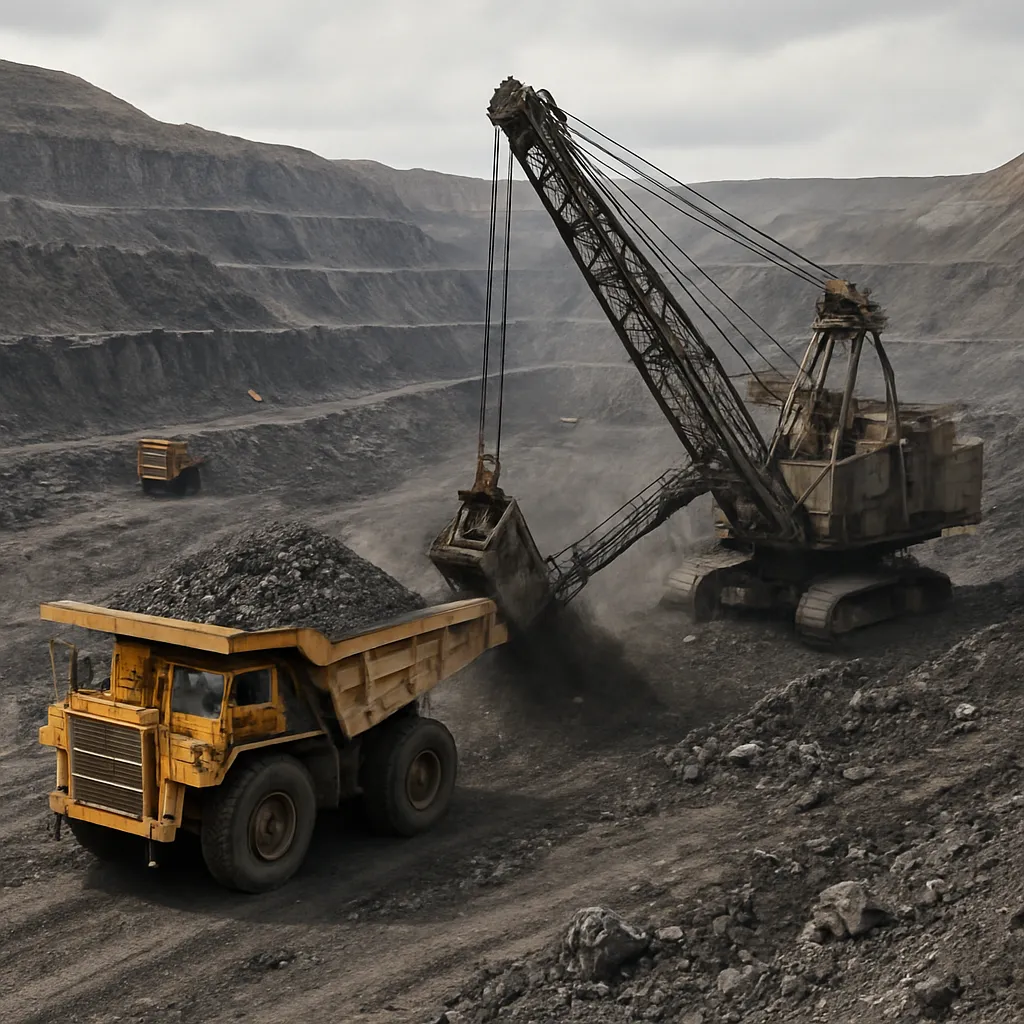
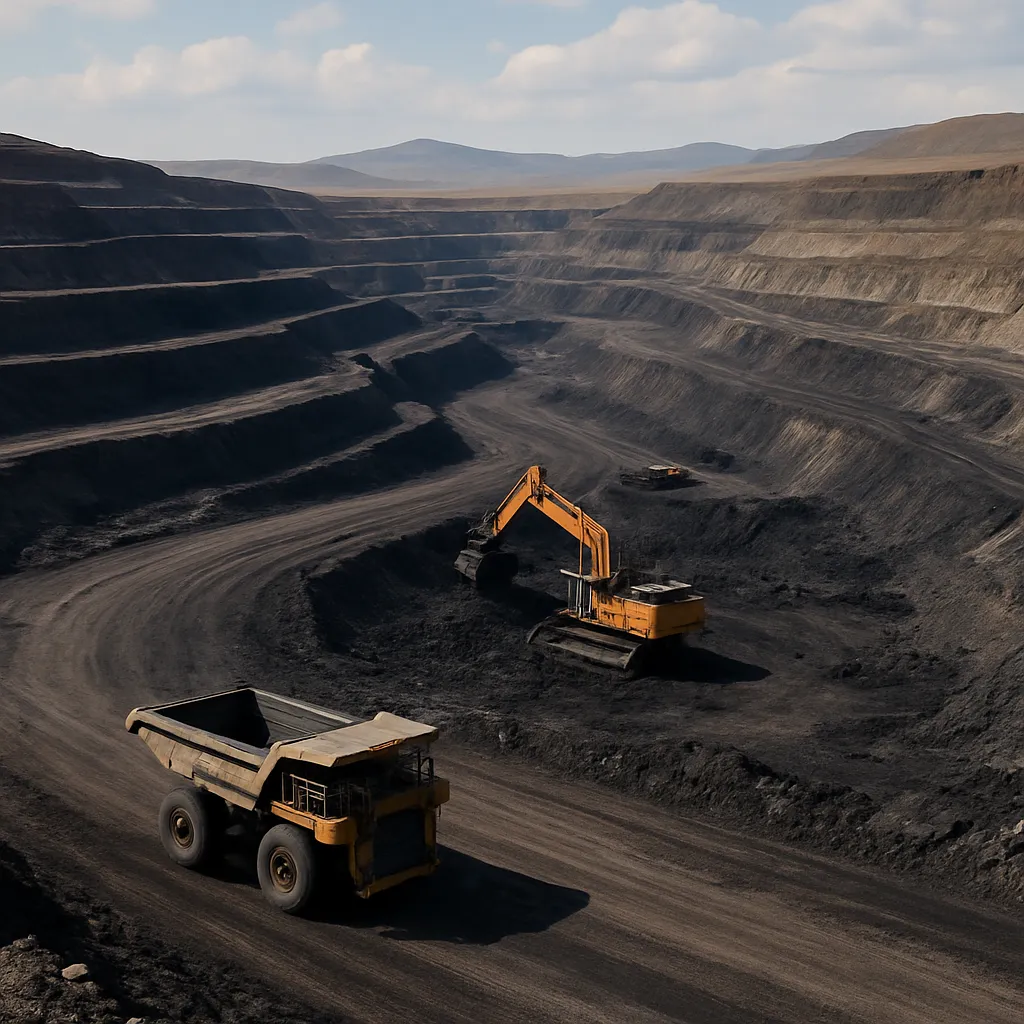
The prevailing method is large-scale open-pit mining, employing fleets of heavy haul trucks, large shovels and crushers. Over the last decade the site has become highly mechanized to support mass mining and rapid turnaround of ore and overburden. Production capacity and actual output have varied with market demand, transport bottlenecks and internal policy choices: at times the mine and connected producers have targeted annual export volumes in the tens of millions of tonnes.
Transport corridors and export gateways
Logistics are decisive for Tavan Tolgoi’s commercial viability. The deposit is relatively remote, and coal is transported to export markets primarily by road to the southern border and increasingly by rail as new infrastructure pieces are completed.
- The main border crossing for coal exports is the Gashuun Sukhait (also known as Ceke on the Chinese side) border point; most coal is destined for Chinese steel mills and power plants.
- Road haulage has been the default transport mode historically, but road capacity, dust, truck maintenance and seasonal constraints have led to heavy investment interest in rail links.
- Railway projects connecting Tavan Tolgoi to border railheads have been a high priority for both the Mongolian government and private developers. Improved rail capacity directly raises the export potential and economics of the deposit by reducing per-tonne transport costs and transit times.
Economic significance and trade statistics
Tavan Tolgoi has become a cornerstone of Mongolia’s extractive economy. Coal from the mine drives export revenues, state budgets and regional employment. While exact yearly figures vary with market cycles and policy choices, some consistent themes emerge.
Contribution to exports and government revenue
- Coal is Mongolia’s largest mineral export by volume, and Tavan Tolgoi contributes a large share of the country’s coal exports. In years of peak production, Mongolia’s coal exports have exceeded 30–40 million tonnes, with Tavan Tolgoi responsible for a significant portion (often cited as around half or more of national exports in many reporting periods).
- Proceeds from Tavan Tolgoi sales and royalties feed directly into national budgets through ETT and related government revenue streams. These revenues are used for public spending, infrastructure investments and local development programs in Ömnögovi Province.
- State decisions about selling shares of the asset, tendering export contracts and managing foreign investment have large macroeconomic implications, affecting exchange earnings and fiscal stability.
Employment and local economy
The mine and the supporting supply chain employ thousands directly in mining operations, logistics, processing, and services, while providing indirect livelihoods for tens of thousands more across trucking, hospitality, retail and government services in the South Gobi. Local communities and herder populations have been affected both positively by job opportunities and negatively by disruption to land use and traditional livelihoods.
Price and market drivers
Tavan Tolgoi’s fortunes are tightly linked to regional steel production and Chinese industrial demand. Prices for metallurgical coal are driven by global steel cycles, trade flows, and short-term logistics constraints. In turn, Mongolia’s bargaining power and fiscal planning are shaped by how much of its high-quality coking coal it can reliably deliver to Chinese buyers and at what cost.
Industry significance and downstream value chain
Because much of Tavan Tolgoi’s resource is high-grade coking coal, the deposit is not just a bulk fuel source: it is a feedstock for the steel industry. This gives Mongolia both a strategic product and an incentive to capture more value domestically through processing and coke production.
Metallurgical coal for steelmaking
Metallurgical coal is a critical ingredient in blast-furnace and some direct-reduction steelmaking routes. Tavan Tolgoi coking coal is therefore sold mainly to metallurgical customers that use it to produce coke, the reduced-carbon input essential to traditional steel production. Maintaining quality standards and reliable supply is a precondition for long-term bilateral contracts with Chinese steelmakers.
Value-capture strategies
- There have been repeated proposals to develop local coking plants, coal-to-chemicals projects or coal-to-liquids facilities near the deposit to increase value capture and create domestic industry. Such projects are capital-intensive and require significant water, energy and infrastructure inputs.
- Many policy debates in Mongolia have centered on whether to export raw coal at volume or to prioritize domestic processing to lock in higher-value manufacturing and job creation.
Social and environmental impacts
Large-scale mining at Tavan Tolgoi has produced a mix of development benefits and environmental and social costs. These impacts are important for long-term sustainability and for relations between the state, companies and local communities.
Environmental challenges
- Land disturbance and habitat loss: open-pit mining alters landscapes and disrupts grazing lands used by herders.
- Dust and air quality: coal handling, crushing and truck traffic generate dust that affects local air quality.
- Water scarcity and use: the desert-steppe climate of the South Gobi makes water a limited resource; mining and associated industrial projects increase pressure on groundwater and surface water supplies.
- Greenhouse gas emissions: as a fossil-fuel commodity, coal production and use contribute to global CO2 emissions; this raises long-term questions about demand in a decarbonizing world.
Social and governance issues
Large mineral revenues have sometimes driven political controversy in Mongolia. Key issues include transparency of contracts and auctions, equitable distribution of royalties, local employment promises vs reality, and complaints from herders about land access and compensation. The Mongolian government and ETT have used benefit-sharing mechanisms, infrastructure investments and social programs to mitigate some impacts, but tensions remain a recurring theme.
Logistical challenges and development constraints
Even with vast reserves, the commercial success of Tavan Tolgoi depends heavily on logistics and infrastructure. Several persistent constraints affect throughput, pricing and the economics of mining.
- Rail capacity: absent sufficient rail links to border railheads, road haulage becomes the bottleneck. New rail projects are crucial to increasing export capacity and lowering costs per tonne.
- Border throughput and customs: the capacity and efficiency of border crossings into China directly limit export volumes and can create seasonal or political bottlenecks.
- Domestic processing capacity: limited local coking and processing infrastructure reduces the ability of Mongolia to capture downstream value.
- Investment cycles and financing: the capital intensity of mine expansion, rail and downstream facilities requires large and often foreign financing, which in turn depends on political stability and predictable regulations.
Recent developments and headline events
Over the past decade, Tavan Tolgoi has featured in national debates about resource sovereignty, privatization, and strategic partnerships. Some notable themes and events that have shaped the field include:
- State policy-making on sales and shareholder arrangements for ETT, which periodically draw public attention and parliamentary debate.
- High interest from neighboring Chinese buyers and logistics companies for long-term supply contracts, reflecting the deposit’s strategic importance for steelmakers.
- Investment commitments and feasibility studies for rail links and local processing. While some projects have progressed, others remain at planning or proposal stages due to financing and environmental constraints.
Future prospects: scenarios and uncertainties
Tavan Tolgoi’s future depends on a range of economic, political and technological factors. Several possible scenarios can be sketched:
- Export-growth scenario: rapid development of rail infrastructure and expansion of mining capacity leads to significantly larger annual exports to China, boosting government revenue and local employment. This requires stable political agreements, sizeable capital investments and fast border throughput improvements.
- Downstream value-capture scenario: Mongolia prioritizes domestic processing and builds coking plants or industrial hubs to produce higher-value coke and chemical intermediates, keeping more value inside the country. This path requires water, energy and long-term financing and may limit short-term export volumes.
- Decarbonization pressure scenario: global trends to reduce coal consumption, changes in steelmaking technology (more electric-arc furnaces using scrap or hydrogen-based reduction) and stricter climate policies gradually reduce demand for coking coal. Under such a scenario, Tavan Tolgoi’s owners and Mongolian policymakers would need to manage a transition, diversify the economy and repurpose infrastructure.
- Stagnation or constraint scenario: continued transport and governance bottlenecks limit the mine to modest production levels, reducing potential fiscal benefits and creating long-term social strains in the region.
Key statistics and quick reference
- Commonly cited total resource estimate: approximately 6.4 billion tonnes (widely reported figure; subject to geological reassessment).
- Approximate coking coal portion: often quoted in public sources as roughly 1.5–1.9 billion tonnes of higher-grade coal within the overall resource.
- Export orientation: most production exported to China via the Gashuun Sukhait border crossing; increasing investment in rail aims to lower haulage costs over time.
- Ownership/management: dominated by the state company Erdenes Tavan Tolgoi alongside private contractors and service firms.
- Employment and regional impact: thousands directly employed, with many more supported indirectly in services and logistics (exact counts change with mine expansion and contracting cycles).
Concluding observations
Tavan Tolgoi is a resource of strategic importance for Mongolia. It supplies high-quality coking coal crucial to regional steelmaking and represents a major source of export earnings and potential industrial development. At the same time, its full potential can be realized only if Mongolia and its partners solve transport bottlenecks, pursue prudent revenue management, address environmental and social impacts, and adapt to a changing global energy landscape. Decisions about infrastructure investment, revenue allocation and industrial policy will determine whether Tavan Tolgoi remains an engine of national development for decades or becomes a stranded asset in a rapidly evolving global economy.