The Tabang coal operation in Indonesia is one of the many coal-producing sites contributing to the country’s position as a global thermal coal supplier. This article provides a comprehensive overview of the mine’s location, geology, mining methods, coal quality, economic significance, environmental and social issues, and statistical context. Wherever possible, data and typical ranges are provided, and attention is given to the broader role of Tabang within Indonesia’s coal sector and regional economy.
Location and geological setting
The Tabang coal project is situated on the island of Borneo, in the Indonesian province of East Kalimantan. East Kalimantan is one of Indonesia’s principal coal-producing provinces and hosts many medium- to large-scale surface mines that supply both domestic power plants and international markets. The Tabang deposit lies within the extensive coal-bearing strata that formed during the Neogene period, when extensive peat swamps accumulated and were subsequently buried and transformed into coal under relatively low-grade rank conditions.
Geologically, deposits in this part of Kalimantan are typically characterized by multiple coal seams interbedded with shales, sandstones and occasional claystones. Seam thickness and lateral continuity vary, which guides mine planning and the choice of extraction methods. Coal seams at Tabang are predominantly near-surface, making them amenable to open-pit extraction—a common method across Kalimantan’s coalfields.
Coal type and quality
The coal produced at Tabang is primarily thermal in nature and is used for electricity generation and other industrial heating applications. Indonesian coal deposits in East Kalimantan, including Tabang, generally yield low- to medium-rank coals characterized by:
- Calorific values commonly in the range of approximately 4,000–5,500 kcal/kg (GAR, gross as-received basis), depending on seam and washability characteristics.
- Moderate to high moisture content compared with harder bituminous coals, which affects transport economics and end-use combustion efficiency.
- Relatively low sulphur content (often below 1% by weight), which is attractive to many international buyers concerned about SOx emissions.
- Variable ash content; some seams exhibit elevated ash which can reduce saleable yield unless beneficiated (washed) before shipment.
Because coal quality can vary seam by seam, mines like Tabang often operate coal-washing and blending programs to deliver consistent product grades to customers. Typical products range from raw run-of-mine (ROM) thermal coal sold to local power plants to washed/separated grades prepared for export markets across Asia.
Mining methods, infrastructure and production practices
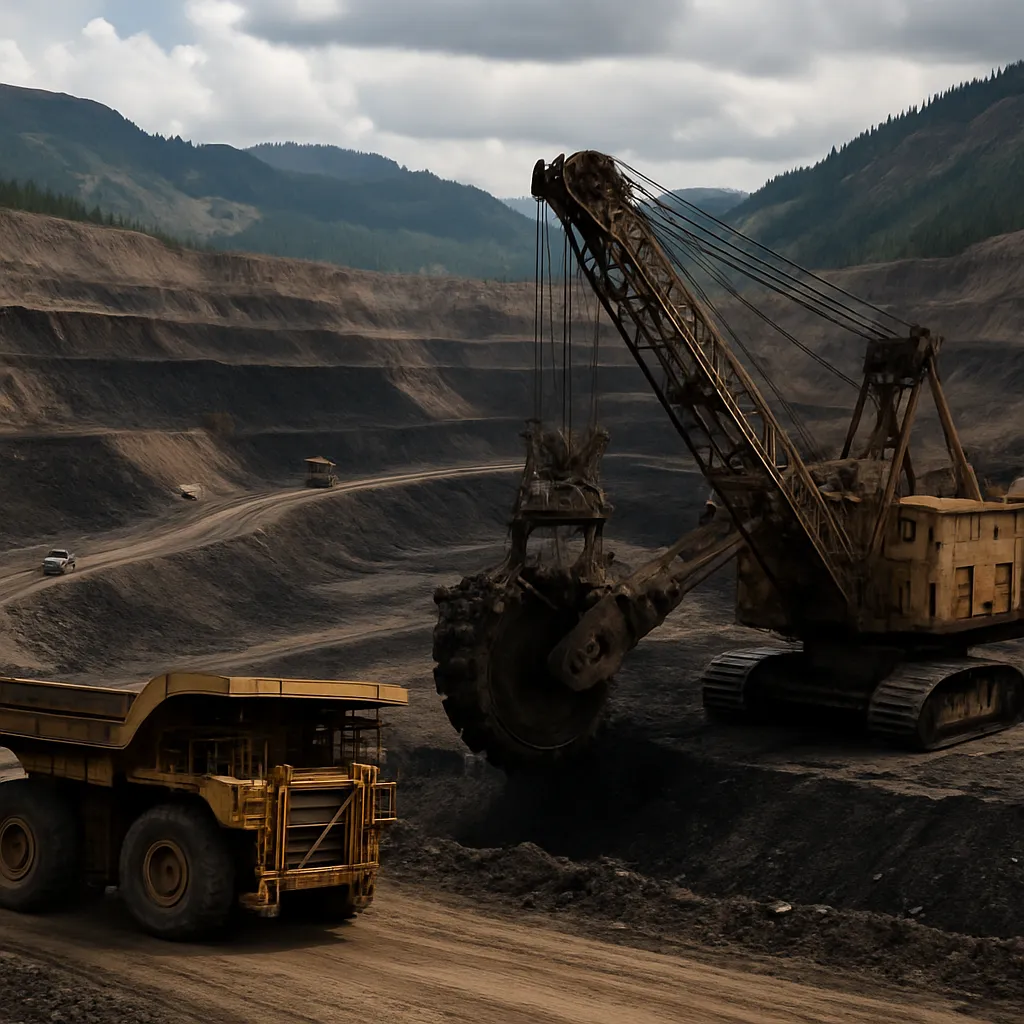
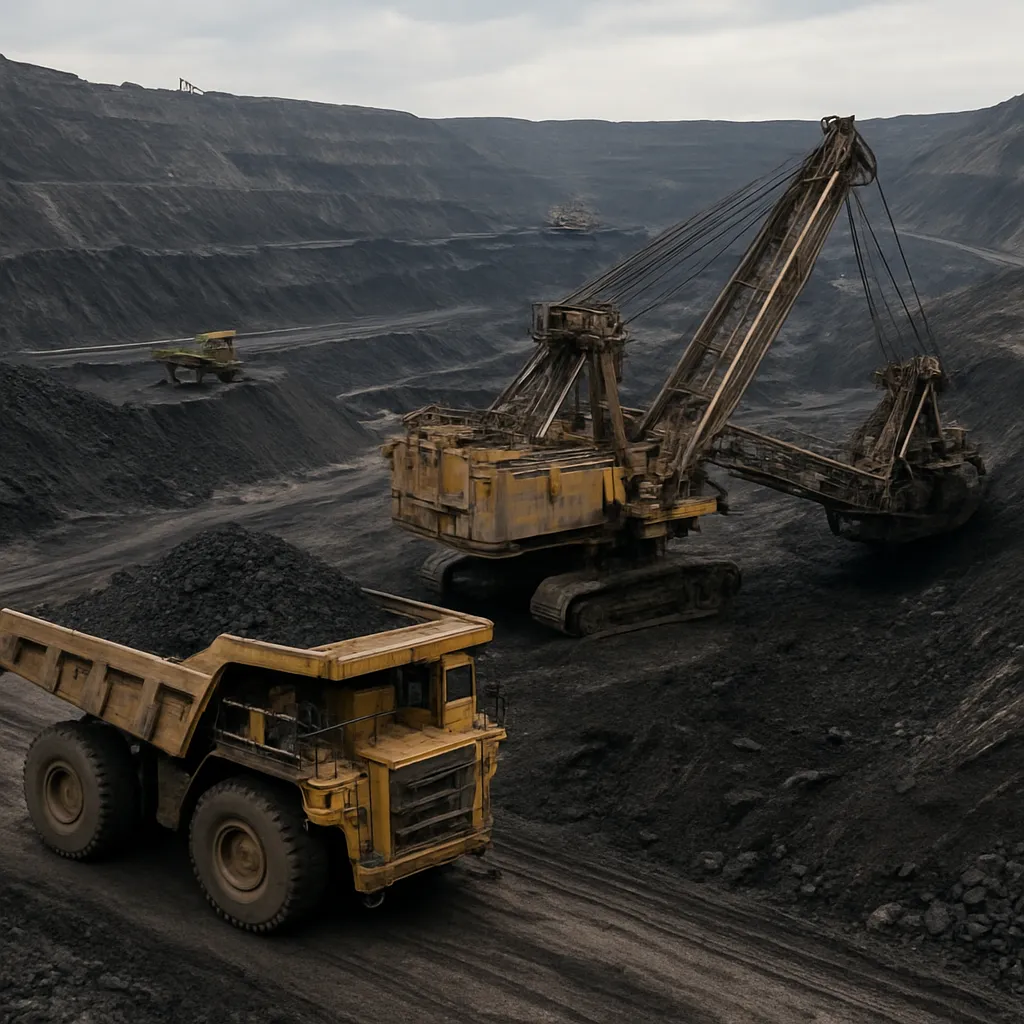
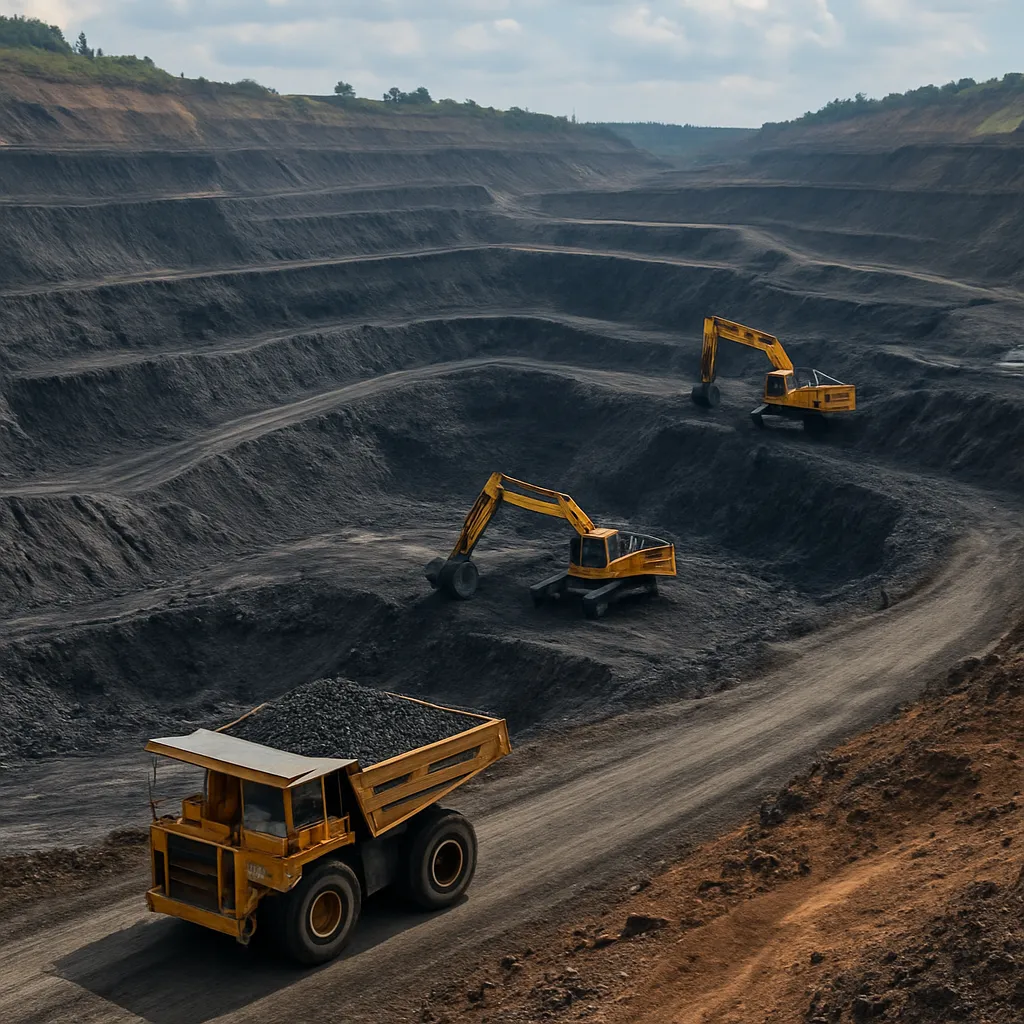
Extraction at Tabang is consistent with the dominant model in Kalimantan: surface mining using large-scale earthmoving equipment. This typically includes hydraulic excavators, large dump trucks, dozers, and ancillary equipment such as front-end loaders and conveyors for material handling. Key operational characteristics often include:
- Progressive open-pit development where overburden is sequentially removed to expose coal seams.
- Sediment management systems, including settling ponds and water treatment, to limit turbidity and manage mine runoff.
- On-site coal processing facilities in projects with washed product lines, or direct loading and transport for unwashed coal.
- Logistics infrastructure—access roads, barge or port arrangements for export, and connections to domestic power-supply networks for local off-take.
Most Kalimantan mines rely on river and coastal shipping to reach export terminals. Depending on specifics at Tabang, coal is either trucked to a nearby river port or transported via conveyor/belt systems to larger terminal facilities for transshipment. Local infrastructure investments such as road upgrades and port facilities are common contributors to regional economic development.
Economic and social significance
The Tabang coal operation contributes at multiple levels: locally, regionally and nationally. Coal mining in East Kalimantan is an important employer and a source of regional fiscal revenues through taxes, royalty payments and fees. Typical socioeconomic impacts from a mining project like Tabang include:
- Employment: Direct employment in mine operations, maintenance, administration, and ancillary services, plus indirect jobs in transport, hospitality and small businesses catering to the workforce.
- Local procurement: Contracting of local suppliers for goods and services—fuel, spare parts, catering, and logistics—stimulates local enterprise.
- Government revenues: Royalties and taxes from coal production help fund provincial and national budgets; these funds are critical for infrastructure and public services in mining regions.
- Community investment: Mining companies typically run community development programs (healthcare, education, road improvements) as part of corporate social responsibility (CSR) or as regulatory obligations.
At the national level, Tabang is one component of Indonesia’s vast coal export industry. Indonesia is historically one of the world’s largest exporters of thermal coal, serving major markets such as India, China, Japan, South Korea and various Southeast Asian nations. Revenues from coal exports have a direct effect on Indonesia’s trade balance, foreign exchange inflows and energy security planning.
Statistical overview and available figures
Specific up-to-date production and reserve figures for individual mines like Tabang can vary year by year and depend on company disclosures and government reporting. For context and to help situate Tabang within the national picture, consider the following typical and historical data points:
- Indonesia’s annual coal production has ranged from roughly 400 to 600 million tonnes in recent years, with fluctuations driven by global demand and domestic policy.
- Major coal-producing provinces—East Kalimantan, South Kalimantan and Central Kalimantan—contribute the bulk of national output. East Kalimantan alone has historically accounted for a significant share (often more than 30%) of production.
- Typical medium-sized mines in Kalimantan may produce several million tonnes per annum (Mtpa), whereas major complexes can exceed 10 Mtpa. Tabang’s annual throughput, depending on project scale and market conditions, would commonly fall within the small-to-medium mine range; however, company-specific disclosures are the most reliable source for exact numbers.
- Reserves for individual mines are reported in different categories (proven, probable, indicated). For comparable deposits in Kalimantan, resource and reserve figures often fall into tens to hundreds of millions of tonnes, reflecting long-term multi-decade production horizons for established mines.
Because of the variability between mines and changes due to new exploration and depletion from production, readers seeking precise, current figures for Tabang should consult the operating company’s annual report, Indonesian government mining statistics (e.g., Ministry of Energy and Mineral Resources), or industry databases that track mine-level production and reserves.
Markets, sales and export routes
Coal from Tabang, like most Indonesian thermal coal, is destined for both domestic power plants and international buyers. Primary market characteristics include:
- Asian demand: Major purchasers are located in India, China, Japan, South Korea, Taiwan and other Southeast Asian countries. Asian utilities often prefer Indonesian coal for its price competitiveness and acceptable sulphur profile.
- Blending strategies: End-users frequently blend coals from multiple sources to meet furnace and boiler specifications. Mines that can supply consistent calorific value and ash parameters gain a pricing edge.
- Logistics: Riverine transport and coastal shipments to seaports are the dominant logistics channels. Transshipment via barges to larger capesize or Panamax carriers is common in Kalimantan operations.
Environmental, social and governance (ESG) considerations
Mining operations in Kalimantan, Tabang included, operate under increasing scrutiny regarding their environmental and social impacts. Key areas of concern and mitigation include:
- Deforestation and biodiversity: Clearing for open-pit mining can fragment forests and impact habitats. Effective mine planning and progressive rehabilitation are essential to reduce long-term impacts.
- Water management: Suspended solids, acid drainage risk (less common in neutral pH Indonesian coals), and changes in hydrology require engineered water management and treatment systems.
- Air quality and emissions: Dust control, diesel emissions from heavy equipment, and the CO2 footprint of coal supply are central issues. Companies implement dust suppression, equipment maintenance, and monitoring systems to address local air quality concerns.
- Land rehabilitation and mine closure: Indonesian regulations mandate progressive reclamation and post-mining land use plans. Successful rehabilitation often includes reforestation, conversion to agriculture or aquaculture, or community development projects.
- Community relations: Ensuring meaningful consultation, fair land compensation, and benefit-sharing helps reduce conflict and supports social license to operate.
Global trends are pushing buyers, financiers and insurers to apply stricter ESG criteria when sourcing coal. This means mines with transparent environmental performance, robust rehabilitation plans and community engagement programs are better positioned to secure long-term contracts and financing.
Regulatory and fiscal environment
Indonesian coal mining is governed by national mining law, regulations on royalties and taxes, and provincial permitting regimes. Key elements affecting projects like Tabang include:
- Licensing: Mines operate under licenses such as IUP (mining business licenses) that set boundaries, production limits and environmental obligations.
- Royalties and taxes: Fiscal terms include production-based royalties, corporate income tax, and local fees. Changes in royalty rates or export taxes can materially affect miner economics.
- Domestic market obligations: Past policies have included requirements to prioritize domestic supply for power generation to secure energy stability, which can affect export volumes.
- Environmental permitting: Environmental Impact Assessments (AMDAL) and other permits are necessary before major activities proceed, binding companies to mitigation and monitoring commitments.
Challenges and opportunities
Tabang, like many coal operations, faces a mix of challenges and opportunities that will shape its future:
- Market volatility: Global demand for thermal coal is sensitive to economic cycles, policy shifts toward decarbonization, and competition from alternative fuels such as natural gas and renewables.
- Quality and value addition: Investing in coal washing, beneficiation and logistics can enhance product value and broaden market access.
- Regulatory change: Adjustments to royalty regimes or domestic market prioritization can create both risk and opportunity, depending on policy direction.
- ESG-driven finance: Access to international capital markets increasingly requires strong environmental management and transparent governance.
- Rehabilitation and post-mining uses: Proactive reclamation and planning for post-mining land use open opportunities for sustainable livelihoods and community development after mine closure.
Future outlook
The future trajectory for Tabang will be influenced by global energy transitions, regional demand dynamics, and domestic Indonesian policy choices. Near-term prospects for coal in Southeast Asia remain linked to power-sector demand, particularly in countries where coal continues to be a cost-competitive fuel for baseload generation. Over the medium to long term, pressures to decarbonize are likely to reshape markets and financing flows.
Operators that improve operational efficiency, manage environmental impacts, and engage constructively with local communities will likely preserve economic value and social license. Where Tabang or similar mines invest in higher-value product streams, export diversification and sustainable rehabilitation, they can enhance both longevity and post-mining outcomes for surrounding communities.
Concluding remarks
Tabang is representative of many Indonesian coal projects: it is embedded in a region rich in thermal coal resources, operated using open-pit techniques, and connected to both domestic and international markets that value Indonesia’s competitive supply. While precise yearly figures and reserve numbers should be sourced from operator reports or official statistics for the most accurate, up-to-date information, the mine’s role is clear: it contributes to local employment, regional infrastructure development, and Indonesia’s broader export economy. At the same time, environmental management, community relations and adaptation to changing market and policy conditions will determine how sustainably and profitably Tabang and comparable operations function into the future.