The Sonpur Bazari Mine is one of the notable coal mining projects in eastern India. Located in the northern reaches of West Bengal, the mine has drawn attention for its **resource** potential, its role in local and regional economies, and the environmental and social questions typical of large surface mining operations. This article provides a comprehensive overview of the mine’s location and geology, the nature of the coal and mining methods used, its economic significance and production statistics (where available), environmental management and social impacts, and likely future trajectories for the site and surrounding region.
Location, geological setting and history
The Sonpur Bazari Mine sits in the northern part of West Bengal, in and around the villages of Sonpur and Bazari in the district of Uttar Dinajpur (North Dinajpur). Geographically it lies within the greater basin area associated with the historic Raniganj and Barakar coalfields of eastern India, zones that have been exploited for coal since the 19th century. The general stratigraphy of this part of eastern India is characterized by Permian–Carboniferous sediments where extensive coal seams are interbedded with sandstones, shales and occasional shaly clays.
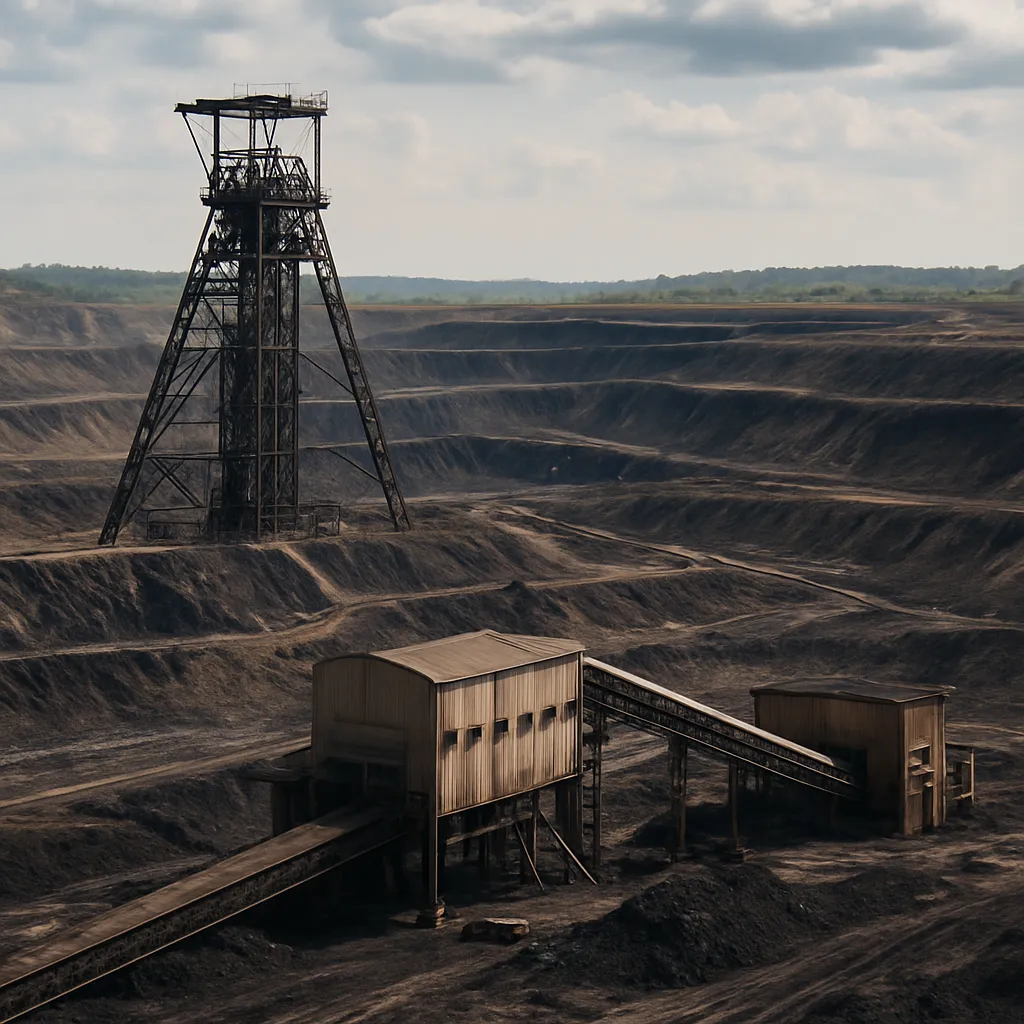
Geologically the deposit at Sonpur Bazari is considered part of the younger eastern coal-bearing sequences and is dominated by multiple seam horizons. The coal here is typically classified as non-coking, thermal coal, with variable calorific value and relatively high ash content by international standards—characteristics common to many Indian coalfields. The seams are amenable to surface mining techniques where topography permits, and the project area was envisioned primarily as an opencast operation with associated infrastructure for haulage, processing and dispatch.
Ownership, project timeline and infrastructure
The Sonpur Bazari project has been developed under the aegis of Eastern Coalfields Limited (ECL), a major subsidiary of Coal India Limited (CIL), which in turn is the national coal company. The project attracted attention in the 2000s and 2010s during expansion efforts by CIL to increase domestic coal production and reduce import dependence.
Development of an opencast mine requires substantial ancillary infrastructure: road and rail connectivity for coal evacuation, overburden handling systems, temporary and permanent water management structures, workshops, and housing or compensation arrangements for displaced populations. Plans associated with Sonpur Bazari included linkages to the regional rail network and road upgrades aimed at serving coal dispatch to nearby thermal power plants and industrial consumers.
Reserves, production capacity and coal quality
Reported estimates for the Sonpur Bazari block place the geological reserves in the range of a few hundred million tonnes. Many project documents and public discussions cite an estimated reserve of roughly 200–350 million tonnes (geological), with recoverable reserves lower after accounting for technical, environmental and legal constraints. For planning purposes the opencast project was often sized with an annual rated production capacity in the range of about 4–6 million tonnes per annum (MTPA) as a normative target, with possible peak capacities slightly higher depending on equipment deployment and market demand.
Coal quality at Sonpur Bazari is typical of the eastern Indian rank: predominantly medium to low rank thermal coal with moderate calorific values (generally in the lower thousands of kcal/kg range compared to higher-grade coals elsewhere) and relatively high ash content. Sulphur content is usually low to moderate, which is favourable from an emissions standpoint, but the high ash reduces calorific efficiency and increases handling and disposal costs for power plants and consumers.
Mining methods, equipment and operations
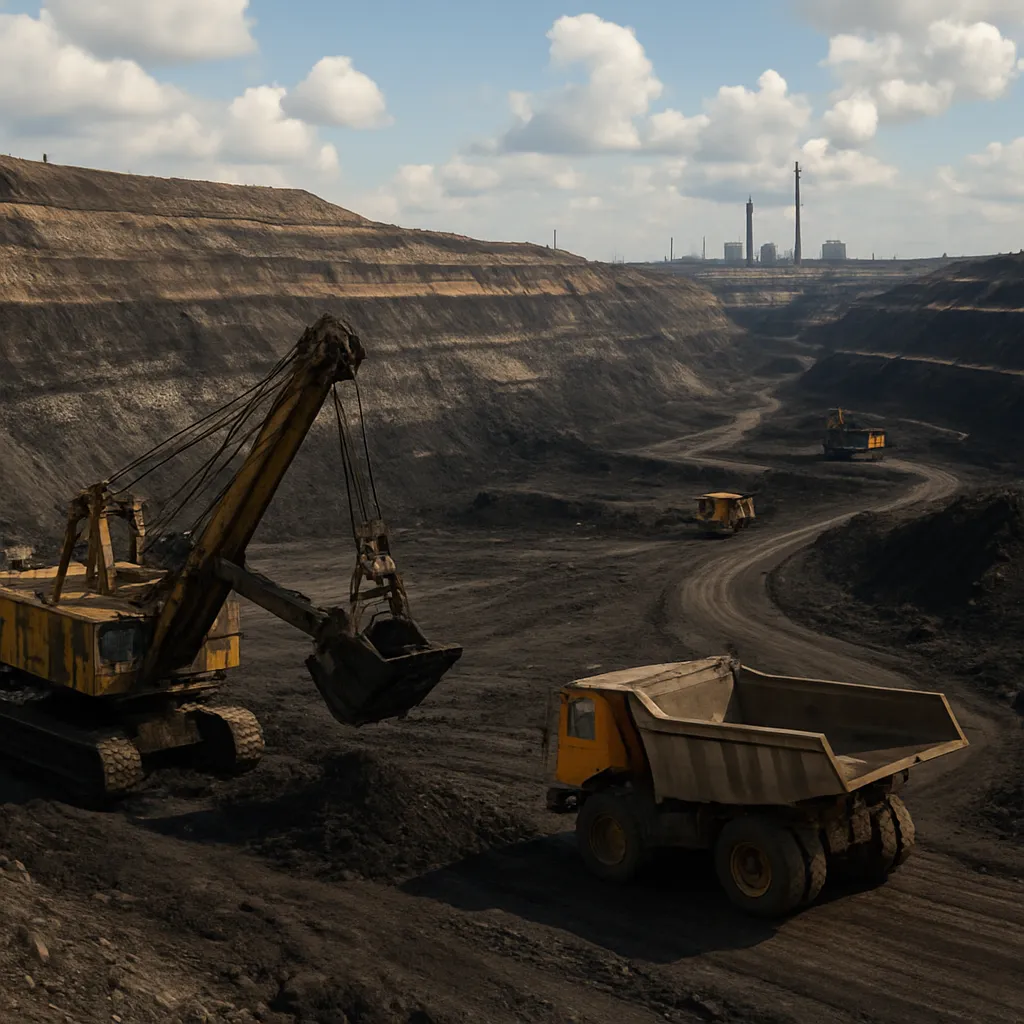
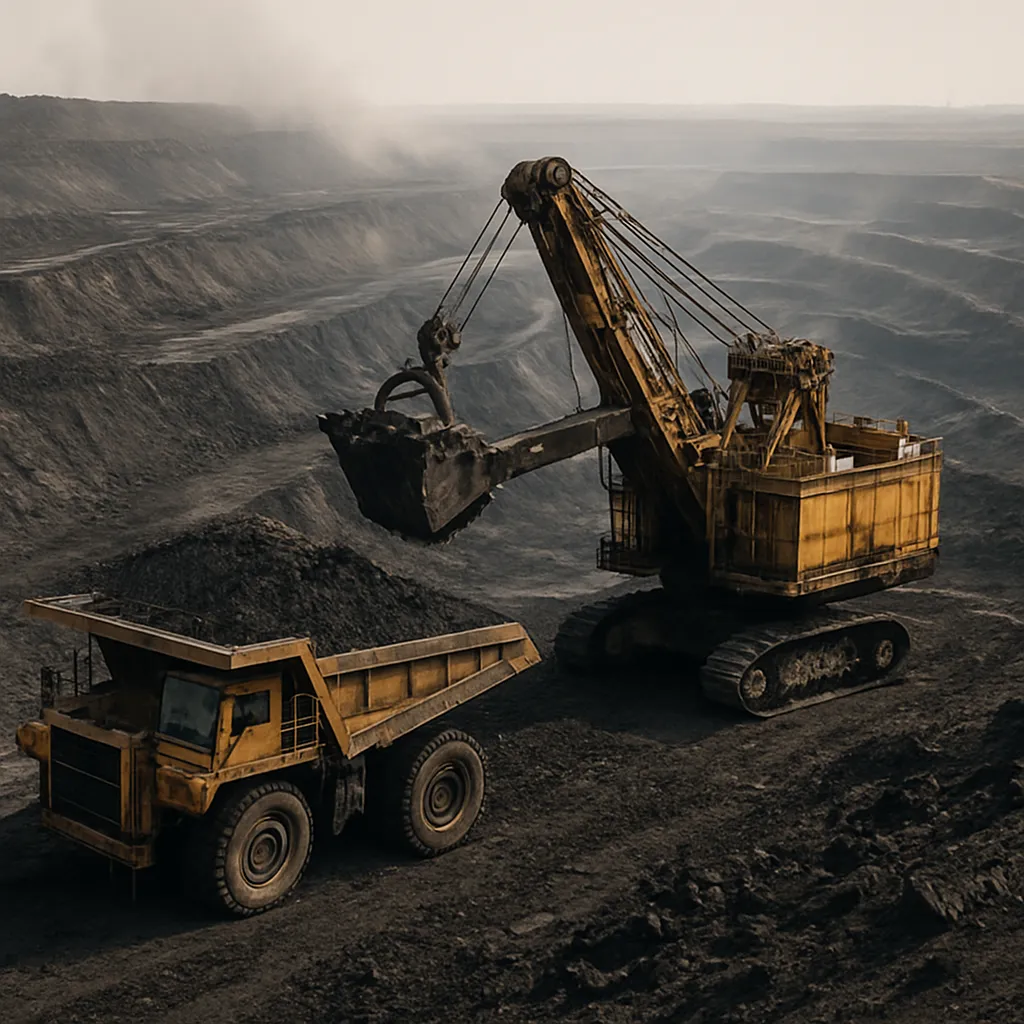
The mine is planned and/or operated primarily as an opencast operation. Typical operations involve progressive removal of the overburden using heavy construction and mining equipment—hydraulic excavators, large dump trucks, dozers and wheel loaders—followed by drilling and controlled blasting where necessary. Ore (coal) is then transported to a coal handling and preparation plant (if installed) for crushing, screening and washing (where economically justified), or directly loaded into rakes and trucks for dispatch.
Key operational systems include:
- Overburden management: benches, dumps and progressive restoration planning to manage spoil material.
- Water control: dewatering pumps, settling ponds and sedimentation systems to manage monsoon-runoff and groundwater intrusion.
- Safety systems: slope monitoring, blasting control, and mechanised material movement to reduce manual hazards.
- Transport: rail sidings, internal haul roads and conveyor corridors to move coal efficiently from mine to market.
Economic significance and local impact
The economic footprint of Sonpur Bazari extends across several dimensions: direct employment and local income, fiscal receipts for the state and centre, supply-chain stimulation and contribution to energy security. For a mine with several million tonnes per annum capacity, direct employment can number in the thousands including operators, technical staff, contract workers and administrative personnel. When indirect employment—contractors, transport operators, suppliers, local service providers and seasonal labour—is included, the number of dependent livelihoods can increase substantially.
Contributions to public finances come via royalties, taxes, cesses and lease/license fees. Coal mining projects in India are subject to a mix of central and state levies and often carry obligations for capacity-building, community development and local infrastructure improvement. The mine thus forms part of broader regional development plans: improved roads, electrification, water supply projects and sometimes investments in local education and health facilities.
From an energy perspective, Sonpur Bazari’s output helps supply thermal power plants and local industries, contributing to regional energy security by supplying domestically produced coal instead of relying on imports. This linkage is particularly important in West Bengal and adjacent states where coal-fired generation remains a backbone of the power mix.
Statistics and reported figures
Publicly available figures for Sonpur Bazari have varied over time depending on project approvals and staged development. Some of the more commonly cited numbers include:
- Estimated geological reserves: roughly 200–350 million tonnes (various project documents and summaries cite values in this range).
- Planned normative production capacity: approximately 4–6 MTPA (with possible short-term peaks slightly above this depending on deployment of equipment and market demand).
- Expected operational life: multi-decade horizon (two to several decades) depending on extraction rate, with life-of-mine estimates commonly presented in the 20–40 year bracket for deposits of this size at the given annual extraction rates.
- Employment impacts: direct employment in the low thousands, indirect employment in the low-to-mid thousands regionally.
Note: the figures above are indicative as project-specific approvals, mine plans and market conditions evolve. Precise audited figures should be referenced from company annual reports or government mining clearance documents for the latest validated numbers.
Environmental management and social issues
As with any large opencast coal project, Sonpur Bazari has faced environmental and social challenges. Key environmental issues include disturbance of land, dust and air quality implications, water usage and contamination risks, disposal of high-ash material, and loss or fragmentation of agricultural and forest lands. Particular local concerns that typically arise around such projects include rehabilitation and resettlement (R&R) of affected families, preservation of livelihoods (especially agriculture), and management of water resources in the area—especially during monsoon and dry seasons.
Mitigation and management measures commonly implemented or proposed at Sonpur Bazari include:
- Progressive reclamation: contemporaneous backfilling and landscaping where possible, creation of stable slopes and revegetation of spoil dumps.
- Afforestation: compensatory plantation programs on degraded lands and on land designated for biological conservation.
- Dust and emission controls: water sprinkling on haul roads, covered conveyors, and enclosures at crushing units to limit particulate emissions.
- Water management systems: construction of siltation ponds, lined settling tanks, controlled discharge, and where feasible, reuse of treated mine water for dust suppression and plantation.
- Social investment: planned compensation packages, livelihood restoration programs, infrastructure improvement (schools, health centres) and local employment preferences.
Controversy has occasionally surrounded timelines for rehabilitation, adequacy of compensation, and impacts on traditional livelihoods. Such issues require sustained engagement between the mining company, local communities, civil society organizations and government agencies to balance economic benefits against social and environmental costs.
Role in regional industry and supply chains
Sonpur Bazari provides coal primarily for thermal power plants and industrial consumers in West Bengal and neighboring states. Coal from this and nearby mines feeds regional generating stations, brick kilns and small to medium industries that rely on domestic coal. Because of the moderate calorific value and high ash, coal from Sonpur Bazari typically requires coal-handling facilities at the consumer end designed to handle ash and manage emissions.
The mine offers regional supply-chain benefits: local employment for transporters, an uplift for accessory industries (workshops, mechanical services), and opportunities for local microenterprises. Rail connectivity is particularly important for longer-haul dispatch of coal and strategic linkages to the national grid of coal distribution managed by Indian Railways.
Safety, technology and modernisation
Safety is a priority in modern coal mining operations. Sonpur Bazari’s operational design includes slope stability monitoring, controlled blasting protocols, and mechanised systems to reduce manual handling (a major source of accidents in older mining setups). Modern mines also integrate digital monitoring—fleet management systems, GPS-enabled haulage optimisation, and environmental monitoring sensors—to improve efficiency and compliance.
There has been an industry-wide push to modernise coal mining in India, including deployment of large-capacity excavators and dumpers, improved coal-washing facilities where economically justified, and adoption of best-practice waste management. At Sonpur Bazari, investments in mechanisation and environmental controls are part of efforts to reduce per-tonne production costs while meeting regulatory expectations.
Challenges and future prospects
Sonpur Bazari faces several challenges common to coal projects in India:
- Environmental constraints: managing land-use change, mitigating dust and water impacts, and meeting increasingly stringent environmental clearances.
- Social acceptance: ensuring fair and transparent resettlement and effective benefit-sharing with local communities to prevent prolonged disputes or project delays.
- Economic viability: balancing production costs against market prices for coal and competition from imported coal or alternative fuels in the power sector.
- Regulatory compliance: aligning development plans with national policies on mining, forest clearance, and land acquisition laws.
Despite these challenges, the mine’s prospects remain linked to India’s broader energy needs. As India continues to rely substantially on coal for electricity generation, domestic mines such as Sonpur Bazari play a strategic role in reducing import dependence and stabilising supply. At the same time, the future trajectory will be shaped by policies encouraging cleaner technologies, emissions reduction, and greater scrutiny of environmental and social impacts.
Interesting facts and wider context
Several features make Sonpur Bazari noteworthy beyond its raw resource value:
- Strategic regional role: its location in northern West Bengal links coal resources to both state industries and eastern India power demand centers.
- Example of modern opencast practices: the project illustrates the combination of heavy mechanisation, environmental management and social programming now expected in major Indian mining projects.
- Local development multiplier: mining projects often accelerate ancillary infrastructure—roads, electrification and communications—that have long-term benefits for rural communities if managed inclusively.
- Balancing act: Sonpur Bazari exemplifies the trade-offs between energy security and environmental stewardship that characterise contemporary resource extraction debates in India and many parts of the world.
Conclusion
Sonpur Bazari Mine is a significant coal project in West Bengal with multi-million tonne reserves and planned opencast production designed to contribute to regional energy supply and economic activity. Its coal is principally thermal, with the quality and ash characteristics typical of eastern Indian deposits. The mine’s development underscores the complex interplay of economic benefits, local socio-environmental impacts, and the need for careful management of resources and communities. For stakeholders—government bodies, the operating company (ECL), local communities and environmental groups—the challenge remains to optimise the mine’s economic potential while minimising ecological footprint and ensuring fair outcomes for affected populations.