Raw bituminous coal is one of the most important fossil fuels in the modern economy. It occupies an intermediate rank in the coalification process between subbituminous coal and anthracite, offering a valuable balance of volatile matter and fixed carbon which makes it suitable for both thermal power generation and, in many cases, conversion to coking coal for steel production. This article explores the geology, global occurrence, mining and production methods, economic and statistical context, industrial applications, environmental and health issues, and future perspectives for raw bituminous coal. The aim is to provide a comprehensive overview of why this resource remains significant even as the world undertakes energy transition efforts.
Occurrence and Geological Characteristics
Bituminous coal forms under medium to high temperatures and pressures in sedimentary basins where high rates of plant material accumulation occurred millions of years ago. Typical depositional environments include coastal plains, deltaic swamps and river floodplains. Over geological time, organic peat deposits were buried and chemically transformed through compaction and coalification into higher-ranked coals.
Key characteristics of raw bituminous coal include:
- Calorific value: generally in the range of about 24–35 MJ/kg (on an as-received or air-dried basis depending on moisture content), making it an efficient fuel for many thermal applications.
- Carbon content: intermediate — higher than subbituminous coal but lower than anthracite; fixed carbon values often range from around 45% to 86% by proximate analysis, depending on specific rank and seam.
- Volatile matter: moderate to high; this influences combustion behavior, gasification characteristics and suitability for coke making.
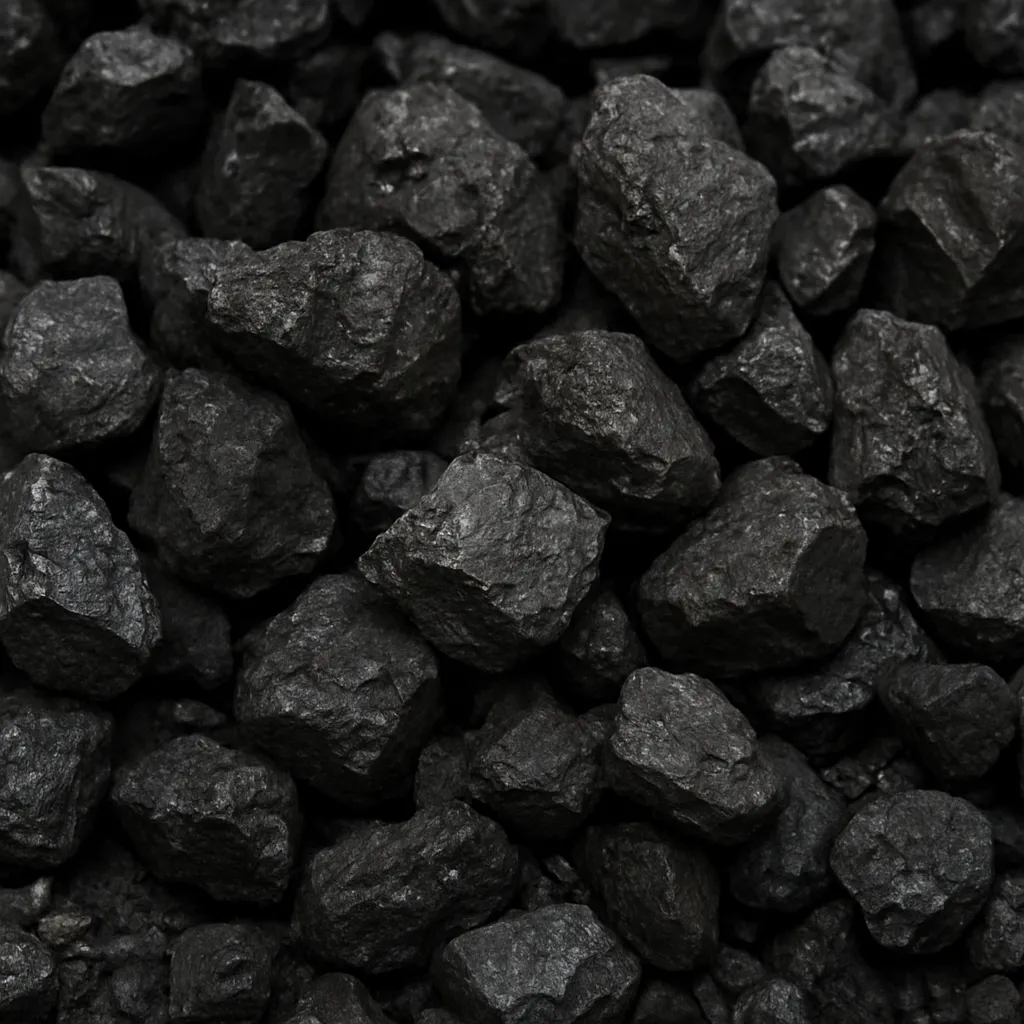
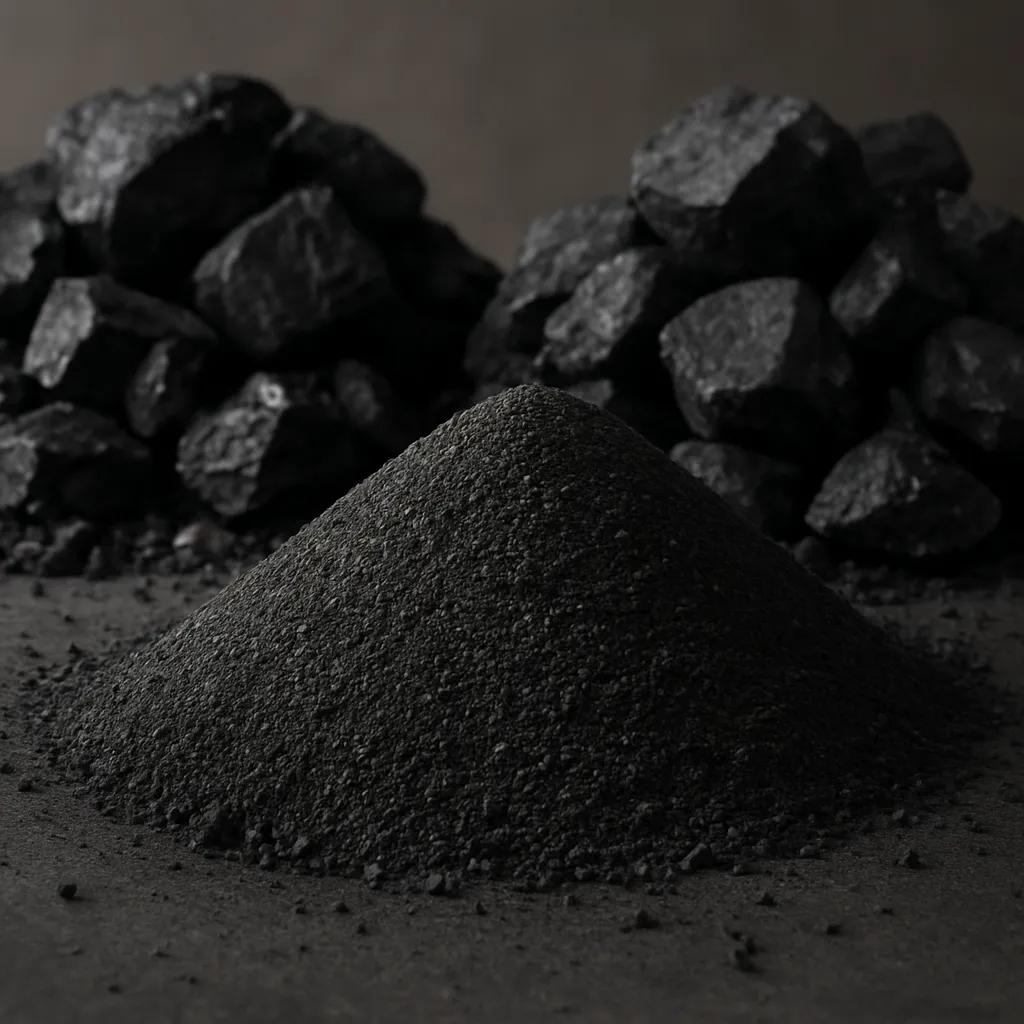
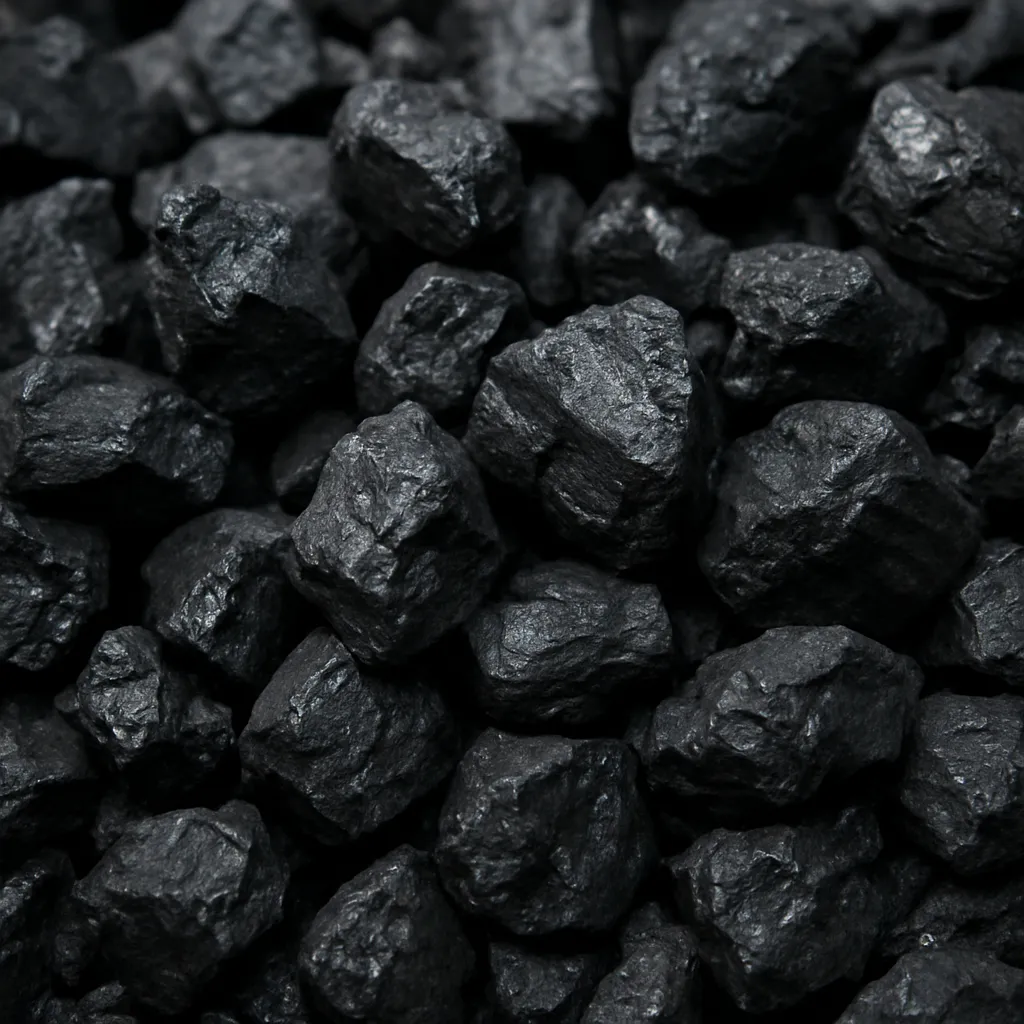
- Physical appearance: typically dull to bright black, brittle, and layered, often with visible banding and sometimes with plant fossil impressions.
- Impurities: variable ash content (5–30% or more in some seams), variable sulfur (low-sulfur to high-sulfur coals), and trace elements including mercury, arsenic and lead in small concentrations.
There are several subcategories within bituminous coal, including low-volatile, medium-volatile and high-volatile bituminous coals, as well as special grades used for metallurgy and coke production.
Where Bituminous Coal Is Found and Extracted
Raw bituminous coal occurs in many parts of the world, concentrated in large sedimentary basins that formed during the Carboniferous, Permian and younger geological periods. Major regions with extensive bituminous coal deposits include:
- China — large coal basins in Shanxi, Shaanxi, Inner Mongolia and other provinces, producing a mix of thermal and higher-grade bituminous coal.
- United States — the Appalachian, Powder River, Illinois and other coal basins supply significant quantities of bituminous and subbituminous coals.
- Australia — Bowen Basin, Surat Basin and other deposits include extensive bituminous and semi-bituminous seams, with large export-oriented production, especially of higher-grade metallurgical coal.
- Russia — extensive deposits in the Kuznetsk Basin (Kuzbass), Pechora and other regions, producing a broad range of coal types including bituminous.
- India — Gondwana formations in states such as Jharkhand, Odisha, Chhattisgarh, West Bengal and Madhya Pradesh contain bituminous coal used for power and industry.
- Poland — Upper Silesian Basin and Lublin Basin contain hard coal (bituminous) which historically has been central to Polish industry and energy supply.
- South Africa, Colombia, Canada, Kazakhstan, Indonesia and others — each with basins containing bituminous coal, often with specific grades valuable for export.
Mining methods vary by deposit depth and seam geometry. Common extraction approaches include:
- Open-pit (surface) mining — applied where seams are shallow and extensive; allows high productivity and lower costs per tonne extracted.
- Underground mining — including room-and-pillar, longwall and bord-and-pillar techniques; essential where seams are deep or surface removal is impractical.
- Combined methods — in some regions, a mix of surface and underground mines operates to access different parts of the same basin.
Global Production, Trade and Economic Importance
Raw bituminous coal has historically been one of the world’s most traded and consumed energy resources. Although global attention on decarbonization is shifting demand patterns, coal continues to play a major role in electricity generation, industrial heat and metallurgical processes.
Some broad statistical highlights (approximate, as trends fluctuate year to year):
- World coal production: in recent years global coal production has been on the order of roughly 7–8 billion tonnes per year (all ranks combined). China has been by far the largest producer, responsible for roughly half of global output.
- Major producers: China (approx. 3.8–4.0 billion tonnes), India (roughly 800–1,000 million tonnes), the United States (roughly 500–700 million tonnes), Indonesia and Australia (each producing several hundred million tonnes, with Australia oriented strongly toward export).
- Proven reserves: global proven coal reserves exceed 1 trillion tonnes (i.e., over 1,000 billion tonnes), representing several centuries of theoretical supply at current consumption rates if used exclusively; these reserves are unevenly distributed across countries.
- Seaborne coal trade: the seaborne market (maritime shipments) accounts for a substantial slice of global trade — thermal coal seaborne trade often reaches around 1–1.3 billion tonnes annually, while seaborne metallurgical (coking) coal trade is smaller but highly valuable (several hundred million tonnes).
- Metallurgical vs thermal: a smaller fraction of total coal is high-quality coking coal used for steelmaking; however, it commands significantly higher prices on global markets than standard thermal coal.
Economic impacts of bituminous coal include:
- Employment — tens to hundreds of thousands of direct mining jobs globally, with many more employed indirectly in transport, processing, equipment manufacturing and services.
- Export revenues — countries like Australia, Indonesia, Russia and Colombia derive major export earnings from coal; coal exports have been pivotal in national trade balances.
- Local economies — coal basins often anchor regional economies, funding infrastructure, public budgets and community services through royalties and payroll taxes.
Industrial Uses and Significance
Raw bituminous coal serves multiple industrial roles. Its importance stems both from its energy content and from the ability of some grades to be converted into coke and other carbon products.
Power Generation
A large share of global electricity has been generated from coal-fired power plants. The higher calorific value of many bituminous coals makes them well-suited for pulverized coal combustion in large thermal power stations. In countries with abundant domestic coal, coal-fired power plants provide energy security and base-load capacity.
Steel and Metallurgy
Certain bituminous coals — when suitable in volatile matter and impurity content — can be processed into coke by heating in the absence of oxygen in coke ovens. This coking coke is essential for traditional blast-furnace steelmaking, providing both a reducing agent and structural support in the furnace. Metallurgical coal and coke remain critical inputs for steel production; while alternatives such as direct reduced iron (DRI) and electric-arc furnaces exist, coke-based routes continue to dominate in many regions.
Chemicals, Gasification and Liquefaction
Bituminous coal is feedstock for chemical production in coal-rich regions: through gasification it becomes synthesis gas (syngas) which can be converted into ammonia, methanol, hydrogen and liquid fuels (coal-to-liquids). Coal tar and other by-products from coke production are precursors for dyes, solvents and specialty chemicals. Advanced technologies, including integrated gasification combined cycle (IGCC) and coal-to-chemicals processes, expand industrial applications beyond simple combustion.
Environmental, Health and Safety Issues
The extraction and use of raw bituminous coal carry multiple environmental and health consequences. These concerns have driven policy debates, regulatory regimes and technological developments aimed at mitigation.
- Greenhouse gas emissions: Combustion of coal generates significant CO2 — roughly 2.4–2.8 tonnes of CO2 per tonne of coal burned, depending on carbon content and combustion efficiency. Coal-fired power generation has been a major contributor to anthropogenic greenhouse gas emissions and global warming.
- Air pollutants: Coal combustion emits sulfur dioxide (SO2), nitrogen oxides (NOx), particulate matter (PM), and mercury. These pollutants contribute to acid deposition, respiratory disease and neurotoxic effects.
- Local environmental impacts: Mining (especially surface mining) causes habitat destruction, landscape alteration, water table changes and potential acid mine drainage which can contaminate rivers and groundwater.
- Occupational health and safety: Coal miners face hazards including mine collapse, methane explosions, and chronic respiratory diseases like coal workers’ pneumoconiosis (black lung), as well as noise, vibration and chemical exposures.
- Waste materials: Coal ash and slag created by combustion and coking processes require safe disposal; failures of ash ponds or improper containment have caused significant environmental disasters.
Technologies, Mitigation and the Energy Transition
The future of raw bituminous coal is being shaped by technological options that aim to reduce environmental impacts while recognizing economic realities and industrial needs.
- Coal washing and beneficiation: Removing ash and impurities before combustion increases the effective calorific value and reduces emissions of particulates and heavy metals.
- Emission control technologies: Flue gas desulfurization (FGD), selective catalytic reduction (SCR) for NOx, electrostatic precipitators and fabric filters significantly reduce pollutant emissions from coal-fired plants.
- Carbon capture, utilization and storage (CCUS): Capturing CO2 from point sources such as power plants or industrial facilities and storing it geologically or using it in enhanced oil recovery can mitigate greenhouse gas emissions, though economic and scale challenges remain.
- Advanced conversion: Gasification and combined-cycle technologies (IGCC) increase efficiency and facilitate CO2 capture compared with conventional combustion.
- Coal-to-chemicals and hydrogen: Using coal as a feedstock for hydrogen production (with capture) or chemical synthesis may provide transitional uses in regions where coal is abundant.
- Mine site rehabilitation and water management: Progressive reclamation techniques and improved water treatment mitigate long-term environmental damage from mining operations.
Regional Perspectives and Case Studies
Different countries face unique balances of economic reliance on coal and pressures to decarbonize. Below are snapshots of several important producers and consumers.
China
China remains the world’s largest producer and consumer of coal. Domestic bituminous coal supports electricity generation, steelmaking and industrial heat. China’s policy is complex: while investing heavily in renewable energy, it continues to construct and operate coal-fired power plants to secure energy supply and stabilize economic growth. The country is also a major investor in technologies such as CCUS and coal-to-chemicals.
Australia
Australia is a leading exporter of both thermal and high-quality metallurgical coal. The Bowen Basin and other Queensland coalfields supply global steel and power markets. Coal drives export revenues and regional employment, while Australia faces international scrutiny around emissions and export sales of coal consumed abroad.
United States
The U.S. has large bituminous reserves in the Appalachian and Illinois basins and produces both thermal and metallurgical coal. Domestic power generation has shifted increasingly toward lower-carbon natural gas and renewables, but coal remains important for certain industrial processes. U.S. coal exports (especially metallurgical coal) also play a role in global markets.
India
India relies heavily on domestic coal (mostly bituminous and lower ranks) for electricity and industry. With growing energy demand, India has focused on expanding domestic capacity, improving coal quality through beneficiation and planning for cleaner technologies, although the pace of transition is constrained by energy access and economic priorities.
Poland
Poland has historically depended on domestic hard coal extracted in the Upper Silesian Basin. In recent decades, production has declined due to economic restructuring, mine closures and rising extraction costs, but coal still plays a significant role in regional employment and district heating. Poland faces substantial policy pressure to reduce coal use to meet European Union climate targets, while balancing social and economic considerations for mining communities.
Market Dynamics: Prices, Exports and Trade Flows
Global bituminous coal markets are characterized by price volatility influenced by supply disruptions, weather, energy policy, shipping costs and competition from alternative fuels such as LNG and renewables. Key market features include:
- Price volatility: Coal prices can spike due to supply constraints, geopolitical events or sudden changes in demand (e.g., cold winters or industrial rebounds).
- Seaborne trade orientation: Countries with low domestic demand but large export capacities (e.g., Australia, Indonesia, Colombia) drive marine coal markets, while import-dependent countries (e.g., Japan, South Korea, some European and South Asian countries) are major buyers.
- Quality premia: High-quality bituminous metallurgical coals and low-ash, low-sulfur thermal coals garner price premiums.
- Logistics and infrastructure: Rail, port capacity and inland transport constraints often determine marginal costs and influence regional competitiveness of coal supplies.
Statistics and Recent Trends (Selected)
While precise numbers vary yearly, some recurring patterns are useful for understanding the role of bituminous coal:
- Global production remains concentrated: a few countries supply the majority of coal, with China the dominant producer and consumer.
- Coal’s share of electricity generation has declined in many advanced economies as renewables and natural gas take larger shares; however, in some developing economies, coal-fuelled growth persists because of resource availability and cost considerations.
- Metallurgical coal markets remain tight at times, causing price spikes because steelmaking depends on coke quality and supply disruptions can’t be quickly mitigated.
- Proven reserves continue to be substantial globally — over 1 trillion tonnes — implying that resource scarcity is not the immediate limiting factor; rather policy choices and the pace of energy transition are decisive.
Health, Social and Governance Considerations
The social dimension of bituminous coal involves community livelihoods, labor conditions, and the interplay between local economies and national policy. Key aspects include:
- Worker welfare and safety: Improving mine safety, reducing occupational diseases and ensuring just transition programs for displaced workers are critical governance tasks.
- Community dependence: Many towns and regions are economically dependent on coal mining and require targeted diversification strategies to avoid social disruption when mines close.
- Regulatory governance: Strong environmental regulation, transparent royalty regimes and accountable permitting are essential to balance economic benefits with environmental stewardship.
Future Outlook and Strategic Questions
The outlook for raw bituminous coal is shaped by twin pressures: persistent demand from steelmaking and some power systems versus the global push to reduce carbon emissions. Several possible pathways exist:
- Gradual decline in coal-fired power for many countries as renewables and storage scale up, while metallurgical uses maintain a relatively stable floor of demand unless low-carbon steelmaking technologies proliferate.
- Increased deployment of emissions control and carbon capture technologies where coal use continues for industrial or energy-security reasons.
- Market segmentation with premium prices for high-quality metallurgical coals and lower prices for lower-grade thermal coals, affecting mining economics and investment decisions.
- Acceleration of mine closure and reclamation programs in regions pursuing rapid decarbonization, coupled with socio-economic transition plans for affected communities.
Interesting Technical and Historical Notes
– Historically, bituminous coal fueled the first industrial revolution waves of steam engines, railways and early steelmaking, establishing patterns of urbanization and industrial growth still visible in many coalfield regions.
– Some bituminous seams contain natural gases such as methane; coalbed methane (CBM) can be recovered for energy, but its extraction also poses safety and environmental challenges.
– Coking properties of some bituminous coals are unique and depend on rank, maceral composition and mineral matter; blending different coals to produce consistent coke is a specialized industrial art and science.
– Advanced laboratory and remote-sensing techniques now allow better characterization of coal seams, improving mine planning and environmental management.
Practical Summary
Raw bituminous coal remains a crucial energy and industrial feedstock in many parts of the world. It supplies electricity, provides the carbon and structural material for steel production through coke, and serves as feedstock for chemical processes. While the global energy transition aims to reduce reliance on coal for climate reasons, the sheer scale of existing reserves, the depth of regional economic integration with coal industries, and the specialized role of certain bituminous grades in metallurgy mean that coal will continue to influence energy markets and industrial supply chains for years to come. Managing environmental impacts, protecting worker and community welfare, and investing in technologies that reduce emissions are central challenges for policymakers and industry stakeholders moving forward.