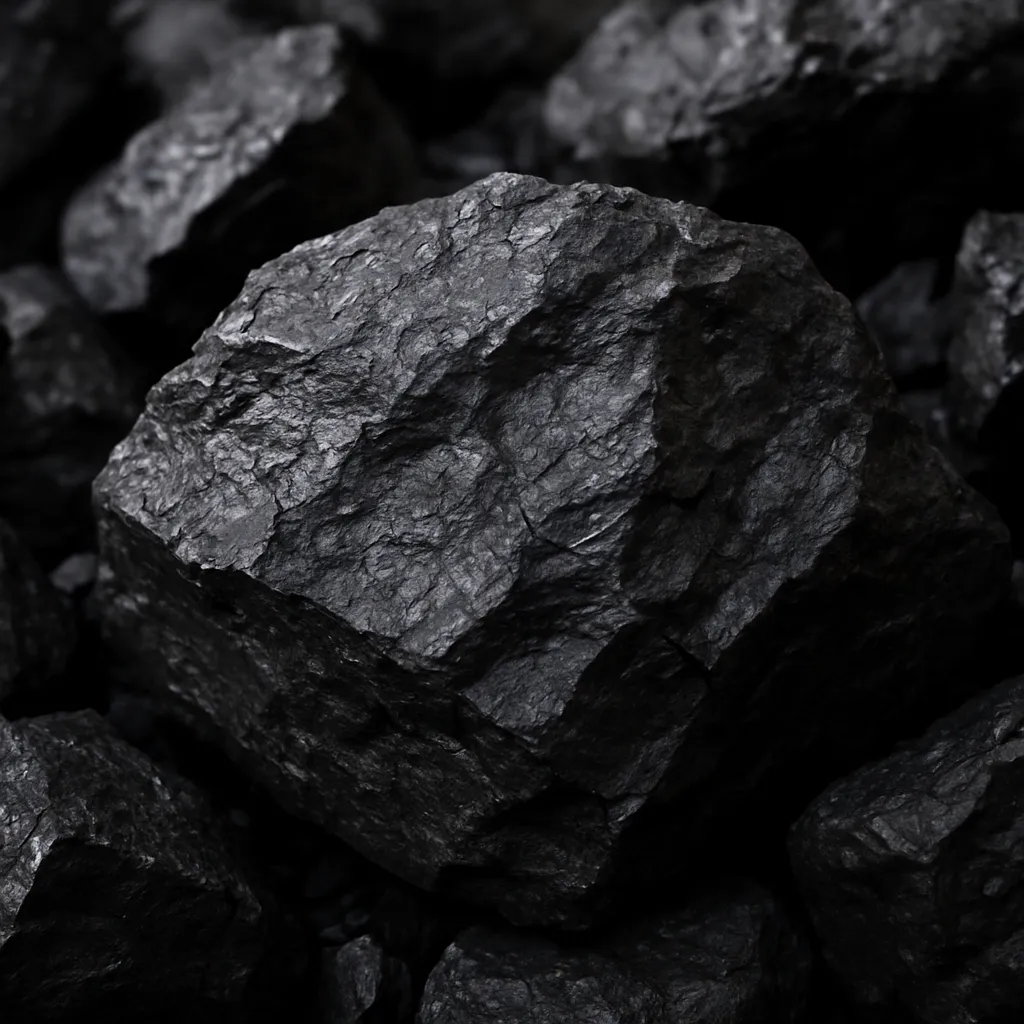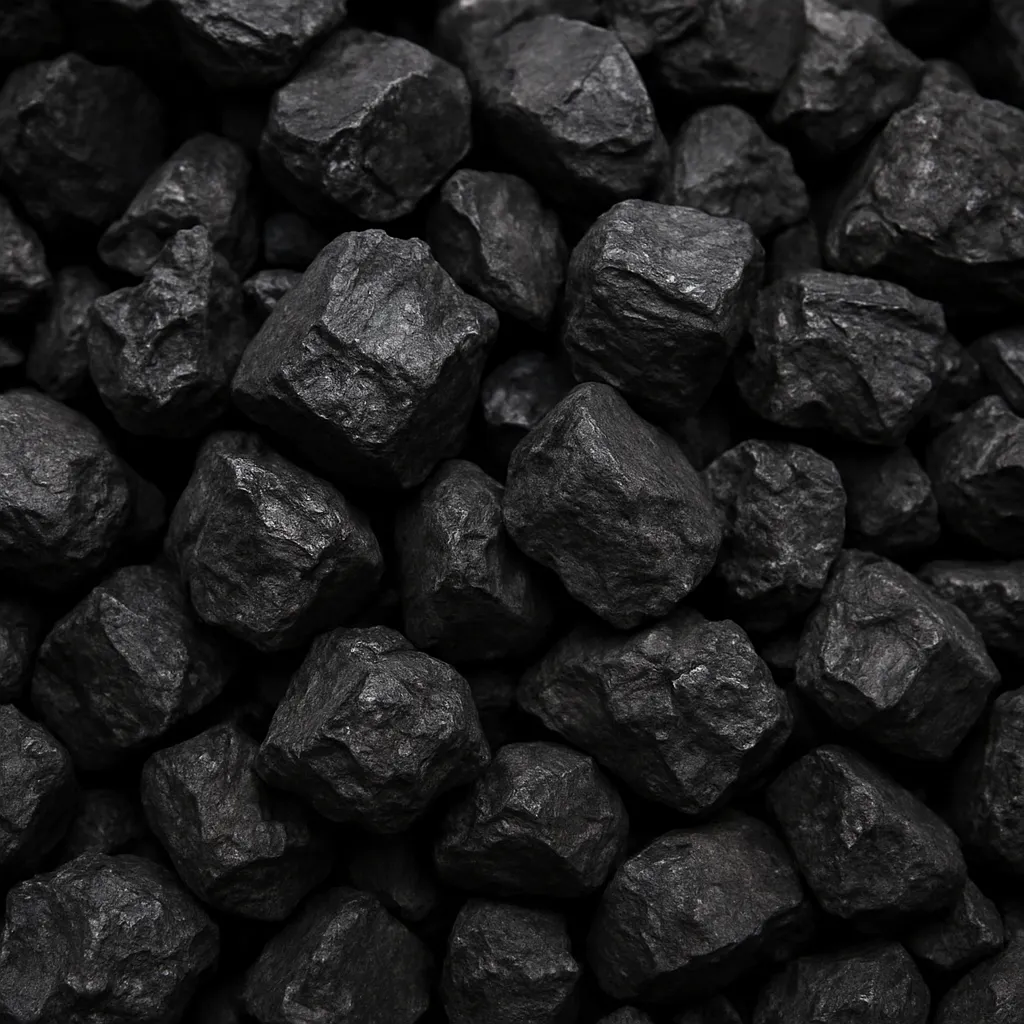
This article examines coal in its many dimensions: geological origin, global distribution, methods of extraction, economic importance, statistical trends, industrial applications and the environmental and policy debates surrounding it. Coal remains one of the world’s most important sources of energy and a pillar of heavy industry despite strong pressure from decarbonization policies and the rise of renewable alternatives. Below you will find an overview of where coal occurs and is mined, who the major producers and consumers are, relevant economic and statistical indicators, its role in industry (notably in producing electricity and steel), and other noteworthy facts about this fossil fuel.
Geology, Types and Formation
Coal is a sedimentary rock formed from the compressed and altered remains of ancient vegetation. Over geological time, plant material in peatlands and swamps was buried by sediments and subjected to heat and pressure, undergoing chemical and physical changes in a process called coalification. The main rank sequence, from lowest to highest carbon content and energy density, is: lignite (brown coal), sub-bituminous, bituminous and anthracite. Each rank has different calorific values, moisture contents and industrial uses.
Coal characteristics that determine its behavior and value include fixed carbon content, volatile matter, moisture, ash content, and sulfur. Low-ash, low-sulfur coals command a premium for many uses, especially in power generation and steelmaking, while high-ash or high-sulfur coals face penalties, higher costs for pollution control and limited markets.
Certain coal types are specifically valued for metallurgical use: metallurgical or coking coal is processed into coke for blast furnaces and direct reduced iron processes. Thermal coal is used primarily for power generation. There are also transitional categories and specialized coals for gasification, liquefaction and chemical feedstocks.
Global Occurrence and Major Producing Regions
Coal deposits are widespread, reflecting the global extent of ancient peat-forming environments. Major coal-bearing regions include:
- Asia: large deposits in China, India, Mongolia and Southeast Asia;
- Oceania: substantial deposits in Australia and Papua New Guinea;
- North America: major basins in the United States and Canada;
- Europe and Eurasia: Russia, Poland, Germany and the United Kingdom have historically large coalfields;
- Africa: resources in South Africa, Zimbabwe and Mozambique among others;
- South America: notable deposits in Colombia and Brazil.
Global proven coal reserves are substantial. Estimates of proved recoverable coal reserves worldwide are on the order of roughly 1 trillion tonnes (about 1,000 billion tonnes), concentrated in a handful of countries. China, the United States, Australia, India and Russia hold a large share of these reserves. Because coal is both abundant and often located near major industrial markets, production patterns reflect not only geology but also historical infrastructure, domestic demand and trade flows.
Top producers and exporters (approximate and subject to change year-by-year):
- China: by far the largest producer and consumer; most coal is mined and used domestically;
- India: second-largest producer and major consumer, heavily dependent on coal for power and industry;
- Indonesia and Australia: important exporters, supplying Asian markets (Japan, South Korea, China, India);
- United States: major producer and consumer with a history of large-scale surface and underground mines;
- Russia, South Africa, Colombia: significant roles in regional and global markets.
Mining Methods and Technologies
Coal is extracted by two primary methods: surface (opencast or open-pit) mining and underground mining. Surface mining accounts for a large share of global production where seams are shallow; underground mining is required for deep seams.
- Surface mining techniques include strip mining, contour mining and mountaintop removal. These methods tend to have lower operating costs per tonne but a larger surface environmental footprint.
- Underground mining methods range from room-and-pillar to longwall mining. Longwall mining, prevalent in major industrial operations, can yield high recovery rates and relatively stable unit costs, but requires significant capital and technical expertise.
- Associated technologies include mechanized continuous miners, conveyors, heavy haul trucks, draglines, and advanced ventilation and methane mitigation systems. Sensorization, automation and remote operation are increasingly adopted to improve safety, productivity and cost control.
Mining is also accompanied by ancillary industries: coal preparation plants (washing and beneficiating to remove impurities), transportation logistics (rail, barge, ship), and port infrastructure for export markets. The economics of an operation depend on seam quality, stripping ratio (for surface mines), depth and geology (for underground mines), local labor costs, and proximity to markets.
Economic and Statistical Overview
Coal remains a major component of the global energy mix despite fluctuations and policy pressures. Approximate figures and trends (rounded and indicative):
- Global production: roughly 7–8 billion tonnes per year of hard coal equivalent in recent years. Production dipped during COVID-19 disruptions but rebounded as energy demand recovered.
- Reserves: proved recoverable coal reserves worldwide total on the order of 1,000 billion tonnes, offering decades of production at current rates.
- Electricity share: coal historically supplied around one-third to nearly 40% of global electricity generation; in many major economies the share has been declining over the past decade but remained significant in 2021–2023. For example, coal supplied a majority of electricity in some emerging economies while its share fell in much of Europe and North America.
- Emissions: coal combustion is the single largest source of energy-related CO2 emissions globally. Recent estimates attribute roughly 14 gigatonnes CO2 per year (order-of-magnitude) to coal combustion, representing a sizable portion of energy-sector emissions.
- Trade flows: a substantial fraction of world production is consumed domestically, especially in China and India. However, seaborne trade is important and dominated by thermal coal and coking coal shipments from Australia, Indonesia, Russia and Colombia to Asian markets.
- Prices and volatility: coal prices have experienced significant volatility. Periods of tight supply, export restrictions and energy crises (notably 2021–2022) led to spikes in spot prices for thermal coal and benchmark indices. Prices moderating after spikes remain susceptible to geopolitical and demand-side shocks.
- Employment and social footprint: coal mining and related industries support hundreds of thousands to millions of direct and indirect jobs globally. The socio-economic role of coal is pronounced in mining regions where it underpins local economies and public revenues.
Major companies and state enterprises dominate the industry in different jurisdictions—state-owned groups in China and India, large diversified miners and commodity traders globally, and specialized mining firms in Australia, the U.S. and elsewhere. Government revenues from coal can be substantial in producer countries through royalties, taxes and export receipts (notably in Australia, Indonesia and Russia).
Role in Industry and Applications
Two principal industrial roles for coal dominate:
- Power generation: Coal-fired power plants provide baseload and mid-merit electricity in many systems. Although intermittent renewables and gas are displacing some coal capacity, coal remains critical where grid flexibility, storage and alternative reliable capacity are constrained.
- Metallurgy and chemicals: Metallurgical coal is indispensable in traditional steelmaking, where coke derived from coal acts as both fuel and reducing agent in blast furnaces. Beyond steel, coal is a feedstock for chemicals, coal-to-liquids and coal gasification processes where local resource endowments and policy frameworks permit.
Other industrial uses include cement production (where coal provides heat), ceramics and certain industrial boilers. Innovations in steelmaking (e.g., hydrogen-based direct reduction) and alternatives to coal-derived coke are emerging and could reduce coal’s share in metallurgical demand over time, but such transitions often require substantial capital and stable supplies of alternatives (e.g., low-carbon hydrogen, biomass or electrification).
Environmental and Policy Challenges
Coal faces the most intense environmental scrutiny among major fossil fuels because of its high carbon intensity and associated local pollutants. Key challenges include:
- Climate impact: Coal combustion emits more CO2 per unit of energy than oil or natural gas. Reducing coal-related emissions is central to meeting many countries’ climate targets.
- Air pollution: Coal-fired power plants and industrial boilers emit sulfur dioxide (SO2), nitrogen oxides (NOx), particulate matter and mercury, which contribute to public health burdens and environmental degradation.
- Land and water impacts: Surface mining can require large land disturbances, and mine drainage may affect water quality. Rehabilitation and reclamation are long-term challenges.
- Social justice and transition: Regions dependent on coal employment face social and economic disruption as mines and plants close. A “just transition” approach—supporting retraining, economic diversification and social safety nets—is politically and ethically critical.
Policy responses vary. Many developed economies have implemented coal phase-out schedules, emissions trading systems, stringent emissions standards and incentives for renewables. Some countries pursue carbon capture, utilization and storage (CCUS) to extend a role for coal in a decarbonizing system—attempting to capture CO2 from large point sources. CCUS pilots exist, but commercial deployment at scale remains expensive and technically demanding.
Market Dynamics, Trade and Prices
Coal markets combine domestic-floor dynamics and internationally traded seaborne market segments. Thermal coal for power is often produced and consumed domestically because transport costs are significant; nevertheless seaborne thermal coal trade is large and highly price-responsive. Coking coal markets are more international because high-quality metallurgical coals are geographically concentrated.
Key market drivers:
- Demand from power and steel sectors, especially in Asia;
- Economic cycles and industrial activity;
- Competition from alternative fuels (gas, renewables) and technologies (battery storage, hydrogen steelmaking);
- Policy shifts, such as emissions pricing, coal taxes, or export controls;
- Transport bottlenecks and port capacity constraints, which can create regional price differentials;
- Geopolitical events that interrupt supply chains or shift trade flows.
During periods of constrained supply (e.g., unexpected demand surges, logistical disruption or export restrictions), spot prices can spike, affecting electricity prices and industrial input costs. Conversely, falls in demand from rapid renewables deployment or clean-energy policy can depress prices and investment in new coal capacity.
Technological Options and Innovations
While the outlook for coal is challenged by climate policy, several technologies aim to reduce its environmental footprint or make continued use more compatible with climate goals:
- Carbon Capture, Utilization and Storage (CCUS): Capturing CO2 at coal-fired plants or industrial sites and storing it in geological formations or using it in industrial processes can dramatically reduce emissions from existing assets, but costs and scale-up remain barriers.
- High-efficiency, low-emissions (HELE) coal plants: Ultra-supercritical and advanced ultra-supercritical power plants achieve higher thermal efficiencies and lower emissions per MWh than older units.
- Co-firing with biomass: Partial replacement of coal with biomass in power plants can reduce lifecycle emissions, though biomass availability and sustainability are constraints.
- Digitalization and automation: Improving mine safety and efficiency through remote operations, predictive maintenance and data analytics reduces unit costs and operational risk.
- Materials and process innovations in steelmaking: Development of electric arc furnaces fed by recycled steel and hydrogen-based direct reduction can lower reliance on coking coal.
Future Outlook and Scenarios
Projections for coal diverge markedly depending on assumptions about climate policy, technology adoption and economic growth. Broad scenario patterns include:
- High-emissions scenario: Continued reliance on coal for electricity and steel in developing economies leads to stable or slightly rising coal use globally.
- Transition scenario: Accelerated deployment of renewables, energy efficiency and alternatives for steel drive sustained declines in coal use in advanced economies, while demand persists in some emerging markets for several decades.
- Decarbonization scenario: Rapid scale-up of CCUS, hydrogen steelmaking and full renewables penetration lead to deep reductions in coal demand and stranded assets in the coal sector.
Key determinants will be the pace of cost reductions in renewables and storage, the commercial viability of low-carbon steel technologies, availability of finance for energy transitions in coal-dependent regions, and political choices on emissions policy and industrial strategy.
Interesting Facts and Lesser-Known Aspects
- Coal is not uniform: rare high-rank anthracite can have properties resembling semi-graphitic carbon and is used in specialized electrodes and filtration media.
- Historic legacy: coal fueled the industrial revolution and shaped urbanization patterns, labor movements and the development of modern infrastructure in many countries.
- Byproducts: coke, coal tar, ammonia and other chemicals derived from coal were historically important feedstocks for dyes, pharmaceuticals and fertilizers; some coal chemical processes remain relevant where oil or gas are scarce or expensive.
- Mine methane: coal mines can emit significant methane, a potent greenhouse gas. Capturing mine methane can improve safety and provide additional energy resources while reducing climate impact.
- Stranded assets risk: as climate policy tightens, coal reserves and infrastructure may lose economic value, affecting public finances and investor portfolios in coal-dependent regions.
Conclusions and Key Takeaways
Coal continues to be a major global energy and industrial commodity with deep economic and social roots. It provides reliable baseload energy and an essential feedstock for conventional steelmaking, particularly in countries with limited alternatives. At the same time, coal is the largest single source of energy-related emissions, and its future depends on a complex interplay of technology, economics, public health, and climate policy.
Some concise points to remember:
- Coal remains abundant with substantial proven reserves, but not all reserves are economical or socially acceptable to develop.
- Major producers and consumers include China, India, the United States and Australia, with differing domestic dynamics and export orientations.
- The industry is facing structural change: decarbonization, competition from renewables and gas, and the need to manage social transitions in coal-dependent communities.
- Technologies such as CCUS, HELE plants, and alternative steelmaking routes can reduce coal’s footprint but require large-scale deployment and investment.
Understanding coal requires balancing its current economic importance against environmental imperatives and the broad global drive toward cleaner energy systems. Policymakers, industry and affected communities will need coordinated strategies to manage decline where required, encourage cleaner use where retained, and ensure fair socio-economic outcomes for regions historically dependent on coal mining and coal-fired industry.