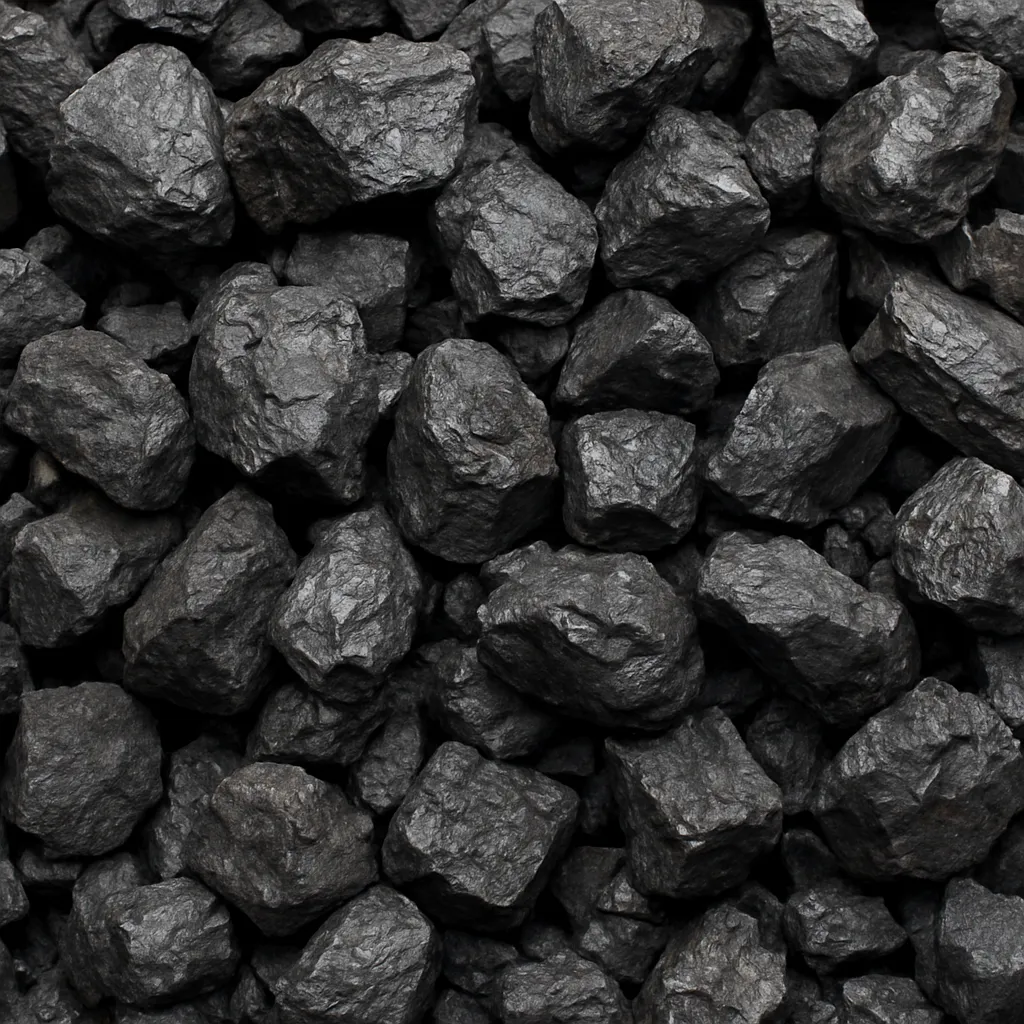
This article explores the technical, economic and geopolitical dimensions of what is commonly referred to as “lean coal” — lower-energy, lower-volatile types of coal often used for power generation rather than metallurgical processes. We will define the term, describe where lean coal is found and mined, present economic and statistical context, examine its industrial uses and environmental implications, and outline technological opportunities and future prospects.
Definition and properties of lean coal
The term lean coal is not a single formal geological classification but is widely used in industry to describe coal with relatively low fixed carbon, lower heating value and often higher moisture and ash content compared with higher-ranked coals. In practical terms lean coal typically corresponds to lignite and sub-bituminous ranks, though some low-volatile bituminous seams can also be locally described as “lean” because of limited calorific content.
Key physical and chemical characteristics that distinguish lean coal:
- Lower calorific value (heating value) per unit mass — typically much lower than bituminous or anthracite coal.
- Higher inherent moisture and volatile matter, which reduces combustion efficiency unless pretreated.
- Often higher ash content and variable sulfur content (some lean coals are low-sulfur, which is attractive for emissions compliance).
- Lower fixed carbon fraction, making lean coal generally unsuitable for coking or metallurgical purposes.
Because of these traits, lean coals are primarily used for electricity generation in thermal power plants, direct combustion in industrial boilers, and in some cases for conversion to gaseous or liquid fuels through gasification or coal-to-liquids processes (with additional processing and cost).
Where lean coal occurs and major mining regions
Lean coals are globally widespread. Their geological occurrence is tied to younger sedimentary basins where peatification was incomplete or where burial and thermal maturation did not advance to higher ranks. Important regions and mining provinces include the following.
North America
The U.S. Powder River Basin (PRB) in Wyoming and Montana is a hallmark example of large-scale production of sub-bituminous coal that is low in sulfur and relatively low in calorific value. PRB production runs into the hundreds of millions of tonnes per year and has been a backbone of U.S. thermal coal supply for decades. Other deposits of lignite occur in North Dakota and Texas, supporting nearby power plants.
Europe
Large lignite (brown coal) deposits occur across Central and Eastern Europe: Germany (Rhineland and Lusatia basins), Poland (Bełchatów and Konin basins), the Czech Republic and Greece. The Bełchatów open-pit mine in Poland is one of the world’s largest lignite operations and feeds a major lignite-fired power station. These resources often underpin national baseload electricity generation due to proximity to demand centers.
Asia and the Indo-Pacific
China has vast coal resources across different ranks; while much of China’s high production is bituminous, substantial volumes of sub-bituminous and lower-grade coals are mined close to demand centers. India mines both sub-bituminous and lignite deposits (Tamil Nadu lignite basins), used predominantly for power generation and captive plants. Indonesia and Australia export large volumes of thermal coal — much of it sub-bituminous — to regional markets; Indonesia’s coastal deposits supply many Asian coal-fired power stations.
Africa and the Commonwealth
South Africa produces both metallurgical and thermal coal; many of its thermal coals fall into the lower-rank thermal category for domestic power generation and export. Other African countries have lignite or low-rank deposits exploited on a smaller scale for local energy.
Other notable regions
Turkey, Kazakhstan, Ukraine and parts of South America host lower-rank coals used regionally. Globally, lean coal deposits are often sited where historical peatlands were buried and only partially coalified.
Mining, processing and handling
Lean coals are recovered both from open-pit and underground mines depending on seam depth and geology. Because they often occur in extensive, near-surface deposits, open-pit mining is common for lignite basins; sub-bituminous seams may be produced by both surface and underground methods.
Processing and handling challenges specific to lean coal include:
- High moisture leading to spoilage and transportation inefficiencies — drying, briquetting or pelletizing can improve calorific density.
- Fine coal and high ash fraction requiring beneficiation (washing, screening, dense media separation) to upgrade quality for sale or combustion.
- Self-heating and spontaneous combustion risks in stockpiles owing to high reactivity, requiring controlled stacking and monitoring.
- Need for continuous quality control when blending lean coal with higher-grade coals to meet boiler and emissions specifications.
Economic importance and industrial uses
Lean coal plays a substantial role in the global energy mix because it is often abundant, geographically widespread and economically accessible. Key economic aspects:
- Base-load electricity generation: Many countries rely on local lignite and sub-bituminous coal to provide stable, dispatchable power capacity at relatively low fuel cost.
- Energy security: Domestic lean coal reduces dependency on imports of gas or oil for electricity, which is strategically valuable for many countries.
- Employment and regional development: Mining and associated power generation support jobs, local supply chains and municipal revenues in mining regions.
- Commodity markets: Thermal coal markets are sensitive to shipping costs, freight rates and regional demand; lean coal that is low in sulfur can command premiums in markets with strict SOx controls.
Despite being lower grade, lean coals are often the lowest-cost fuel on a delivered basis when mines are located near power stations, minimizing transportation costs. In countries with extensive lignite deposits (Germany, Poland, Greece), lignite has historically provided some of the cheapest electricity generation inputs.
Statistical context and trends
Global coal remains a major primary energy source. Estimates from major energy agencies during the early 2020s place annual global coal production and consumption on the order of several billion tonnes per year. Production and demand are concentrated: China alone accounts for a very large share of global coal production and consumption, often cited as roughly half of both, followed by significant producing and consuming nations such as India, the United States, Australia, Indonesia, Russia and South Africa.
Regional shifts and notable statistical trends:
- In many advanced economies electricity sector transitions and environmental policies have reduced coal-fired power capacity, creating downward pressure on domestic coal demand.
- Conversely, in fast-growing emerging economies the need for affordable baseload power has sustained demand for thermal coal, including lower-rank coal that can be burnt in fluidized bed boilers or modern coal plants with emissions controls.
- Large-scale export flows — Australia and Indonesia are dominant exporters of thermal coal — influence regional prices and investment in lean-coal production.
- Proved global coal reserves are measured in the order of magnitudes that could sustain current consumption for multiple decades, but the pace of coal use is highly sensitive to policy and technological change.
Because data vary year by year and sources use different definitions, precise figures should be checked against current releases from agencies like the International Energy Agency (IEA), BP Statistical Review, U.S. Energy Information Administration (EIA) and national geological surveys.
Environmental impacts and regulation
Lean coal’s environmental profile is complex. On the one hand, some sub-bituminous coals are relatively low in sulfur, reducing SO2 emissions compared with high-sulfur bituminous coals. On the other hand, the lower calorific value and higher moisture of lean coal typically mean more fuel must be burned to generate the same energy output, raising carbon dioxide emissions per unit of useful energy and increasing particulate emissions unless adequately controlled.
Environmental considerations include:
- Greenhouse gas emissions: CO2 intensity per unit of electricity can be higher for lignite and wet sub-bituminous coals than for higher-rank coals.
- Local air pollution: particulates, NOx and SOx from combustion unless flue gas cleaning systems (electrostatic precipitators, fabric filters, SCR, FGD) are installed.
- Land disturbance and ecosystem impacts from open-pit mining; reclamation and progressive restoration are increasingly mandatory in many jurisdictions.
- Water usage and contamination risks in mining and washing operations.
Regulatory responses range from emissions performance standards and carbon pricing in some jurisdictions to coal phase-out schedules for older plants. At the same time, technologies such as improved combustion design, co-firing with biomass and carbon capture can mitigate emissions while allowing continued use of lean coal in certain contexts — albeit at an economic cost.
Technologies for upgrading and alternative uses
Several technical pathways exist to increase the value or reduce the environmental impact of lean coal:
- Drying and upgrading: Mechanical and thermal drying (including low-temperature drying and solvent-based methods) reduce moisture and increase calorific value, improving transport economics and combustion efficiency.
- Briquetting and densification: Compressing fines and low-grade coals into higher-density products reduces spontaneous combustion risk and improves heating value per transported tonne.
- Gasification and syngas: Integrated Gasification Combined Cycle (IGCC) and other gasification approaches can convert lean coal into syngas for power, chemical feedstocks or liquid fuels, and are more amenable to carbon capture at scale.
- Co-firing with biomass or blending with higher-rank coals to reduce net fossil carbon intensity and adjust combustion properties.
- Advanced combustion technologies: Circulating fluidized bed (CFB) boilers can burn low-grade, high-ash coals efficiently with in-duct desulfurization, expanding possible uses of lean coals while meeting emissions limits.
The economic viability of these options depends heavily on local fuel prices, proximity to markets, availability of emissions credits or carbon pricing, and capital costs for retrofits or new plants.
Market dynamics and geopolitical importance
Lean coal markets are shaped by transport economics and policy drivers. For domestic supply to nearby power plants, lignite basins often create low-cost base-load generation. For traded thermal coal, shipping costs and port logistics determine competitiveness; Indonesian and Australian exporters dominate many regional markets because of low freight costs to Asia.
Geopolitically, coal — including lean thermal coal — has implications for:
- Energy security: Countries with domestic lignite reserves can insulate themselves from global fuel market volatility.
- Trade balances: Exporters of thermal coal earn foreign exchange but also face exposure to demand shifts driven by climate policy and competition from gas and renewables.
- Investment flows: Financing for new coal projects has become more constrained in some markets due to lender and insurer divestment driven by climate commitments.
Interesting technical and historical notes
- Many large lignite mines and plants were developed in the mid-20th century to provide cheap electricity near industrial centers; retrofitting or closure of these assets poses economic and social challenges for affected regions.
- Some low-rank coals can be unexpectedly low in sulfur, which once made them attractive even in stringent air-quality regimes despite low calorific value.
- Innovations such as chemical drying and small modular gasifiers have been piloted to make lean coal more flexible and less carbon-intensive, but scale-up remains a hurdle.
Outlook and future perspectives
The future role of lean coal will be shaped by the intersection of economic competitiveness, climate policy, and technology. Several broad scenarios are plausible:
- In regions with abundant domestic lignite and limited immediate alternatives, lean coal will continue to supply baseload power for years, possibly with upgrades in emissions control and efficiency.
- In export-oriented markets and places with strong decarbonization policies, lean coal’s role is likely to diminish as gas, renewables and storage expand and as financial barriers to new coal projects increase.
- Technologies such as gasification with carbon capture could enable some continued use of coal feedstocks in a decarbonizing world, but the cost and energy penalties are significant and deployment is uncertain at scale.
Ultimately, the balance between energy affordability, industrial needs and climate commitments will determine the pace and scale at which lean coal is phased down, upgraded or integrated into cleaner energy systems.
Summary and key facts
Lean coal — encompassing lignite and many sub-bituminous deposits — remains a cornerstone of thermal power generation in many parts of the world due to its local abundance and low extraction cost in situ. Major producing regions such as the Powder River Basin in the United States, the Bełchatów lignite complex in Poland, and coastal thermal coal exporters in Indonesia and Australia illustrate the geographic diversity of lean coal supply. Economically, lean coal supports energy security, employment and affordable baseload electricity, while presenting environmental challenges that drive innovation in combustion, upgrading and emissions control. The future of lean coal will be determined by the relative costs of cleaner alternatives, technological advances in emissions abatement, and evolving policy frameworks aimed at reducing carbon emissions.