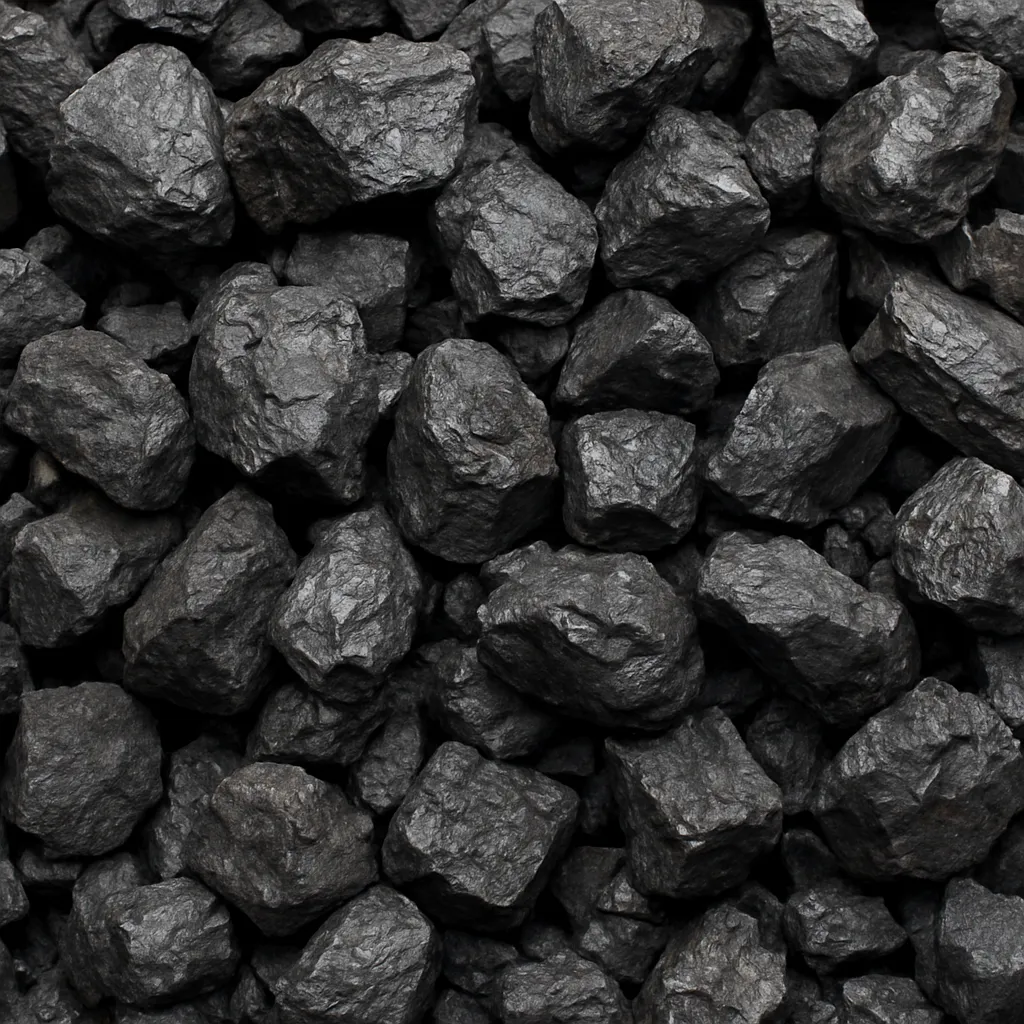
Fat coal — a traditional term used in many coal-producing countries — denotes a high-quality type of coal valued for its energy content and physical behavior during heating. Often associated with coking and the production of coke, fat coal has played a central role in metallurgy, power generation and regional economies for more than a century. This article explores what fat coal is, where it is found and mined, the economics and statistics surrounding its trade and production, its industrial applications, and the environmental and technological issues shaping its future.
Definition, classification and physical properties
The term “fat coal” is used variably by geologists and coal technologists. In many Central and Eastern European traditions (for example Polish: “węgiel tłusty”), fat coal refers to a type of bituminous coal with relatively high calorific value, moderate-to-low moisture, and a tendency to cake or form coherent masses when heated. In industry parlance, fat coal often overlaps with “caking coal” or the portions of bituminous coal that can produce a strong, porous coke when baked in coke ovens — a material essential for traditional blast-furnace steelmaking.
Key measurable properties of fat/caking coal include:
- Calorific value (gross and net) — usually high compared with sub-bituminous and lignite coals.
- Fixed carbon and volatile matter — fat coal typically combines significant fixed carbon with a volatile fraction that supports plastification during heating.
- Ash content, moisture and sulfur content — vary by deposit; low ash and low sulfur are preferable for metallurgical uses.
- Caking indices — laboratory measures such as the Free Swelling Index (FSI) and Gieseler plastometer indicate a coal’s ability to form coke.
From a petrographic standpoint, fat coals often contain significant macerals (vitrinite, inertinite) arranged in ways that promote the development of a coherent coke structure at elevated temperatures. This property distinguishes them from non-caking “lean” coals used primarily for thermal combustion.
Where fat coal occurs and where it is mined
Geological setting and major basins
Fat coals are found where organic-rich sediments have been buried and metamorphosed to the appropriate rank (mainly bituminous). Major coal-bearing basins that produce fat/caking coals include:
- Kuznetsk Basin (Kuzbass), Russia — one of the world’s largest reserves of high-quality bituminous coal, including coking grades.
- Bowen and Surat Basins, Australia — Australia is a global leader in metallurgical (coking) coal production and export.
- Appalachian Basin and parts of the Illinois Basin, United States — historically important sources of bituminous and coking coals.
- Shanxi, Shaanxi and Inner Mongolia, China — major domestic producers, with a mix of coking and thermal coals.
- Highveld and Waterberg, South Africa — producing both thermal and coking grades for domestic industry.
- Upper Silesian Coal Basin, Poland and Ostrava-Karviná Basin, Czech Republic — important European sources of bituminous coals including fat types.
Leading producing and exporting countries (overview)
In the early 2020s, global coal production remained concentrated among a handful of countries. While much of the world’s output is thermal coal, significant volumes of bituminous and metallurgical coals — the categories most likely to include fat/caking coals — are produced in:
- China — the largest producer and consumer of coal. China also imports coking coal to feed its steel industry.
- Australia — the leading exporter of coking coal, with major export terminals serving Asia.
- Russia — substantial reserves and production of coking-grade coals, important for both domestic industry and export.
- United States — produces high-quality coking coal in Appalachia and the Interior basins, some of which is exported.
- Colombia, Canada, South Africa — notable exporters and regional suppliers of metallurgical and thermal coals.
Production patterns vary by country: some, like Australia and Russia, export large proportions of their coking coal; others, like China and Poland, consume most of their production domestically to support integrated steelmaking and power systems.
Economic and statistical perspective
Global production, trade and market dynamics
Global coal production in the early-to-mid 2020s was measured in the range of several billion tonnes annually for hard coal (bituminous plus anthracite) and additional billions for lower-rank coals. The seaborne trade in coal — that is, the coal shipped internationally by sea — is a subset of production where coking coal plays an outsized role because of long-distance flows from high-export countries (for example, Australia and Russia) to importers (notably China, Japan, South Korea and some European nations).
Roughly speaking, metallurgical coal (the category that includes most coking and fat coals used in steelmaking) represents around 10–15% of global seaborne coal trade by volume but a substantially higher share of the market value because metallurgical coal commands higher prices than thermal coal. Price volatility for coking coal can be pronounced: tight supply, logistics disruptions or surges in steel demand quickly push prices upward, while gradual decarbonization policies and recycling can reduce demand prospects.
National and regional statistics (selected examples)
- Australia — dominates coking coal exports; several mines in Queensland and New South Wales supply high-quality fat/coking coals to Asia and beyond. Exports are measured in tens to hundreds of millions of tonnes annually for metallurgical coal segments.
- China — large domestic production and high steel output make China the world’s largest consumer of metallurgical coal; it is also a major importer of specific coking coal grades to blend with domestic coals.
- Russia — significant production and a key supplier to European and Asian steelmakers; infrastructure constraints and geopolitical developments can affect export flows.
- United States — production of coking coal is concentrated in regions like Appalachia; U.S. exports are smaller than Australia’s but important for certain premium markets.
Because data are updated annually by sources such as the International Energy Agency (IEA), the International Energy Forum (IEF), national geological surveys and trade associations, absolute numbers will vary year to year. When discussing investments, policy or trade, industry stakeholders use up-to-date datasets to make planning decisions.
Industrial uses and processing
Steel production and coke making
The single most important industrial use of fat/caking coal is in the production of coke, which in turn is a key reductant and heat source in the traditional blast-furnace route to steel. The process chain involves:
- Coal preparation and blending — coal is washed to reduce ash and impurities and then blended to achieve target caking characteristics.
- Coke oven operation — the blend is heated in coke ovens under controlled conditions to produce coke and coke oven gas.
- Coke use — the resulting coke provides reactive carbon and structural permeability in blast furnaces, enabling chemical reduction of iron oxides and efficient heat transfer.
Quality metrics such as Coke Strength after Reaction (CSR) and Coke Reactivity Index (CRI) are critical for steelmakers selecting coals and coke for blast furnaces.
Other industrial applications
- Chemical feedstocks — coke oven by-products yield tar, benzene, toluene and other chemicals used in a variety of industries.
- Coal gasification — high-quality coals can be gasified to produce synthesis gas (CO + H2) for chemicals or fuels.
- Coal-to-liquids (CTL) — in some countries, high-grade coals have been converted to liquid fuels via Fischer-Tropsch processes (capital- and energy-intensive).
- Domestic and industrial fuel — in some regions, fat coals are used for heating and electricity generation where regulatory regimes and economics allow.
Processing, quality control and testing
Because fat coals may be used in high-value metallurgical applications, rigorous testing and processing are routine:
- Coal washing and beneficiation to remove mineral matter and reduce ash.
- Caking and swelling tests (e.g., FSI) and rheological tests (Gieseler plastometer) to evaluate behavior during carbonization.
- Proximate and ultimate analyses (moisture, ash, volatile matter, fixed carbon, sulfur and calorific value).
- Microscopic petrographic analysis to characterize macerals and coal rank.
Environmental, social and health aspects
While fat coal is economically valuable, its extraction, processing and use raise environmental and social concerns that mirror those associated with coal generally, with some specifics:
- Greenhouse gas emissions — burning coal and conventional coke-based steelmaking are carbon-intensive. The steel sector accounts for around a quarter of industrial CO2 emissions globally, much of it linked to coke and blast-furnace operations.
- Local pollutants — coal dust, particulate emissions from combustion and by-products from coke ovens (including polycyclic aromatic hydrocarbons) affect air quality and health near mines and plants.
- Methane — coal mining can release methane, a potent greenhouse gas; many modern operations capture methane for power or flare it to reduce climate impacts.
- Water and land impacts — mining and coal-washing generate wastewater and require tailings management; post-mining land reclamation is an important regulatory and social obligation.
- Occupational and community health — historically, diseases such as pneumoconiosis (black lung) have afflicted miners; modern controls have reduced but not eliminated such risks.
Technological responses and alternatives
To reconcile the industrial value of fat/coking coal with climate targets and local environmental needs, several technological and policy pathways are under development and deployment:
- Steel decarbonization — substitution of blast-furnace/coke routes by electric-arc furnaces (EAFs) fed by scrap, direct reduced iron (DRI) using hydrogen or natural gas, and carbon capture and storage (CCS) applied to blast-furnace gas streams.
- Coke process improvements — more efficient coke ovens and by-product recovery can reduce emissions per tonne of steel produced.
- Coal gasification with CO2 capture — converting coal into syngas for chemicals or fuels with capture of CO2 can reduce lifecycle emissions in certain configurations.
- Mine methane recovery and use — capturing coalbed methane for energy reduces both fugitive emissions and enhances energy efficiency.
Economic trends and strategic importance
Fat coal remains strategically important because metallurgical-grade coal cannot be completely replaced in all applications today — particularly in integrated steelworks that rely on coke for both chemical and structural functions in blast furnaces. That strategic role drives investment, international trade flows and policy debates:
- Price sensitivity — coking coal prices are sensitive to freight, mine closures, changes in steel demand and inventory levels at key consuming countries.
- Security of supply — steelmakers diversify suppliers and invest in long-term contracts because interruptions to coking coal supply can disrupt steel production.
- Regional transitions — in Europe and parts of North America, declining domestic coal production has increased dependency on imports or stimulated shifts to alternative steelmaking routes.
Interesting historical and technical notes
Some additional points of interest about fat coal and its role in human history and technology:
- The Industrial Revolution was propelled by coal, with certain fat and bituminous coals prized for metalworking and iron production centuries ago.
- Coke technology — the ability to convert coal to coke with predictable strength was a major 18th–19th century innovation enabling large-scale iron and steel production.
- By-products from coke ovens historically powered chemical industries that supplied dyes, solvents and later petrochemical feedstocks before oil and gas became dominant.
- Modern testing equipment (e.g., Gieseler plastometer, Thermogravimetric Analysis) allows precise prediction of coal behavior in industrial processes, reducing risks in blending and coke-making.
Outlook and concluding observations
Fat/caking coal occupies a complex niche in a changing global energy and industrial landscape. On one hand, it underpins a still-critical segment of the global steel industry and supports regional economies and employment in mining areas. On the other hand, strong climate policies, advances in alternative steelmaking technologies and concerns about local pollution create pressure to reduce dependence on coke-based processes.
In the coming decades, demand for fat coal will be shaped by:
- Speed and scale of steel-sector decarbonization (EAFs, hydrogen-based DRI, CCS on blast furnaces).
- Technological advances that permit substitution or reduction of coke use without compromising steel quality.
- Market dynamics — supply disruptions, mine closures, and investments in new capacity will continue to affect prices and trade.
- Policy and regulatory environments — carbon pricing, emissions regulations and incentives for low-carbon steel will determine investment flows.
For countries and companies that rely on fat coal, managing the transition will require a combination of improved environmental performance at mines and plants, strategic investments in alternative steelmaking technologies, and careful planning to protect regional economies and workforce livelihoods during structural change.