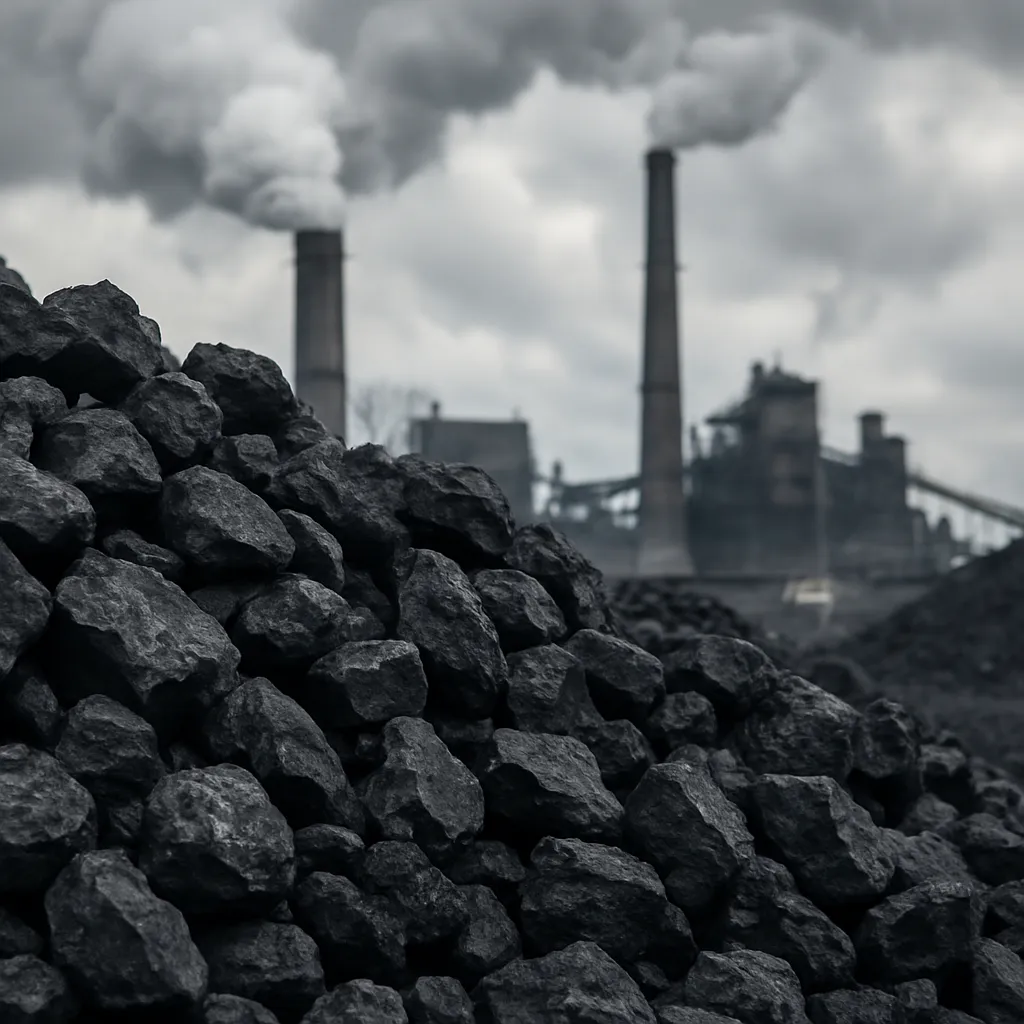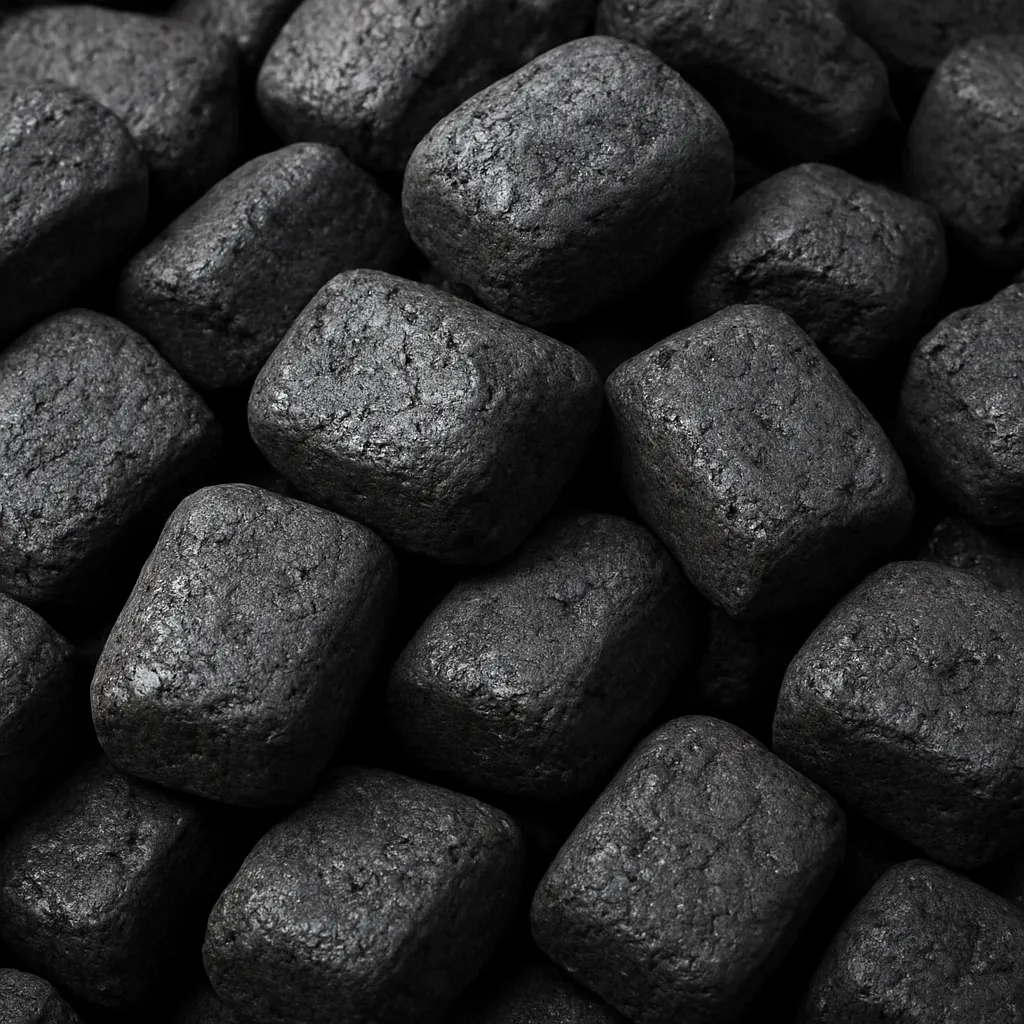
High-density coal briquettes are a manufactured fuel product created by compressing fine coal, usually of higher-rank varieties, into compact, uniform blocks with enhanced mechanical strength and energy density. These products play an important role in domestic heating in some regions, in industrial heating applications, and as a specialty feedstock for certain metallurgical and chemical processes. This article examines the geological and raw-material basis for high-density briquettes, where the feedstock coal is sourced and mined, manufacturing and technical properties, economic and statistical context, environmental and industrial significance, and likely future directions for this class of fuels.
Geological source materials and mining regions
High-density briquettes are not a naturally occurring coal type; they are a manufactured product derived from various ranks of mined coal. The choice of feedstock strongly influences the briquette’s properties. Key raw-material types used to produce high-density briquettes include anthracite, high-rank bituminous coals, and occasionally refined carbon by-products or coal fines from processing plants. These coals are valued because of their relatively low volatile matter, higher fixed carbon content and favorable combustion characteristics.
Major coal-producing regions that supply feedstock for briquetting are broadly the same as the world’s largest coal basins. The most significant countries and regions include:
- China – the single largest producer and consumer of coal, with large reserves of bituminous coal and some anthracite in northern provinces.
- Russia – major deposits of high-rank coals and anthracite, supplying both domestic and export markets in Europe and Asia.
- United States – large bituminous and sub-bituminous resources, with pockets of higher-rank coals used in metallurgical applications.
- Australia – predominantly metallurgical and thermal coals for export; some high-quality coals suitable for densification.
- Indonesia – chiefly thermal coals, but important as a global supplier of coal fines and washed products used in briquette manufacture and blending.
- South Africa – significant bituminous coal resources; fines and wastes from mining and processing are often used for briquetting.
- Poland, Ukraine, Kazakhstan and other Central and Eastern European and Central Asian producers – sources of bituminous and semi-anthracite coals historically used for household briquettes and industrial briquetting plants.
While large-volume briquetting plants are typically located near coal-processing centers where fines and slimes are generated, specialized producers also import higher-grade coals to manufacture premium high-density briquettes for export.
Manufacturing processes and technical characteristics
High-density briquettes are produced by compacting coal dust, fines or pulverized higher-rank coal under high pressure, often with applied heat and with or without binders. The production route determines mechanical strength, density, moisture content and combustion behavior. Typical production steps include:
- Preparation: drying and grinding to achieve a consistent particle size distribution.
- Blending: combining coals of different ranks, adding binders or additives (e.g., pitch, starch, molasses, or specialized organic binders) and sometimes inorganic materials to modify combustion.
- Forming: compressive molding, extrusion or piston-press processes create the desired shape and density. High-pressure piston and roller presses produce the densest blocks.
- Thermal treatment (optional): carbonization or low-temperature drying and curing to improve durability and reduce moisture and volatile content.
- Quality control and packaging: testing for calorific value, ash content, mechanical strength and emissions characteristics before packaging and distribution.
High-density briquettes typically aim for:
- High volumetric energy density (lower storage and transport cost per unit energy).
- Low moisture and controlled ash content.
- Mechanical robustness for handling and transport.
- Predictable combustion characteristics: steady burn rate, stable flame and reduced emissions of dust during handling.
Typical physical densities can range from 1.0 to >1.3 g/cm3 depending on raw materials and pressing conditions, and calorific values often fall between 24 and 32 MJ/kg for coal-based briquettes made from bituminous or anthracite feedstocks.
Economic significance, markets and applications
High-density coal briquettes serve several economic niches:
Domestic and residential heating
In parts of Eastern Europe, China and some Asian markets, coal briquettes historically provided a convenient and relatively clean-burning household fuel compared with loose lump coal. Briquettes offer uniform size and controlled combustion, simplifying stove design and user operation. However, as natural gas, electricity and cleaner fuels have spread, residential demand for coal briquettes has declined in many regions, while remaining stable in areas with limited energy alternatives.
Industrial heating and process uses
Industrial applications include small and medium furnaces, kilns, and boilers where steady, high-density fuel is needed. The uniformity and high energy density of briquettes can improve combustion control, lower volumetric transport costs, and reduce fuel handling loss. Specific industrial segments include ceramics, brick and lime kilns, and small industrial boilers.
Metallurgical and chemical industries
High-quality, high-density briquettes based on low-volatile, high-carbon feedstocks can be tailored for metallurgical uses as a partial substitute for coke in certain processes, or as a carbon reductant in ferroalloy, foundry, and some smelting contexts. In these applications, briquettes are engineered for low reactivity, high fixed carbon, and predictable volatile release.
Logistics and export
Because briquettes are denser and cleaner to handle than loose fines, they can be an attractive form for exporting low-value coal fines that otherwise have limited marketability. Briquetting can turn a waste stream into a sellable commodity, improving mine economics and reducing disposal costs.
Production volumes and statistical context
Providing precise global statistics for high-density coal briquettes is difficult because briquettes represent a fraction of total coal production and are produced both by dedicated briquette manufacturers and by integrated coal processors. Nevertheless, several quantitative observations frame their place in global energy flows:
- Global coal production in recent years has been on the order of roughly 7.5–8.0 billion tonnes per year for hard coal (bituminous and anthracite) and an additional several hundred million tonnes for lignite. The majority is used directly for power generation and industrial heat.
- Briquette production is a small subset of total coal production: in many advanced markets, domestic briquette output is measured in hundreds of thousands to a few million tonnes annually per country, while in some regions with large residential consumption it can reach several million tonnes per year regionally.
- China is both the largest coal producer and the largest internal market for solid fuels; historically, household briquettes and coal cakes were a major fuel format. Although centralized urbanization and fuel switching have reduced household briquette volumes, sizable industrial briquette production and specialized high-density briquettes remain.
- In Europe, briquette production has fallen in many countries with the decline of domestic coal use, but specialized briquette plants still produce value-added products for niche industrial markets and for export to regions where handling and combustion characteristics are prized.
Estimated market values for the broader solid-biofuel and briquette sector (including biomass and charcoal briquettes) run into the low billions of US dollars annually at a global scale. The pure coal briquette segment is a smaller portion of that total and tends to be highly regionalized. Where accurate national statistics are published, they are often aggregated under “solid fuel” or “coal product” categories rather than a separate line for high-density briquettes.
Industrial importance and strategic roles
High-density coal briquettes have strategic importance in several contexts:
- Energy security: In regions with abundant domestic coal but limited pipeline gas or LPG infrastructure, briquettes provide a storable, transportable energy source that can be stockpiled for seasonal heating or emergency use.
- Value recovery: Briquetting converts low-value coal fines and slurries into a marketable product, improving mine profitability and reducing waste disposal burdens.
- Process predictability: Uniform fuel composition and size improve combustion control in industrial processes, which can enhance product quality and energy efficiency.
- Trade flexibility: Densified briquettes lower shipping costs per unit of energy compared to loose fines and reduce dust and handling losses during export.
In some metallurgical contexts, briquettes are engineered as part of the raw material chain to meet strict specifications of chemical composition and mechanical strength, enabling their integration into sintering, reduction and molding processes.
Environmental performance and regulatory context
Environmental considerations for high-density coal briquettes depend on feedstock quality, manufacturing processes and end-use combustion controls. Key points include:
- Combustion emissions: Because briquettes can be made from higher-rank coals with lower volatile matter, they often burn cleaner than raw, low-grade crushed coal. However, they still release CO2, NOx and particulate matter during combustion unless used in controlled, modern combustion systems with appropriate emission controls.
- Particulate and handling improvements: The compact form reduces dust generation during transport and storage compared to loose fines, lowering occupational exposure and fugitive dust emissions.
- Waste reduction: Briquetting diverts mine waste and tailings from disposal, reducing the environmental footprint of mining sites and sometimes enabling remediation of waste stockpiles.
- Regulatory pressure: In many countries, tightening air-quality standards, incentives for low-carbon fuels and policies to phase out coal in power generation reduce the long-term markets for coal briquettes, particularly in residential applications. At the same time, specialized industrial uses may be exempt or subject to different timelines.
Technological advances are addressing environmental downsides. Examples include co-briquetting coal with biomass or waste-derived binders to reduce net fossil carbon intensity, torrefaction of biomass for hybrid coal-biomass briquettes, and post-combustion controls in industrial users to minimize particulate and NOx emissions.
Logistics, storage and handling considerations
High-density briquettes are valued for improved logistics: their compactness reduces volumetric transport costs, and their mechanical strength facilitates automated handling. Storage considerations include:
- Protection from moisture to prevent quality degradation.
- Adequate fire safety measures; densified carbonaceous products can self-heat in large stockpiles under certain circumstances and require monitoring.
- Palletization and packaging standards for international trade.
Industrial end-users often design feed systems specifically for briquette geometries (round, pillow, rectangular) to ensure steady feeding and minimized breakage.
Regional cases and market examples
Several regional markets exemplify how high-density briquettes are positioned:
China
China’s long history of household briquettes has evolved into a mix of industrial briquetting and specialized high-density products for specific industries. Urban household briquette use has declined sharply with coal-to-gas and coal-to-electricity transitions, but rural and industrial niches remain.
Poland and Central Europe
In parts of Central and Eastern Europe, briquettes derived from higher-rank domestic coals were once a common household fuel. Declining coal consumption and regulatory pressures have reduced domestic demand, but export-oriented plants still produce high-quality briquettes for markets where coal remains competitive.
South and Southeast Asia
Where grid reliability or gas distribution is limited, briquettes remain an economically attractive option for small-scale industrial users and some residential consumers. The ability to use local coal fines reduces dependence on imported fuels.
Future trends, innovation and challenges
Several trends will shape the future of high-density coal briquettes:
- Decarbonization pressure: Global efforts to reduce CO2 emissions challenge the long-term role of any coal-based fuel. As a result, the market for coal briquettes is likely to shrink in jurisdictions with aggressive coal phase-out policies.
- Co-briquetting and hybrid fuels: Combining coal with biomass or waste carbon sources and developing binders that reduce life-cycle emissions can extend the viability of densified fuels in transitional markets.
- Cleaner combustion technologies: Integration of briquettes with modern burners, gasification modules or combined heat-and-power systems can reduce local pollution and improve efficiency, preserving niches for coal-derived densified fuels.
- Waste beneficiation: The economic incentive to turn processing fines and tailings into a saleable product remains a strong driver of briquetting technology, particularly where disposal costs are high or environmental regulations are strict.
- Specialty metallurgical demand: High-performance briquettes tailored for steel, foundry and chemical applications may sustain a premium market even as general energy use declines.
Conclusion
High-density coal briquettes occupy a specialized but important place within the global coal value chain. They provide logistical advantages, enable value recovery from waste streams, and offer controlled combustion characteristics that are useful in residential and industrial contexts. However, their long-term role is constrained by climate policy, air-quality regulation and the global shift toward lower-carbon energy sources. Innovation — including the integration of biomass, improved binders, and coupling with cleaner combustion technologies — can preserve niche markets and improve environmental performance. For regions with abundant coal resources and limited alternatives, high-density briquettes remain a pragmatic solution to specific energy and industrial needs while the broader energy transition continues.