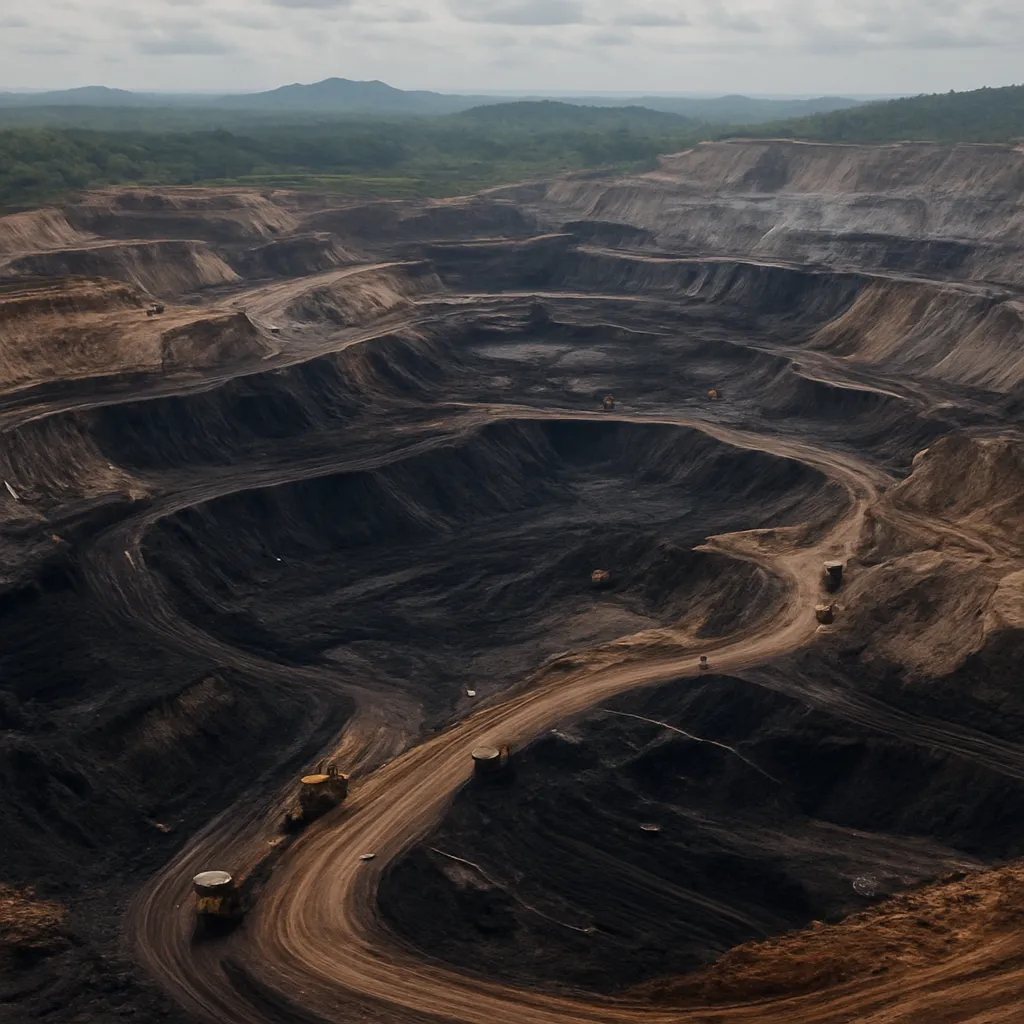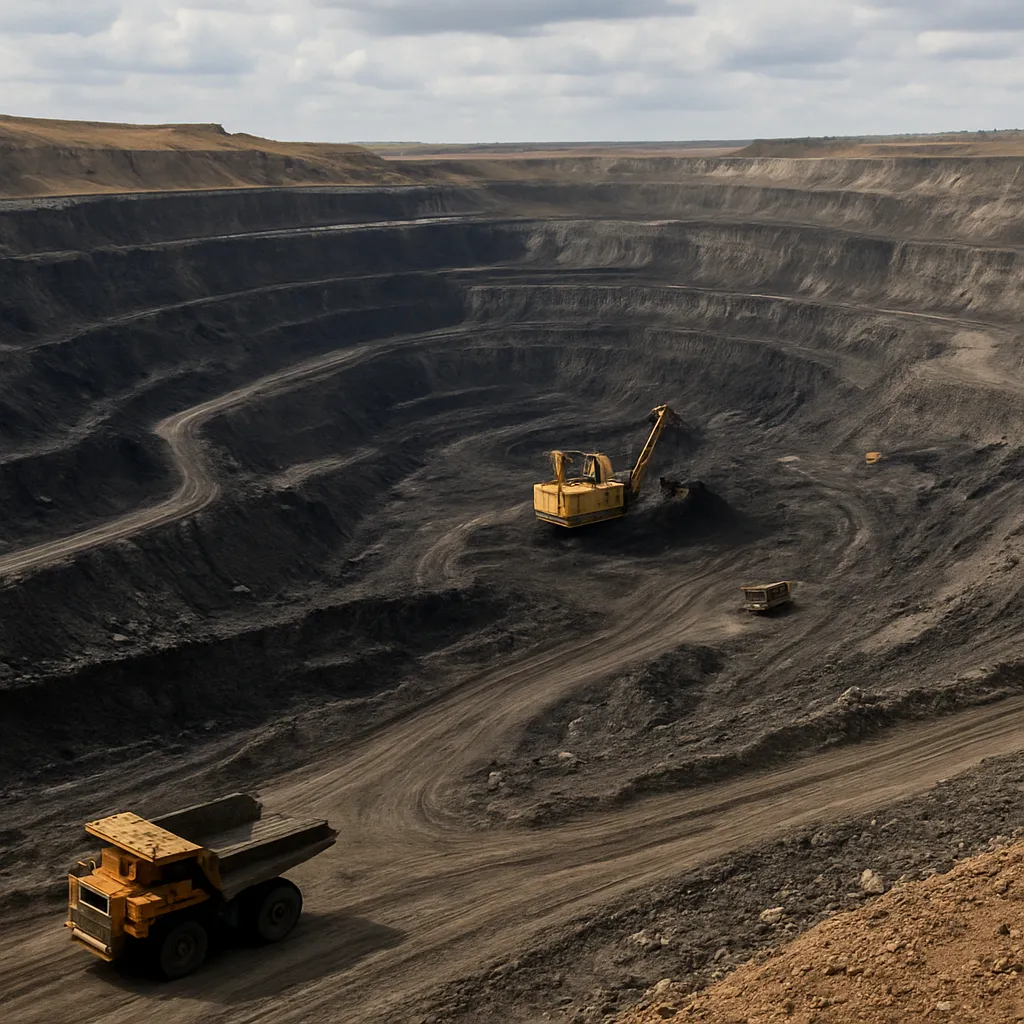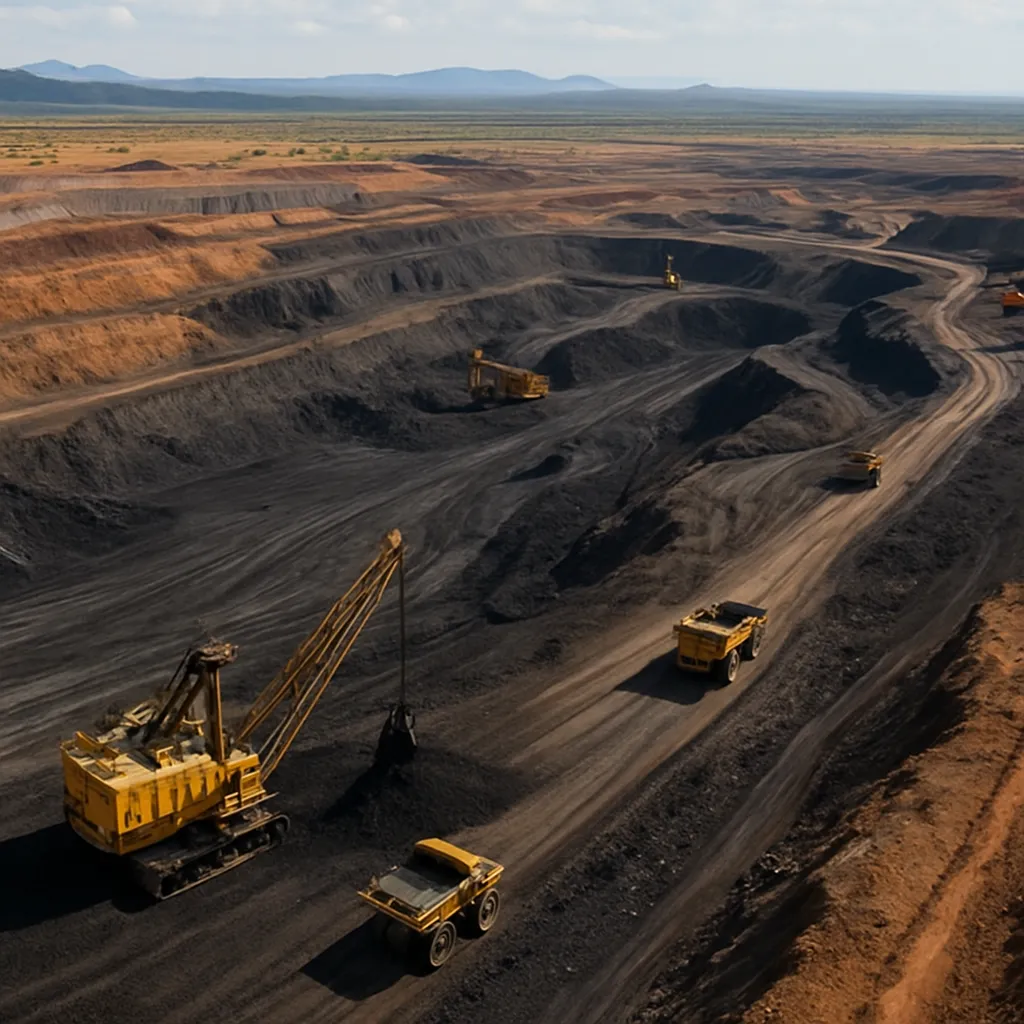
The Waterberg Coalfield in northern Limpopo, South Africa, is one of the country’s most important and talked-about coal provinces. It combines enormous geological resources with active large-scale mining and major national energy projects. This article examines the location and geology of the field, the principal mining operations and the types of coal produced, plus the economic, industrial and environmental dimensions that shape the future of the region. Detailed data and context are provided where available, and the article highlights why Waterberg matters for South Africa’s energy security, regional development and the global conversation on coal and decarbonization.
Location, geology and resource overview
The Waterberg Coalfield lies in the northern part of South Africa’s Limpopo Province, around the town of Lephalale (formerly Ellisras), stretching into surrounding municipalities. Geographically it is situated within the greater Karoo Basin geological province and contains extensive coal-bearing strata that were deposited in Permian coal-forming environments. These coal measures are generally associated with the Vryheid Formation and equivalent sequences of the Karoo Supergroup; they occur in relatively contiguous deposits over a large, low-gradient landscape.
The Waterberg area is notable not just for the size of its coal occurrences but for the scale of undeveloped resources. Estimates vary between sources and depend on classification (measured, indicated, inferred), yet common assessments describe Waterberg as one of South Africa’s largest remaining coal resource provinces. Analysts and industry publications often cite figures in the tens of billions of tonnes for total identified resources, with a substantial portion remaining unmined. That makes Waterberg strategically important for future domestic power supply and potential export markets, even though much of the resource is lower grade than some older coalfields in Mpumalanga (e.g., Witbank).
From a geological standpoint, coal in Waterberg is generally formed in broad seams and multiple horizons, allowing for large open-pit mining operations where conditions permit. Overburden thickness, groundwater interactions and seam continuity vary across the basin, influencing recovery methods and costs. The coal is typically part of a continental sedimentary succession, with interbedded sandstones, shales and occasional conglomerates, and the depositional setting means seams are laterally extensive but sometimes of variable quality.
Mines, operators and infrastructure
The most notable operation in the Waterberg region is the open-pit Grootegeluk mine, operated by Exxaro. Grootegeluk is the anchor mine of the basin and one of South Africa’s largest single-sited coal producers. It is integrated into regional supply chains: the mine supplies coal to the nearby Medupi power station (an Eskom project), local industrial clients and select export off-takers. Production at Grootegeluk historically has been in the tens of millions of tonnes per annum—large by South African standards—and the site includes both conventional thermal coal production and beneficiation facilities to produce coal of different quality grades.
Beyond Grootegeluk, dozens of exploration titles, development proposals and smaller mining ventures have been active in the Waterberg over recent decades. Some projects have advanced to construction while others remain at exploration, permitting or legal-review stages. The region has attracted interest from major local mining houses and smaller junior explorers alike due to the size of the resource base.
Infrastructure is a key enabler: the area has been linked to South Africa’s rail and road network to move coal to Eskom power stations and export terminals such as the Richards Bay Coal Terminal. The proximity of large users (like the Medupi power station) reduces haul distances for a significant fraction of production, though logistical constraints (rail capacity, loading facilities and port access) remain important considerations for any expansion or export strategy.
Coal types, qualities and uses
Coal from Waterberg is predominantly used as thermal coal for electricity generation. The rank varies locally, but the coal is commonly classified as sub-bituminous to high-volatile bituminous in different seams and layers. Relative to some older high-grade South African coals (e.g., some Witbank coals), Waterberg coal often has:
- Lower calorific value (higher moisture content).
- Generally low sulfur content, which can be advantageous for emissions control.
- Variably low to moderate ash content depending on seam and beneficiation.
Because of the lower calorific value, Waterberg coal is especially suited for modern large pulverized coal-fired units designed to handle such coals; this is one reason the nearby Medupi power station was tied into the basin’s supply chain. The coal is used almost entirely for thermal power, with only limited quantities appropriate for metallurgical purposes (coking) after beneficiation. Some production is allocated to the export market where lower energy content coals are blended or shipped to buyers with appropriate requirements.
Economic importance and statistics
Waterberg’s economic relevance stems from several interacting roles. First, it contributes to national energy security by supplying fuel to base-load power stations. Medupi, commissioned in stages from the early 2010s and sized at approximately 4,800 MW (completed as a multi-unit coal-fired complex), depends heavily on proximate coal deliveries to ensure reliable operation. Second, mining in Waterberg supports regional development: it creates direct employment in mines and indirect jobs in services, transport, equipment supply and local commerce, and it generates royalties and taxes to local and national government.
Quantitatively, figures differ by operator and over time. Grootegeluk’s annual output has been reported in the order of tens of millions of tonnes per year—commonly cited production ranges for the mine are approximately 20–35 million tonnes per annum in different years depending on market demand and operational plans. For the basin as a whole, when considering all licensed and potential mines, identified resources are often described in the low tens of billions of tonnes category; some estimations that include inferred resources put the figure higher. Employment associated with large-scale operations is substantial: major mines can directly employ several thousand workers, with multiplier effects creating several thousand additional indirect jobs in construction, logistics and local services.
Revenue and fiscal impacts arise from coal sales (domestic and export), royalty payments and corporate taxes. Coal supplied to state-owned power utilities effectively underpins the functioning of the electricity grid and thereby the broader economy—an economic value that is hard to capture purely in mine-gate sales numbers. Conversely, volatility in coal prices, rising operational costs and global decarbonization trends influence investment decisions and expected returns for both producers and host communities.
Social, environmental and governance dimensions
The Waterberg Coalfield’s development has raised significant social and environmental questions. Coal mining, especially open-pit operations, affects land use patterns, biodiversity, water resources and air quality. The Lephalale district is semi-arid and water resources are sensitive; large-scale mining plus water-demanding thermal power stations pose persistent concerns for water allocation and sustainability. Dust control and particulate emissions, rehabilitation of mined land, and protection of ecological corridors are central to environmental management plans required by regulators and scrutinized by civil society.
Community impacts are multifaceted. On the positive side, mines and related projects have brought employment opportunities, infrastructure investment (roads, clinics, housing) and local economic stimulus. On the negative side, there are issues of displacement, unequal benefit distribution, health concerns and long-term dependence on a carbon-intensive industry. South African environmental and mining law requires environmental impact assessments (EIAs), social and labour plans, and rehabilitation commitments; however, implementation and enforcement have been the subject of ongoing debate and litigation in some cases.
Another dimension is the global climate policy context. Coal-fired power generation is under increasing pressure from emissions reduction commitments and international finance restrictions. This external pressure affects the long-term value of coal reserves and influences the cost of capital for new projects in Waterberg. South Africa’s own Just Energy Transition discussions emphasize the need to balance worker livelihoods and regional development with national commitments to reduce greenhouse gas emissions.
Industrial integration and logistics
Waterberg’s coal is both a local fuel and, to a lesser extent, an export commodity. The most important industrial link is supply to Medupi power station and other Eskom facilities, which reduces transport distances and helps stabilize coal logistics for critical national infrastructure. For exports, coal from Waterberg can be railed to the industrial ports on the eastern seaboard—principally the Richards Bay Coal Terminal—assuming rail capacity and terminal allocations are available. Rail network upgrades and private-public coordination are therefore vital for unlocking export potential beyond domestic commitments.
Beyond rail, beneficiation and washing plants in the region or downstream allow producers to adjust product specifications for particular markets. Advances in dry beneficiation and coal handling technologies have been used to improve product quality and reduce water consumption in some operations, given local hydrological constraints. Local beneficiation also captures additional value in the region rather than exporting raw product alone.
Challenges, risks and future prospects
Several factors shape the outlook for Waterberg coal mining:
- Market risk: Global demand for thermal coal is influenced by China, India, and other Asian markets, and by the pace of coal-to-gas or renewables switches. Price volatility affects project economics and expansion decisions.
- Policy and finance: International financiers and insurers are increasingly cautious about coal projects, which raises the cost of capital for new mines, while domestic policy on carbon pricing or emissions restriction will influence profitability.
- Infrastructure constraints: Rail capacity, port allocations and local logistics can be bottlenecks; resolving these requires public-private planning and investment.
- Environmental and social license: Community acceptance, successful rehabilitation, water management and biodiversity protections are necessary to sustain operations and avoid costly legal or reputational problems.
Nevertheless, the Waterberg continues to attract interest because of its large resource base and its proximity to major power projects. Policy choices—such as how South Africa sequences its energy transition, supports worker retraining, and invests in lower-emission technologies (e.g., carbon capture and storage where technically and economically feasible)—will determine whether the basin’s coal is exploited aggressively over decades or whether development is more measured and time-limited as the economy shifts toward lower-carbon sources.
Interesting facts and regional context
– The Waterberg basin is often described as one of the last major frontier coal provinces in South Africa because of its combination of size and relative underdevelopment compared with older coalfields in Mpumalanga.
– The close geographic relationship between the basin and Medupi power station is unusual by modern standards—large basins often feed distant stations, but in Waterberg fuel supply happens across short distances, reducing some transport costs.
– Technological and operational innovations in beneficiation, water recycling and dust suppression have been key to improving the sustainability profile of operations in semi-arid Waterberg conditions.
– The region’s development has spurred broader investment in Lephalale and adjacent municipalities: housing, roads, health facilities and education projects have been partially funded or catalyzed by mining and power sector investment.
– Waterberg demonstrates the tensions in many resource-rich regions: the same endowment that promises jobs and revenue also requires robust governance to ensure equitable benefit-sharing and environmental protection.
Conclusions
The Waterberg Coalfield is a pivotal component of South Africa’s energy and mining landscape. With very large identified resources, a major operating mine in Grootegeluk and direct supply links to large generation capacity at Medupi, the basin underpins important aspects of national electricity provision and regional economic activity. At the same time, the basin faces real challenges: environmental constraints, water scarcity, social impacts, infrastructure bottlenecks and the shifting economics of coal under global decarbonization pressures. The future of Waterberg will therefore be shaped not only by geology and market demand but by policy choices, community engagement, environmental stewardship and the pace at which South Africa transitions its energy system.
Key terms highlighted
For emphasis, the article has highlighted around ten central terms relevant to the region: Waterberg, Limpopo, Grootegeluk, Medupi, Eskom, coal, thermal, reserves, mining and scale. These words underscore the geographic, industrial and economic facets of the basin.