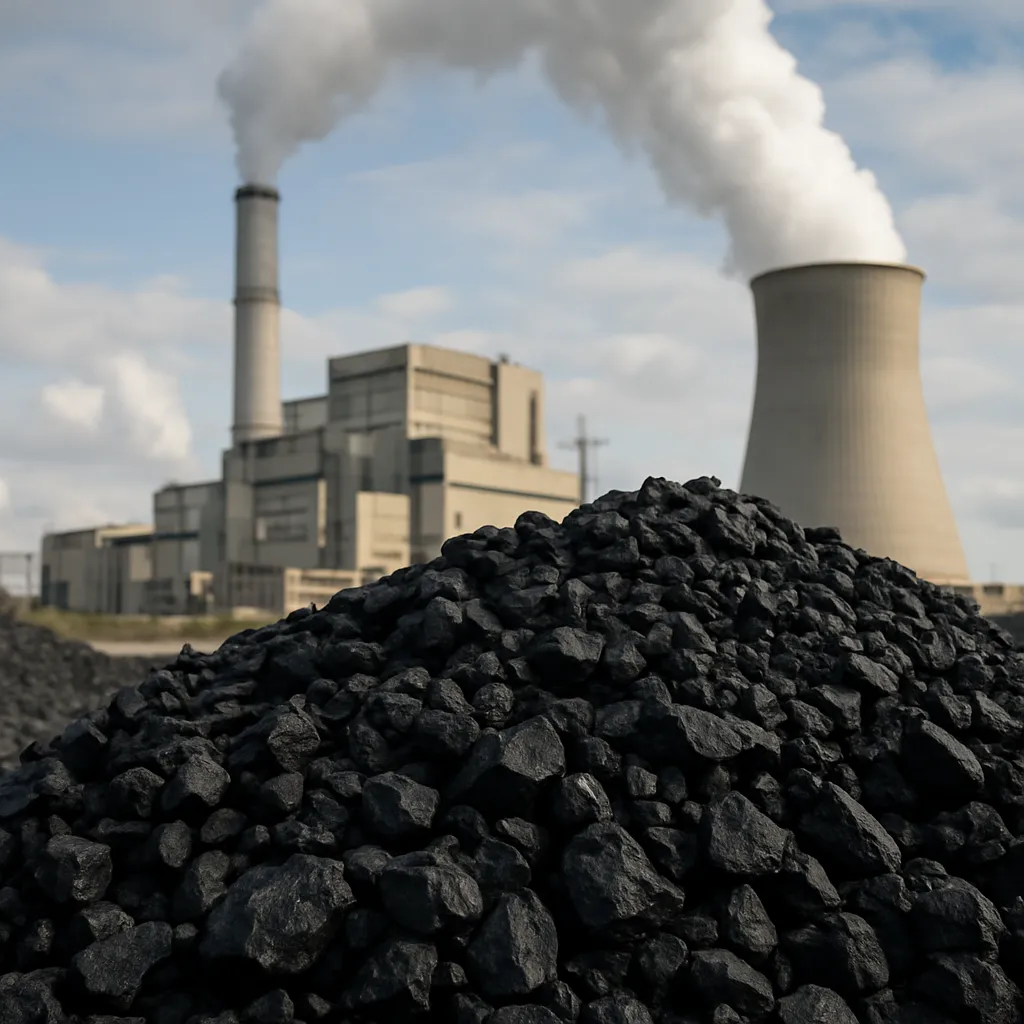
This article examines coal used for the production of sponge iron (direct reduced iron), covering its geological occurrence, mining regions, technical characteristics, economic and statistical context, industrial significance and future trends. The aim is to provide a comprehensive, practical picture of the coal-driven DRI sector, its role in the steel value chain and the environmental and market pressures shaping its future.
Overview: coal and sponge iron — basic concepts
Sponge iron, commonly called sponge iron or DRI (Direct Reduced Iron), is an iron product obtained by reducing iron ore in the solid state without melting. When the reduction agent is coal (solid carbonaceous fuel), the process is commonly referred to as coal-based DRI. Coal in this application serves two intertwined roles: as a reductant (providing carbon monoxide and hydrogen to remove oxygen from iron ore) and as a fuel generating the heat required for the reduction reactions. The most widely used coal-based smelting or reduction technologies include the rotary kiln and various vertical-shaft and fluidized-bed adaptations adapted to local raw materials and energy costs.
Where this coal occurs and where it is mined
Coal suitable for sponge iron production is not a unique geological variety; rather, it is selected from the broad range of ranks and types based on certain physicochemical properties. The critical attributes — such as calorific value, volatile matter, ash content and sulfur — determine usability. Consequently, coal used in DRI plants is typically drawn from deposits of bituminous to sub-bituminous rank, often from seams that are abundant in major producing regions.
Major coal-producing and DRI-consuming regions
- India: The largest user and one of the largest producers of coal for sponge iron. Major coal-producing states include Jharkhand, Chhattisgarh, Odisha, West Bengal and Madhya Pradesh. India’s domestic coal supply underpins a large coal-based DRI industry, developed because of limited access to cheap natural gas and strong local demand for steel.
- Australia: A key exporter of thermal and metallurgical coals. While much of Australian coal is directed to metallurgical markets (coking coal), large volumes of thermal and semi-soft coals find their way to world markets that supply DRI producers.
- China: Large domestic coal production concentrated in Shanxi, Inner Mongolia, Shaanxi and other provinces. China uses coal both for coal-based DRI and for metallurgical coke and blast furnace feedstock.
- Russia and Kazakhstan: Major coal basins such as Kuzbass (Kemerovo) supply regional markets and are a source for some DRI operations.
- South Africa: Exports and domestic supply serve both thermal and industrial applications; coal-based ironmaking exists where gas supply is limited.
- Colombia, the United States and Indonesia: Important exporters of steam and some lower-grade metallurgical coals; markets for DRI plants that accept imported coals.
The choice of supplier and deposit is determined by cost, logistics and specific coal properties. In many cases, coal for DRI is sourced locally to minimize transport costs and to match the plant’s designed fuel characteristics.
Technical and metallurgical characteristics of coal for DRI
Not all coals are equally suitable for sponge iron production. Plants require coal with predictable behaviour in the reduction environment and tolerable ash and sulfur levels to avoid product contamination and excessive refractory wear.
Key coal parameters
- Proximate analysis: moisture, volatile matter, fixed carbon and ash. Low to moderate moisture and a predictable volatile content aid stable kiln or reactor performance.
- Ultimate analysis: carbon, hydrogen, nitrogen, sulfur and oxygen content. High carbon (relative) is desirable for reductant effectiveness; low sulfur is preferable for metallurgical quality.
- Ash content and ash fusion temperature matter for kiln slagging and waste handling: lower ash simplifies solid waste management and improves heat balance.
- Grading and size: Many coal-based DRI processes require sized coal (lump or sinter feed) or pulverized coal, depending on the reactor design. Uniform sizing improves gas-solid contact and reduces process upsets.
- Reactivity and caking behaviour: For coal-based DRI, a coking or high free-swelling index is not necessary and can even be problematic; non-caking or low-caking coals are often preferred to avoid agglomeration.
Because coal must perform as both energy carrier and chemical reductant, plants often blend coals or beneficiate lower-grade coals to achieve target parameters. Beneficiation techniques (washing, flotation, density separation) are used to lower ash and sulfur and to enhance grindability and calorific value.
Production processes and coal consumption patterns
Coal-based sponge iron production encompasses several technologies. The two broad categories are kiln-based technologies (rotary kilns, straight-hearth furnaces) and reactor-based approaches (moving-bed and fluidized-bed), though the latter are more commonly associated with gas-based reduction.
Typical process descriptions
- Rotary kiln: Iron ore fines, limestone (in some designs) and coal are fed into a slightly inclined rotating cylinder. The coal combusts and partially gasifies, producing a reducing atmosphere (CO, H2) that converts iron oxides to metallic iron sponge. Rotary kilns are flexible in raw-material quality and have lower capital intensity, which helped their adoption in markets with lower gas availability and abundant coal.
- Vertical-shaft furnace / moving bed: More commonly used in gas-based DRI production but can be adapted to coal-derived reducing gases. Fresh ore descends through a counter-current stream of reducing gas.
- Coal gasification + gas-based reduction: In some modern plants, coal is gasified in a separate gasifier to produce synthesis gas (CO + H2), which is then cleaned and fed to a moving-bed DRI reactor. This approach combines coal as feedstock with a cleaner, more controllable gas-based reduction step.
Coal consumption rates
Coal consumption per tonne of sponge iron depends on the process, coal quality and plant efficiency. Typical consumption ranges:
- For conventional coal-based rotary kiln and similar low-capital processes, overall solid coal consumption (including energy and reduction role) can range approximately between 0.9 and 1.4 tonnes of coal per tonne of DRI produced, although process configuration and coal quality affect the number substantially.
- In gasifier-to-DRI configurations, coal equivalent consumption is often reported lower on a per-tonne basis because gasification and waste-heat recovery can improve thermal efficiency, but the complexity and capital cost are higher.
These ranges are indicative. Engineers designing a plant will base final figures on detailed mass and heat balances performed for given ore and coal quality.
Economic and statistical overview
The coal-for-sponge-iron sector occupies a strategic niche in global steelmaking. DRI is the principal feed for electric arc furnaces (EAFs), enabling steelmakers to reduce reliance on blast furnaces and coke ovens. In many developing economies, coal-based DRI is the economically rational route where natural gas is expensive or unavailable.
Global context and numbers
- Global crude steel production is on the order of 1.8–1.9 billion tonnes per year (World Steel Association reference range in recent years). Within this system, DRI is a significant raw material source for EAF steelmaking.
- Direct Reduced Iron (DRI) production has been expanding, with estimates commonly placing global DRI output in the order of 90–110 million tonnes per year in the early 2020s. Growth has been driven by EAF adoption, regional steel demand and energy-cost differentials favoring DRI.
- India is the single largest producer of coal-based DRI and, overall, a leading DRI manufacturer. Industry sources typically attribute roughly 60–70% of global DRI output to India, although the exact share fluctuates year to year with domestic demand and export of steel products.
Market economics of coal for sponge iron are shaped by:
- Relative prices of natural gas, imported coal and domestic coal supply.
- Logistics and proximity of coal to DRI plants — transportation costs can dominate delivered fuel costs for lower-value coals.
- Policy, tariffs and subsidy regimes that affect the competitiveness of domestic coal vs. imported alternatives or gas.
- Carbon pricing and environmental regulation, influencing the comparative attractiveness of gas- or hydrogen-based DRIs vs coal-based routes.
Industrial significance and applications
Coal-based sponge iron plays a vital role in steelmaking, especially where integrated blast-furnace infrastructure is absent or where EAFs predominate. Advantages and industrial drivers include:
- Lower capital costs for coal-based DRI plants compared with large integrated blast-furnace complexes.
- Flexibility for smaller-scale steel producers or for those in regions with abundant coal but limited gas supply.
- Support for decentralised steel production close to construction and manufacturing hubs, reducing logistics for finished steel rather than ore and coke.
However, coal-based DRI often faces quality and environmental challenges that require mitigation — upgrades in coal handling, beneficiation, emissions control and product refining in subsequent steelmaking steps.
Environmental and regulatory considerations
Compared with gas-based DRI, coal-based processes typically have higher CO2 and particulate emissions per tonne of DRI because of the carbon intensity and ash content of coal. Key environmental concerns include:
- CO2 emissions: Coal-based reduction emits more CO2 per tonne of iron produced than natural-gas-based routes, making it a focal point for decarbonisation policy and carbon pricing mechanisms.
- Particulate matter and NOx/SOx: Combustion and handling of coal generate particulates and acid gases; controlling these emissions requires investment in baghouses, scrubbers and flue-gas desulfurisation where sulfur content warrants it.
- Ash and solid residues: High-ash coals produce larger quantities of solid waste that must be managed and, where possible, valorised (e.g., in cement manufacture or road construction).
- Water use and effluent from coal washing and plant cooling, particularly in water-stressed regions.
Because of these pressures, many operators pursue partial mitigation strategies: coal washing and blending to reduce ash and sulfur, installation of modern emission control systems, adoption of heat recovery technologies and, in some cases, co-feeding biomass to lower net fossil carbon intensity.
Technological developments and decarbonisation pathways
The long-term outlook for coal-based sponge iron depends on energy prices, regulatory frameworks and technology deployment. Major trends and innovation pathways include:
- Shift to gas and hydrogen: Where natural gas is affordable or where green hydrogen becomes commercially available, gas- and hydrogen-based direct reduction offer materially lower CO2 footprints. Several projects worldwide are assessing hydrogen DRI as a primary decarbonisation route.
- Coal gasification + gas cleaning: Gasifying coal to produce cleaned syngas for DRI offers improved control of emissions and the potential integration of CO2 capture, though at higher capital cost.
- Carbon capture, utilization and storage (CCUS): Applying CCUS to gas streams from coal gasifiers or to flue gases could reduce net emissions; economics and infrastructure remain challenging.
- Efficiency and waste heat recovery: Upgrading plant thermodynamics, recovering sensible heat and improving kiln insulation reduce specific coal consumption and emissions per tonne of DRI.
- Coal beneficiation and pelletization: Enhancing coal quality through washing and pelletizing can reduce ash and improve handling, lowering environmental impacts and improving kiln performance.
Commercial risks and market dynamics
Coal-for-DRI economics are exposed to several commercial risks:
- Price volatility: Global coal prices, freight rates and exchange rates can rapidly change delivered fuel costs for DRI plants that rely on imported coal.
- Policy and carbon costs: Carbon pricing, emissions limits and potential future bans or taxes on coal use in industrial processes create long-term uncertainty.
- Competition from alternative ironmaking: Widespread deployment of hydrogen-based DRI, or lower-cost gas DRI in some regions, could erode markets for coal-based DRI.
- Raw material availability: Availability of suitable low-ash, low-sulfur coal can be regionally constrained, leading to opportunistic blending and investment in beneficiation.
Interesting facts and less-obvious aspects
A number of practical and historical points make the coal-for-sponge-iron topic noteworthy:
- Coal-based rotary-kiln DRI technology proliferated historically because it was capital-light and could be scaled down to serve local markets. This explains the especially strong uptake in countries with numerous small and medium foundries and steel mills.
- Quality of sponge iron — for downstream steelmaking — depends not only on metallic iron content but also on residual carbon, gangue levels and tramp elements introduced via coal impurities (e.g., phosphorus, sulfur, alkalis). Thus, coal choice can affect final steel quality and suitability for certain products.
- Some plants use pelletised or briquetted coal-ore mixes to manage handling, improve gas-solid contact and reduce fines-related process upsets.
- The interplay between local coal policy (mining royalties, allocation rules), railway capacity and port logistics often decides whether a DRI plant will run on domestic coal or resort to imported tonnages.
Concluding observations
Coal for sponge iron has been and remains a strategically important energy and reductant route where local resource endowments and energy economics favour its use. The sector supports decentralised steelmaking, provides a route from ore to metallic iron without blast furnaces, and has been a backbone of industrialization in several countries, notably India. At the same time, environmental and climate constraints are driving significant technological and market shifts: efficiency improvements, beneficiation, emission controls, and potentially large moves toward hydrogen and gas-based processes as low-carbon options scale up. For stakeholders — miners, plant operators, steelmakers and policymakers — the near-term horizon involves optimizing coal quality, managing emissions and balancing short-term economic competitiveness against long-term decarbonisation commitments.