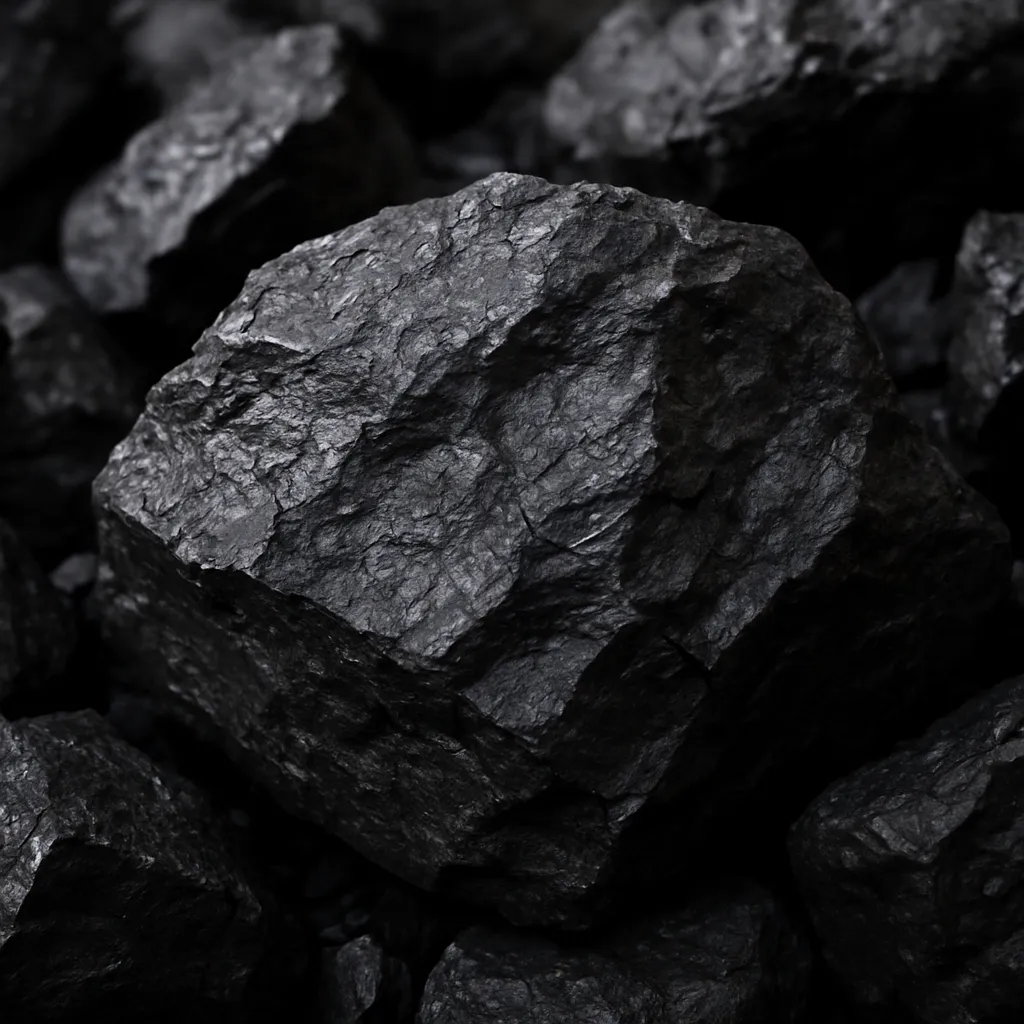
This article explores the world of coal briquettes: what they are, where the raw coal comes from, how briquettes are produced and used, and their economic, industrial and environmental significance. Coal briquettes remain an important form of solid fuel in many regions for heating and industrial applications. The following sections examine geological occurrence and mining, production technologies and compositions, markets and statistics, roles in industry and households, and emerging trends and regulatory pressures shaping their future.
Geology, occurrence and major mining regions
Coal is a sedimentary rock formed from the accumulation and preservation of plant material in ancient peatlands and swamps, buried and transformed by heat and pressure over millions of years. There are several ranks of coal — from low-grade lignite through sub-bituminous and bituminous to high-grade anthracite — and the rank affects calorific value, moisture content and volatility. Coal-bearing basins are widespread across the globe and tend to occur in regions with thick sequences of Paleozoic to Cenozoic sedimentary rocks.
Major modern coalfields and producing regions include:
- China (Shanxi, Inner Mongolia, Shaanxi, Xinjiang and others) — by far the largest producer and consumer of coal, dominating global output.
- India (Jharia, Raniganj, Korba, Talcher) — large domestic market with a major role in power generation and industry.
- United States (Powder River Basin, Appalachian, Illinois Basin) — significant metallurgical and thermal coal production.
- Australia (Bowen Basin, Queensland; Hunter Valley, New South Wales) — major exporter of thermal and metallurgical coals.
- Indonesia (Kalimantan, Sumatra) — large exporter of thermal coal, especially to Asian markets.
- Russia (Kuznetsk Basin, Kansk-Achinsk, Pechora) — large reserves and significant export capacity.
- Poland and the Czech Republic (Upper Silesia, Ostrava-Karviná) — important European coal basins often associated with household briquette usage historically.
Coal occurs in both deep underground and near-surface deposits. Mining methods include underground longwall or room-and-pillar, and surface open-pit mining — choice depends on depth, seam thickness and geology. Coal destined for briquetting can be produced as clean lumps or as waste fines and dust from processing; briquetting is a way to recover value from small-particle coal and improve handling properties.
What are coal briquettes and how are they made?
Coal briquettes are compacted blocks made from coal dust, fines, or a mixture of coal and other carbonaceous materials, bound together to form a uniform fuel with predictable combustion properties. Briquetting increases bulk density, reduces dust, eases transport and storage, and can improve combustion consistency. Briquettes have been used for domestic heating, industrial boilers and metallurgical processes.
Common production methods:
- Cold pressing: Coal fines are mixed with a binder (starch, molasses, pitch, or synthetic binders) and pressed at ambient temperature into molds or into continuous extruded shapes.
- Hot pressing: Heat is applied during compaction (or the coal is partially carbonized) to assist binding and increase strength.
- Carbonization and coking: For metallurgical briquettes, coke breeze or pulverized coke is briquetted under heat/pressure to form strong pieces for use in blast furnaces or sinter plants.
- Cold extrusion: Coal fines plus binder are extruded under pressure into cylindrical or pillow-shaped briquettes.
Typical binders include organic materials (starch, sugar syrups, molasses), coal tar pitch, or modern polymeric binders. The binder choice affects ash, volatiles and smoke characteristics. Some briquettes are made solely from processed coal dust (so-called smokeless briquettes) and are marketed for cleaner domestic heating; others mix in biomass or recycled materials to reduce cost and environmental impact.
Economic and statistical overview
Coal remains one of the world’s largest energy sources by volume. Recent years have seen fluctuations in production and demand driven by energy policy, prices, and the pace of electrification and decarbonization.
Key statistical points (approximate and variable by year):
- Global coal production is on the order of several billion tonnes per year. In the early 2020s annual production commonly ranged between 7.5 and 8.5 billion tonnes of coal equivalent, depending on demand and economic cycles.
- Roughly 70% of global coal consumption is used for electricity generation, with the remainder used in industry (notably steelmaking) and for heating and other direct uses.
- China accounts for approximately half of global coal consumption and a large share of production; India, the United States, Australia, Indonesia and Russia are also major players.
- Proved global coal reserves are typically reported in the order of around 1 trillion tonnes (varying by reporting agency) — sufficient for many decades at current consumption rates, though the recoverable fraction and economically exploitable reserves depend on price and regulation.
Market specifics for coal briquettes:
- Domestic briquette markets remain important in parts of Eastern Europe, China and parts of Asia where solid-fuel stoves are common or where coal fines are abundant and require upgrading.
- Industrial briquettes (coke breeze briquettes, pulverized coal briquettes) serve blast furnaces, sinter plants and industrial boilers. These markets are tied closely to steel production and heavy industry cycles.
- Price dynamics: briquettes often command a premium per tonne compared with raw low-grade coal because of added processing and binder costs, but they can provide better value per unit of delivered useful heat due to higher density and easier combustion control.
Industrial, household and strategic roles
Coal briquettes serve several niches across sectors:
- Household heating: In regions where central gas distribution is limited or where coal stoves persist, briquettes deliver a cleaner, easy-to-handle fuel than raw coal dust or irregular lumps. Smokeless briquettes were historically important in British urban areas and are still used in parts of Central and Eastern Europe and Asia.
- Industrial boilers and process heat: Briquettes provide uniform feedstock to industrial furnaces and boilers, improving combustion efficiency and reducing handling problems associated with fines.
- Metallurgy: Coke breeze or other carbonaceous fines are briquetted to create strong, low-ash charges for blast furnaces and sintering operations.
- Emergency and strategic fuel stocks: High-density briquettes are sometimes preferred for long-term storage in emergency reserve programs because of reduced spontaneous combustion risk and higher volumetric energy density.
Environmental issues, emissions and regulation
Environmental considerations are central to discussions about coal and coal briquettes. Burning coal releases carbon dioxide (CO2), a greenhouse gas, along with other pollutants: sulfur oxides (SOx), nitrogen oxides (NOx), particulate matter (PM), mercury and other trace elements. Briquettes can mitigate some local pollution problems by improving combustion efficiency and reducing fine dust, but they do not eliminate CO2 emissions unless combined with carbon capture technologies.
Regulatory trends affecting briquettes and solid coal use:
- Urban air quality programs in Europe and East Asia frequently restrict or ban the use of high-emission solid fuels for domestic heating. For example, many Polish cities and other EU localities have phased out use of irregular coal in low-emission zones.
- China’s clean-heating campaigns have reduced small-scale coal burning in northern cities, substituting gas, electricity or centralized heating, though briquettes and other upgraded solid fuels remain in rural and industrial use.
- Policies to decarbonize the power sector and steel industry increase pressure to reduce coal consumption through fuel-switching, efficiency improvements and deployment of CCS (carbon capture and storage) for industrial plants.
Health impacts: Poorly burning solid fuels are a major source of indoor and ambient air pollution in some regions. Switching from raw coal or smoky domestic stoves to higher-grade briquettes and clean-burning appliances can reduce particulate emissions and associated respiratory disease risks — but the best public-health outcome comes from replacing solid fuels with clean energy vectors (gas, electricity from low-carbon sources).
Technological and market innovations
Several developments shape the modern briquette landscape:
- Co-processing with biomass: Mixing coal fines with biomass (wood residues, agricultural residues) to create hybrid briquettes reduces fossil carbon content and can help manage biomass waste streams.
- Improved binders: Newer, low-emission and biodegradable binders improve combustion cleanliness, reduce smoke and minimize toxic byproducts.
- Automation and quality control: Modern briquetting plants produce highly uniform products with tight specifications for size, moisture, calorific value and ash content, tailored to customer needs.
- Use in energy transition pathways: In industrial contexts where phasing out coal is difficult (e.g., some steelmaking routes), briquettes are sometimes used to maximize efficiency and minimize fugitive dust while pathways to low-carbon alternatives are developed.
Future trends and outlook
The future of coal briquettes is shaped by two opposing forces: continued demand in regions where solid fuel infrastructure and economic realities persist, and accelerating policy-driven declines in coal use in power and households in many countries. Key trends to watch:
- Short- to medium-term persistence of briquette demand in parts of Asia, Africa and Eastern Europe, especially where coal fines are abundant and modern heating alternatives are not yet affordable or available.
- Gradual decline in domestic briquette use in urban centers due to air-quality regulations and infrastructure improvements (gas grids, electrification, district heating).
- Potential growth in industrial briquette use if steel and other heavy industries retain coal-based processes but need cleaner, more controllable feedstock forms.
- Greater integration of biomass and waste materials into briquette formulations as producers respond to carbon constraints and circular-economy pressures.
Interesting facts and practical considerations
- Historically, briquetting provided a way to use small-particle coal that would otherwise be waste; modern plants still recover value from fines produced by crushing, washing and screening.
- Briquettes burn more predictably than heterogeneous lump coal, allowing more precise control of stove and boiler temperatures and improving fuel efficiency.
- Some briquettes (e.g., anthracite-based “smokeless” fuels) were developed to meet early 20th-century urban smoke-control laws and remain a specialty market.
- There are specialized briquettes for different uses: high-volatile briquettes for domestic heating, low-ash briquettes for some industrial uses, and very hard briquettes for metallurgical processes.
- Transport and storage advantages: briquettes’ higher bulk density reduces volume shipments and lowers storage losses compared with loose fines.
Conclusion
Coal briquettes occupy a practical niche between raw coal and alternative fuels: they add value to coal fines and dust, improve handling and combustion properties, and serve both household and industrial markets. While global trends favor reduced coal consumption for climate reasons, briquettes will remain relevant in the near-to-medium term in specific markets and industries. The balance between economic utility, public-health impacts and climate commitments will determine how quickly briquette use declines, evolves (through biomass co-processing and cleaner binders), or is phased out in favor of low-carbon alternatives. Understanding regional mining patterns, production technologies and regulatory drivers is essential for stakeholders — from producers and utilities to municipalities and consumers — planning transitions in energy supply and heating practices.