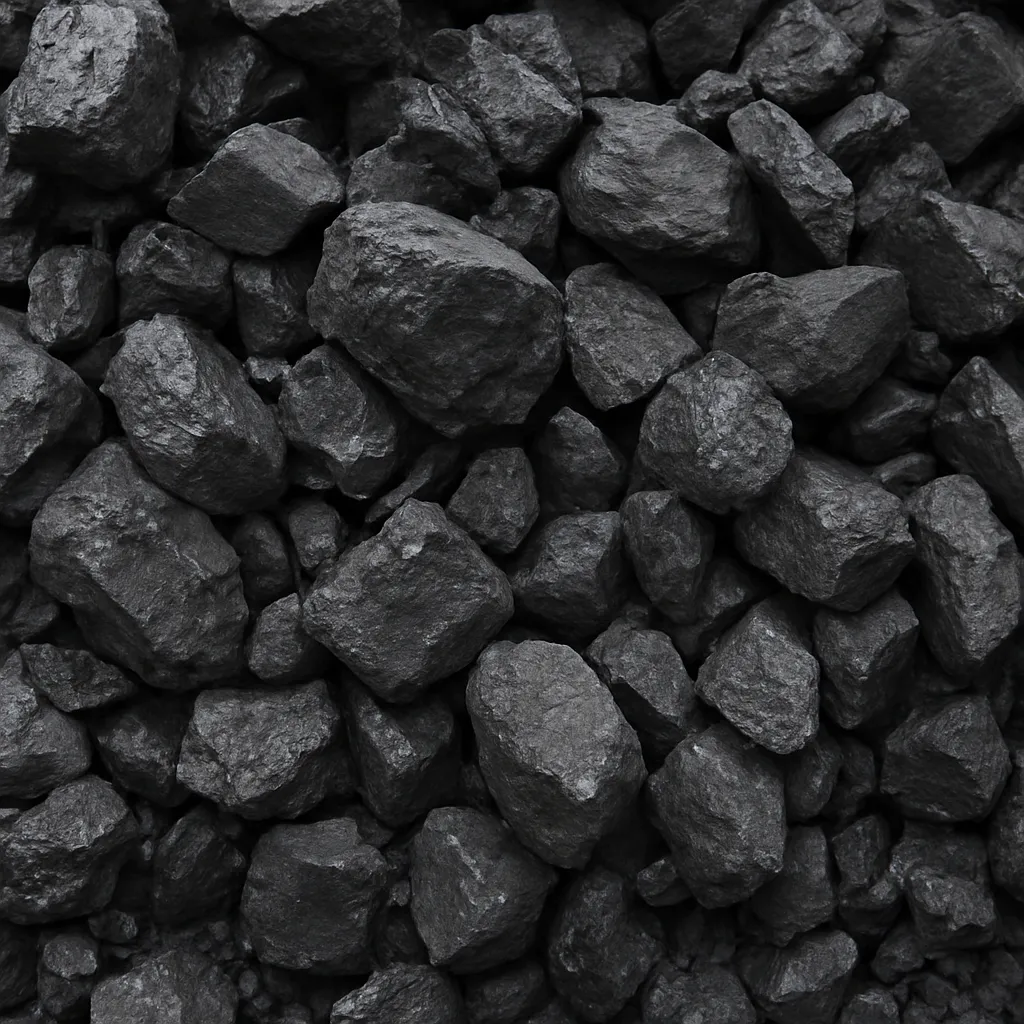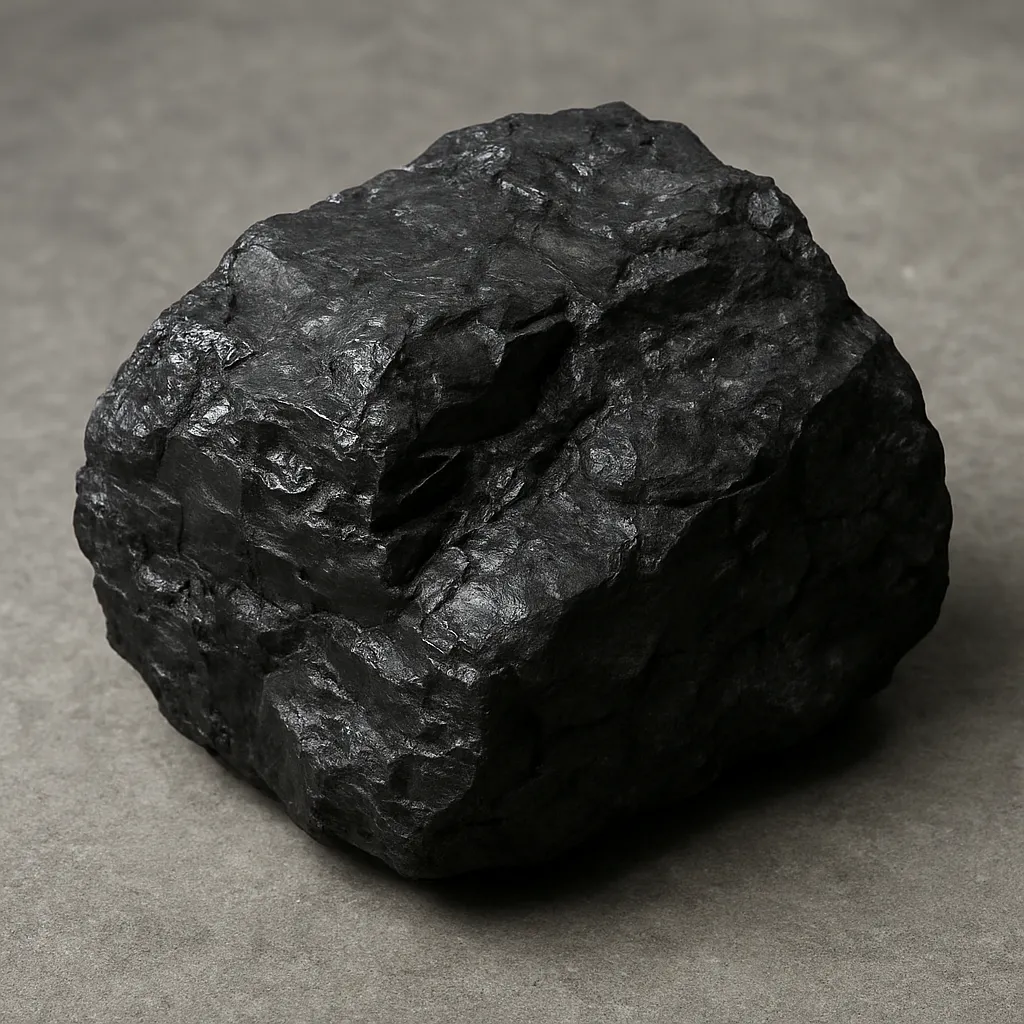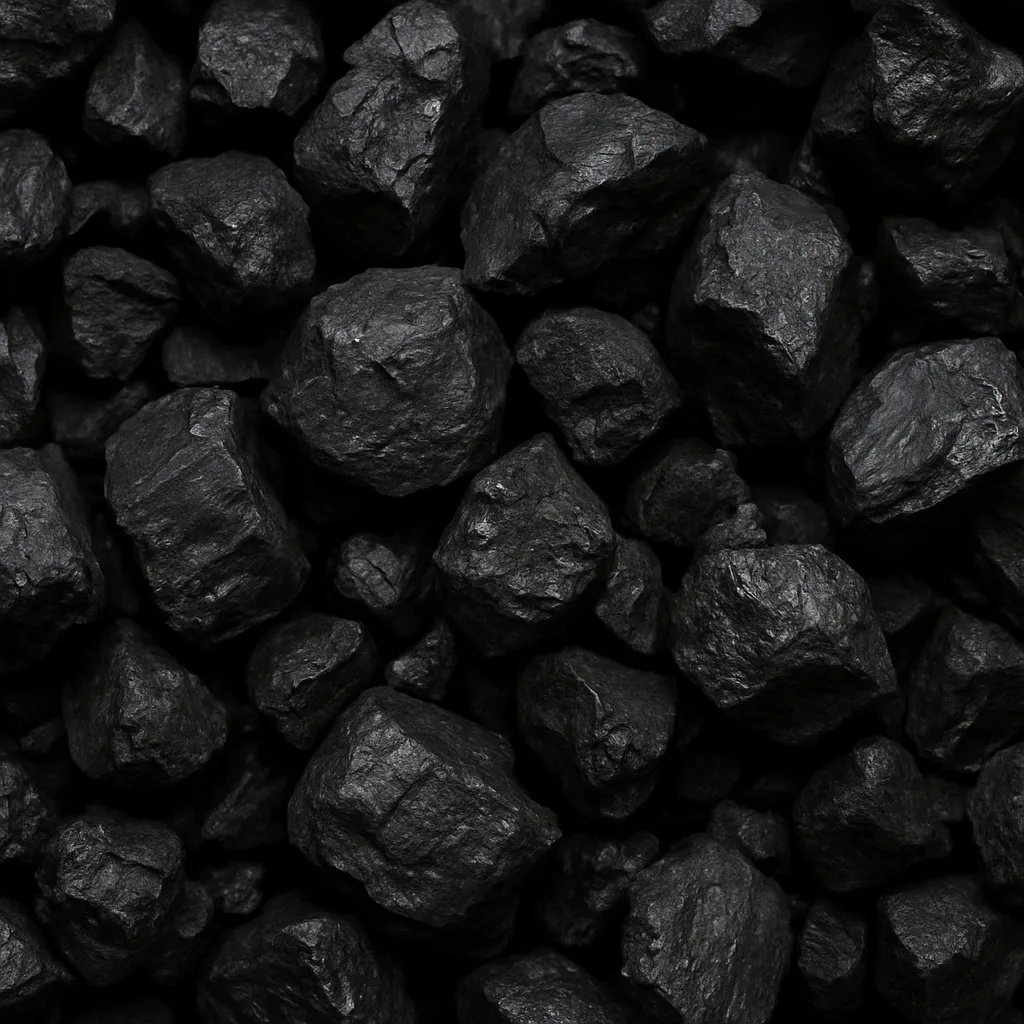
Cleated coal is not a separate type of fuel but a descriptive term used by geologists and mining engineers to refer to coal seams that contain a well-developed system of natural fractures called cleats. These cleats control the movement of water and gases, influence how coal responds to stress, and are central to technologies such as coalbed methane production and gas drainage in mines. This article examines the geology, occurrence, mining practices, economic significance, statistics where available, industrial uses and environmental implications of cleated coal, with emphasis on the scientific and practical aspects that make cleat-bearing coals a distinct and important subset of global coal resources.
Geology and Formation of Cleated Coal
Coal is a sedimentary rock derived from the accumulation and alteration of plant material over millions of years. During coalification, physical compaction and chemical changes generate a complex internal fabric of organic constituents (macerals), minerals and pores. In many coals a systematic network of natural fractures — the cleats — develops as a response to differential stress, shrinkage during coalification, and tectonic events. Cleats are typically classified into two orthogonal sets: the continuous, dominant face cleat and the usually discontinuous butt cleat, which intersect the face cleat at near-right angles.
Origin and Characteristics
The formation of cleats involves multiple processes:
- Mechanical stresses during burial and uplift produce tensile fractures in the relatively brittle coal matrix.
- Shrinkage due to dewatering and thermal alteration can open microfractures that coalesce into cleats.
- Tectonic folding and faulting can reorient and amplify existing fracture networks.
Typical geometrical properties of cleats include spacing, aperture, connectivity and persistence. Cleat spacing ranges from a few centimeters to multiple meters depending on coal rank, depth and geological history; apertures are usually minute but sufficient to provide permeability pathways for fluids. While the porosity of coal matrix (pore space within the organic matter) may be substantial at the micro-scale, the macroscopic permeability that allows fluid flow is dominated by cleat networks.
Role of Coal Rank and Maceral Composition
Higher-rank coals (bituminous to anthracite) tend to develop more brittle fracture networks, but the relationship between rank and cleating is complex. Vitrinite-rich coals frequently show pronounced cleating because vitrinite responds to stress in a way that promotes planar fracturing. Conversely, coals with high inertinite or mineral matter content may have irregular fracture patterns. Cleat intensity and orientation reflect both the intrinsic material properties of the coal and the regional stress field history.
Where Cleated Coal Occurs and Major Basins
Cleated coal is widespread wherever economically significant coal seams have formed, so it is found in almost all major coal basins worldwide. The presence and character of cleats vary by basin due to different depositional environments, tectonic histories and coal ranks.
Representative Basins and Regions
- Appalachian Basin (United States): Classic study area for cleat systems in bituminous coals; cleat networks have been central to coal mining operations and coalbed methane projects.
- Powder River Basin (United States): Low-rank coals with distinct cleat patterns that influence both surface mining and CBM potential.
- Bowen and Surat Basins (Australia): Important for coal seam gas (CSG) development; cleats play a key role in production and well design.
- Upper Silesian Basin (Poland): Thick, high-quality coals with significant cleating affecting mining and methane hazards.
- Ordos Basin (China) and other Chinese coal basins: Extensive cleat systems are implicated in both gas drainage and coalbed methane exploration.
- South African Karoo and Witbank basins: Cleated coals exist within high-rank seams relevant to both mining and potential methane recovery.
In short, cleated coal is not limited to a single continent or coal type; wherever coal seams intersect significant burial, thermal and tectonic histories, cleats are likely to be present and influential.
Mining, Extraction and Engineering Implications
Cleats strongly influence mining operations in multiple ways. They affect roof stability, water inflow, gas emission rates and the mechanical behavior of pillars and mined-out workings. Understanding cleat orientation is crucial for safe and efficient mine design.
Coalbed Methane and Gas Drainage
One of the most economically and operationally important consequences of cleats is their role in storing and transmitting coal seam gas, commonly called coalbed methane (CBM) or coal seam gas (CSG). Gas is primarily stored by adsorption onto the internal surfaces of the coal matrix; it desorbs when pressure is reduced, migrating through the matrix into the cleat network and then to wells or mine entries.
Key engineering points:
- Permeability: Coal permeability is dominated by cleat apertures and connectivity and is often anisotropic — higher parallel to the face cleat set.
- Desorption and production: Successful CBM production relies on reducing pressure so gas desorbs and flows through cleats. Water production is usually managed first because dewatering lowers pressure.
- Gas drainage in mines: Pre-drainage boreholes target cleat networks to reduce methane concentration before mining, improving safety and recovering gas as fuel.
- Stimulation: In lower-permeability coals, hydraulic fracturing or other stimulation methods may be used to enhance connection with cleats, but stimulation must be adapted to coal’s mechanical response and gas sorption behavior.
Permeability and Flow Characteristics
Coal permeability typically ranges from sub-microdarcy to several millidarcies, with cleat systems responsible for the higher end of flow capacities. Cleat porosity is generally small (from fractions of a percent up to a few percent), yet because it forms connected pathways, it can dramatically increase effective permeability. Permeability is sensitive to stress: increasing effective stress closes cleat apertures and reduces flow, while gas desorption can cause coal shrinkage and temporarily increase permeability.
Mining Safety and Outbursts
Cleats can act as conduits for sudden release of gas and coal particles — so-called outbursts — which pose significant safety hazards in underground mines. Predicting and managing outburst risk requires detailed knowledge of cleat pressure connectivity, gas content and local stress conditions. Engineering controls include gas drainage boreholes, controlled ventilation, and careful sequencing of extraction near high-gas zones.
Economic and Statistical Perspectives
The economic importance of cleated coal stems from two main arenas: conventional coal extraction and the recovery of coalbed methane. While most market statistics focus on coal tonnage and energy content, cleated coal matters economically because it can either improve or complicate extraction and because of its CBM potential.
Coalbed Methane as an Energy Resource
Coal seam gas resources are large on a global scale. Estimates of in-place gas in coalbeds vary widely by basin and methodology, but many basins hold tens to hundreds of billions of cubic meters of gas in place. Recoverable CBM reserves are smaller but can be commercially significant in countries like Australia, the United States and China. Major producing regions benefit economically from CBM through:
- Direct gas sales to domestic markets and conversion to liquefied or pipeline gas.
- Improved safety and productivity in mines by reducing in-situ methane.
- Opportunities for integrated projects such as coal-to-gas value chains and power generation near production sites.
Statistical context (representative, not exhaustive):
- Major CBM-producing countries include Australia, the United States, China and Canada. Australia has been notable for converting large volumes of CSG into pipeline gas and LNG feedstock in Queensland and New South Wales basins.
- CBM production contributes a non-negligible share of natural gas supply in regions where it is developed. In some Australian basins and U.S. plays, CBM has supplied tens of percent of regional gas demand during peak periods of development.
- Globally, conventional coal production remains in the order of several billion tonnes per year, and coal continues to be a major energy source in many countries; the role of CBM is smaller in absolute energy terms but strategically important as a lower-carbon alternative to coal combustion when replacing coal in power generation.
Because estimates and production figures change with markets and technology, specific numbers should be obtained from recent national energy reports and industry surveys for precise planning or academic work.
Economic Factors Influenced by Cleats
Cleated coal affects the economics of both mining and gas recovery in several ways:
- Increased permeability from well-connected cleat networks improves CBM well productivity, shortening payback periods and increasing field economics.
- Conversely, irregular or poorly connected cleating reduces gas recovery and may require additional stimulation or water handling, increasing costs.
- In mining, cleats that transmit water can increase pumping costs and destabilize workings, while cleat conduits for methane can require costly pre-drainage and ventilation measures.
- Cleat orientation relative to mining faces can influence longwall and room-and-pillar designs, affecting recovery rates and long-term resource value.
Industrial Uses and Technological Applications
Beyond the use of coal as a fuel, cleated coal has specialized industrial relevance through methane recovery and potential roles in carbon management.
Coalbed Methane Utilization
Recovered methane from cleated seams is used for:
- Power generation at local or regional plants.
- Supply to gas distribution networks and industrial consumers.
- Feedstock for liquefaction or conversion to chemicals in certain integrated projects.
In addition to energy, CBM development can provide local jobs, infrastructure investment and reduced mine ventilation costs. However, development requires careful management of produced water quality and volumes, which are often substantial in dewatering phases.
Enhanced Recovery and CO2 Sequestration
Emerging uses of cleated coal include enhanced coalbed methane recovery (ECBM) by injecting gases like carbon dioxide (CO2) or nitrogen. CO2 has a stronger affinity for coal surfaces than methane and can displace methane from adsorption sites while being sequestered in the coal matrix. Several pilot projects worldwide have tested the dual aims of increasing gas recovery and storing CO2; results show potential but also underline challenges related to injectivity (cleat permeability), geomechanical response and long-term stability.
Environmental, Safety and Regulatory Considerations
Cleats influence environmental and safety issues in both mining and gas production. The environmental footprint and risk profile of clearing, drilling and dewatering operations are shaped by cleat properties.
Greenhouse Gas and Methane Management
Methane is a potent greenhouse gas. Capturing methane from cleated coal seams for use as an energy source reduces emissions relative to uncontrolled release. In many coal mines, methane drainage through pre-drainage wells and use of recovered gas is both a safety measure and a greenhouse-gas mitigation strategy. Regulatory frameworks often require monitoring and management of methane emissions, and carbon accounting systems may credit methane capture and utilization.
Water Issues and Surface Impacts
Dewatering coal seams produces water that can contain dissolved salts and other constituents requiring treatment or managed discharge. Cleat connectivity influences the volume and rate of water production; highly permeable cleat systems can yield large water flows early in a project. Surface impacts include the need for water storage, treatment facilities and land disturbance associated with drilling and well infrastructure.
Subsidence and Geomechanical Effects
Coal extraction can induce subsidence; cleat networks influence how stresses redistribute and where fractures propagate during and after extraction. Careful geomechanical modeling that incorporates cleat anisotropy is necessary to predict subsidence and design mitigation measures.
Measurement, Modeling and Research Directions
Advances in measurement and modeling have improved understanding of cleated coal and its behavior under production or mining-induced changes.
Characterization Techniques
- Core and image analysis: Optical and electron microscopy reveal cleat morphology and mineral infill.
- Micro-CT and X-ray imaging: Provide 3D views of fracture networks at fine scales.
- Well testing and pressure transient analysis: Estimate permeability and storativity tied to cleat systems.
- Tracer tests and microseismic monitoring: Map connectivity and fracture activation during stimulation or production.
Modeling Approaches
Numerical models of cleated coal must couple gas adsorption/desorption, matrix diffusion, cleat flow, multiphase fluid interactions (water and gas) and geomechanics. Contemporary workflows use dual-porosity and dual-permeability formulations to represent matrix and cleat domains separately, combined with geomechanical modules to account for stress-dependent cleat aperture changes. Research focuses on improving upscaling methods (from pore-scale observations to field-scale models) and on coupling reactive transport when water chemistry alters cleat or matrix properties.
Innovations and Future Research
Key areas of ongoing research include:
- Improved stimulation strategies that respect coal’s sorption-induced deformation and avoid damaging matrix properties.
- CO2-ECBM pilot projects and long-term monitoring of CO2 storage in coal seams.
- Enhanced imaging and machine-learning-based interpretation of cleat networks for better well placement and production forecasting.
- Integration of methane capture with renewable energy systems and local energy markets to optimize value and emissions reductions.
Interesting Facts and Practical Observations
- Cleat networks can be remarkably systematic: in some seams, face cleats run for tens of meters while butt cleats terminate frequently, providing a directional preference for fluid flow that can be exploited in well spacing and orientation.
- Coal behaves counterintuitively: while the matrix holds most of the gas by adsorption, the visible fractures (cleats) are what enable gas to move — a small volume fraction of the rock controls production rates.
- Coal swelling and shrinkage during gas sorption and desorption can change cleat apertures. This coupling means that permeability is not constant during production — well performance can evolve as pressures and water saturation change.
- Historical mining records often noted cleat directions and intensities, and modern CBM projects frequently re-examine abandoned mine data to predict cleat behavior and gas potential.
Concluding Remarks
Cleated coal represents a fascinating intersection of geology, engineering and economics. The presence of a well-developed cleat network transforms a coal seam from a passive store of energy into an active hydraulic and gas-bearing system that requires integrated approaches to exploit safely and profitably. From enhancing mine safety through methane drainage to enabling commercial coalbed methane production and exploring CO2 storage opportunities, cleated coal plays a multifaceted role in contemporary energy systems. As technologies for imaging, modeling and stimulation improve, the ability to quantify and manage cleat networks will continue to define the success of projects that depend on these natural fracture systems.
Key terms: cleat, permeability, coalbed methane, porosity, adsorption, fracture, gas drainage, seam, adsorption capacity, coalification