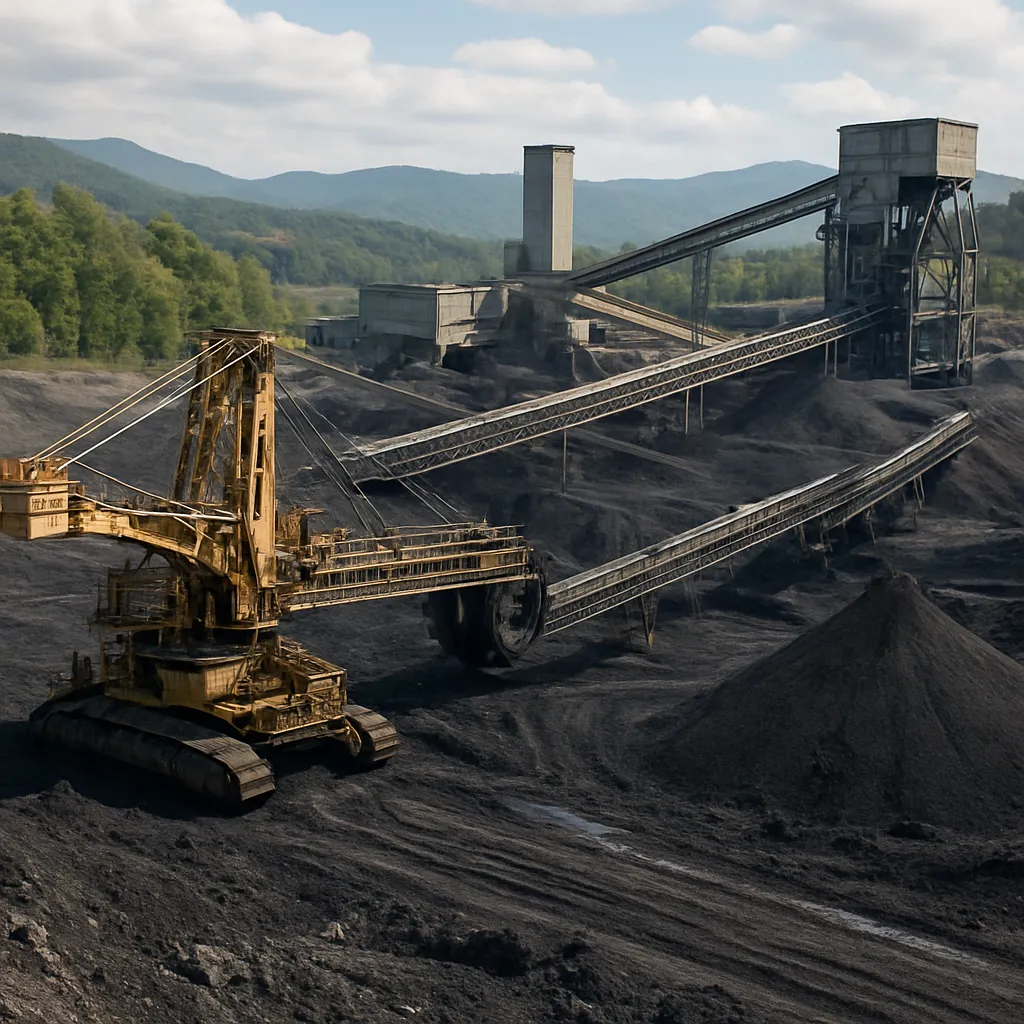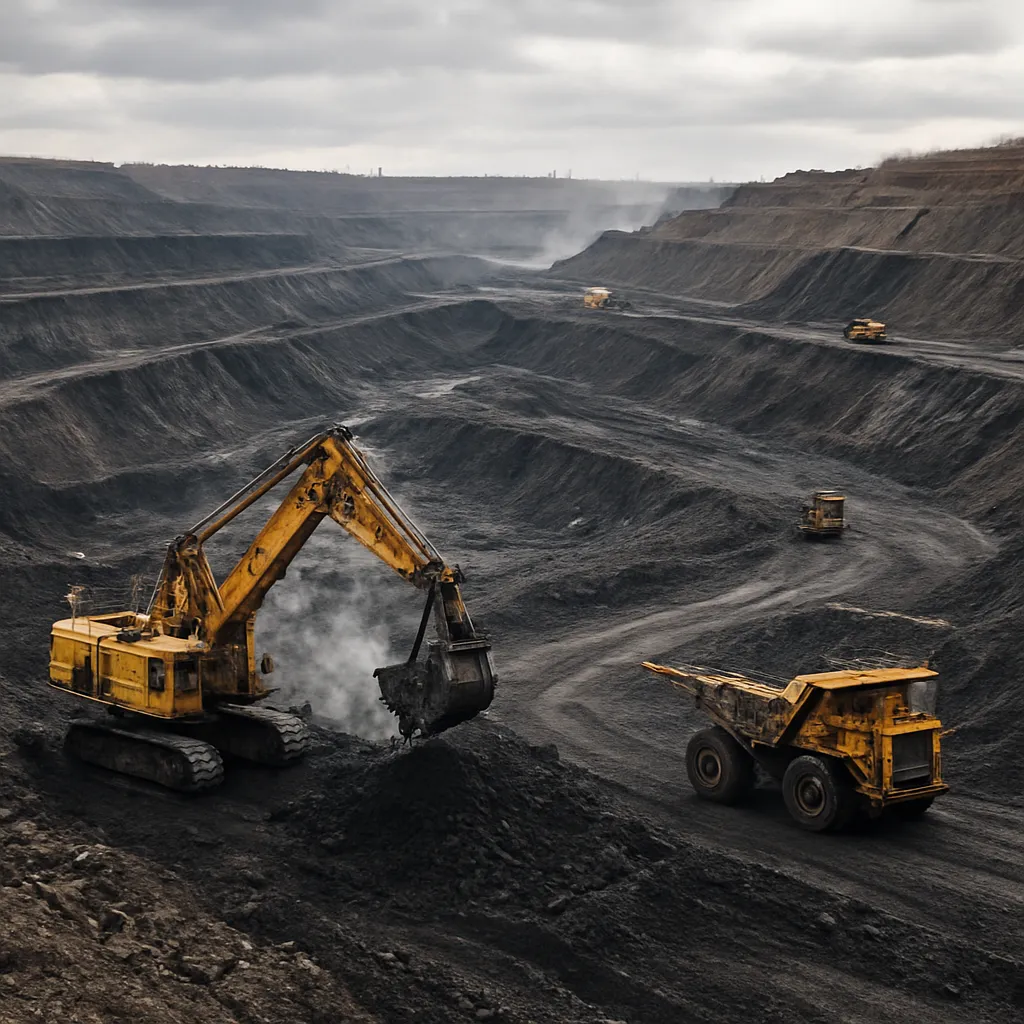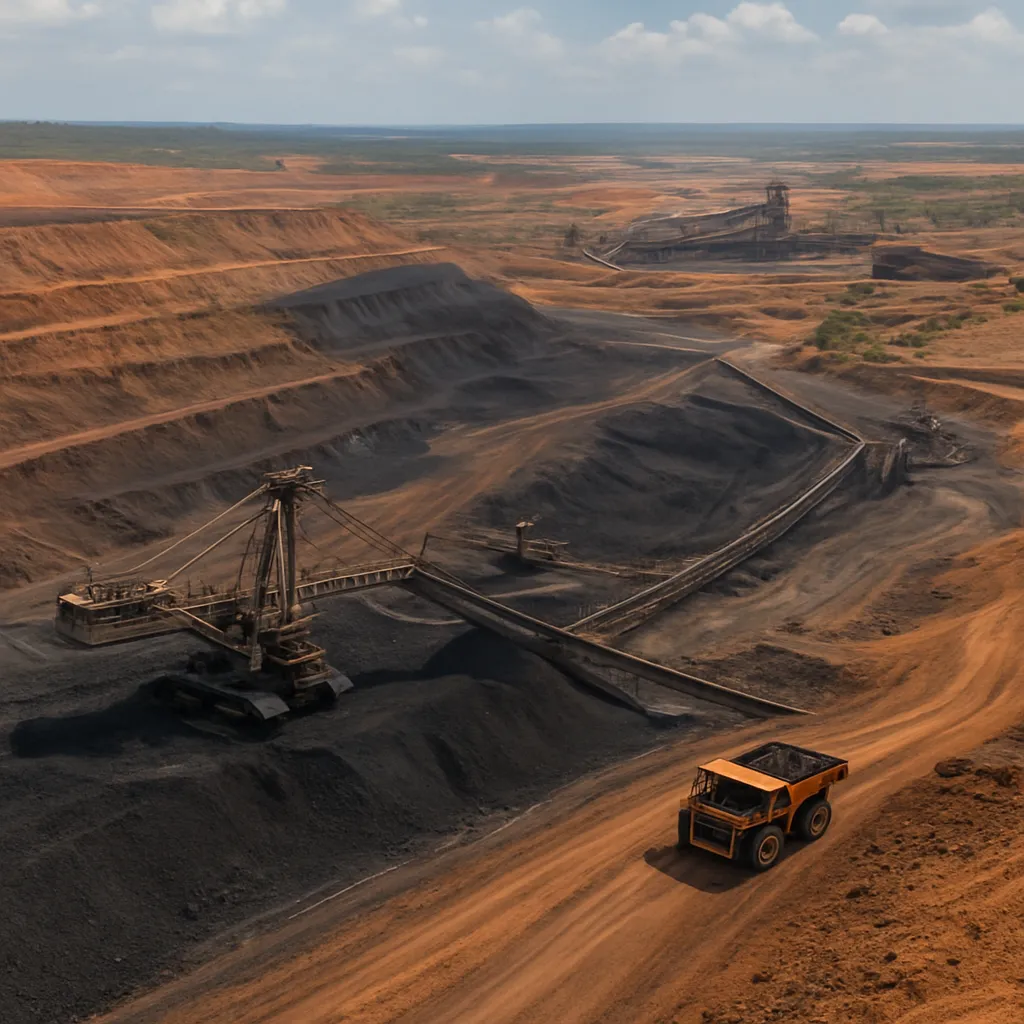
The Ncondezi Coal Mine, located in western Mozambique, is one of several significant coal projects in the country’s northern interior that have drawn international attention for their geological potential and development challenges. This article provides a detailed overview of Ncondezi — its location, geology and the type of coal present, historical and current ownership and development status, economic and industrial significance for Mozambique and the region, available statistical and resource information where reported, infrastructure and logistic considerations, environmental and social issues, and future prospects and challenges.
Location, geology and the coal type
Ncondezi is situated in the western part of Mozambique’s Tete Province, a region known for hosting much of the country’s coal endowment. The deposit lies in a sequence of sedimentary basins that extend across the border into neighboring countries and are part of the larger geological systems that produced coal seams in the Zambezi-Mid Zambezi Basin areas. The local geology is characterised by multiple coal seams of variable thickness and continuity occurring within sandstones and shales, formed in ancient peat-forming environments.
The coal at Ncondezi is predominantly classified as thermal coal, with characteristics that make it suitable principally for power generation and steam coal markets. Geological descriptions commonly identify the product as relatively high-volatile rank coal with variability in calorific value, ash, moisture and sulphur content across different seams and areas of the licence. In simple terms, Ncondezi’s coal is typically targeted as a fuel for power plants (domestic or export markets) and as a potential blend component for some industrial uses rather than consistently meeting premium metallurgical (coking) coal specifications.
Coal quality parameters reported in exploration studies and company updates historically indicate ranges in calorific value and impurities; these vary by seam and by the stage of mine development. Because coal quality can be heterogeneous across a project, developers typically propose beneficiation and washery steps to achieve suitable product specifications for target customers. At the site scale, geology dictates mine design options — shallow, laterally extensive seams are more amenable to open-pit mining, while deeper or discontinuous seams may require underground methods or selective mining.
History, ownership and development status
Exploration of coal in Tete Province accelerated in the late 20th and early 21st centuries as global demand for thermal coal rose and international investors sought new sources of fuel. The Ncondezi project has passed through several phases of exploration and development, with involvement from junior mining companies and investor groups that have sought to progress the project from early-stage resource definition through to feasibility studies and potential production.
Ownership and corporate structure of the project have varied over time as companies consolidated or divested interests, and as local and international stakeholders engaged in joint ventures and licensing arrangements. Historically, small to medium-sized listed exploration companies have been the primary proponents of Ncondezi, undertaking drilling campaigns, resource estimation, and pre-feasibility studies. Such companies typically work in coordination with Mozambican regulatory authorities to obtain the licences and environmental approvals required for development.
At various times, Ncondezi proponents produced technical studies outlining staged development options, commonly proposing an initial modest production rate to de-risk the project followed by potential expansion phases tied to infrastructure improvements (rail and port access) and market commitments. The pace of development has been influenced by commodity price cycles, investor appetite, competition for infrastructure capacity in the region, and evolving environmental and social governance expectations.
Resource estimates and production potential
Resource estimates for Ncondezi have historically been reported by project promoters following industry-standard sampling and estimation methodologies. These estimates commonly differentiate between measured, indicated and inferred resources. While numbers vary between reports and over time as more drilling is completed or modelling methods are updated, company disclosures have suggested that the project contains significant coal resources — often expressed in the hundreds of millions of tonnes range when combining all resource categories. It is important to note that resource figures are distinct from mineable reserves: resources describe geological potential, whereas reserves reflect the portion of resources that are economically and technically recoverable after feasibility studies and accounting for infrastructure, prices, and operating costs.
Production scenarios proposed in historic studies have ranged from small-scale trials up to multi-million tonnes per annum operations for fully developed stages. Typical phased approaches envisage an initial stage of a few million tonnes per year (to establish stable operations and secure cash flow) followed by expansions conditional on securing export routes and power offtake agreements. The timing and scale of production remain contingent on securing long-term financing, market offtake, and logistics arrangements linking the mine to international ports.
Economic and industrial significance
For Mozambique, coal projects such as Ncondezi have been viewed as potential drivers of economic growth, local employment, and foreign exchange earnings. The discovery and development of large coal deposits in Tete Province over the last two decades attracted major international investors and spurred ancillary investments in rail, port and power infrastructure that benefit the broader economy. Coal exports historically have contributed a meaningful share of Mozambique’s mining export revenue and have been part of government strategies to accelerate development in the central and northern regions.
At the project level, economic impacts include direct job creation in exploration, construction and mining operations; indirect employment in services, logistics and supply chains; and potential contributions to local government revenues through royalties and taxes. Developers often propose community development programs, local procurement plans, and training initiatives aimed at ensuring some of the economic benefits remain in nearby districts and towns.
From an industrial perspective, thermal coal from Ncondezi could support domestic power generation projects and regional energy security if allocated to national needs, or contribute to export volumes to energy-hungry markets in Asia and elsewhere. The project’s value chain — from pit to port — stimulates demand for contractors, engineering services, heavy equipment, and often requires partnerships with railway operators and port authorities.
Infrastructure and logistics
One of the defining constraints and opportunities for any coal project in Tete Province, including Ncondezi, is access to reliable and affordable infrastructure. The economics of bulk commodity mining depend heavily on transport and export capacity. Key components include:
- Rail links: Connection to a functioning rail corridor that leads to a deepwater port is essential for competitive export. In Mozambique, several corridors are used or proposed to convey coal from inland basins to ports on the Indian Ocean.
- Port capacity: Availability of berthing, stockpiling and ship-loading facilities at ports is a critical determinant of export throughput and scheduling.
- Roads and local access: For initial development phases and for enabling community linkages, road improvements are often needed.
- Power and water: Mining operations require substantial power (for processing plants, workshops, and camp facilities) and reliable water supplies for both processing and domestic uses; securing these utilities can shape project design and costs.
Historically, Ncondezi developers have identified rail and port access as project dependencies. Where existing national infrastructure is insufficient for large volumes, companies have planned incremental strategies — using truck-to-rail transshipment, partnering in shared infrastructure projects, or waiting for the expansion of public rail corridors. Investments by other major projects in Tete have occasionally created wider capacity and opportunities for new entrants, but competition for finite rail slots and port windows has been a recurring challenge.
Environmental and social considerations
As with all modern mining projects, environmental and social considerations play a central role in the development pathway for Ncondezi. Key areas of attention include:
- Water resources: Mining and processing can consume and potentially contaminate surface and groundwater if not managed properly. Water management plans, catchment studies and monitoring programs are typical mitigation measures.
- Biodiversity and land use: Clearing for pits, waste dumps and infrastructure can affect local ecosystems and agricultural land. Environmental impact assessments (EIAs) are generally required to identify sensitive areas and propose mitigation or offset measures.
- Community impacts: Resettlement, livelihood disruption, and social changes associated with an influx of workers are central topics in social impact assessments. Companies often undertake stakeholder engagement, community development agreements, and grievance mechanisms to address these issues.
- Air quality and dust: Mining, material handling and transport generate particulate emissions; dust control and monitoring form part of standard environmental management plans.
- Greenhouse gas emissions: Thermal coal production and use contribute to CO2 emissions when burned for energy. Increasing scrutiny from financiers and markets means coal projects face growing pressure to demonstrate credible plans for emissions management, energy efficiency, or participation in carbon offset programs.
Regulatory compliance with Mozambican environmental law, international lender requirements (for projects seeking project finance), and community expectations shapes the permitting timetable and cost profile. Companies that proactively address environmental and social governance (ESG) tend to encounter fewer delays and stronger local acceptance, whereas unresolved social tension or environmental incidents can significantly disrupt project timelines and investor sentiment.
Regional and national context
Ncondezi must be understood within the broader mosaic of coal development in Mozambique. The discovery of extensive coal resources in Tete attracted multinational mining companies and created a cluster of coal projects that collectively influenced national planning on transport, power and fiscal policy. Mozambique’s role as a coal exporter has waxed and waned with global demand cycles, which affect commodity prices, investment flows and the pace at which projects move from exploration to production.
Nationally, the government has sought to balance the economic benefits of mining with social and environmental stewardship and to leverage resource projects to foster local development. Challenges include ensuring that infrastructure built to serve mining also benefits host communities, coordinating land-use planning, and ensuring that fiscal arrangements deliver sustainable public revenues. For regional stakeholders, coal projects have the potential to catalyse electricity generation capacity and local industrialisation if integrated with broader development strategies.
Statistical and financial indicators (reported and typical ranges)
Precise statistics on Ncondezi’s resources, planned production rates and capital costs have been reported in various company documents, but these figures can change as studies are updated. Historically, public disclosures by project proponents have cited:
- Resource estimates reported in company statements that range from tens to several hundred million tonnes across measured, indicated and inferred categories — a scale consistent with an operation capable of multi-year production if economic conditions support development.
- Staged production proposals, with initial phases targeting a few million tonnes per annum and potential expansion to higher throughput contingent on securing rail and port capacity.
- Capital expenditure (capex) estimates for comparable Tete-region coal projects typically run into the hundreds of millions to multi-billion US dollars for fully developed operations including mine, processing, and dedicated infrastructure; Ncondezi-scale projects aiming for modest initial production would expect capex on the lower end of that range, but exact numbers depend on scope, infrastructure sharing and regional logistics.
- Ongoing operating cost drivers include fuel, labour, materials, beneficiation costs and transport tariffs — with transport often representing a significant portion of the delivered cost to export markets.
Given the variability in public reporting and the sensitivity of feasibility outcomes to commodity prices and infrastructure commitments, prospective investors and stakeholders typically examine a range of scenarios reflecting low, base and high coal price environments when assessing project economics.
Opportunities and challenges
Opportunities associated with the Ncondezi project include the potential to:
- Generate employment and regional economic activity through construction and operation phases;
- Contribute to Mozambique’s export earnings and fiscal revenues if ramped to export-scale production;
- Provide feedstock for domestic power projects, potentially supporting electrification and industrialisation; and
- Benefit from economies of scale and shared infrastructure if coordinated with other regional projects.
Key challenges include:
- Securing reliable, cost-effective transport and port access amid competing demand from other coal producers;
- Rising environmental and social expectations that increase permitting complexity and compliance costs;
- Exposure to volatile global coal prices and the long-term structural decline in thermal coal demand in some markets due to climate policy and competition from lower-carbon alternatives;
- Attracting long-term project finance in a market where lenders increasingly apply stringent ESG criteria.
Future outlook and strategic considerations
The future of Ncondezi will be shaped by a combination of commodity markets, regional infrastructure development, and non-market influences such as investor preferences and regulatory shifts. Strategic actions that could improve the project’s prospects include:
- Securing binding offtake agreements or power purchase agreements (PPAs) to underpin financing for initial phases;
- Pursuing collaborative infrastructure arrangements (e.g., shared rail and port solutions) that reduce capital intensity and improve logistics reliability;
- Implementing robust environmental and social programs early to build community support and reduce permitting risk;
- Exploring product diversification (e.g., washed coal products, domestic power coal supply) to reduce market concentration risk;
- Maintaining operational flexibility to scale production in response to market signals and to adapt to low-carbon transition pressures.
Developers that adopt a pragmatic, phased approach and prioritise transparent stakeholder engagement are generally better positioned to translate geological potential into sustainable operations. For governments and communities, ensuring that benefits from any development are equitably shared and managing environmental liabilities are central priorities.
Conclusion
Ncondezi represents a noteworthy component of Mozambique’s coal landscape — a project with geological potential and clear links to the economic prospects of Tete Province. The coal at Ncondezi is primarily thermal in nature and has been the subject of exploration and pre-development studies that point to meaningful resource volumes. However, the pathway from resource to producing mine depends on securing finance, reliable infrastructure (especially rail and port), favourable market conditions, and robust management of environmental and social risks.
While the precise figures for reserves, production capacity and capital costs have fluctuated in public reports over time, the underlying themes are consistent: Ncondezi’s value hinges on the interplay between geology, logistics and macroeconomic forces. Careful planning, strong stakeholder relationships, and transparent governance will be essential to determine whether and how the project develops to provide long-term benefits to investors, local communities and Mozambique’s economy.