This article examines the Neryungri open-pit coal operation in the Russian Far East, placing it in geological, economic and social context. It outlines what is mined, the type and quality of the coal, operational and logistical features, and the broader role of the mine in regional industry and the national energy mix. The text emphasizes technical and economic aspects as well as environmental and community issues that shape the mine’s present and future. Key concepts are highlighted for quick reference.
Location and geological setting
The Neryungri mining area is located in the southern part of the Sakha Republic (Yakutia) of Russia, near the town of Neryungri, which serves as the principal regional hub. Geographically the deposit sits within the South Yakutian coal basin, an area of significant late Paleozoic and Mesozoic sedimentary rocks that host multiple coal seams. The setting is characterized by continental climate extremes, discontinuous to continuous permafrost in surrounding areas, and rugged terrain that has influenced both mine design and transport arrangements.
Geology and coal characteristics
The coal mined at the Neryungri open pit is predominantly used for thermal applications. Coal ranks in the deposit generally span from sub-bituminous to medium-volatile bituminous categories, with variations across seams and layers. This reflects differences in burial depth, thermal maturity and the depositional environment of the host strata. Typical chemical characteristics include moderate to low ash content in the better seams, variable sulfur levels (often low to moderate), and calorific values that make the product suitable for power generation and local industrial use. Some sections of the basin also contain coals of better coking potential, but the primary output from the open-pit operation has historically been thermal coal destined for power plants and heating.
- Neryungri deposit: part of a broader South Yakutian coal province.
- Coal type: mainly thermal (sub-bituminous to bituminous) suitable for electricity generation.
- Typical quality traits: moderate calorific value, variable ash and sulfur, seam-dependent variability.
Mining operations and infrastructure
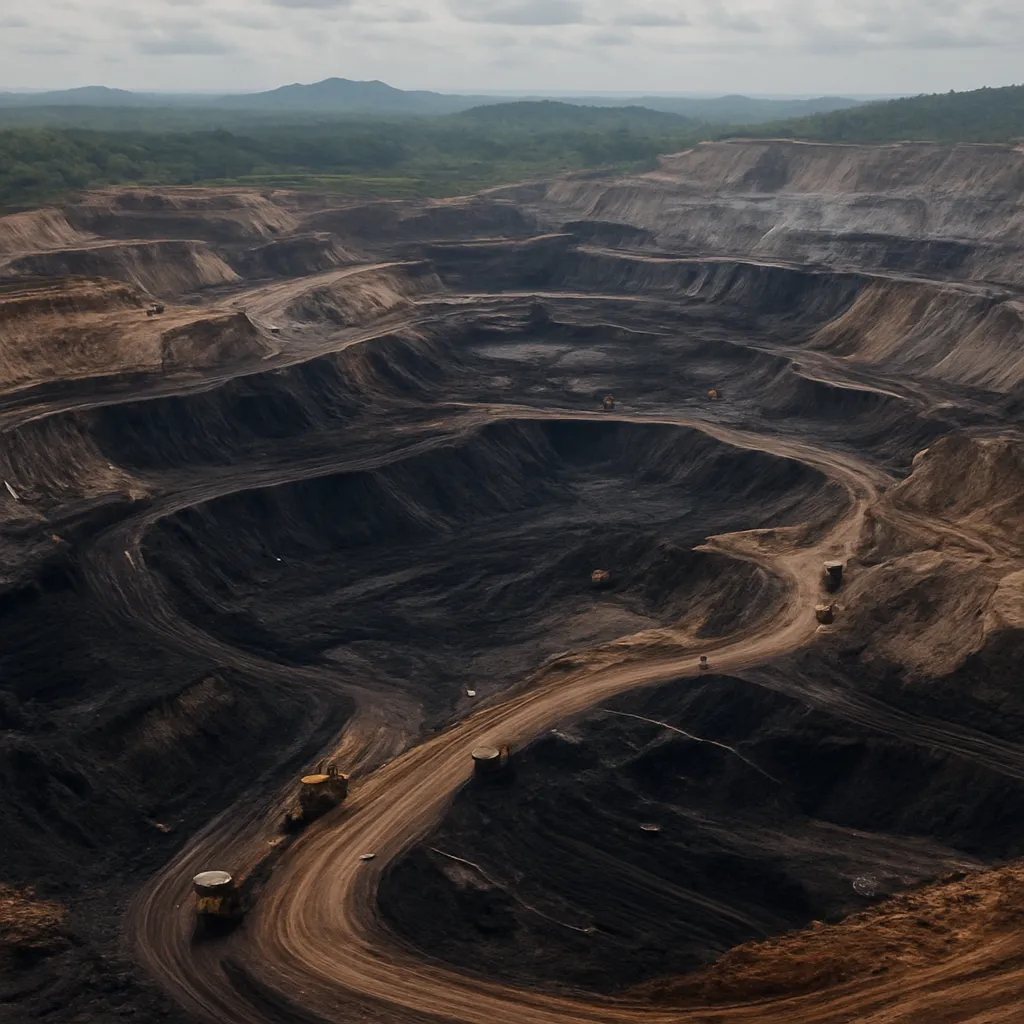
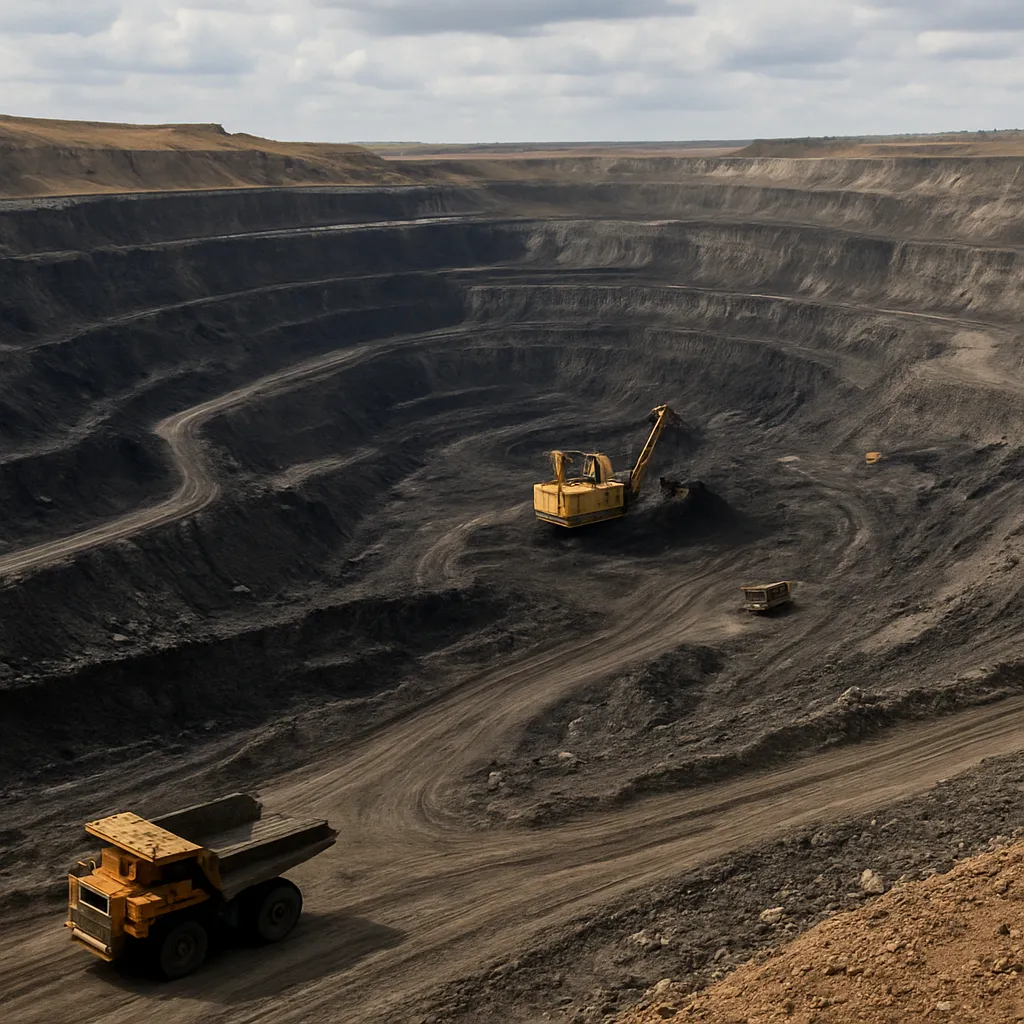
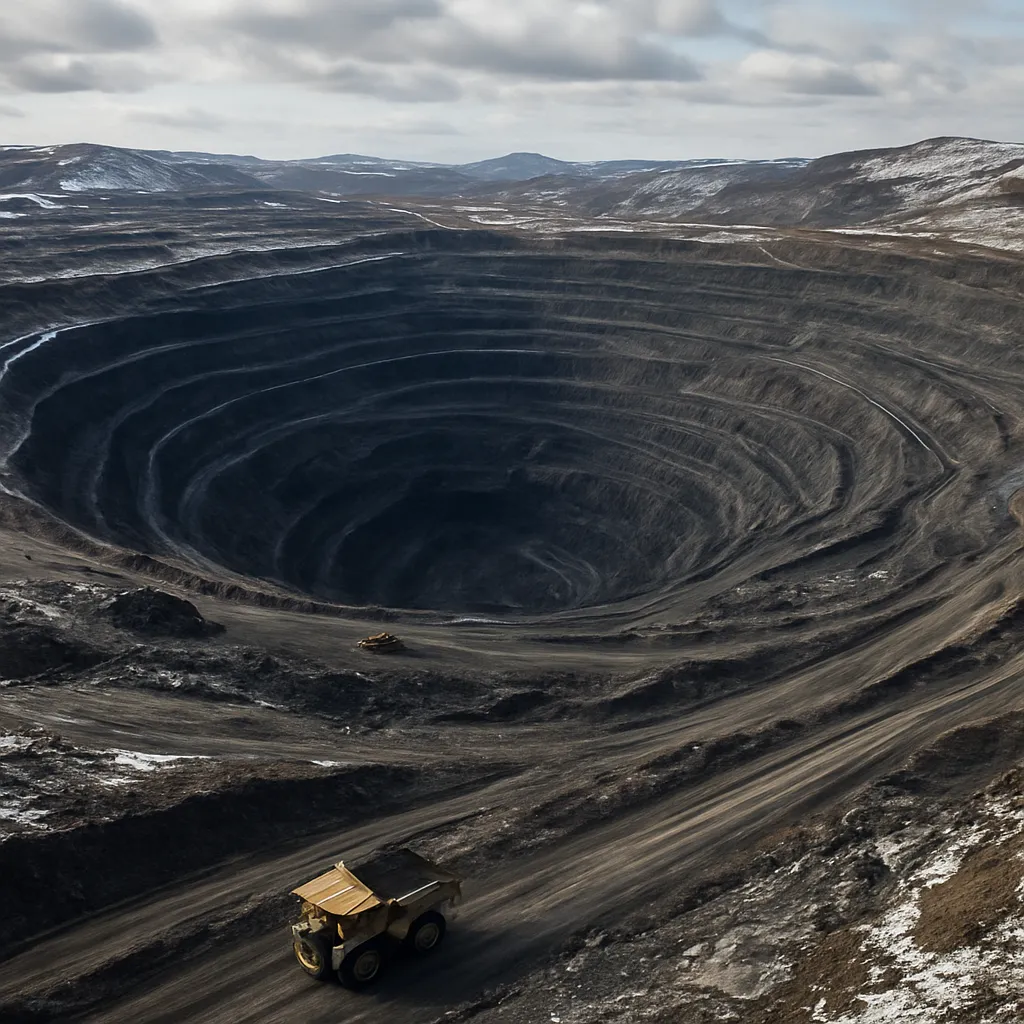
The Neryungri operation is organized around large-scale open-pit mining methods. Open-pit extraction is preferred where seams outcrop or lie at shallow to moderate depth and where overburden can be economically removed. The mine uses conventional drilling, blasting, and heavy excavation equipment — electric and hydraulic shovels, large wheel loaders, and off-highway dump trucks — all adapted to severe seasonal temperature swings. Overburden management, benching practices and pit slope stabilization are important design concerns because of weathering patterns and the presence of frozen ground in nearby areas.
Processing and handling
Raw run-of-mine coal from the pit is initially crushed and screened on site. Where economic, the coal is washed in local concentrators to reduce ash and improve calorific value, creating higher-grade thermal products for industrial customers or export. Stockyards, conveyor systems and load-out facilities are sized to match rail logistics. Quality control laboratories monitor moisture, ash, sulfur and calorific value continuously to meet contractual specifications.
Logistics and transport links
A distinctive asset for Neryungri is its integration with regional rail infrastructure. The town of Neryungri lies on the Amur–Yakutsk Mainline (connecting to the Baikal–Amur Mainline network), enabling rail haulage to mainline junctions and onward transfer to Pacific ports for export or to industrial consumers across the Russian Far East. Seasonal constraints, rail capacity, and the distance to seaports shape the economics of export versus domestic supply. Road networks and winter ice roads supplement rail transport for local deliveries and equipment mobilization.
- Primary transport: rail (Amur–Yakutsk Mainline / connections to BAM and Trans-Siberian corridors).
- Supporting transport: regional roads, on-site conveyors, stockyards and occasional river transport logistics during summer in nearby basins.
- Infrastructure challenges: distance to ports, cold-climate maintenance, and limited year-round overland alternatives.
Economic and industrial significance
Neryungri’s coal operation is a cornerstone of the local economy and contributes to broader regional and national energy systems. The mine supplies fuel for district heating, local industry, and regional power plants in Yakutia and neighboring regions. Employment at the mine and in related services — transport, equipment maintenance, processing, and administration — supports the town and surrounding settlements. Revenues from coal help finance local budgets via taxes and royalties, and the presence of the mine has encouraged investment in rail and utility infrastructure around Neryungri.
Market orientation
The primary market for Neryungri coal has historically been domestic: power generation and heat production within the Russian Far East. However, geographic proximity to Northeast Asian markets provides export opportunities. When logistics and prices favor export, washed thermal coal from the region can be shipped to buyers in China, South Korea and other Asia-Pacific economies. Export competitiveness depends on rail capacity, terminal access, freight rates and international thermal coal prices.
Fiscal and social impacts
Coal mining generates direct fiscal flows through corporate taxes, mineral extraction taxes, and local levies. Indirectly, the industry fosters jobs in construction, transport and services. The social infrastructure of towns like Neryungri — schools, hospitals, housing — has in part developed around the stability and incomes provided by mining employers. At the same time, dependence on a single commodity exposes communities to market cycles and long-term shifts in energy demand.
Production, reserves and statistics
Precise production and reserve figures for individual pits can vary by year, depending on geological developments, investment cycles and market conditions. Publicly reported data for the wider South Yakutian coal region indicate that the area hosts substantial coal endowments, with total coal resources and reserves often described in the order of hundreds of millions of tonnes across multiple deposits. Annual output from individual large open-pit operations in the Russian Far East commonly ranges from the low millions to several million tonnes per year, though specific figures for the Neryungri pit fluctuate with operational planning.
Because reporting standards, mine phases and ownership structures differ, it is common for exact production data to be presented by mining enterprises, regional authorities or national statistics agencies. Industry observers note that regional production in Yakutia contributes meaningfully to the national thermal coal supply and has at times been expanded to meet either domestic demand spikes or export opportunities to Asia.
- Estimated reserve scale: deposits across the basin measured in the hundreds of millions of tonnes.
- Typical annual production scale for comparable pits: from a few million to several million tonnes.
- Market share: important regional supplier to Yakutia and adjacent areas; occasional export volumes to Asia depending on logistics and price.
Environmental and social considerations
Open-pit coal mining carries significant environmental and social responsibilities. In the Neryungri region, environmental challenges include landscape disturbance, dust and particulate emissions, water management and impacts on permafrost. The removal of overburden and exposure of fresh rock can accelerate thawing of permafrost in adjacent areas if not carefully managed, which has engineering and ecological consequences. Water treatment, tailings management and progressive rehabilitation of worked-out benches are essential to reduce long-term environmental liabilities.
Mitigation and reclamation
Contemporary mining practice emphasizes mitigation: staged rehabilitation, revegetation trials adapted to cold climates, and engineering measures to stabilize slopes and protect groundwater. Companies operating in the area typically prepare mine closure plans, set aside financial provisions for reclamation, and engage with community stakeholders on land use and legacy issues. Cold-climate revegetation requires species selection appropriate to boreal and subarctic conditions, and long timescales are expected for full ecosystem recovery.
Community impacts
The mine provides jobs and economic opportunities but can also introduce social changes: in-migration during construction or expansion, pressure on housing and services, and shifts in local livelihoods away from traditional activities. Social licensing — maintaining good relations with local authorities, indigenous communities and civic organizations — is therefore a central part of sustainable operating practice. Programs for workforce training, local procurement and community investment help build long-term acceptance.
Operational challenges and technical adaptations
Operating a large open-pit in Yakutia requires specific technical adaptations driven by climate and geology. Cold-weather equipment specifications, winter diesel fuel handling, lubrication, and maintenance regimens differ from temperate operations. Permafrost and ground freezing cycles require thermal stabilization measures for pits, haul roads and processing sites. Engineering solutions include thermosyphons for embankments, insulated foundations for stockpiles and buildings, and careful scheduling to take advantage of winter road hardness for heavy hauls where necessary.
- Equipment: cold-adapted, with winterized engines, heaters and lubricants.
- Ground control: permafrost-aware engineering, thermosyphons, and thermal insulation strategies.
- Seasonal logistics: use of winter roads and scheduling to minimize cold-induced downtime.
Future prospects and strategic challenges
The medium-term future of Neryungri’s open-pit operations depends on interplay between domestic energy demand, international coal prices, transport infrastructure investments and environmental policy trends. Potential paths include sustained production to supply regional power and heat needs; increased export orientation if rail capacity to Pacific ports is expanded; or gradual scaling down if global decarbonization policies materially reduce thermal coal markets.
Opportunities
- Infrastructure upgrades (rail capacity, load-out facilities) can unlock export volumes and improve margins.
- Investment in coal-washing and quality enhancement can raise the commercial value of mined material.
- Local value-add: development of coal-to-energy or coal-biomass co-firing projects could extend domestic demand.
Risks and external pressures
- Global energy transition and policies limiting coal use reduce long-term demand risk.
- Logistics bottlenecks and freight rate volatility can make export sales unpredictable.
- Environmental constraints — both regulatory and community-driven — increase compliance costs and reclamation liabilities.
Notable and interesting facts
- The town of Neryungri grew in parallel with mining development, illustrating classic resource-town dynamics in remote regions.
- Remote cold-climate mining demands creative engineering solutions that are of interest to polar and high-latitude industry specialists.
- Seasonal contrasts — long sub-zero winters and relatively short summers — shape the annual rhythm of mining activity and maintenance cycles.
- Connections to the Amur–Yakutsk Mainline make the area a strategic node for any expansion of rail-linked mineral exports from central and eastern Siberia to the Pacific rim.
In summary, the Neryungri open-pit operation is a significant element of the South Yakutian coal complex. It supplies primarily thermal coal used to heat towns and run regional power plants, contributes to local economic stability through jobs and fiscal flows, and presents characteristic engineering and environmental challenges tied to permafrost and remote logistics. The operation’s future will be shaped by infrastructure investments, market dynamics in the Asia-Pacific region, and evolving environmental policies. Continued attention to sustainable practices, worker safety and community engagement will be crucial to balance productive use of the resource with long-term stewardship of the regional environment and social fabric.