The Naryn Sukhait coal deposit, located in the southern reaches of Mongolia near the Chinese border, is one of the country’s better-known coal sites and a significant element of the South Gobi’s mining landscape. This article summarizes the deposit’s location, geology, types of coal produced, mining and logistics arrangements, economic role, available statistical information, environmental and social aspects, and the outlook for its development. Where precise figures vary between sources, ranges and qualifiers are used to reflect uncertainty; the focus is on clear, practical information that illuminates the mine’s importance to both Mongolia and its regional markets.
Location and geological setting
The Naryn Sukhait deposit lies in the southern Gobi Desert, in Mongolia’s Omnogovi (South Gobi) region, a short distance north of the Mongolia–China border. Its geographic proximity to Chinese demand centers is a defining feature of the deposit’s commercial importance. The site is accessed by road networks that connect to border crossings used for export trucks and to regional rail links further inside China.
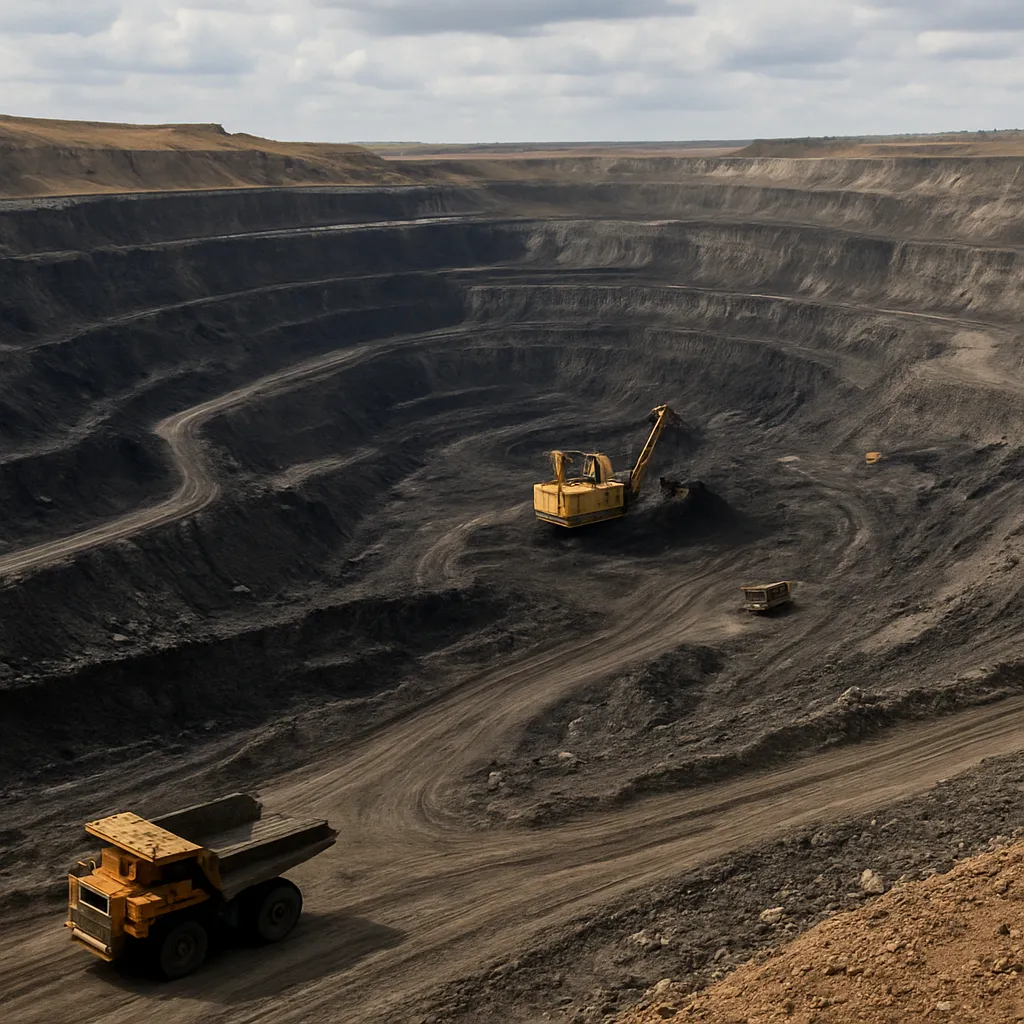
Geologically, the deposit is part of the broader South Gobi coal-bearing basins. Coal seams occur within continental sedimentary sequences — fluvial and lacustrine deposits — that accumulated in Meso-Cenozoic basins. The deposit is typical of many Gobi coalfields in that it is accessible via surface (open-pit) mining methods, with relatively shallow overburden in many sections and lateral continuity of economically minable seams.
Coal quality and types
Naryn Sukhait primarily produces thermal or steam coal destined for power generation and industrial heat in neighboring regions of China. The coal is commonly characterized as sub-bituminous to bituminous in rank, with variable but generally favorable qualities for combustion in large thermal plants.
- Calorific value: Typical reported ranges for Gobi thermal coal deposits, including Naryn Sukhait, fall roughly between 4,000–6,500 kcal/kg (gross calorific value), with variation between seams and mining blocks.
- Ash and sulfur: The coal tends to have moderate to low sulfur levels, and ash contents that vary by seam and require washing or blending for certain customers. Low-sulfur characteristics make the coal attractive for markets with emissions considerations.
- Coking potential: The deposit is generally not considered a primary source of high-grade coking coal; its main role is in the thermal coal market.
Quality variation across the deposit means that some product is sold as raw run-of-mine thermal coal, while other lots are likely beneficiated (washed and sized) to meet specific calorific and ash specifications required by industrial users and power plants in China.
Mining operations and logistics
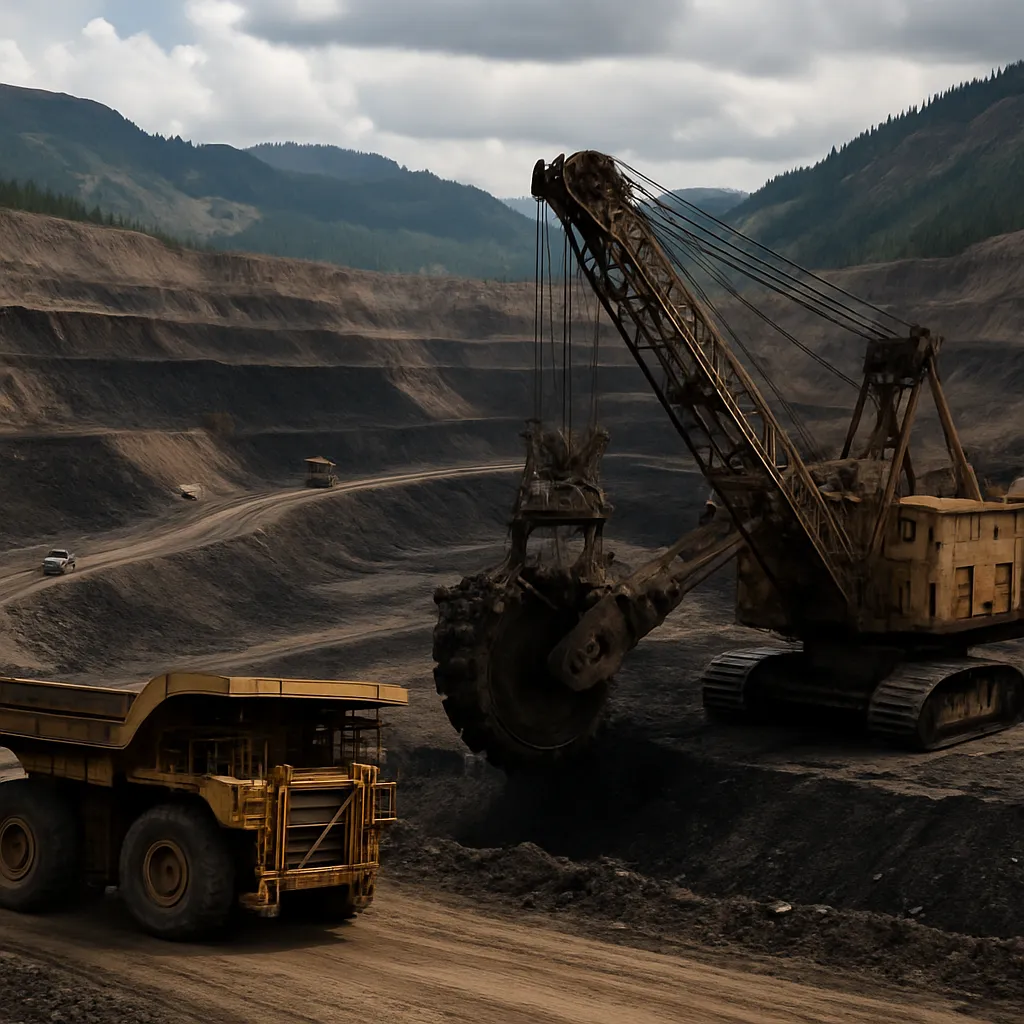
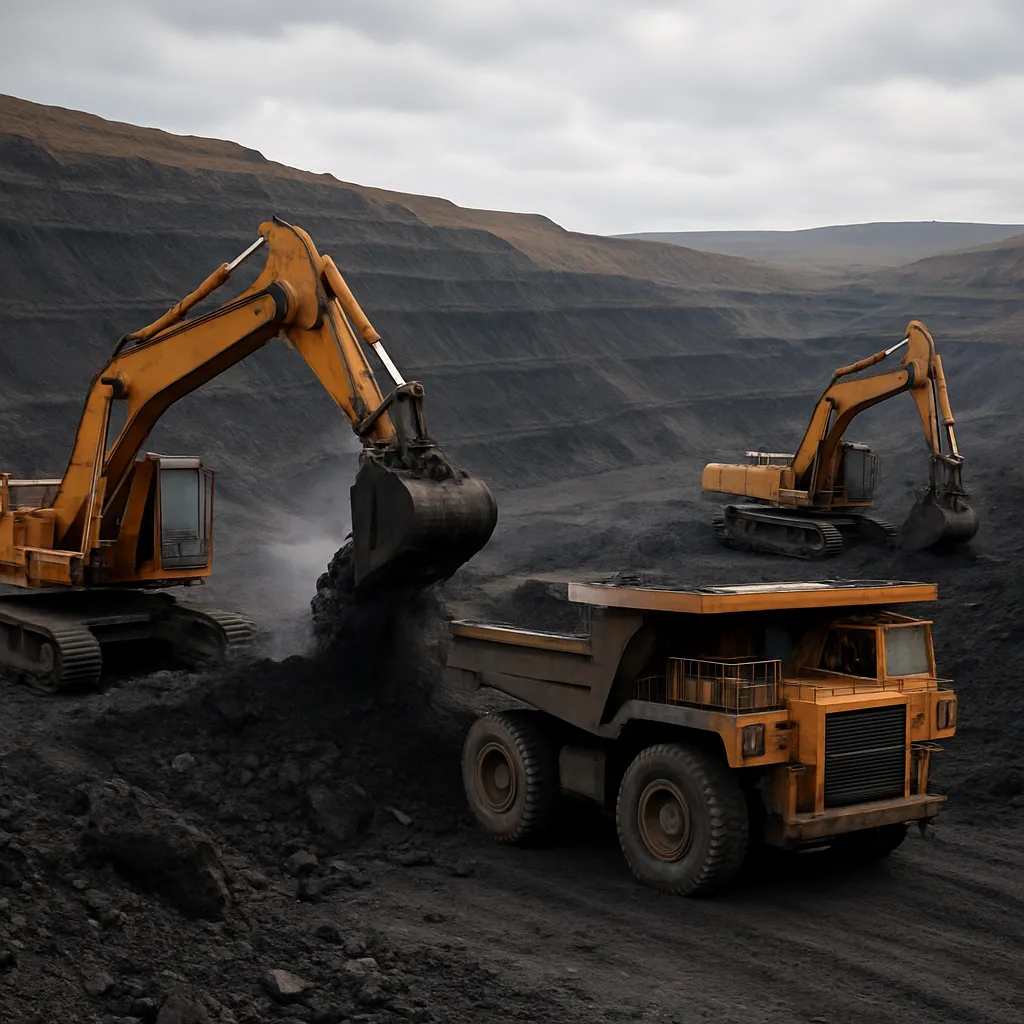
Mining at Naryn Sukhait is typically carried out using conventional open-pit techniques: stripping of overburden, drilling and blasting where required, excavation by excavators and trucks, and on-site processing such as crushing and screening. The simplicity of the deposit’s geometry and the favorable strip ratios in many areas make bulk mining economically feasible.
- Transport: One of the mine’s most important advantages is its short hauling distance to the border. Coal is generally trucked to border transfer points and then delivered to Chinese buyers who handle onward rail transport or direct use in nearby facilities. This cost-effective logistics chain is a major reason why South Gobi deposits play a prominent export role.
- Infrastructure: Typical infrastructure includes road maintenance, weighbridges, fuel and maintenance depots, crushers and screens, temporary stockyards, customs processing points at the border, and workforce camps with basic services. Water supply in the Gobi is constrained; mining operations therefore often invest in water recycling and efficient water use systems.
- Seasonality and operations: Weather extremes in the Gobi (hot summers, very cold winters, occasional dust storms) affect operations, road access, and truck throughput. Companies operating at Naryn Sukhait adapt schedules and logistics to seasonal constraints.
Ownership, contracts and market links
Over time, Naryn Sukhait has been exploited through various Mongolian companies and joint-venture arrangements with Chinese partners and off-takers. The deposit’s commercial model has depended heavily on long-term and spot contracts with Chinese buyers, who require steady supplies of thermal coal for power generation and industrial uses.
Typical commercial patterns include:
- Long-term supply contracts with Chinese state-owned or provincial utilities and industrial consumers.
- Spot sales and merchant trading through intermediaries active in Inner Mongolia and neighboring Chinese provinces.
- Local Mongolian companies’ involvement in extraction, with cross-border logistics often coordinated by buyers to ensure consistent delivery to plants and railheads.
The near-border location reduces transport time and cost relative to more remote Mongolian deposits, which fosters stable demand from provincial buyers in China looking to secure reliable, relatively low-cost thermal coal.
Economic and industrial significance
Naryn Sukhait contributes to Mongolia’s export earnings and to local and national employment. Its principal economic roles include:
- Export revenue: Coal exports to China represent a major source of foreign exchange for Mongolia; South Gobi mines such as Naryn Sukhait are part of that export base. Even modest production levels can translate into significant revenue given Chinese demand.
- Regional economic activity: The mine creates direct jobs in mining, logistics and maintenance, and indirect jobs in service sectors (transport, catering, equipment supply). Local procurement and infrastructure spending stimulate regional economies in Omnogovi province.
- Energy security for buyers: For Chinese provincial grids and industrial facilities near the border, Naryn Sukhait and similar mines provide a local coal source that reduces reliance on more distant suppliers.
The exact share of Mongolia’s coal exports represented by Naryn Sukhait fluctuates with production and market conditions. In general terms, production from southern deposits collectively comprises the bulk of Mongolia’s exported thermal coal tonnage, with north and central coalfields playing smaller or different roles (e.g., coking coal exports from other regions).
Statistical context and indicative figures
Precise, up-to-date production and reserve numbers for Naryn Sukhait can vary by reporting source and by year. The following are indicative figures and ranges intended to provide a useful context rather than definitive accounting:
- Reserves and resources: Publicly reported resource estimates for deposits in the South Gobi vary widely by block and by the stage of exploration and feasibility work. Many deposits in the area have resources on the order of tens to several hundreds of millions of tonnes; Naryn Sukhait is often grouped among deposits with hundreds of millions of tonnes in-place resources when including measured, indicated and inferred categories across multiple seams.
- Annual production: Annual output from a single deposit and its associated mine complex can vary from under 1 million tonnes to several million tonnes depending on development stage and market demand. Naryn Sukhait’s reported production in various periods has fallen in wide ranges; it has been a modest but steady contributor to Mongolia’s thermal coal exports, with output responsive to contract volumes and truck/transport capacities.
- Export flows: The dominant destination for coal from Naryn Sukhait is China, delivered to nearby provinces and power/industrial facilities. At the national level, Mongolia’s coal exports have in some years exceeded 20–30 million tonnes, with a significant portion coming from South Gobi operations.
Because reporting varies, readers seeking precise annual tonnages or up-to-the-month reserve statements should consult the latest company disclosures from the operating entities, government mineral resources publications, and border export statistics published by Mongolian and Chinese authorities.
Environmental and social considerations
Mining in the arid Gobi environment raises particular environmental and social issues that are relevant to Naryn Sukhait:
- Water use: The Gobi is water-scarce. Mining operations must manage water carefully, often relying on recycling, efficient dust suppression measures that minimize freshwater consumption, and contingency plans for limited groundwater resources.
- Dust and air quality: Trucking and open-pit extraction generate dust, which can affect local communities, livestock and biodiversity. Dust control measures (paved or treated haul roads, water or chemical suppressants, and enclosures for crushers) help mitigate impacts.
- Biodiversity and grazing: The region is used for pastoralism; disturbances to grazing routes, wells and habitats can impact nomadic herders. Responsible operations engage in stakeholder consultation, compensation where appropriate, and measures to minimize land disturbance.
- Rehabilitation: Progressive rehabilitation of disturbed land, and planning for eventual mine closure, are important long-term obligations. Closure plans typically cover landform re-contouring, topsoil replacement (where feasible), and monitoring.
Socially, the mine provides employment and local business opportunities but can also strain local services and alter traditional livelihoods. Effective social investment programs, transparent employment practices, and ongoing consultation with herders and local authorities are important for maintaining social license to operate.
Operational challenges and regulatory environment
Several common challenges affect operations at Naryn Sukhait and similar deposits:
- Cross-border trade and customs: Because the market is primarily across the border, mine operators must navigate customs procedures, trucking regulations, and bilateral trade arrangements that can affect throughput and payment cycles.
- Price volatility: Thermal coal prices in regional markets can fluctuate with changes in Chinese demand, domestic energy policies, and international fuel competition (gas, renewables). This volatility feeds into contract negotiations and investment planning.
- Infrastructure constraints: Road quality and trucking capacity limit daily tonnage that can be moved to customers. Investment in road upgrades, truck fleets, and border facilities directly increases sales potential.
- Permitting and regulation: Mongolian mineral rights, environmental permitting, and local land-use agreements impose regulatory steps that operators must manage carefully. Changes in regulation or enforcement intensity can affect project timelines and costs.
Future prospects and strategic considerations
Looking ahead, several trends will influence Naryn Sukhait’s role:
- Chinese demand dynamics: The trajectory of coal-fired power generation and industrial coal use in China will largely determine long-term demand for border-produced thermal coal. Policies aimed at emissions reduction and cleaner fuels may reduce demand in some segments while creating demand for coal with specific quality attributes (e.g., low sulfur).
- Logistics upgrades: Improved road or cross-border infrastructure can increase the mine’s market reach and reduce unit transport costs. Potential integration with wider regional infrastructure initiatives would benefit throughput.
- Value chain integration: Opportunities exist to add value through washing, blending and quality certification to command higher prices and meet stricter buyer specifications.
- Environmental compliance and community relations: Operators with robust environmental management and community engagement programs will be better positioned to secure long-term permits and social acceptance.
Interesting facts and wider context
Some broader points that illustrate the deposit’s place in the regional mining landscape:
- Strategic border location: The proximity to China transforms what might otherwise be a small domestic mine into an export-oriented commodity producer, underscoring how geography shapes mineral economics.
- Complement to larger projects: Naryn Sukhait-type deposits complement mega-projects (e.g., larger coal or metallurgical operations elsewhere in Mongolia) by supplying thermal coal and by providing employment diversity in the region.
- Flexible production model: Because of the trucking-to-border model, production at Naryn Sukhait can be scaled relatively quickly compared with rail-dependent mines, enabling responsiveness to short-term demand changes.
Summary
The Naryn Sukhait coal deposit is an important part of the South Gobi’s mining portfolio. Its principal strengths are location close to Chinese buyers, accessible open-pit geology, and thermal coal quality that fits regional needs. Economic benefits accrue through export revenues and local employment, while environmental and social responsibilities require ongoing management in a water-scarce, pastoral landscape. Quantitative reporting for resources and annual production varies with operators and market conditions; reported resource estimates commonly place such South Gobi deposits in the range of tens to hundreds of millions of tonnes in-place, and annual outputs for individual mines can range from under one million tonnes to several million tonnes depending on scale and logistics. The deposit’s future depends on Chinese demand patterns, infrastructure improvements, environmental regulation, and investments in processing and logistics that can raise product value and market resilience.