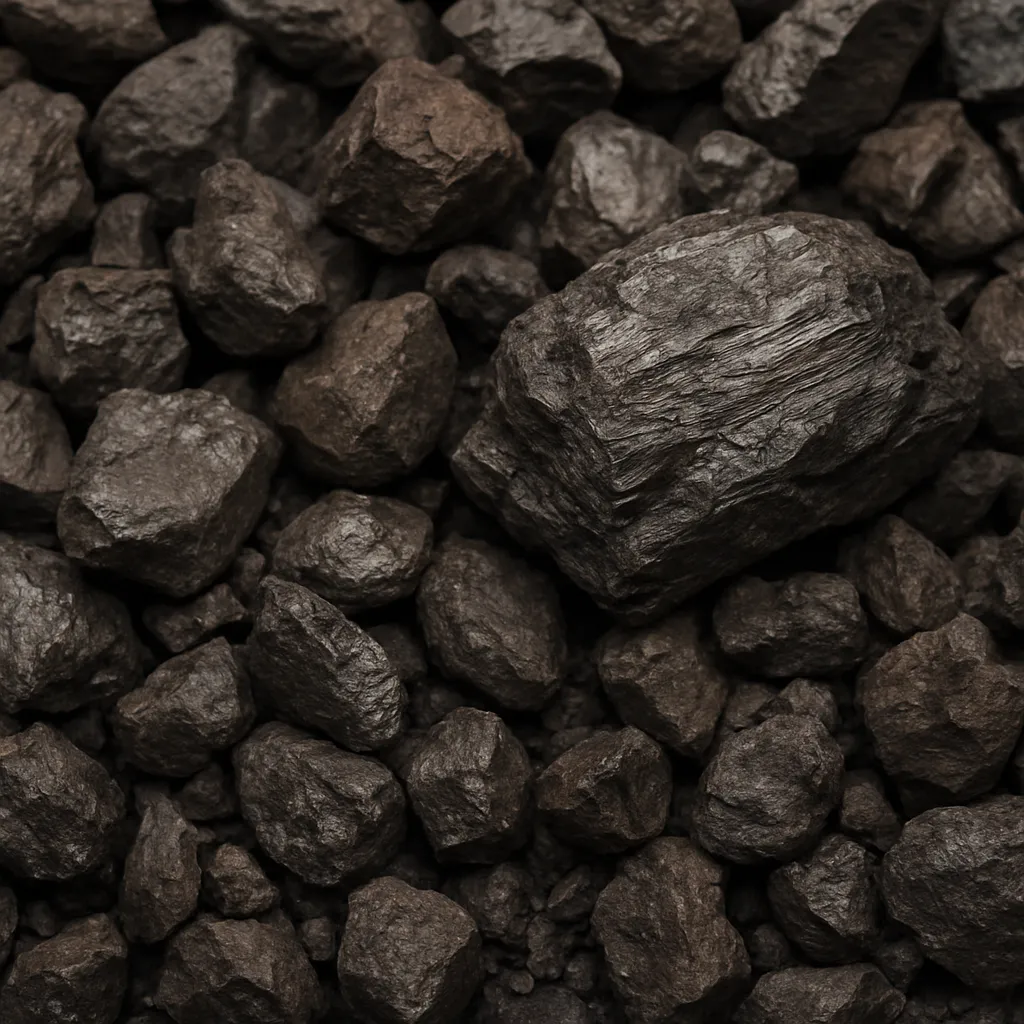
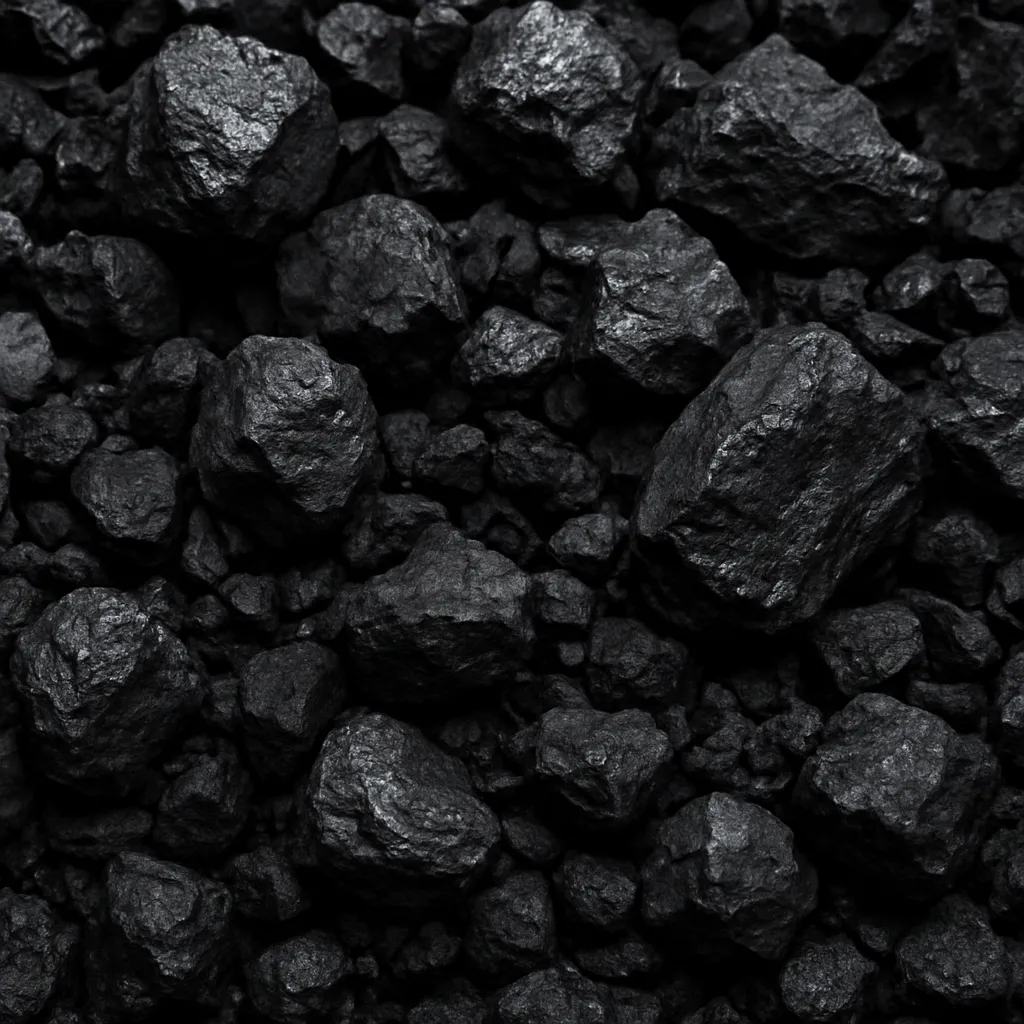
This article examines H-grade coal — a term often used in industry to denote higher-quality coal with significant heat output and specific properties that make it valuable for energy and metallurgical use. The text covers geological occurrence, major producing regions, mining and processing methods, economic and statistical perspectives, industrial significance (especially for steelmaking and power), and environmental and future considerations. Throughout the article you will find technical descriptions, market context and practical implications for policymakers, investors and industrial users.
What is H-grade coal? Definitions, classification and physical properties
H-grade coal is not a universally standardized single category but is commonly used in trade and technical discussions to indicate coal of relatively high rank and performance. In many contexts H-grade refers to coal with a high fixed carbon content, elevated calorific value, and favorable coking and combustion characteristics. This makes it particularly suited for metallurgical processes (coking coal for steel) and high-efficiency power generation. Typical attributes associated with H-grade coal include low moisture, low ash, moderate-to-low sulfur, and physical properties that support cokemaking and strong mechanical strength in coke.
Coal rank is a spectrum from lignite through sub-bituminous and bituminous to anthracite. H-grade coals commonly fall into the upper bituminous to anthracite range or are high-quality bituminous coals prized for coking. Measured properties used to classify and price H-grade include gross calorific value (often expressed in MJ/kg or kcal/kg), fixed carbon percentage, volatile matter, ash content, sulfur content and the coal’s caking or plasticity characteristics (Gieseler, Free Swelling Index, or Roga index). For example, high-quality metallurgical coals often exhibit calorific values in the range of roughly 26–33 MJ/kg (about 6,200–7,900 kcal/kg), with low ash (<10%) and low sulfur (<1% typical for premium grades).
Geology and global occurrence of high-grade coal
Coal forms from the burial and diagenesis of plant material in ancient swamps and deltas; subsequent burial, heating and tectonism drive coalification to higher ranks. H-grade coals are commonly associated with basins that have experienced deeper burial, stronger thermal maturation, or tectonic compression resulting in higher rank (less volatile, higher carbon). Typical geological provinces hosting high-grade coals include:
- Appalachian Basin (United States) — historically important for high-rank anthracite and bituminous coals, notably in Pennsylvania, West Virginia and nearby states.
- Kuznetsk Basin (Kuzbass) and the Kansk-Achinsk basins in Russia — major producers of both thermal and metallurgical coal, including higher-rank seams.
- Donetsk Basin (Donbas) in Ukraine — long-established source of bituminous coals with high fixed carbon.
- Bowen Basin and Hunter Valley in Australia — globally significant for high-quality coking and thermal coal exported to Asia and beyond.
- Inner Mongolia and Shanxi provinces in China, and the Tavan Tolgoi area in Mongolia — important for both metallurgical and thermal grades.
- South Africa (Highveld) — producers of bituminous coals with varying quality, some higher-ranked material suitable for power and industrial processes.
- Colombia (Cerrejón and Cesar basins) and Canada (British Columbia) — notable seaborne suppliers of higher-quality thermal coal.
These occurrences are controlled by basin architecture, depth of burial, geothermal gradients and regional metamorphism. Zones of intense deformation (fold and thrust belts) often contain higher-rank seams, but those geological settings can make mining more complex and costly due to faulting and seam variability.
Typical deposit characteristics and seam depths
H-grade seams can range from near-surface deposits amenable to open-pit mining to deeply buried seams requiring underground longwall or room-and-pillar methods. High-rank coals are often found at greater depths in basins with prolonged burial, whereas shallower basins more commonly host lower-rank coals. Seam thickness, continuity and overburden characteristics determine mining method choice and influence the delivered cost of product to market.
Where H-grade coal is mined: major producing countries and regions
Global production of high-quality coals for metallurgical and premium thermal uses is concentrated in certain countries with large endowment and established infrastructure. Key producers of H-grade coal include:
- Australia — one of the largest exporters of both metallurgical (coking) and thermal coal. Major basins (Queensland and New South Wales) supply Asia, especially China, Japan, South Korea and India.
- Russia — significant exports from Siberian basins and the Far East; supplies both metallurgical and thermal grades to Europe and Asia.
- United States — produces high-quality bituminous coals in Appalachia and high-volume sub-bituminous coal in the Powder River Basin; Appalachian coals are often higher rank and used in steel and specialized applications.
- Canada and Colombia — important seaborne suppliers of thermal coal with competitive logistics to the Americas and trans-Pacific markets.
- South Africa — export-oriented industry with quality coal used for power and industry.
- China and India — both large domestic producers; while China produces a broad spectrum of ranks (including anthracite and high-rank bituminous), India is an important producer of coking coals for its steel industry.
- Mongolia — rapidly growing supplier of metallurgical and thermal coals, with large deposits such as Tavan Tolgoi targeted at Chinese and global markets.
Mined volumes, export levels and relative importance vary: Australia and Indonesia dominate seaborne thermal coal by tonnage, while Australia, Canada and the U.S. (Appalachia) are major players in coking coal markets. Russia’s exports surged in some periods, reshaping trade flows, while political events, transport bottlenecks and trade policy can quickly alter supply patterns and prices.
Mining methods, preparation and quality control
Mining H-grade coal involves conventional open-pit and underground techniques. For seamed, high-quality coals suitable for coking, underground longwall mining in Australia, the U.S. and Russia is common, delivering high recovery and continuity. Open-pit mining dominates where seams are near-surface and overburden economics favor bulk extraction. Key processing steps include crushing, screening, washing (coal beneficiation) to remove ash and impurities, and blending to meet strict spec sheets required by buyers.
Coal preparation plants use gravity separation, dense media separation and flotation to upgrade run-of-mine product. Specification control is critical for H-grade coal because small variations in ash, sulfur and volatile matter can materially affect steelmaking performance or boiler efficiency. Laboratory analyses and in-line monitoring confirm calorific value, moisture, fixed carbon and ash, while metallurgical coal is also tested for caking properties and coke strength after reaction (CSR/CSI).
Economic and statistical overview
Coal remains a major global commodity despite the energy transition. Global production and trade figures vary year by year; in the early 2020s total global coal production was on the order of several billion tonnes annually. Seaborne trade accounts for a significant share of international flows, particularly for thermal coal consumed by non-domestic sources and for metallurgical coal used in steelmaking globally.
Approximate and representative statistics (subject to change with market conditions):
- Global coal production (all ranks) in recent years has been approximately 7–8 billion tonnes per year (metric), with fluctuations driven by growth in Asia and declining use in some OECD markets.
- Seaborne coal trade (thermal + metallurgical) typically ranges in excess of 1 billion tonnes annually; seaborne metallurgical coal trade is smaller, roughly in the low hundreds of millions of tonnes per year, while thermal seaborne trade is larger.
- Australia is frequently the world’s largest exporter of both thermal and coking coal by tonnage, exporting several hundred million tonnes annually across both categories. Other large exporters include Indonesia (mainly thermal), Russia, Colombia and South Africa.
- Price volatility is a notable feature: coking coal prices can spike sharply during supply disruptions because steelmaking relies on a relatively tight seaborne coking market; thermal coal prices are also sensitive to seasonal and policy-driven demand shifts.
The economic value of H-grade coal per tonne is higher than lower-grade thermal coal because of its higher energy density and specialized uses. This premium supports investment in deeper or more complex mines. For producing countries, high-grade coal exports can contribute materially to national revenues, foreign exchange reserves and regional employment. In major producing regions, royalties, corporate taxes and local economic multipliers mean coal operations can be central to regional development.
Industrial significance: steelmaking, power generation and beyond
H-grade coals are critical for two overarching industrial uses:
- Metallurgical use (coking coal): High-quality H-grade coking coals are essential feedstock for blast furnaces to produce coke, the reactive carbon used in iron reduction. The quality of coke — its strength, porosity and reactivity — derives directly from the rank and caking properties of the input coal blend. Because steel production is foundational to construction, automotive, machinery and many other sectors, metallurgical coal has strategic industrial importance.
- High-efficiency thermal generation and industrial heating: H-grade thermal coals, with high calorific value and low ash, support efficient power plants (higher heat rates, lower fuel handling costs) and industrial boilers (cement, chemicals, paper). In some power systems, switching to higher-quality coal can reduce fuel consumption per unit of electricity, though environmental impacts remain significant relative to low-carbon options.
Other niche uses include activated carbon production, certain carbon black feedstocks and coal-based chemical processes (e.g., coal-to-chemicals or coal gasification). Historically, coal-derived products have supported local chemical industries and provided feedstock flexibility, though many such processes face economic competition from natural gas and renewables.
Trade dynamics, pricing and market drivers
Markets for H-grade coal are shaped by supply bottlenecks (logistics, port capacity), geopolitical events, demand from steelmakers (which closely track construction and durable goods demand), and policy/regulatory shifts (carbon pricing, air quality limits). Key drivers include:
- Steel demand cycles — growth in infrastructure and manufacturing propels metallurgical coal demand.
- Policy and environmental regulation — emissions targets, sulfur and particulate controls can either constrain or shift demand.
- Logistics and transport costs — distance to seaborne markets, rail and port throughput materially affect delivered cost and competitiveness.
- Geopolitical shocks — sanctions, trade restrictions and conflict can reroute trade flows and create price dislocations.
The seaborne coking coal market is relatively concentrated in supply and can show significant price swings, while thermal coal markets can show regional segmentation (e.g., Asia-Pacific, Atlantic). Hedging, long-term contracts and spot trading coexist; steel producers often secure long-term supply for metallurgical coal to ensure quality and availability.
Environmental impacts and mitigation: emissions, air quality and climate policy
H-grade coal, while more energy-dense than low-rank coal, still contributes substantial greenhouse gas emissions when combusted. Key environmental issues include CO2 emissions from combustion, particulate and SOx/NOx emissions affecting air quality, and local impacts of mining such as land disturbance, water use, and acid mine drainage risk.
Mitigation strategies and technologies include:
- Coal washing and beneficiation to reduce ash and improve combustion efficiency.
- End-of-pipe emission control systems in power plants and industrial boilers (scrubbers, selective catalytic reduction, particulate filters).
- High-efficiency, low-emission (HELE) coal technologies that improve plant thermal efficiency and reduce CO2 per MWh.
- Carbon capture, utilization and storage (CCUS) applied to coal-fired plants and industrial processes, although deployment is still limited by cost and infrastructure needs.
- Transition strategies in steelmaking, including partial substitution with scrap in electric arc furnaces, direct reduced iron (DRI) using hydrogen, and increased recycling — each reducing long-term reliance on coking coal but requiring time and investment.
Even with efficiency improvements, coal combustion remains carbon-intensive relative to natural gas, renewables and nuclear options. Policies such as carbon pricing, emissions trading systems and regulatory limits on new coal plants influence the long-term market for H-grade coal, especially in countries committed to net-zero targets.
Socioeconomic impacts: employment, royalties and regional development
Coal mining communities often rely heavily on industry for employment, infrastructure and public revenues. H-grade coal projects can bring well-paid jobs, local procurement and government revenue through royalties and taxes. However, they also pose social challenges: boom-bust cycles, dependence on a single commodity, health impacts from mining and combustion, and future transition needs as demand potentially declines.
Effective socioeconomic management involves planning for diversification, skills retraining, environmental remediation and transparent benefit-sharing mechanisms so that communities retain value after mines close or scale down.
Trends, innovations and the future of H-grade coal
Several trends will shape H-grade coal’s future:
- Energy transition and steel decarbonization: Long-term structural decline in thermal coal use is possible in economies rapidly adopting renewables. Metallurgical coal demand, tied to steel, faces technological alternatives (DRI with hydrogen, greater scrap use) but is likely to persist for decades given the current steelmaking fleet.
- Technology deployment: CCUS, process electrification and cleaner combustion could prolong the role of coal in some regions if costs fall and policy supports deployment.
- Market reorientation and supply security: Producers and consumers may reassess supply chains for resilience; diversified sourcing and long-term contracts remain common strategies.
- Regulatory and financial pressure: Banks and investors increasingly assess climate-related risk; financing for coal projects has become more constrained in some jurisdictions, affecting the economics of new H-grade mine development.
Innovation opportunities include improved beneficiation to increase yields of high-grade product, more efficient mining methods reducing environmental footprints, and integration of renewables into mining operations to reduce Scope 2 emissions.
Interesting facts and less obvious considerations
– H-grade coals used for coking are often blended in complex recipes: no single coal usually meets all metallurgical specifications, so producers blend several sources to achieve target coke properties.
– Logistics frequently drive competitiveness as much as in-mine quality: a lower-quality coal close to major ports may outcompete higher-grade coal from remote basins once delivered cost is considered.
– Some regions with H-grade resources have remained undeveloped because of difficult geology, lack of infrastructure or environmental constraints; unlocking such resources typically requires large capital investments.
– Coal reserves and resources are large globally, but economically recoverable reserves depend on price, technology and regulation. High-grade seams are a smaller fraction of total resource volume but generate a disproportionate value share due to price premiums.
– In periods of steel market tightness, premiums for premium H-grade coking coals can be several times higher than generic thermal coal prices, reflecting strategic importance and limited substitutability.
Conclusion: balancing value, risk and transition
H-grade coal occupies a distinctive niche in the global energy and industrial landscape: valued for its high calorific value and role in critical processes like steelmaking, yet increasingly scrutinized for environmental impacts. Major producing countries such as Australia, Russia, the United States and China leverage H-grade coal for export revenues, domestic industry and energy security. Markets for H-grade coal are influenced by cyclical industrial demand, transport and logistics, geopolitics and evolving climate policy. For stakeholders — governments, companies and communities — the near-term economics are often favorable for existing high-quality operations, while long-term strategy must weigh carbon constraints, technological alternatives for steelmaking and the need for responsible transition planning.
Understanding H-grade coal requires integrating geological knowledge, market economics and policy foresight. The commodity will remain relevant in specific industrial contexts for years to come, but its role and scale will be shaped by technological progress, regulatory regimes and global efforts to reduce greenhouse gas emissions.