The Glendell Mine is a significant open-cut coal operation in New South Wales, Australia, located within one of the country’s most productive coal regions. This article provides an in-depth overview of the mine’s location, geology, operational profile, economic and industrial role, environmental and social context, and statistical and regulatory details. The aim is to present a rounded picture of Glendell’s technical characteristics, market importance, and the contemporary challenges and opportunities facing coal operations in the region. Key terms such as Glendell Mine, Hunter Valley, and thermal coal are emphasized to highlight the mine’s central features.
Location and Geological Setting
The Glendell Mine is situated in the Hunter Valley coal basin of New South Wales (NSW), one of Australia’s foremost coal-producing regions. The Hunter Valley lies north of Sydney and encompasses a corridor of open-cut and underground mines, rail infrastructure, and export terminals that service both domestic power stations and international markets. Glendell is located near the municipalities of Muswellbrook and Singleton, an area that hosts multiple coal operations and associated service industries.
Geologically, the deposit exploited by Glendell is part of the Permian coal measures typical of the Hunter Basin. These strata contain multiple seams of varying thickness and quality. The mine extracts predominantly thermal coal—coal suited for electricity generation—drawn from relatively shallow, laterally extensive seams that are economically amenable to large-scale open-cut mining. The local geology involves interbedded sandstones, siltstones, and coal seams, with overburden that is removed to access coal seams with conventional heavy earthmoving equipment.
Operations, Mining Methods and Coal Quality
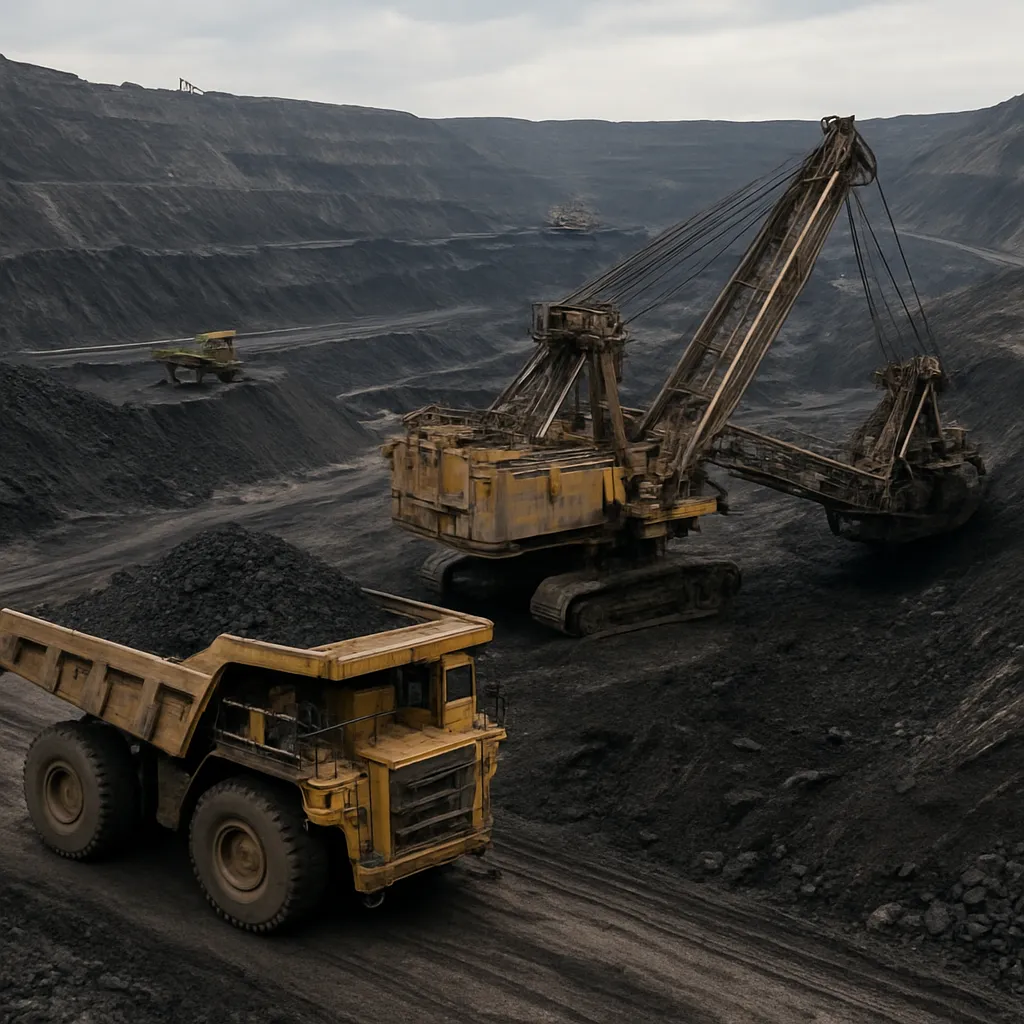
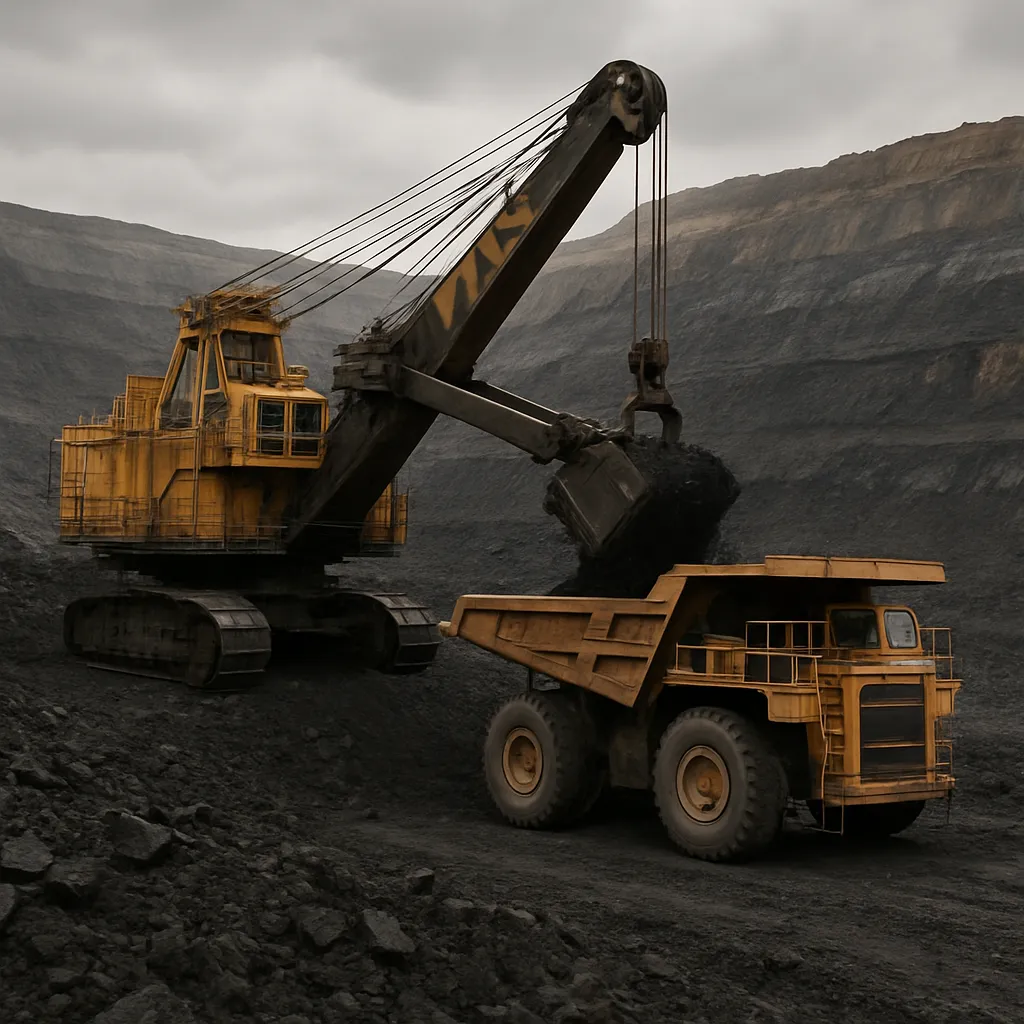
Glendell operates as an open-cut (open-pit) mine. Typical equipment for such operations includes electric rope shovels, hydraulic excavators, haul trucks, and continuous dumping conveyors where applicable. Material handling follows standard open-cut workflows: overburden removal, coal extraction, on-site processing (screening, blending), and loadout for rail transport.
Coal Types and Quality
- Thermal coal: The mine primarily produces thermal coal used for power generation. The coal tends to be medium- to high-volatile bituminous, with calorific values that make it attractive to both domestic power utilities and export markets.
- Product specifications: Typical output is sold as run-of-mine or after simple preparation (screening and washing to remove impurities). Product parameters of interest to buyers include calorific value (energy content), ash percentage, moisture, sulfur content, and volatile matter.
- Market fit: Glendell’s coal is generally targeted at the thermal market—energy utilities in Asia and, historically, domestic Australian power stations. Some blends may be used in industrial boilers and other combustion applications.
Modern coal handling at Glendell includes measures to preserve product quality: segregated stockpiles, controlled blending, and dust suppression on stockyards and loadout areas. These practices help meet customer specifications and regulatory environmental controls.
Economic Role and Market Position
Glendell plays a clear role in both the local Hunter Valley economy and the wider coal export trade. The mine contributes to economic activity through direct employment, contracting opportunities, rail logistics, and port throughput. It is part of a regional cluster of mines whose combined output supports one of the world’s largest coal export chains.
Employment and Local Economy
- Workforce: The operation employs a mix of direct employees and contract workers. While precise headcounts vary with mining schedules and expansions, typical open-cut coal operations of Glendell’s scale involve several hundred personnel on site including operators, maintenance crews, environmental staff, and administrative support.
- Supply chain impact: Local businesses supply fuel, consumables, heavy equipment maintenance, accommodation, and catering services. The mine’s spending circulates through local towns and supports regional infrastructure.
Exports, Logistics and Markets
Coal from Glendell is transported by rail to export terminals—primarily the Port of Newcastle—where it is loaded onto bulk carriers for international markets. Major destinations for Hunter Valley thermal coal historically include countries across East and South Asia such as Japan, South Korea, China, Taiwan, Indonesia, India, and increasingly Southeast Asian nations. The mine’s coal also serves domestic energy markets when contracted locally.
In the global coal trade, Glendell and neighboring mines contribute to Australia’s position as a leading coal exporter. This export revenue is significant for Australia’s balance of trade and for the fiscal health of regional governments that collect royalties, taxes, and fees associated with mining activity.
Statistical Profile and Production Data
Production figures for individual mines can vary annually due to market demand, operational constraints, and regulatory approvals. Glendell’s output is commonly reported in the range of several million tonnes per annum. Estimates compiled from industry reports and operator releases indicate an annual production on the order of 4–6 million tonnes of saleable coal in typical operating years. This places Glendell among the medium-to-large scale producers in the Hunter Valley context.
- Annual production (approx.): 4–6 million tonnes saleable coal per year (varies by year and life-of-mine plans).
- Employment: Several hundred direct and contract employees on-site during peak operations.
- Market share: As part of the Hunter Valley cluster, Glendell contributes a meaningful share of regional export tonnage, though major cumulative export levels are largely driven by the collective output of multiple adjacent mines and the rail/port system.
Note: Exact production and reserve figures are periodically updated in company reports and government mine-approval documents. For decision-making or investment purposes, consult the operator’s latest annual or sustainability report and NSW Department of Planning & Environment records for the most current certified statistics.
Ownership, Approvals and Regulatory Context
Glendell has been operated as part of larger coal company portfolios that manage multiple Hunter Valley assets. The mine’s operating approvals, extensions, and rehabilitation commitments are governed by NSW state mining legislation and environmental approvals from state agencies. Regulatory oversight includes conditions related to noise, dust, blasting, water management, and progressive rehabilitation.
Major regulatory themes for Glendell and neighbouring mines include:
- Environmental impact assessments (EIA) required for extensions and modifications.
- Community consultation and agreements addressing local impacts and benefits.
- Financial assurances and rehabilitation bonds to ensure landscape restoration after mining ceases.
- Emissions reporting and compliance related to air quality and greenhouse gas disclosures at company and national reporting levels.
Environmental Management and Community Relations
In common with modern mining practice, Glendell has systems in place to manage its environmental footprint and maintain community relations. These include dust suppression, progressive rehabilitation of disturbed land, water management strategies to protect local catchments, and monitoring programs for noise and air quality.
Rehabilitation and Land Use
Progressive rehabilitation is a core regulatory requirement. After coal extraction, works are undertaken to regrade benches, replace topsoil, and revegetate areas using native species where practicable. Rehabilitation aims to return land to productive uses, which may include biodiversity corridors, grazing, or other regional land uses agreed with stakeholders. Financial bonds and formal rehabilitation plans ensure that ecological and visual outcomes are considered across the life of mine.
Community Engagement
Community engagement efforts typically focus on:
- Local employment and training initiatives.
- Support for community projects and infrastructure through community investment programs.
- Transparent reporting of environmental performance and timely communication about blasting, traffic, and other operational events.
These efforts aim to balance the mine’s economic contributions with responsiveness to community concerns about air quality, water use, and the visual impact of mining operations.
Role in Energy Transition and Industry Trends
The role of coal mines like Glendell is being reassessed globally as energy systems transition toward lower-carbon sources. Despite this, thermal coal remains a significant energy source in many parts of Asia, and export demand has persisted in cycles depending on global economic conditions and energy policies.
Industry trends affecting Glendell include:
- Fluctuations in international coal prices driven by demand from Asia, currency exchange rates, and shifting energy policies.
- Increasing scrutiny of emissions across the supply chain, prompting coal producers and customers to assess carbon intensity and lifecycle emissions.
- Technological changes in mining and transport that improve efficiency and reduce local environmental impacts (e.g., fleet electrification, improved dust controls).
Consequently, Glendell’s business planning includes managing market volatility, meeting environmental compliance, and exploring operational efficiencies to remain competitive in a changing global energy landscape.
Interesting Operational and Historical Notes
- Regional clustering: Glendell operates alongside multiple adjacent mines, creating logistical and infrastructure synergies—particularly rail corridors and shared services—which help reduce unit costs and increase throughput efficiency at major export ports.
- Blending strategies: To meet diverse buyer specifications, the mine often employs coal blending practices—mixing different coal runs to achieve required calorific values and quality parameters.
- Local innovation: Companies in the Hunter Valley have implemented various initiatives to reduce dust, improve water recycling, and manage biodiversity offsets—practices often trialed and scaled within the region.
Recent Developments and Future Outlook
Glendell’s future is shaped by a combination of remaining reserves, regulatory approvals, market demand, and company strategy. Potential mine-life extensions require formal approvals and often face scrutiny from regulators and community stakeholders. Economic viability depends on global coal demand, operating costs, and the competitiveness of alternative energy sources.
Key factors that will influence Glendell’s trajectory include:
- Global thermal coal demand—especially in Asia—where slower-than-expected energy transitions or coal-fired capacity retirements will alter export opportunities.
- Regulatory environment in NSW and federal policy—especially environmental standards and rehabilitation expectations.
- Technological adoption—efficiencies in mining, transport, and emissions management can extend economic life while reducing local impacts.
Summary
Glendell Mine occupies an important niche within the Hunter Valley coal complex. As an open-cut producer of primarily thermal coal, it contributes to regional employment, export revenues, and the broader energy supply chain. The mine operates in a tightly regulated environment with active community engagement and environmental management programs designed to reduce local impacts and ensure rehabilitation. Production tends to be in the order of 4–6 million tonnes per year, with a workforce comprising several hundred direct and contracted roles.
Looking forward, Glendell’s prospects will be shaped by market demand, regulatory decisions, and industry responses to climate and sustainability challenges. For regional stakeholders, the mine remains an economic anchor, while for global markets it is part of the complex dynamics that determine coal trade flows and energy security in the Asia–Pacific region.