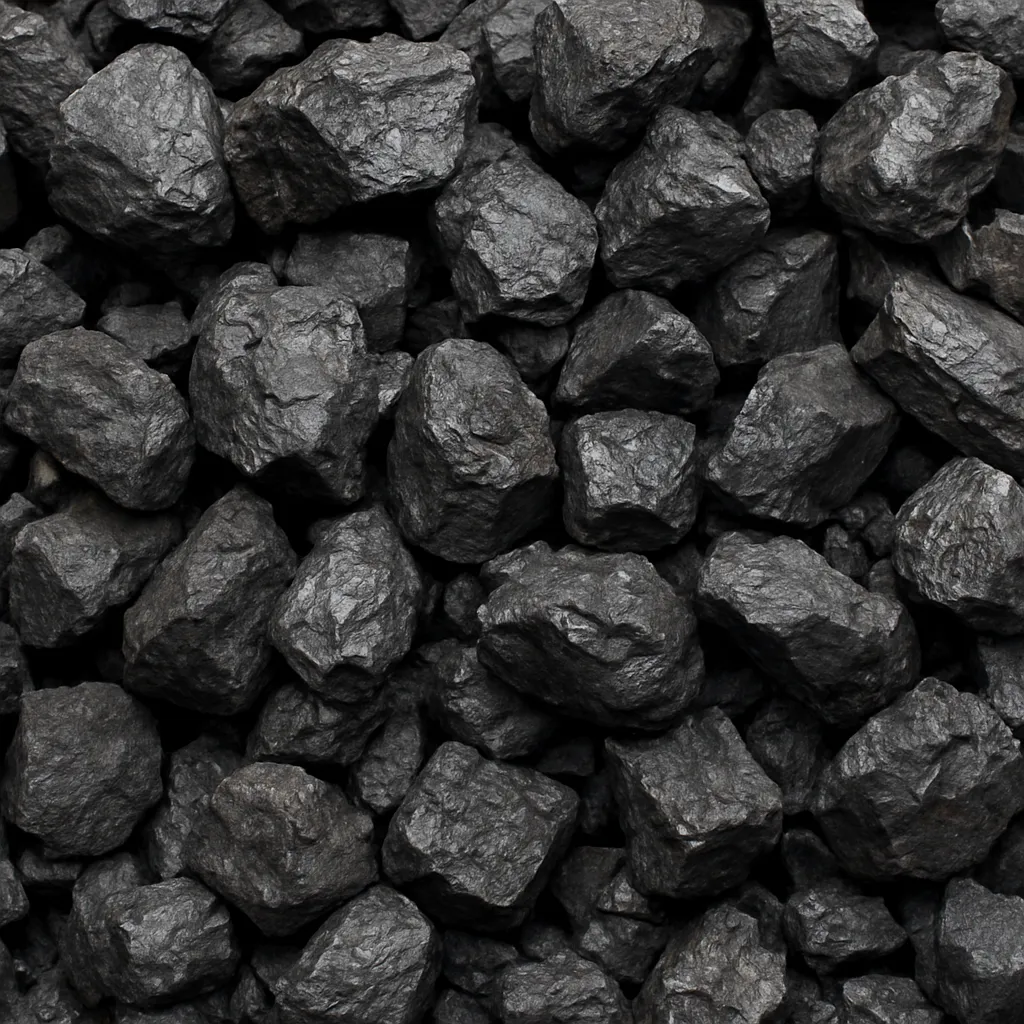
Premium metallurgical coal occupies a strategic niche at the intersection of geology, heavy industry and global trade. Also commonly referred to in industry parlance as high-grade coking material, this coal is the feedstock for coke production and, by extension, a cornerstone of traditional steel manufacture. The following article describes the geological origin and physical properties of premium metallurgical coal, where it is found and produced, its economic and statistical importance, its role in industrial processes, and current trends and challenges affecting supply, demand and the market outlook.
Geology, types and technical properties
Metallurgical coal is not a single uniform commodity but a group of coals that possess the necessary physical and chemical characteristics to form strong coke when heated in the absence of air. Within the industry the most prized categories are hard coking coal (HCC), medium coking coal (MCC), semi-soft coking coal (SSCC) and pulverized coal for injection (PCI). What makes a coal “premium” is a combination of low impurities and superior caking and coking properties: low ash and sulfur, low phosphorus, appropriate moisture and volatile-matter content, favorable plasticity and dilatation characteristics, and high carbon yield in the oven.
From a geological perspective, these coals are typically high-rank bituminous coals formed during the late Carboniferous to Permian periods in sedimentary basins subject to significant burial and thermal maturation. They tend to occur in thick, laterally continuous seams within basin environments that have experienced the right combination of pressure, temperature and time to concentrate the properties useful for coking. Coal quality varies by seam and by basin: even within a single mine there can be variation that requires careful washing, blending and quality control.
Key technical parameters
- Fluidity and dilatation: measures of the coal’s plastic behaviour during heating; required for good coke structure.
- Gieseler and Roga indices: laboratory tests that predict caking and swelling behaviour.
- Volatile matter and fixed carbon: influence coking behaviour and coke strength.
- Ash, sulfur and phosphorus: lower values are preferred; high sulfur or phosphorus can degrade steel properties and require additional metallurgical steps.
- Coke Strength After Reaction (CSR) and Coke Reactivity Index (CRI): operational metrics that steel producers use to assess coke performance in the blast furnace.
Premium coals consistently produce coke with high CSR and acceptable CRI values, translating into predictable blast-furnace performance and lower operational risk for steelmakers.
Global occurrence and major producing regions
Major concentrations of premium metallurgical coal are found in several well-known geological provinces. Large, export-oriented deposits and established mining infrastructure have created a global seaborne market for these coals, with a handful of producing regions dominating exports.
Australia
The Bowen Basin in Queensland and the Surat and Gunnedah basins are among the most significant sources of export-quality coking coals. Australia is consistently the world’s largest exporter of metallurgical coal, supplying a large share of the global seaborne trade. Australian mines produce a broad spectrum of coking coals, including many high-quality HCC products that are targeted at steelmakers in Asia.
Canada
British Columbia’s Elk Valley is a prominent source of premium HCC, with large open-pit operations focussed on producing low-ash, low-sulfur coals. Canadian material is often prized for its consistent quality and is exported to Asia and other seaborne markets.
Russia
Russia—particularly the Kuzbass (Kemerovo) region—has long been a major metallurgical coal producer, serving both domestic steel mills and export markets. Russian coals cover a spectrum from premium coking coals to lower-rank materials used for PCI and thermal purposes.
Other notable producers
- Mongolia: several large deposits near the Chinese border (e.g., Tavan Tolgoi, Ukhaa Khudag) have significant coking coal resources that feed the Chinese market.
- United States: parts of Appalachia and the Illinois Basin produce metallurgical coals; however, the US is a net importer of certain premium grades due to quality mismatches and logistics.
- Colombia: an important supplier of hard coking coal, with export routes to Europe and Asia.
- South Africa: has coking coal resources used both domestically and exported to global markets.
- China and India: both produce substantial volumes of metallurgical coal but also import specific premium grades to meet local steel industry requirements.
Location, seam thickness, mine scale, infrastructure and proximity to ports all play decisive roles in which deposits become the backbone of global supply.
Market structure, economics and statistics
The market for premium metallurgical coal is a hybrid of seaborne trade and domestic supply. Steel producers value consistency and predictability in feedstock because coke quality directly influences furnace throughput, coke rate and emissions. As a result, pricing for premium grades often reflects not only calorific value and chemical analysis but also proven coke performance data.
Supply and demand drivers
- Global steel production: the primary driver of metallurgical coal demand. Traditional steelmaking via the blast furnace-basic oxygen furnace (BF-BOF) route consumes the majority of met coal through coke production.
- Seaborne versus domestic supply: countries with large integrated steelmaking sectors (e.g., China, India) balance domestic mining with imported premium coals to optimize coke properties and cost.
- Infrastructure and shipping: long-haul maritime routes, shipping tonnage and port handling capacity influence delivered costs and market access.
- Quality segmentation: buyers are willing to pay premiums for coals that guarantee coke quality and operational stability.
Statistical picture (estimates and recent trends)
Global crude steel production has hovered around 1.8 to 1.9 billion tonnes in recent years (early 2020s). Roughly 70–75% of that steel has been produced via the BF-BOF route, which is coke-dependent, meaning that demand for metallurgical coal is tightly correlated with BF steel output.
Seaborne metallurgical coal trade has been estimated in the order of 150–230 million tonnes annually in the recent decade, depending on market disruptions and Chinese import policy. Australia accounts for a very large share of exports—often cited as between half and two-thirds of the seaborne market for coking coal—while countries such as Canada, Russia, Colombia and the United States supply meaningful additional volumes.
Price volatility has been pronounced: benchmark prices for premium hard coking coal can move sharply due to supply shocks (e.g., floods, mine accidents, export restrictions), geopolitical tensions, or surges in steel demand. For example, price spikes in the 2021–2022 period saw certain spot premiums reach multiple-hundred-dollar-per-tonne levels FOB Australia, whereas long-term contract benchmarks in calmer markets often settle much lower, in a more moderate band.
Economic importance for producing countries
For major exporters, premium metallurgical coal represents substantial export revenue, regional employment and tax receipts. In Australia and Canada, coking coal exports support port towns, rail corridors and mine servicing industries. In countries with domestic steel industries, metallurgical coal resources reduce input vulnerability and contribute to industrial competitiveness.
Role in steelmaking and associated industries
The central role of premium metallurgical coal is its conversion into coke, a porous, carbon-rich material produced in coke ovens through destructive distillation of coal. Coke performs two key functions in a blast furnace: it acts as a physical support bed for burden materials and serves as a chemical reductant to convert iron oxides into metallic iron. The quality of coke—density, strength, reactivity—directly influences furnace productivity, coke rate (amount of coke consumed per tonne of hot metal) and energy efficiency.
Process integration and quality needs
- Coke oven batteries require coals that oven homogenously and produce a coherent, strong coke mass.
- Steelmakers blend multiple coals to achieve targeted coke properties and to manage cost.
- Operations such as sintering, pelletizing and blast-furnace charging interact with coke quality; thus, feedstock selection is part of a broader metallurgical optimization.
Downstream products and by-products
Coke-making yields valuable by-products: coal tar, ammonia, benzole and light oils that feed chemical industries. The integration of metallurgical coal and coke-making into wider industrial value chains magnifies its economic importance beyond its direct contribution to steel production.
Environmental considerations, alternatives and future outlook
Environmental concerns shape the long-term outlook for premium metallurgical coal. Blast furnaces and coke ovens are significant sources of CO2 and other emissions. Two principal decarbonization pathways influence future demand for metallurgical coal: changes to steelmaking technology and improvements in coke and furnace efficiency.
Technological shifts
- Electric arc furnace (EAF) steelmaking, which relies heavily on recycled scrap and electrical energy, reduces metallurgical coal demand per tonne of steel. However, large stable supplies of scrap and powerful grids are needed to scale EAFs in many regions.
- Direct reduced iron (DRI) using natural gas or hydrogen can lower coke consumption, especially when paired with EAFs. Hydrogen-based DRI (when hydrogen is low-carbon) is a long-term potential substitute that could significantly reduce demand for coke.
- Process innovations like pulverized coal injection (PCI) partially replace coke with injected coal, reducing coke rates but still maintaining significant coal usage. Improvements in coke oven efficiency, recycling of coke oven gas and emissions control also moderate environmental impacts.
Regulatory and market pressures
Steelmakers face regulatory pressure to decarbonize and market pressure from customers to reduce product carbon intensity. These pressures encourage investment in alternative processes, which could alter demand patterns for premium metallurgical coals. Nevertheless, the pace of transition is constrained by capital costs, energy system readiness and raw material availability—factors that preserve a meaningful role for quality coking coals for at least the medium term.
Supply chain resilience and geopolitical risk
Recent years have shown the vulnerability of seaborne supply chains to weather events, political decisions and logistical constraints. Because only a limited number of basins produce the highest-grade coals, buyers often maintain diversified sourcing strategies and long-term contracts to ensure continuity. Strategic stockpiling, backward integration by steel producers and closer cooperation between miners and steelmakers are common risk-mitigation approaches.
Concluding perspectives
Premium metallurgical coal remains a critical raw material for the global steel industry because its specialized physical and chemical properties cannot be trivially substituted in many existing plants. While decarbonization trends and technology shifts (EAFs, DRI with hydrogen) will change demand patterns over time, the near- to medium-term outlook still shows substantial reliance on coke derived from premium coals—especially for large-scale integrated steel producers. The market is characterized by pronounced quality differentiation, geographic concentration of supply, price volatility driven by supply shocks and a close tie to global steel output. For policymakers, investors and industrial planners, the interplay between geology, logistics, environmental policy and technological innovation will determine how the role of premium metallurgical coal evolves in the coming decades.