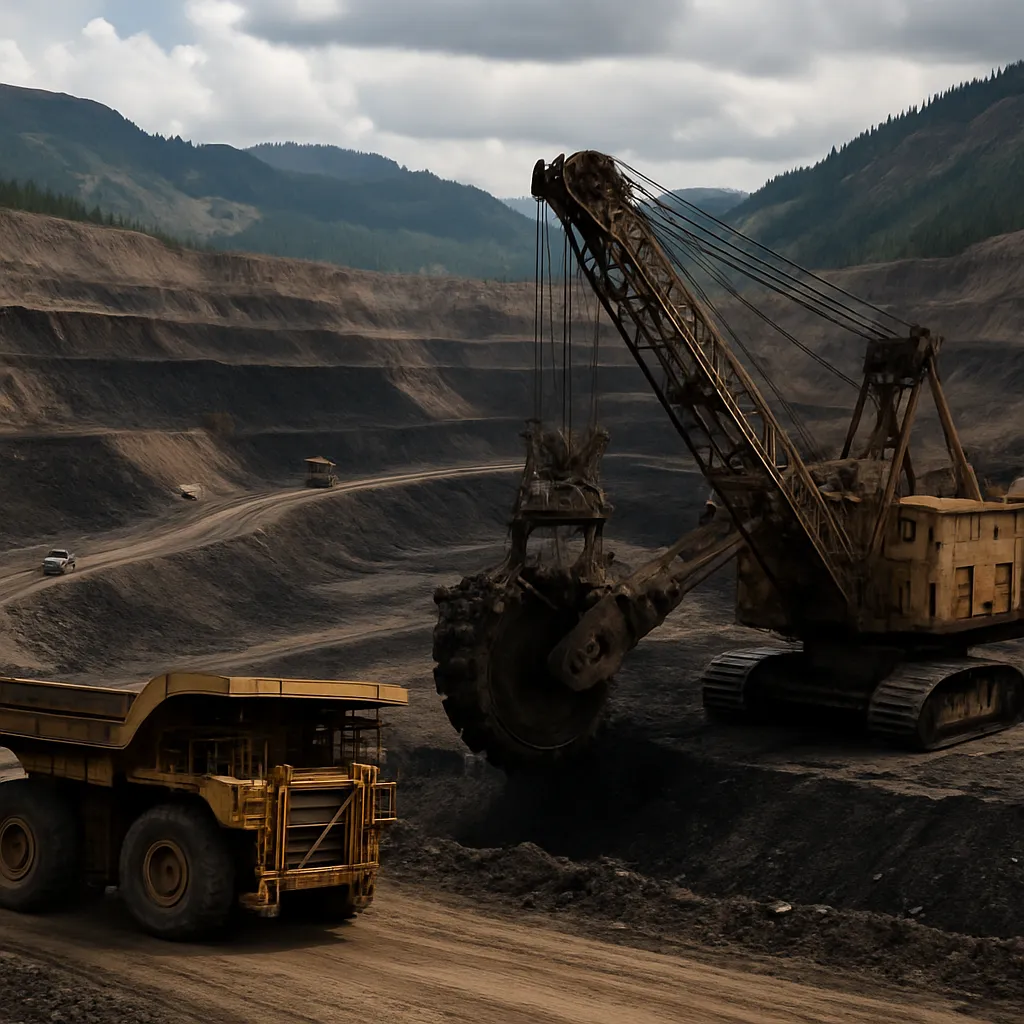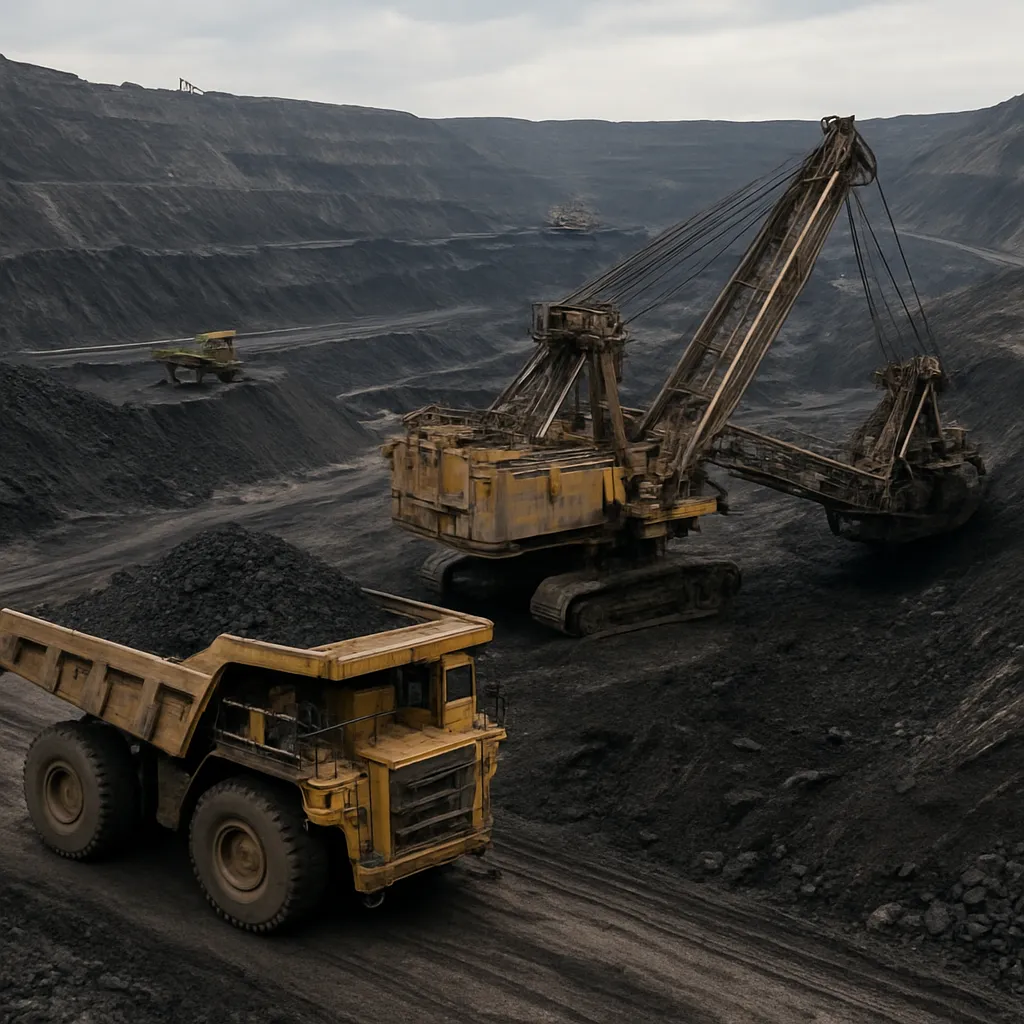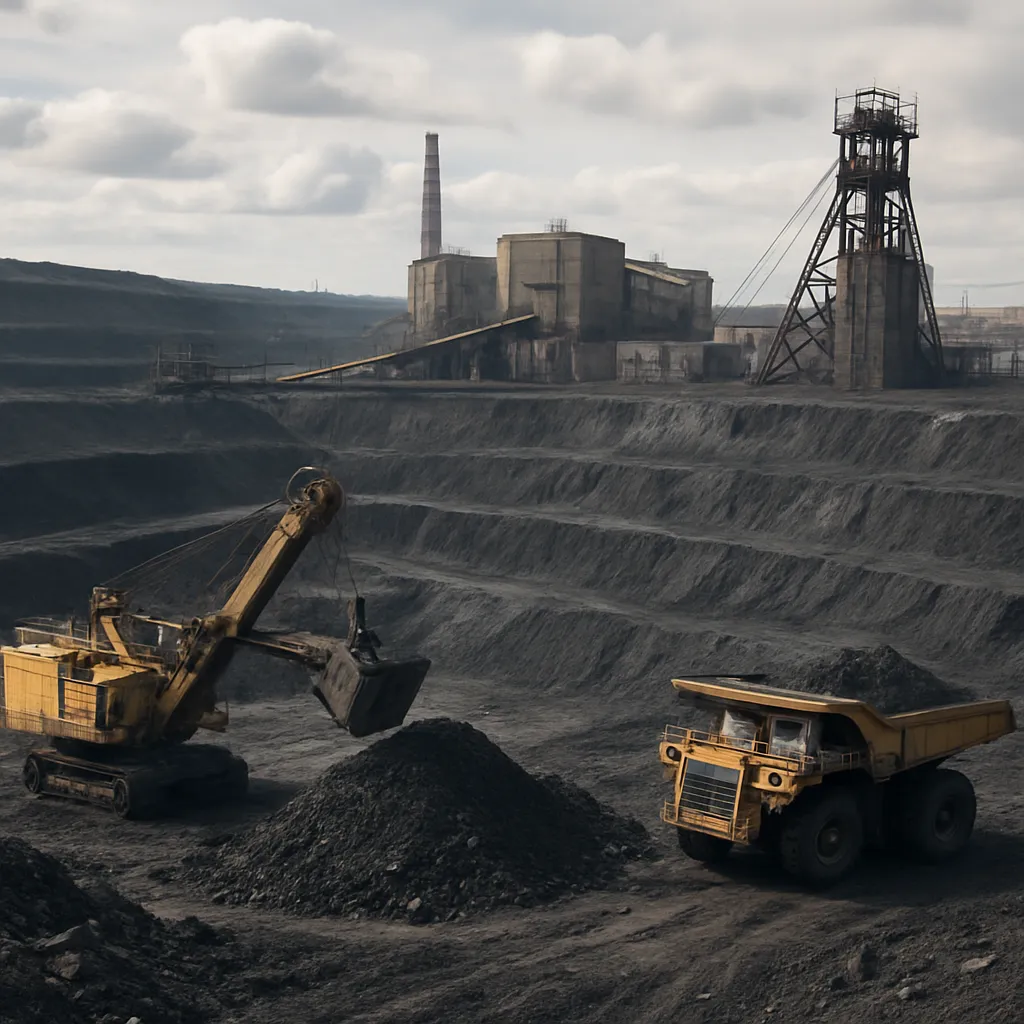
The Vorkuta coal mining complex, set in the far north of the European part of Russia, is one of the most emblematic and historically loaded mining regions of the country. Located above the Arctic Circle, the mines of Vorkuta have been a major source of coal for nearly a century, shaping local settlement patterns, regional economies and leaving a deep imprint on Russian industrial history. This article reviews the geology and location of the Vorkuta coalfield, its historical development (including its role during the Soviet era), the types of coal produced, current economic and production aspects, infrastructure and logistics, environmental and social impacts, and future prospects for the basin.
Location and Geological Characteristics
The Vorkuta coalfield lies in the northern sector of the Komi Republic, in the northeastern part of the Pechora coal basin. The town of Vorkuta itself sits on the Vorkuta River, some 1,300–1,500 km north-east of Moscow and well above the Arctic Circle, surrounded by tundra and underlain by substantial zones of permafrost. The basin is part of the larger Pechora coal province, which is geologically distinct for its Paleozoic and early Mesozoic sedimentary sequences.
Coal seams in the Vorkuta basin are generally of medium to considerable thickness and are composed predominantly of higher-volatile bituminous coal, with seams of variable rank. Some seams have properties suitable for coking (metallurgical) use while others are more suitable for thermal (power generation and heating) applications. The geology is typical of a compact northern coal basin: multiple seams at varying depths, with overburden influenced by frozen ground, making both mining and geotechnical management challenging.
History and Development
Commercial mining around Vorkuta began in the early 1930s after the discovery of significant coal deposits. The rapid development of the basin was strongly tied to Soviet industrialization drives. Construction of mines, associated rail links and settlements accelerated in the 1930s and 1940s. The history of Vorkuta cannot be separated from the history of the Soviet forced labor system: a network of Gulag camps was established to exploit the coal resources, and thousands of prisoners were used as labor in the mines. The name Gulag and events such as the 1953 uprising of Vorkuta prisoners are ingrained in the historical memory of the area.
Throughout the Soviet period Vorkuta became one of the northern USSR’s principal coal producers. After the Second World War and into the late Soviet period, the mines were expanded and mechanized to varying degrees. In the late 20th century and into the post-Soviet period, the basin experienced the common trends of many Russian mining regions: restructuring, privatization or consolidation of enterprises, periods of under-investment, and population decline as economic conditions changed.
Mining Operations and Infrastructure
Mining in Vorkuta has traditionally relied on underground methods, though open-pit (surface) mining has also been used where the geology and overburden permit. Underground workings include both longwall and room-and-pillar methods adapted over time to the local geology and climate. Mines operate under difficult conditions: extreme cold for much of the year, frozen ground which complicates surface works, and typical coal-mining hazards such as methane emissions, roof stability issues, and water inflow management in thaw pockets.
Infrastructure is a crucial aspect of Vorkuta’s viability as a coal-producing region. The town and mine workings are connected to the rest of Russia by the Pechora Railway, a key link that enables transport of coal to processing centers and end users. Seasonal and logistical constraints are significant: northern location increases fuel and maintenance costs, and long transport distances to major industrial consumers and ports raise the delivered cost of coal.
- Rail transport: the principal artery for coal movement, linking Vorkuta to southern distribution networks.
- Local processing: some coal sorting and preliminary preparation is done locally to meet quality specifications.
- Support facilities: mine workshops, dewatering stations, and heating systems are all engineered to cope with Arctic conditions.
Economic and Statistical Overview
The economic profile of the Vorkuta coalfield has shifted considerably from its Soviet peak to the contemporary era. At its height during the Soviet period, annual output from the broader Pechora region, including Vorkuta, was substantial—measured in several millions to tens of millions of tonnes annually depending on the decade. Since the 1990s production volumes have generally declined due to economic restructuring, depletion of easily‑accessible seams, lower demand from traditional captive markets, and rising costs.
More recent decades show the following broad patterns (numbers are indicative and vary by source and year):
- Peak Soviet-era annual coal output for the Vorkuta complex reached millions of tonnes per year (estimates for the wider basin and associated mines commonly cite double-digit million tonnes per year at peak times across the Pechora region).
- Post-Soviet contraction reduced annual production in many years to the low millions of tonnes, sometimes well under that, depending on mine closures and demand.
- Reserves: the Vorkuta deposit has historically been described as having large remaining coal reserves relative to local needs, though economically recoverable reserves depend on price levels, technology and investment to counter permafrost and depth-related costs.
Employment and regional income have been heavily tied to the mines. During peak operations, tens of thousands of workers were employed directly and indirectly; today the workforce is substantially smaller. The local economy is driven by a combination of mining wages, municipal services tied to state budgets, and limited secondary industries. The cost structure of mining in Vorkuta is elevated by logistics, heating, and infrastructure maintenance needs, which affects competitiveness compared with southern Russian coalfields.
Industrial Significance and Applications
Coal from Vorkuta has been used for a range of industrial purposes. Two principal application areas are:
- Metallurgical use: certain seams yield coals with coking potential that can supply blast-furnace coke production in steel-making.
- Thermal use: lower- and medium-grade coals serve power plants, district heating systems and industrial boilers, especially within regional markets where transport costs are manageable.
Historically, Vorkuta coal played a role in supplying energy and fuel for northern industrialization and for feeding metallurgical centers across the Soviet Union. Even as large integrated steel producers have diversified their coal supply mix, Vorkuta’s coal continues to be significant for local energy security and for industries that value proximate suppliers.
Social and Cultural Dimensions
The social fabric of Vorkuta is shaped by its mining legacy. The town grew around mining settlements, and its demographics reflect cycles of influx, consolidation, and decline. Population peaked in the Soviet era; since the 1990s there has been outmigration driven by mine closures, economic uncertainty and harsh living conditions. Nevertheless, a core community remains, composed of mining families, municipal workers and retirees.
The cultural memory of the area is indelibly tied to the Gulag system: memorials, oral histories and academic research document the suffering and forced labor that enabled much of the early extraction activity. The story of Vorkuta is therefore both industrial and human: it encompasses enterprise and technological effort as well as a painful chapter in 20th-century history.
Environmental Impacts and Risks
Mining in an Arctic setting brings heightened environmental vulnerabilities. Key concerns include:
- Permafrost destabilization: extraction and infrastructure heating can thaw ground, risking subsidence and damage to surface facilities.
- Water contamination: runoff and mine drainage can introduce suspended solids and dissolved metals into local waterways.
- Methane emissions: coal mining releases methane, a potent greenhouse gas; coalbed methane management is both an environmental and safety concern.
- Tailings and spoil: spoil heaps and tailings can be sources of dust, acidification and long-term landscape alteration.
Climate change intensifies many of these risks by warming permafrost, altering hydrology and lengthening the thaw season. Conversely, increased Arctic maritime accessibility from warming could alter future logistics options (for instance, potential increased use of the Northern Sea Route for export), although such changes bring their own economic and ecological trade-offs.
Current Trends and Future Prospects
The future of Vorkuta’s coal industry depends on several interacting factors:
- Market demand: domestic demand for thermal and metallurgical coal, as well as global price dynamics, strongly influence investment and production decisions.
- Investment in technology: modernization—mechanization of underground operations, improved methane capture and control, better thaw-resistant infrastructure—can reduce costs and environmental impact.
- Regulatory and policy environment: national energy policy, climate commitments and regional development programs shape the pace and nature of activity.
- Demographics and labor: availability of skilled labor and the cost of attracting workers to remote Arctic locations remain limiting factors.
There are three broad scenarios for Vorkuta that analysts commonly consider: continued scaled-back production with a focus on serving local and regional markets; targeted modernization and consolidation that preserves a reduced but stable output; or progressive shutdown and mine reclamation if economic conditions make ongoing operations unsustainable. Each outcome carries significant social and environmental implications for the Komi Republic and for the communities tied to the mines.
Interesting Facts and Legacy
Vorkuta’s story contains many notable and compelling elements:
- The town is one of the northernmost significant coal-mining centers in the world, operating above the Arctic Circle.
- Vorkuta’s mines are associated with a major chapter in Soviet forced labor history; the area is frequently mentioned in studies of the Gulag and in memoir literature.
- Harsh climatic conditions, including long polar nights and extreme cold, shaped the development of specialized mining and living infrastructure.
- Because of its remoteness and Arctic placement, Vorkuta has been a testing ground for techniques in cold-climate engineering, permafrost management and logistics planning for northern extractive industries.
Summary
The Vorkuta coal mining complex remains a place where geology, industrial ambition and human history intersect. Its coal reserves in the Pechora Basin supported major industrial projects across the Soviet Union and sustained a sizeable Arctic community, even as that history is marked by the human cost of forced labor. Today Vorkuta faces the twin realities of a harsher economic environment and a changing climate. Decisions about investment, environmental management and social support will determine whether the basin remains an active mining center, contracts into a smaller role supplying regional needs, or moves toward closure and reclamation. Regardless of the pathway chosen, the Vorkuta coalfield will continue to be a significant case study in Arctic resource development, post-industrial transition and the legacy of 20th-century extractive economies.