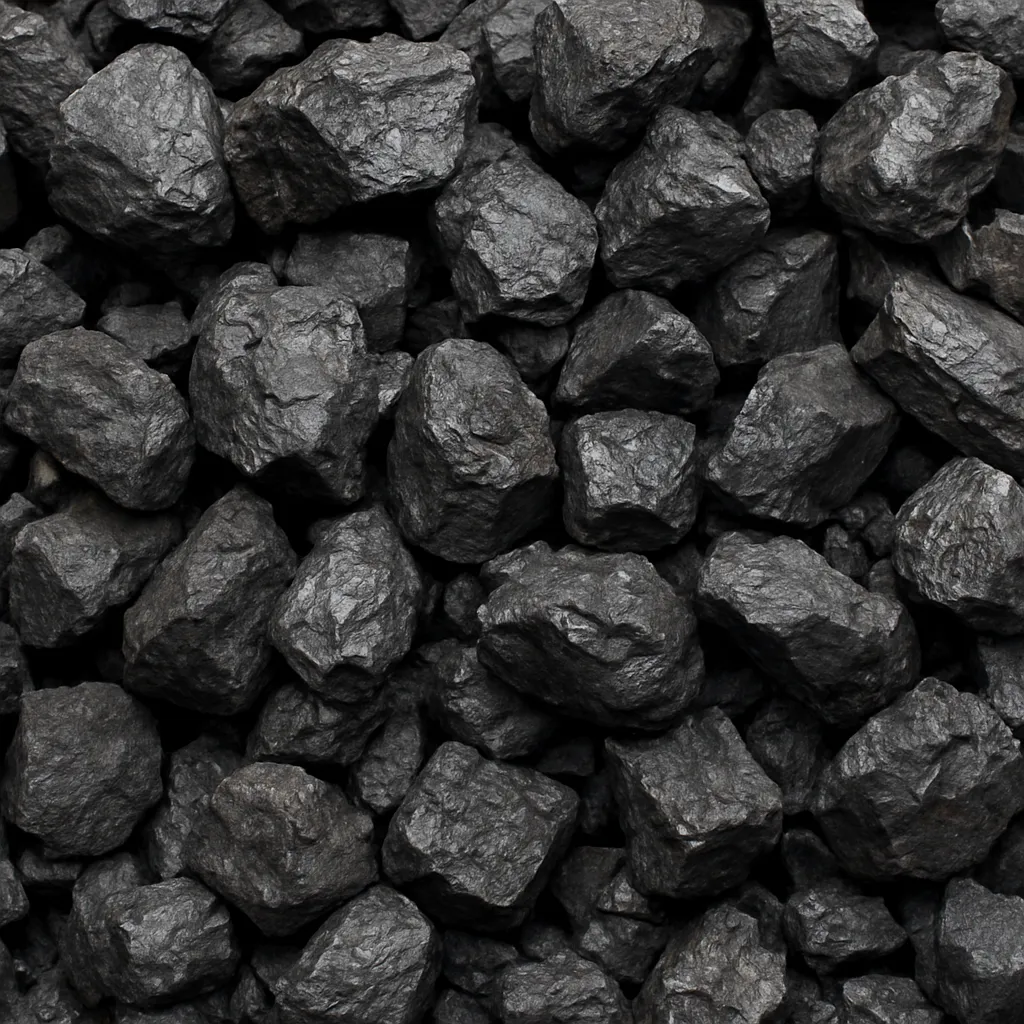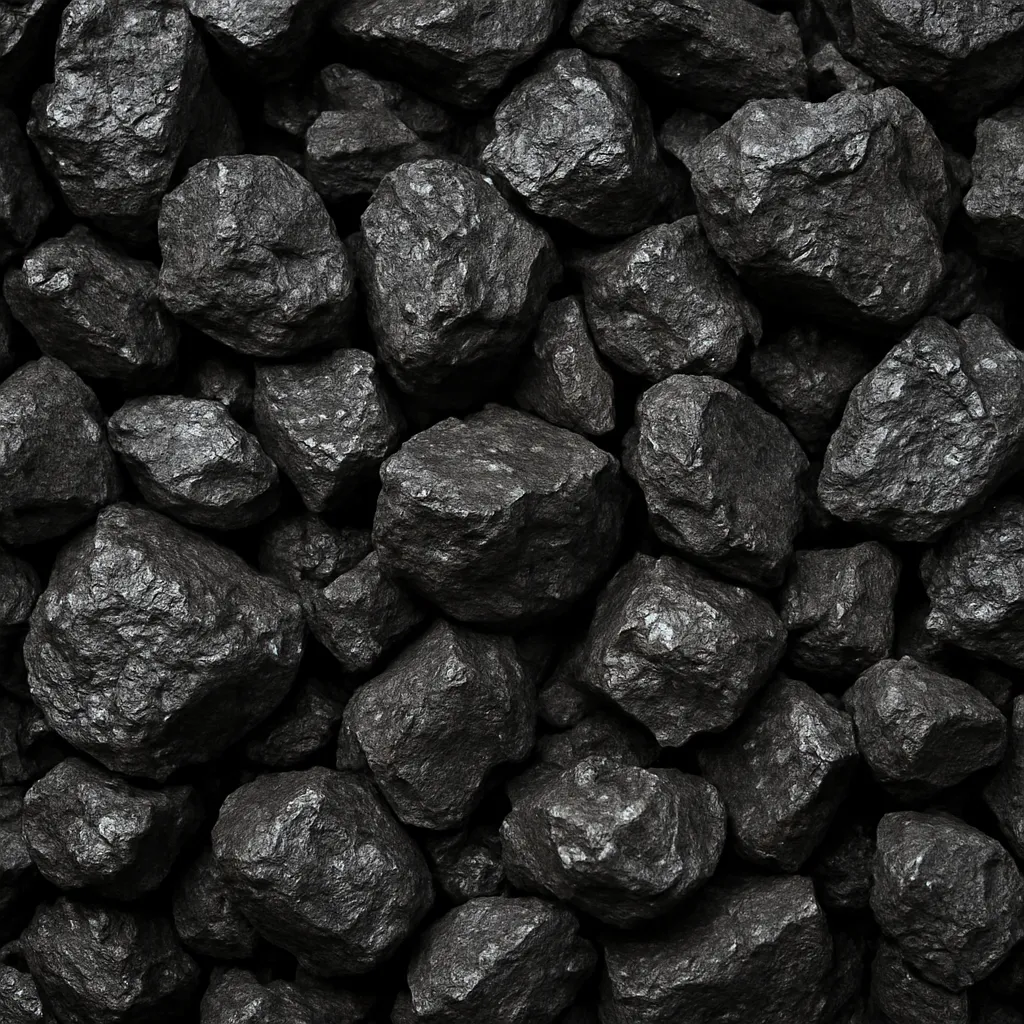
This article examines utility-grade coal — the steam or thermal coal primarily used for large-scale electricity generation and district heating — covering what it is, where it is found and mined, its economic and statistical footprint, its role in industry, and the major environmental and market trends shaping its future. The term utility-grade designates coals with properties suitable for combustion in large power stations: sufficient calorific value, manageable ash and moisture levels, and predictable behaviour in boilers. Below you will find a comprehensive overview combining geological, technical, economic and policy perspectives to understand the continuing global importance of this fuel.
Definition, types and physical properties
Utility-grade coal refers to coals used primarily for steam generation in thermal power plants. It spans a range of coal ranks from higher-moisture sub-bituminous and lignite to medium- and high-rank bituminous coals that are often used in large central-station boilers. Key quality parameters for utility coal include calorific value (net and gross), moisture, ash yield, sulfur content, and volatile matter. These properties determine combustion performance, ash handling needs and pollutant formation.
Typical ranges (approximate) for utility-grade coals:
- Calorific value: ~8–30 MJ/kg (roughly 2,000–7,200 kcal/kg), with many thermal coals clustered between 15–25 MJ/kg.
- Moisture: low-rank coals (lignite/sub-bituminous) often have elevated moisture (15–40%), while higher-rank bituminous coals usually have <10% moisture.
- Ash content: from <5% for washed high-quality coals to >30% for some low-grade varieties; lower ash is preferred for higher plant efficiency and lower maintenance.
- Sulfur: ranges typically from <0.5% (low-sulfur coals) to >3% in higher-sulfur coals; sulfur influences SO2 emissions and the need for flue-gas desulfurization.
From an operational standpoint, utility coal is often traded and specified by calorific value (kcal/kg or MJ/kg), ash and sulfur content, and sometimes washability (how effectively impurities can be removed). Blending of coals from different seams or origins is a common practice to meet a power plant’s fuel specification at competitive cost.
Where it occurs and major producing regions
Coal is a sedimentary rock formed from ancient plant material and occurs in layers or seams within basins worldwide. Utility-grade coal deposits are concentrated in well-known coal basins. The global distribution reflects geological history, notably Carboniferous to Tertiary period peat swamp formation and subsequent burial. Major producing and exporting regions are listed below, with emphasis on those that dominate supply of thermal coal for utilities.
Top producing countries (overview)
- China — the largest producer and consumer of coal. Vast deposits in Shanxi, Inner Mongolia, Shaanxi and Xinjiang feed a domestic fleet of coal-fired power plants; China’s production and consumption dwarf those of other countries, accounting for roughly half of global consumption in many recent years.
- India — large domestic production concentrated in Jharkhand, Odisha, Chhattisgarh and West Bengal; India is predominantly self-sufficient but also imports higher-quality thermal coals for coastal plants.
- United States — important production from the Powder River Basin (Wyoming and Montana), Appalachian basins, and Illinois Basin. The Powder River Basin is noted for large volumes of low-sulfur, low-cost sub-bituminous coal widely used in US power plants.
- Australia — a major exporter of seaborne thermal coal, with production concentrated in Queensland and New South Wales and major export ports such as Newcastle, Gladstone and Abbot Point.
- Indonesia — one of the world’s largest exporters of thermal coal, especially to Asian markets; large open-pit mines in Kalimantan and Sumatra produce a range of sub-bituminous and low-rank coals suited to coastal power plants.
- Russia — significant production in Kuzbass (Kemerovo), the Far East and eastern Siberia; supplies both domestic demand and exports to Europe and increasingly to Asia.
- Other significant producers/exporters: South Africa (Richards Bay hub), Colombia (export-oriented mines), Kazakhstan and Poland (large domestic consumption and exports in Europe).
Major export hubs include the Port of Newcastle (Australia), Richards Bay (South Africa), and Indonesian coal terminals in Kalimantan and Sumatra. These ports connect inland basins to coastal shipping lanes supplying utilities across Asia, the Middle East and beyond.
Mining methods and processing
Utility-grade coal is extracted using two primary methods: surface (open-pit or open-cast) mining and underground (room-and-pillar or longwall) mining. The method depends on seam depth, thickness and geology.
- Surface mining: common in basins such as the Powder River Basin, Australia’s Bowen Basin margins, and Indonesian open cuts. Surface mining enables high productivity and low production costs per tonne but has substantial land disturbance.
- Underground mining: used where seams are deeper or where surface disturbance must be minimized; longwall mining in particular delivers high yields in suitable geology (e.g., parts of China and Poland).
Processing often includes crushing and screening, washing (coal preparation) to reduce ash and improve calorific value, and sometimes drying for high-moisture coals. Washed coals command higher prices and better boiler performance, while raw coals may be more economical for some utilities if plants are designed for high-ash fuels.
Economic and statistical picture
Coal remains a major global commodity with significant trade, fiscal and employment implications. Although trends differ regionally, coal’s economic footprint includes extraction revenues, export earnings, royalties and taxes, and the economic activity associated with coal-fired power generation — often central to national energy security.
Global production and consumption (approximate figures)
- Global primary coal production and consumption are on the order of several billion tonnes per year. In recent years, global production has typically ranged around 7–8 billion tonnes (metric) annually, with year-to-year variability associated with economic growth, energy demand and policy shifts.
- China often produces and consumes roughly half of global coal; that puts annual Chinese production in the multiple-billion-tonne range, while India’s production is in the hundreds of millions of tonnes annually.
- Australia and Indonesia are among the largest seaborne exporters, each exporting several hundred million tonnes per year in many recent years (exports fluctuate by market conditions).
Because trade flows are substantial, seaborne prices and freight rates are important economic indicators. Price indices such as the Australian Newcastle thermal coal spot price (FOB Newcastle), Richards Bay index, and contracts indexed to Platts or Argus assessments are used by market participants. Thermal coal prices can be volatile: prices surged in 2021–2022 due to pandemic recovery, supply constraints and high demand in Asia, then eased in subsequent years as gas and renewables ramped and demand softened.
Trade balances, employment and fiscal importance
For some countries (e.g., Australia, Indonesia, Colombia), coal exports are major sources of foreign exchange and government revenue. Mines frequently contribute significant local employment and economic activity in remote regions. Mining companies often pay royalties and corporate taxes that fund local and national budgets. Estimates of direct employment in coal mining worldwide are in the low millions, with far larger numbers affected indirectly via supply chains and local services.
Price behaviour and market drivers
- Supply-side drivers: mining disruptions, strikes, weather events, export restrictions, freight bottlenecks and changes in mine investment.
- Demand-side drivers: economic growth (especially in Asia), switching between fuels (gas/coal/biomass), and policies (carbon pricing, emissions limits, renewables deployment).
- Geopolitics: trade policies, sanctions, and major commodity flows (e.g., flows of Russian coal to Europe and Asia) influence regional prices and trade corridors.
Role in electricity generation and industry
Utility-grade coal has historically been the backbone of industrial-scale electricity generation. Coal-fired power plants offer dispatchable, baseload-capable generation that historically supported grid stability and industrial development. As of the early 2020s, coal-fired generation still supplies roughly one-third of global electricity, though the share varies substantially by region and is declining in some markets.
Besides electricity, coal supports certain industrial uses:
- District heating and industrial steam plants in many countries.
- Coal-to-chemical and coal-to-liquids processes in regions with limited oil and gas resources.
- While metallurgical (coking) coal is required for steelmaking blast furnaces, utility-grade thermal coal is not typically used for metallurgical processes. However, some countries with integrated industries may source both thermal and metallurgical coals from the same basins.
Important operational and economic factors:
- Flexibility: modern plants may need to ramp to balance intermittent renewables; coals with predictable combustion properties facilitate flexible operation.
- Efficiency: higher calorific value, lower moisture and low ash coals improve plant thermal efficiency and reduce fuel consumption per MWh.
- Environmental controls: effective particulate, SO2 and NOx abatement (ESP, FGD, SCR) is critical for continuing operation under tightening emissions limits.
Environmental impacts, regulations and future trends
The environmental footprint of coal combustion is a central issue shaping its future. Burning coal emits CO2, particulate matter, SO2, NOx and trace elements (mercury, arsenic), and coal mining and combustion create land, water and air impacts.
Climate and air-quality impacts:
- CO2 emissions: coal-fired power is one of the largest stationary sources of CO2. Rough approximations place CO2 emissions from coal combustion at about 2.5–3.0 tonnes of CO2 per tonne of coal burned, depending on rank and carbon content.
- Air pollutants: SO2 and NOx formation depends on fuel sulfur and combustion conditions; particulate emissions are controlled with electrostatic precipitators (ESPs) and fabric filters; mercury and trace metals require specialized controls.
Regulations and policy drivers:
- In many OECD countries and some major economies, policy measures (emissions trading systems, carbon prices, coal phase-out commitments) are reducing demand for coal-fired generation.
- In contrast, some emerging economies continue to rely on coal for reliable and affordable power to support industrialization and economic development; these countries often balance near-term energy needs against long-term decarbonization goals.
- Technologies such as carbon capture, utilization and storage (CCUS) offer pathways to decarbonize coal plants, but deployment remains limited by cost, infrastructure and policy support.
Market and technological trends that will shape utility coal’s trajectory:
- Renewables + storage competition: declining costs of wind, solar and batteries reduce coal’s economic attractiveness for new generation capacity in many regions.
- Retirement of aging coal fleets: many plants in developed markets are being retired for economic and regulatory reasons.
- Improving plant efficiency and emissions control: large utilities may invest in upgrades to existing plants to reduce emissions intensity and extend operational life.
- Potential resurgence risk: short-term demand spikes can occur if gas prices rise or if renewables underperform, illustrating coal’s role as a reliability backstop.
Interesting technical, social and market developments
Several noteworthy developments and innovations are associated with utility-grade coal:
- Blending strategies: Utilities routinely blend coals from different sources to balance cost, emissions and performance. Blending allows the use of abundant lower-cost sub-bituminous coals while meeting boiler limits on ash and sulfur.
- Coal washing and beneficiation: Advances in coal-preparation technology can significantly improve the calorific value and reduce ash and sulfur content, making lower-grade coals suitable for utility use.
- Flexibility retrofits: Some coal plants are being retrofitted for faster ramping to complement variable renewable generation and to provide grid services.
- CCUS pilots: A small but growing number of demonstration projects aim to capture CO2 from coal-fired plants for storage or utilization, though full-scale commercial uptake is limited by cost and infrastructure.
- Mine rehabilitation and repurposing: Post-mining land-use planning increasingly emphasizes ecological restoration, renewable energy siting (e.g., solar farms on former mine sites) and community transition programs.
- Digitalization: Mining operations and power plants are using sensors, automation and data analytics to optimize productivity, reduce costs and improve safety.
Practical considerations for utilities, traders and policymakers
For utilities and traders, the economics of utility-grade coal hinge on fuel quality, logistics (rail and port access), and regulatory costs (emissions controls, carbon pricing). Policies that affect these variables directly influence merit order, plant dispatch and investment decisions. For policymakers, balancing energy affordability, security and environmental goals requires careful sequencing of coal retirements, investment in alternatives and support for affected communities.
Key points to consider:
- Fuel specification: choose coals that match plant design to avoid derating, slagging, fouling and excessive maintenance.
- Supply security: diversified sourcing and long-term contracts can mitigate market volatility and shipping disruptions.
- Environmental compliance: anticipate tightening regulations and plan investments in emissions controls or alternatives accordingly.
- Socio-economic transition: regions dependent on coal need structured transition plans to manage employment impacts and fiscal revenue declines as demand changes.
Concluding perspective
Utility-grade coal remains a significant global energy resource, supplying substantial shares of electricity in Asia, parts of Africa and Latin America, and supporting energy-intensive industries where alternatives are not yet practical or affordable. Its markets are shaped by geological endowments, trade infrastructure, and evolving economic and policy contexts. While the long-term global trend points toward reduced coal use in many advanced economies driven by decarbonization and technological change, coal’s role in energy security and development ensures it will continue to be relevant in many regions for years to come. Strategic approaches that combine operational efficiency, environmental mitigation (including CCUS where feasible), and social transition planning will determine how utility coal is managed through the coming decades.