The Maules Creek Mine is one of the most prominent and contentious coal operations in Australia. Located in the north-western plains of New South Wales, it has attracted attention for its scale, economic contribution, and the social and environmental debates that have accompanied its development. This article provides a detailed overview of the mine’s location, geology, production profile, economic role, environmental and social context, and its outlook within the global coal industry.
Location and Geological Setting
The Maules Creek Mine is situated in the Liverpool Plains region of north-central New South Wales, roughly between the towns of Boggabri and Narrabri. It lies within the Gunnedah Basin, a Permian-age sedimentary basin that hosts a number of significant coal deposits supplying both domestic and international markets. The mine footprint extends across land that previously included sections of the Leard State Forest, private agricultural land and cleared farmland. Its proximity to regional rail lines provides direct logistical links to export terminals on the New South Wales coast.
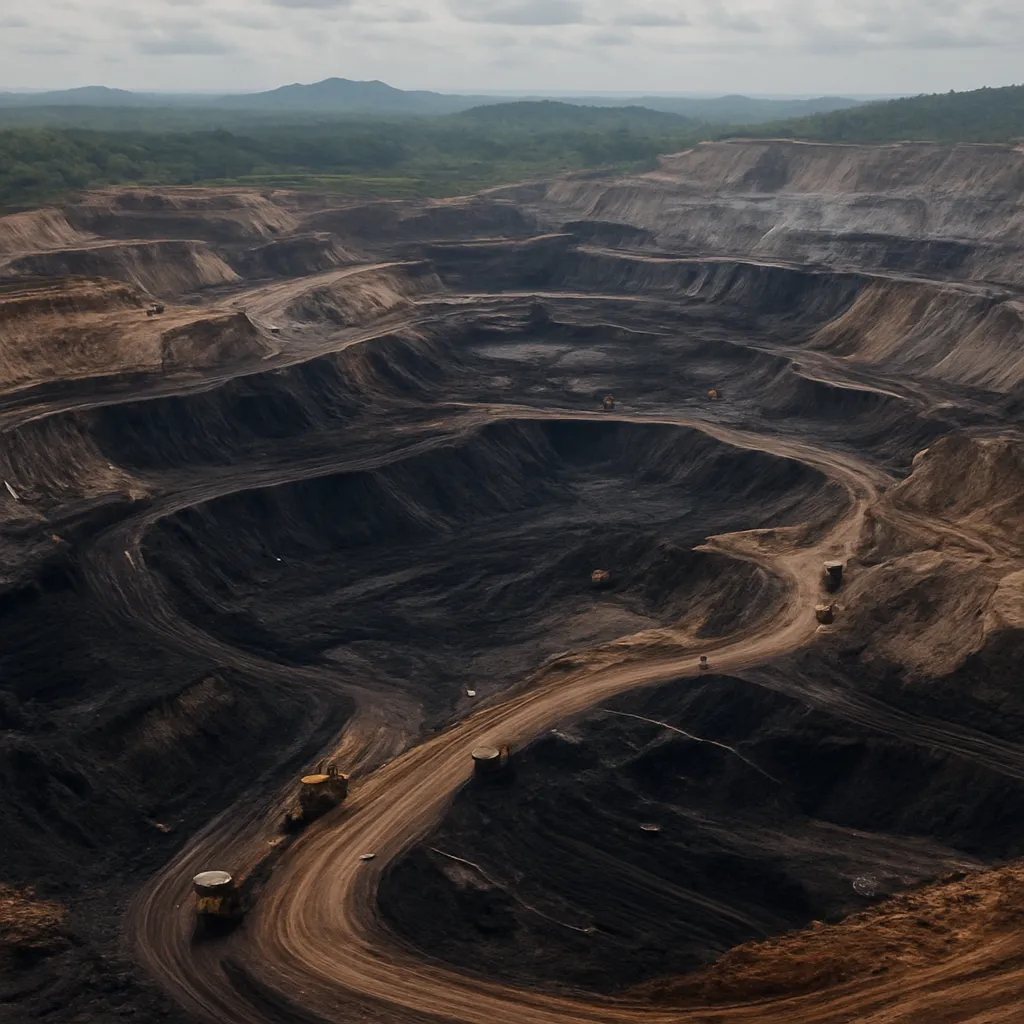
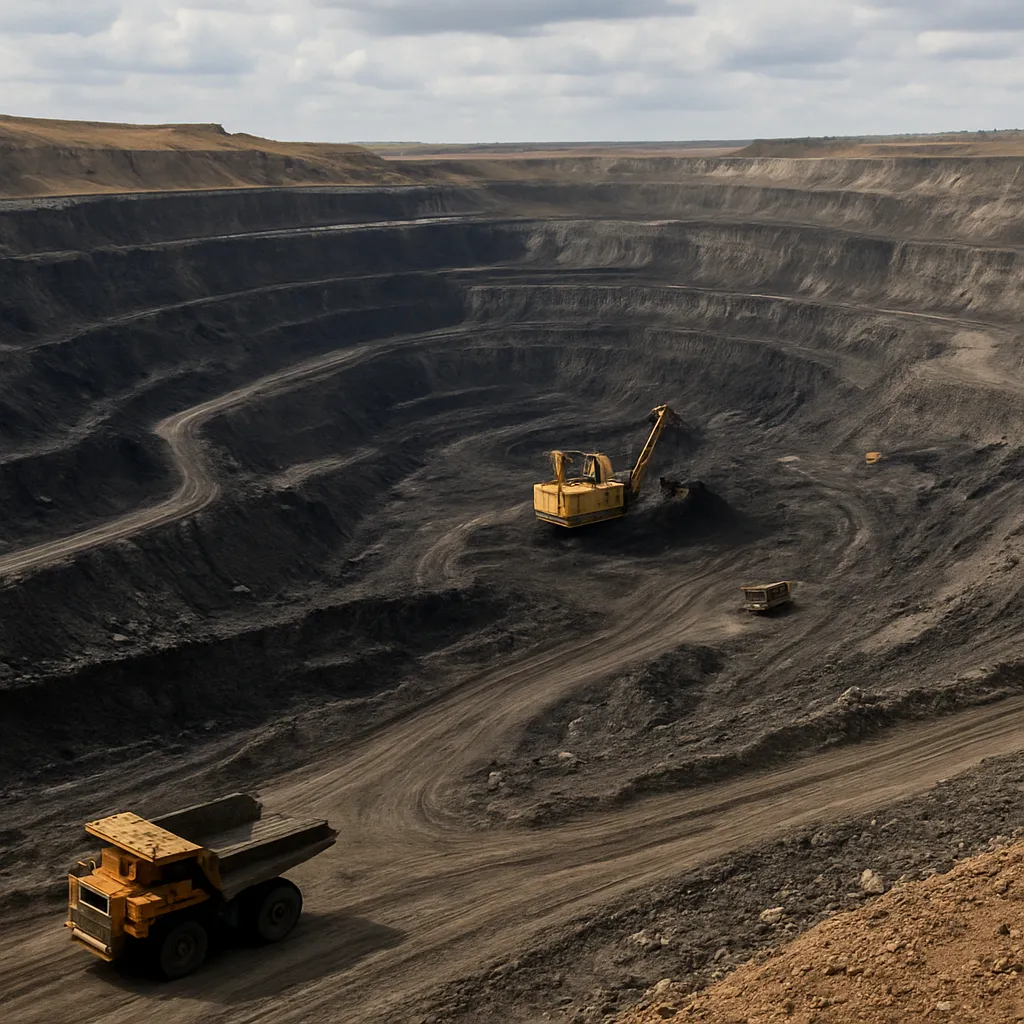
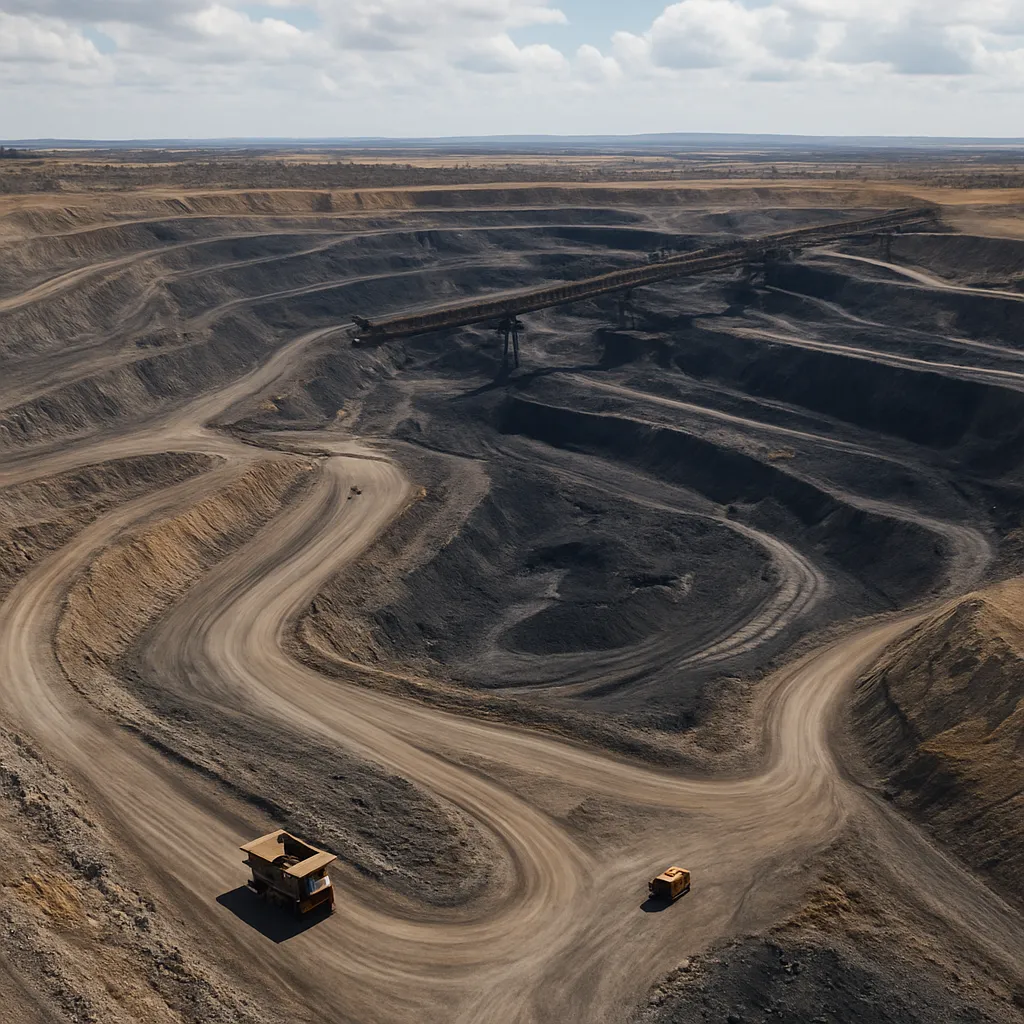
Geologically, Maules Creek exploits Permian coal measures typical of the Gunnedah Basin. These seams are primarily targeted for thermal coal used in power generation. The coal at Maules Creek is generally high-energy thermal coal marketed to Asian thermal power utilities and energy traders. The deposit is accessed by open-cut mining methods, employing conventional truck-and-shovel operations supported by a coal handling and processing plant (CHPP), stockpiles, and a rail load-out facility.
Development, Ownership and Timeline
The project was developed and is operated by Whitehaven Coal, an ASX-listed coal company headquartered in New South Wales. Construction activities culminated in the mid-2010s and the mine reached initial production in 2015. Commercial operations began in late 2015 and expanded over subsequent years to reach steady-state production.
Key milestones included land acquisition and approvals, the clearing of parts of the Leard State Forest, construction of processing and rail infrastructure, and establishment of contractual arrangements for coal offtake and logistics. The project required environmental approvals at state and federal levels and was the subject of multiple legal and community challenges prior to and during early operations.
Production, Coal Quality and Operations
Maules Creek is an open-cut coal mine producing run-of-mine (ROM) coal that is processed through a CHPP to deliver a marketable product. The mine was developed with a design production capacity in the low-to-mid double-digit millions of tonnes per annum. Specifically, the project’s nameplate ROM capacity is commonly cited at approximately 13 million tonnes per annum (Mtpa), though actual annual throughput can vary by year according to market conditions, operational adjustments and life-of-mine sequencing.
The product is marketed as high-quality thermal coal suited to international export markets, particularly in Asia. Coal characteristics sought by buyers typically include calorific value, ash and moisture content, and low sulfur. The Maules Creek product has been sold predominantly to buyers in countries such as Japan, South Korea, Taiwan and Southeast Asian markets, depending on contractual arrangements and market cycles.
Mining methods are typical for large open-cut operations: progressive overburden removal, coal extraction with hydraulic shovels and large haul trucks, on-site processing (washing and sizing), and rail dispatch. Transport is by rail to export terminals—primarily Port of Newcastle—where coal is loaded onto bulk carriers for shipment to overseas power utilities and traders.
Economic and Industry Significance
The Maules Creek Mine represents a significant capital investment and economic asset for the region and for New South Wales. The development phase generated substantial construction activity and short-term employment, while operations provide ongoing employment, contractor work and regional economic multipliers. Local businesses—ranging from logistics and earthmoving contractors to accommodation, retail and professional services—have benefitted from the mine’s presence.
At the state level, the mine contributes to public revenue through royalties, taxes and other charges associated with mineral extraction. Exact annual royalty payments fluctuate according to coal prices, volumes produced and the royalty rate regime; however, multi‑million-dollar contributions to state revenue are a typical outcome for mines of this scale during periods of sustained production.
Within the Australian coal industry, Maules Creek is notable for its scale and for being one of the major new greenfield projects developed in the 2010s. It added to Australia’s export capacity at a time when Asian energy demand remained a major driver of international coal markets. The operation has also been a material component of Whitehaven Coal’s production portfolio and financial performance, contributing to aggregate production statistics reported by the company.
Employment, Local Benefits and Supply Chain
Operational staffing for the mine comprises both direct employees and numerous contractors. While staffing levels fluctuate with production levels and operational cycles, the mine supports hundreds of direct jobs and many more indirect roles through the supply chain. Contractors provide services in earthmoving, processing plant operation, rail logistics, maintenance, environmental management and site services such as catering and accommodation.
Local procurement policies and community benefit arrangements have been part of the project’s public messaging, with commitments to employ locally where possible and to support regional economic development. These benefits are often balanced against the concerns of those who oppose the mine on environmental or land-use grounds, leading to complex local dynamics.
Environmental, Social and Legal Issues
From its inception, Maules Creek generated significant environmental and social controversy. Environmental groups, local landholders and Indigenous representatives raised concerns about clearing of native vegetation, potential impacts on groundwater and surface water, biodiversity loss (including habitat for threatened species), and the broader climate implications of coal extraction and combustion.
One flashpoint was the clearing of parts of the Leard State Forest for mine infrastructure and open-cut operations. This led to protests, blockades, and legal challenges mounted by conservation groups and local community organizations. The campaign against the mine drew national and international attention and was part of broader debates about the future of coal mining in Australia.
Water resources and groundwater models were another major area of dispute. Opponents argued that mining could lower groundwater tables or alter flow regimes detrimental to agricultural users and local ecosystems. Proponents pointed to environmental management plans, monitoring programs, and regulatory oversight intended to mitigate risks. The mine operates under a regime of environmental approvals that require monitoring, reporting and rehabilitation obligations.
Indigenous heritage considerations formed part of the approvals process. Consultations occurred with local Aboriginal groups regarding heritage sites and cultural values. As with many large resource projects in Australia, reconciling development objectives with Indigenous rights and cultural protection has been complex and sensitive.
Statistics and Reported Figures
Certain figures related to Maules Creek have been publicly reported by the operator and in regulatory filings. Key data points reported over recent years include:
- Start of commercial production: 2015 (initial shipments and ramp-up through 2016)
- Nameplate ROM capacity: approximately 13 Mtpa
- Reported coal reserves and resources: the mine has been described in Whitehaven reports as holding reserves and resources in the hundreds of millions of tonnes. Published categories and totals have varied over reporting periods, reflecting mining depletion, exploration outcomes and reclassification activity; figures commonly referenced in public statements and regulatory documents put proven & probable reserves for Maules Creek alone in the range of several hundred million tonnes at various points in the mine’s life.
- Employment: hundreds of direct operational roles and a larger number of contractor positions during both construction and operation phases
- Markets: primarily export markets in Asia, with coal moved by rail to eastern seaboard ports
Because reserve and resource reporting is periodically updated in company statements, and because production fluctuates with global coal demand and operational factors, readers seeking precise current figures should consult the latest Whitehaven Coal annual reports and the NSW Department of Planning & Environment disclosures for up-to-date numerical data.
Rehabilitation, Offsets and Compliance
Under its approvals, Maules Creek is required to implement rehabilitation and biodiversity offset programs designed to restore disturbed land progressively as mining areas are relinquished. The mine’s environmental management plans include progressive rehabilitation of benches and disturbed areas, re-vegetation using locally appropriate species, and longer-term landform and drainage stabilisation.
Biodiversity offset arrangements have been used as a mitigation measure where unavoidable impacts on native vegetation and habitat have occurred. These offsets typically involve the protection or enhancement of alternative parcels of land to compensate for habitat loss. The efficacy and adequacy of offsets have been debated by conservationists and regulators alike.
Compliance with environmental conditions is monitored through mandatory reporting to state authorities, independent audits and public disclosure requirements. The mine has been subject to regulatory oversight, infringement notices and community scrutiny; such mechanisms are integral to the continuing social licence of large mining projects.
Community Relations and Social Licence
The Maules Creek case is illustrative of the tensions that can arise between resource development advocates and community stakeholders concerned about environmental values and agricultural impacts. Community engagement programs, benefits-sharing measures and local investment have been used to build relationships, but unavoidable differences of interest and strong activist opposition have persisted. Protest campaigns, direct actions and legal appeals reflected deep-seated opposition among some groups, while other local stakeholders emphasised economic benefits and opportunities.
Longer-term social licence for the mine depends on performance against environmental commitments, transparent engagement with affected communities, and the ability to demonstrate tangible local benefits. Companies operating in such environments increasingly emphasise environmental stewardship, Indigenous engagement and community investment to maintain operational continuity.
Global Context and Future Outlook
Maules Creek operates in a global thermal coal market subject to cyclical price movements, energy demand shifts and policy changes driven by climate considerations. In the medium term, Asian demand—particularly for coal-fired generation in nations with growing electricity needs—has historically supported exports from Australian mines. However, long-term demand projections differ widely and are influenced by renewable energy uptake, emissions targets, and energy policy settings in importing economies.
For Maules Creek specifically, future mine life and production profiles will depend on a mix of factors: remaining reserves and the economics of extracting them, global coal price dynamics, logistical costs, regulatory changes and evolving corporate strategy by the operator. The mine’s large resource base provides optionality, but market and policy trends will play a major role in determining the pace and duration of extraction.
Interesting Facts and Broader Implications
- Maules Creek was one of Australia’s most publicly contested new coal projects in the 2010s, with an unusually high level of civil society activism and media attention surrounding its approvals and early operations.
- The project illustrates the modern complexity of developing major resources in agricultural landscapes, where competing land uses—mining and farming—require negotiated outcomes and regulatory balancing.
- It highlights how infrastructure (rail and port access) is central to the viability of regional coal deposits in Australia, enabling relatively remote operations to serve international markets.
- The mine also serves as a case study in environmental regulation, demonstrating how offsets, monitoring and progressive rehabilitation are applied in practice to large open-cut mines.
Concluding Observations
Maules Creek is a major thermal coal operation that has had a meaningful economic impact for its operator, the local region and the state treasury. At the same time, it has been a focal point for debates about the environmental and social costs of new coal developments. Its experience underscores the multifaceted nature of resource projects: geological opportunity, capital investment and infrastructure intersect with community values, environmental conservation and global energy trends.
Those seeking the most current and detailed numerical information—annual production volumes by year, up-to-date reserve and resource statements, exact employment numbers and quantitative environmental monitoring outcomes—should consult Whitehaven Coal’s latest annual reports, quarterly production updates and the New South Wales planning and environment regulator’s public registers. These sources provide the formal, audited figures that underpin ongoing analysis of Maules Creek’s role in the Australian and global coal sectors.