The Mbali Coal Mine is one of the many coal-producing sites contributing to South Africa’s long-standing role as a global coal supplier and a cornerstone of the country’s domestic energy system. Situated in the highveld coalfields of Mpumalanga province, the mine extracts primarily thermal coal from Permian-age seams and participates in the regional value chain that supplies power stations and export terminals. This article outlines the mine’s geological setting, the types of coal produced, its economic and social significance, operational and environmental aspects, and the strategic role it plays within South Africa’s mining sector.
Location, geological setting and mining methods
Mbali Coal Mine is located in the eastern parts of South Africa’s Highveld region within Mpumalanga, an area that hosts the bulk of the country’s commercial coal reserves. The coal-bearing strata in this region belong to the Karoo Supergroup (specifically the Ecca Group), with multiple seams of Carboniferous–Permian age that are typically shallow to moderately deep and amenable to conventional open-pit or underground mining.
The geology around Mbali comprises multiple coal seams interbedded with shales, siltstones and sandstones. Coal rank across the Mpumalanga coalfield ranges from sub-bituminous to medium-to-high volatile bituminous coal. At Mbali the coal is generally classified as thermal coal, with variable inherent moisture, ash and sulphur contents typical of the Highveld coal seams.
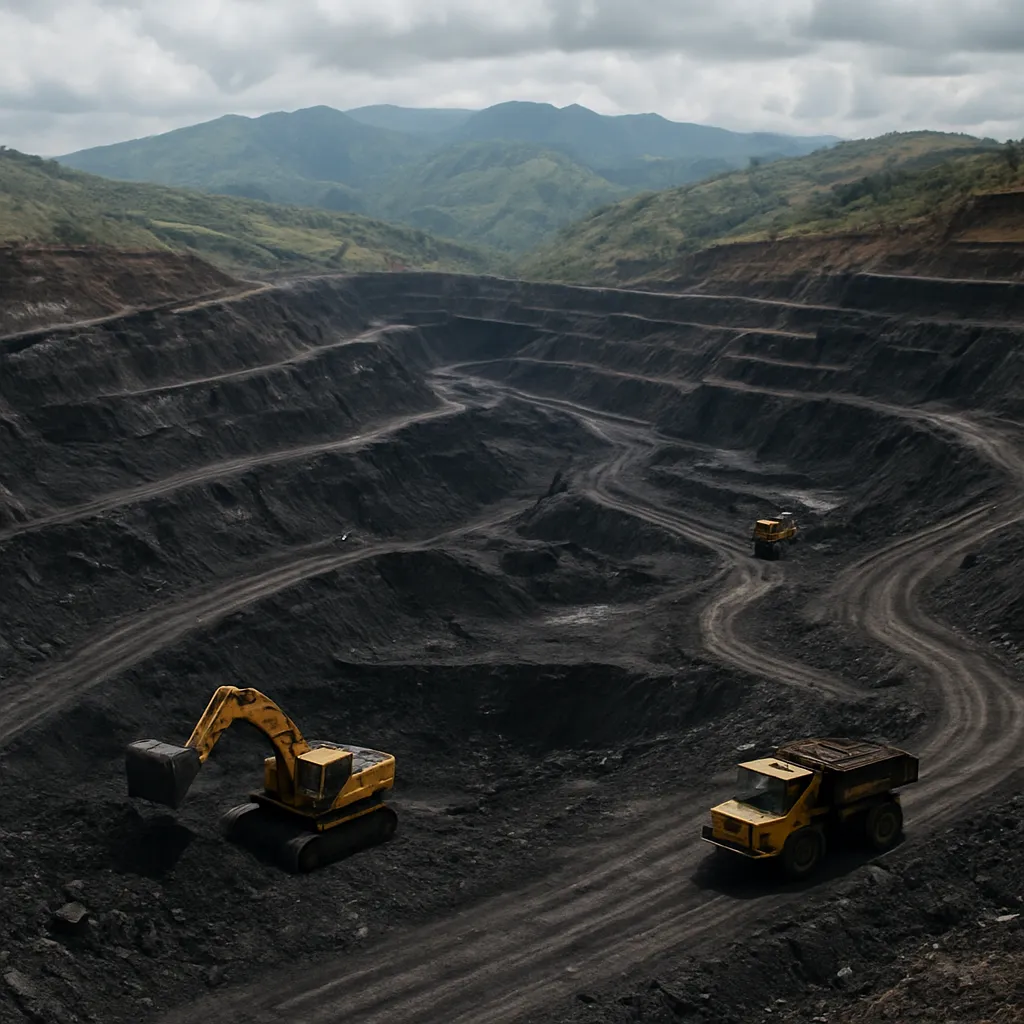
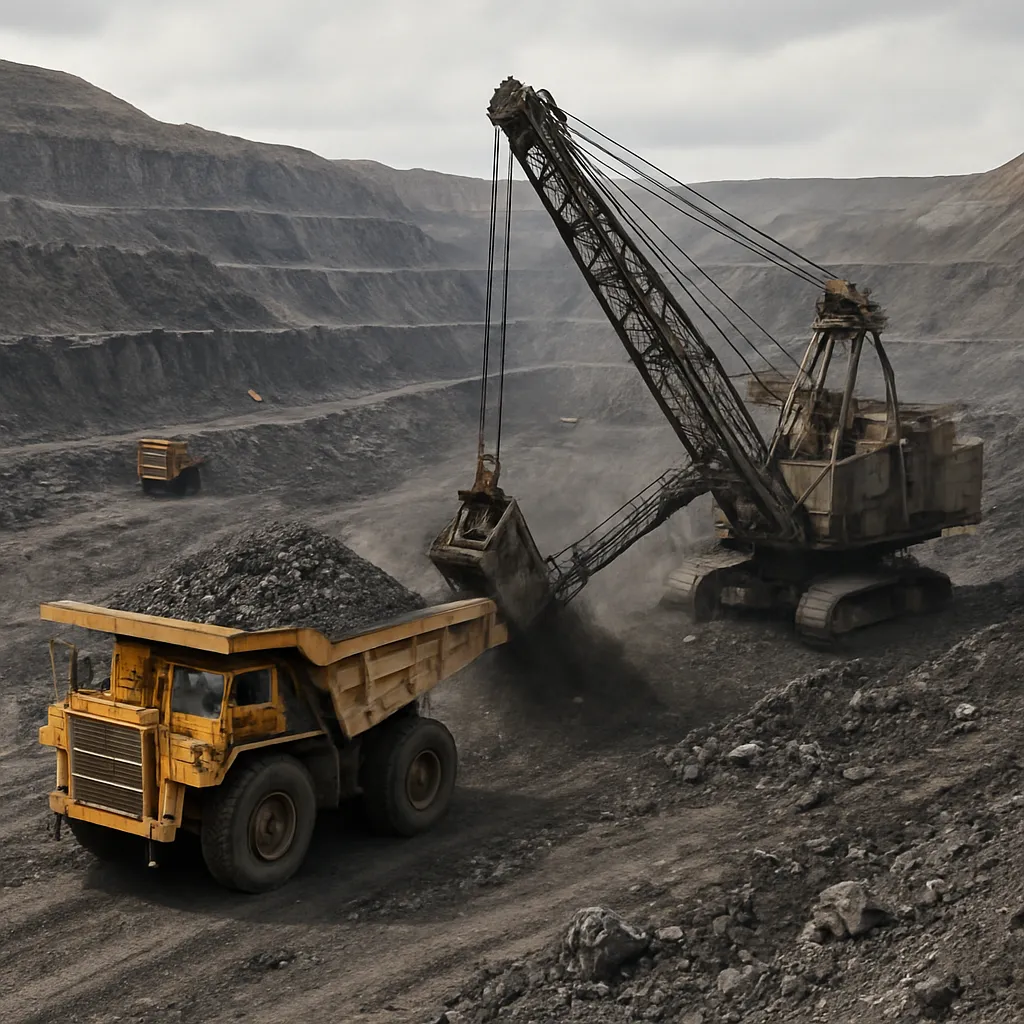
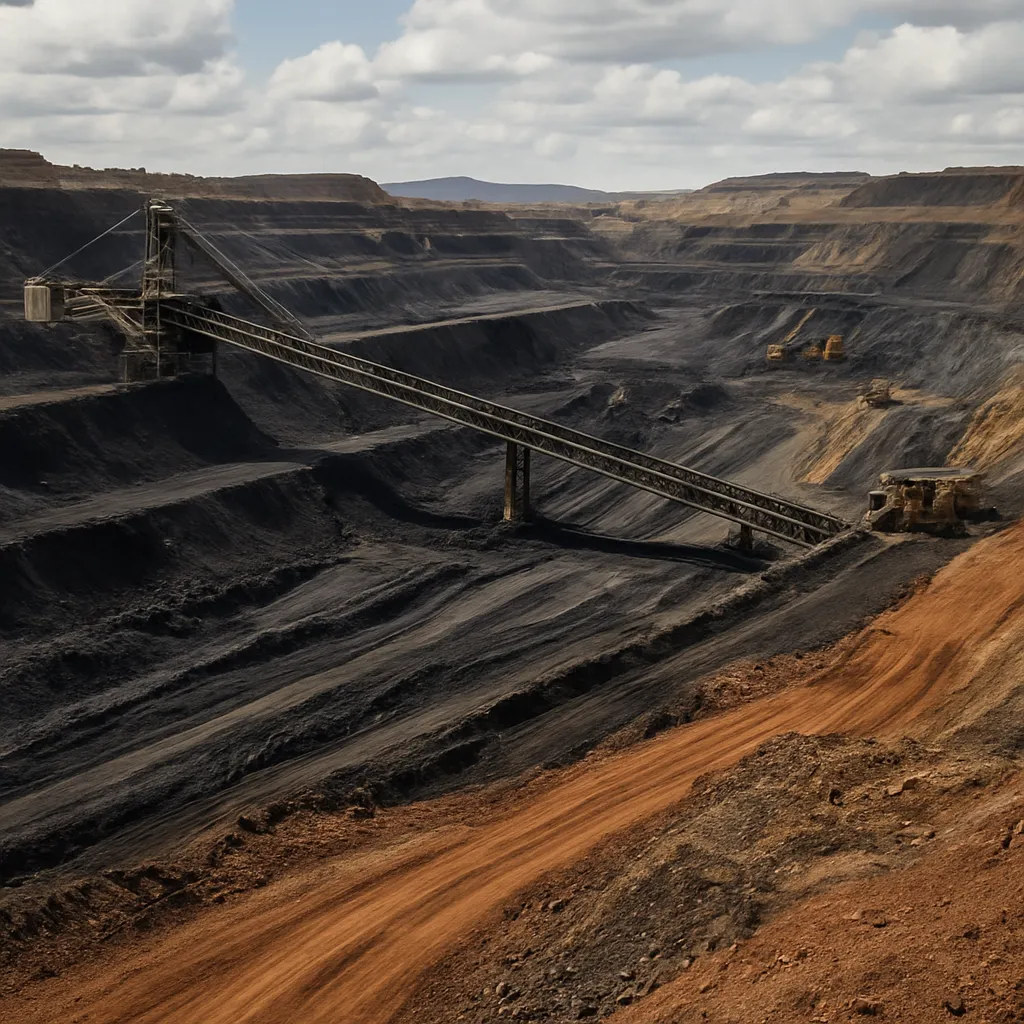
Mining methods employed at Mbali depend on seam depth and thickness. Where seams are relatively near-surface and persistent, bulk surface mining (open-pit) using draglines, shovels and haul trucks is common; where seams are deeper or where surface disturbance must be limited, bord-and-pillar or longwall underground methods may be applied. Modern mechanisation and adherence to safety standards are central features of contemporary operations.
Coal type, quality and uses
The primary product of Mbali is thermal coal, intended mainly for combustion in power stations rather than for metallurgical use. Typical qualities for coal from this region include:
- Calorific value: commonly in the range of 15–24 MJ/kg (lower heating value), depending on seam and beneficiation.
- Ash content: variable; many Highveld seams produce coal with moderate to high ash content, often requiring washing or blending to meet end-user specifications.
- Moisture and volatile matter: moderate to high volatile matter; moisture levels that influence handling and transport economics.
- Sulphur: generally low to moderate, though local variations exist that must be managed to meet emissions requirements.
Because of these characteristics, Mbali’s coal is primarily destined for:
- Domestic power generation (Eskom power stations and independent power producers).
- Domestic industrial consumers (cement works, steelworks auxiliary boilers, brick and tile manufacturers).
- Potential export markets via major export facilities such as the Richards Bay Coal Terminal (Richards Bay) when coal quality and logistics permit.
Reserves, production and statistics
Specific, up-to-date public reserves and production figures for Mbali Coal Mine can be limited in availability depending on company reporting practices and the confidentiality of commercial data. In general terms, South African collieries range from small operations producing under 0.5 Mtpa (million tonnes per annum) to large mines producing several million tonnes per year. Mbali, as a regionally significant operation, would typically be characterised as a small-to-medium or medium-scale producer unless designated as part of a major mining group.
Contextual national statistics are useful to frame Mbali’s role. South Africa’s coal sector (in recent years) has delivered around 200–260 million tonnes of coal annually, with a substantial share consumed domestically for electricity generation. The country’s coal reserves are among the largest globally—estimated in the tens of billions of tonnes—positioning South Africa as a long-term coal reservoir for both domestic use and exports.
Key performance metrics relevant to Mbali and similar operations include:
- Annual production (typical range for medium mines): 0.5–3 Mtpa.
- Employment: medium mines often directly employ several hundred to a few thousand workers depending on mechanisation and underground vs open-pit method.
- Coal quality parameters: calorific value, ash, moisture, total sulphur and size distribution—each influencing market value.
Where available, company annual reports or mining right documents provide mine-specific figures such as proven and probable reserves (in millions of tonnes), mine life in years under current production rates, and annual production tonnages. For Mbali, local regulatory filings with the Department of Mineral Resources and Energy (DMRE) or environmental impact assessments would be primary sources for precise figures.
Economic and regional significance
Mbali Coal Mine plays multiple economic roles at local, regional and national levels. At the local level, the mine is typically a major employer and buyer of goods and services, supporting towns and service economies in the Highveld. At a regional level, coal mines underpin industrial clusters—power generation, steel, cement and other energy-intensive industries rely on a stable coal supply.
Nationwide, coal remains central to South Africa’s energy mix. Approximately 80–90% of South Africa’s electricity generation is coal-fired, making the coal sector strategically important for national energy security. Mbali’s contributions, while a fraction of national output, form part of a distributed supply network that helps maintain grid reliability.
Economic multipliers of a mine such as Mbali include:
- Direct employment and payrolls supporting household incomes.
- Local procurement of goods and services, from equipment maintenance to catering.
- Taxes, royalties and other payments to national and provincial governments.
- Infrastructure investments—roads, rail links and power connections that can have spillover benefits for other industries.
Transport, logistics and market access
Coal mined at Mbali is typically moved by a combination of truck and rail to end users. For long-distance export or delivery to coastal terminals such as Richards Bay, rail is the most economical mode. The primary freight corridors connect Mpumalanga coalfields to Richards Bay and Durban, and rail capacity constraints or congestion at export terminals can materially affect mine economics.
Domestic supply chains are equally important: many mines supply directly to nearby Eskom power stations and industrial customers via short-haul rail or road. The mine’s logistical efficiency—loading, stockpiling, washing and quality control—directly impacts margins and contract compliance.
Ownership, governance and regulatory environment
Mines in South Africa operate under a licensing and regulatory framework administered by the Department of Mineral Resources and Energy and relevant provincial authorities. A mining right or production right governs legal extraction, and environmental authorisations such as environmental impact assessments (EIAs) and water-use licences are mandatory.
Ownership structures vary: some mines are wholly owned by large mining companies or coal multinationals; others are operated by private firms or local consortia including black economic empowerment (BEE) partners. Corporate governance, community participation and compliance with labour and safety legislation are central to responsible operations.
Social and environmental considerations
Coal mining at Mbali raises a range of social and environmental issues common to the industry:
- Water management: Coal production and processing consume and potentially contaminate water. Operations are required to manage water use, prevent acid mine drainage, and treat effluents to meet regulatory standards.
- Air quality: Dust and particulate emissions from blasting, hauling and stockpiling must be controlled to reduce impacts on nearby communities and ecosystems.
- Land disturbance: Open-pit mining opens large scars on the landscape; progressive rehabilitation and post-mining land use planning are required to restore ecological function and enable future land uses.
- Community relations: Labour practices, resettlement where necessary, and local procurement policies shape the mine’s social licence to operate. Community development projects—education, health and infrastructure—are commonly part of corporate social investment.
- Greenhouse gas emissions: Coal burning is a major source of CO2 emissions. Mines and their buyers face increasing pressure to reduce lifecycle emissions, pursue energy efficiency, and support carbon mitigation strategies.
Regulatory frameworks demand that mining companies prepare Environmental Management Programmes (EMPrs), conduct baseline and ongoing monitoring, and implement closure and rehabilitation plans with financial provisioning to ensure compliance even after mine closure.
Safety, technology and operational improvements
Safety is a major focus in South African mining, with continuous improvements driven by regulation, technology and industry best practice. Mbali employs safety management systems, emergency response plans and ongoing training to manage risks such as roof falls (in underground operations), heavy plant incidents and respiratory hazards.
Technological trends influencing mines like Mbali include:
- Automation and remote-operated equipment to improve productivity and reduce safety exposure.
- Improved beneficiation and wash-plant technologies to reduce ash content and increase market value.
- Real-time monitoring (including geotechnical and environmental sensors) to optimise operations and detect hazards early.
- Data analytics and fleet management systems to improve fuel efficiency, reduce costs and better schedule logistics.
Challenges and future prospects
Coal mines across South Africa face a mix of short- and long-term challenges that shape the future of operations such as Mbali:
- Coal demand dynamics: International markets are transitioning away from coal faster than domestic demand; export opportunities depend on price competitiveness and terminal access while domestic demand is influenced by Eskom’s generation mix and policy on renewables.
- Regulatory and permitting hurdles: Lengthy permitting timelines for water and environmental approvals can slow expansion projects and increase costs.
- Infrastructure constraints: Rail capacity constraints and port throughput limitations can limit export volumes and impact realised prices.
- Social licence and community expectations: Mines must manage relationships with communities and address socio-economic needs to avoid conflicts and operational interruptions.
- Energy transition pressures: As South Africa implements cleaner energy policies, coal mines must adapt—either by improving their environmental footprint, diversifying into other minerals, or planning for orderly closure and redeployment of assets.
Despite these challenges, medium-term prospects for mines supplying domestic power stations and industrial consumers remain tied to South Africa’s reliance on coal for baseload electricity. Companies with efficient operations, strong environmental management and flexible market access are better positioned to sustain operations through fluctuating market conditions.
Rehabilitation, closure planning and post-mining land use
Responsible mining mandates planning for rehabilitation and mine closure from an early stage. Closure plans for Mbali typically involve:
- Progressive rehabilitation during mining (recontouring, topsoil replacement and revegetation).
- Management of remaining spoil and water bodies to reduce acid generation and persistent contamination.
- Community engagement on post-mining land use—options include agriculture, conservation areas, industrial estates or recreational development.
- Financial provisioning to guarantee closure obligations are met even if a company faces financial stress.
A well-executed closure strategy reduces long-term liabilities, secures the legacy of the site and enables local communities to benefit from post-mining opportunities.
Notable impacts and interesting facts
Some broader observations that add context to Mbali’s story:
- South Africa’s coal industry has historically been a major employer and engine of regional development; mines like Mbali are nodes in a larger network of coal supply that has supported industrialisation for over a century.
- Coal from the Highveld is heterogeneous—operators often blend seams to meet specifications, and washing plants play a critical role in determining marketability and price.
- Local community projects associated with mines often focus on skills development, small enterprise support and infrastructure upgrades to leave a lasting positive impact.
- Technological adoption in the coal sector—such as remote sensing for exploration and drone-based environmental monitoring—has accelerated in recent years, improving operational transparency.
Conclusion
Mbali Coal Mine exemplifies the typical characteristics of a Highveld coal operation: it produces primarily thermal coal from Permian-era seams, contributes to local employment and regional economies, and interacts with a complex transport and market system that ties it to both domestic power generation and export markets. While specific up-to-date production and reserves figures require consultation of company reports and regulatory filings, Mbali’s significance derives from its role within South Africa’s broader coal value chain—supporting energy security, industrial activity and regional development—while facing contemporary challenges related to environmental management, infrastructure constraints and the global energy transition. Effective governance, community engagement and adaptive operational strategies will determine how mines like Mbali continue to contribute in the decades ahead.