The following article provides a comprehensive overview of the Umaria Coalfield in India: its location, geology, mining activities, coal quality, economic and statistical context, industrial significance, environmental and social implications, and prospects for the future. The aim is to synthesize geological, economic and practical aspects relevant to researchers, industry professionals and general readers interested in India’s coal sector.
Location and Geological Setting
The Umaria Coalfield is situated in the eastern part of the state of Madhya Pradesh, central India, within the administrative boundaries of Umaria district. The coalfield lies in the broad Central Indian Coalfields region and is geographically close to forested and ecologically sensitive areas, including reserves and national parks that shape land use decisions. The terrain here is a mix of plateau, undulating hills and river valleys, with coal seams occurring in a complex sedimentary sequence of Permo-Carboniferous to Gondwana age.
Geologically, the coal-bearing formations in and around the Umaria block belong to the Gondwana group, characterized by interbedded sandstones, shales, and coal seams formed in fluvial to deltaic environments. These deposits are typical of central Indian coalfields: multiple seams of varying thickness, generally laterally discontinuous, and often affected by faulting and structural deformation. The coal is predominantly of the non-coking, or thermal, type that formed from plant material in freshwater swamp conditions.
Coal Type and Quality
The coal mined in the Umaria area is primarily used for thermal purposes — supplying fuel to power stations and industrial boilers. Typical properties of central Indian coals, which are applicable to Umaria, include moderate to high ash content, modest calorific value, and variable moisture. The coal rank ranges from sub-bituminous to low volatile bituminous in many seams.
- Calorific value: Central Indian thermal coals commonly have gross calorific values roughly in the range of 3,000–4,200 kcal/kg (approximate general range applicable to similar coalfields).
- Ash content: Often higher than premium export coals, frequently in the range of 25–40% depending on seam and local geology.
- Sulphur and volatile matter: Typically low to moderate sulphur, with variable volatile matter content.
Because of the relatively high ash content and variable calorific value, coal from Umaria is most economically suited to local and regional thermal power plants, captive power for mining and industrial operations, and cement and brick manufacturing where lower-grade coals are acceptable.
Mining Methods and Infrastructure
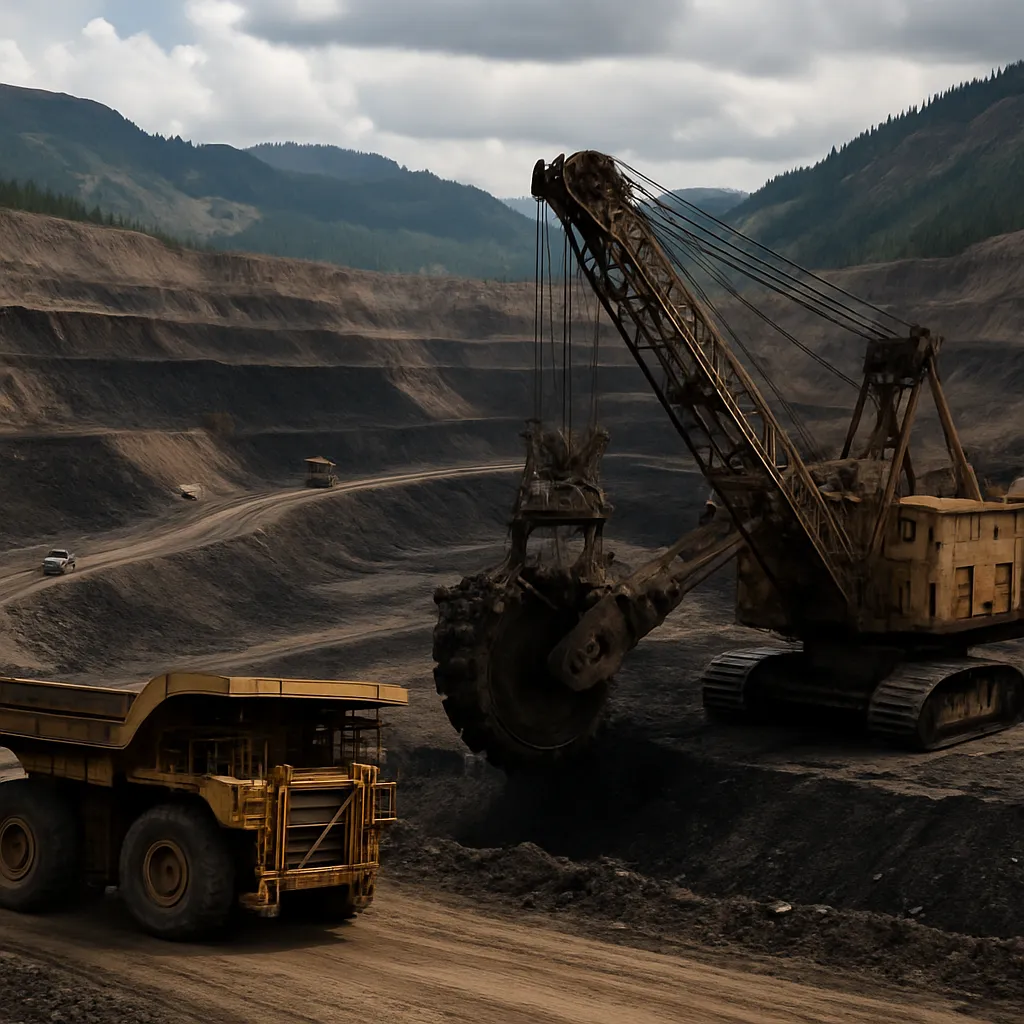
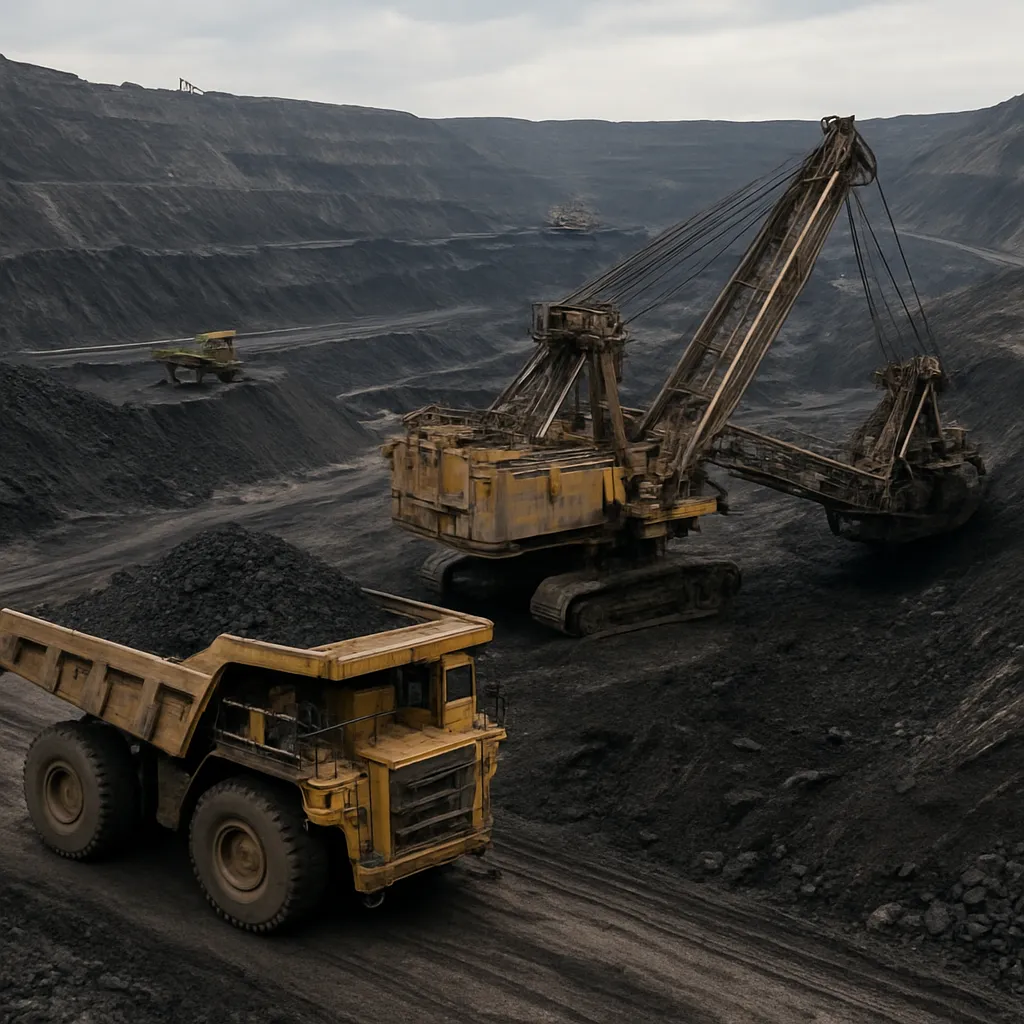
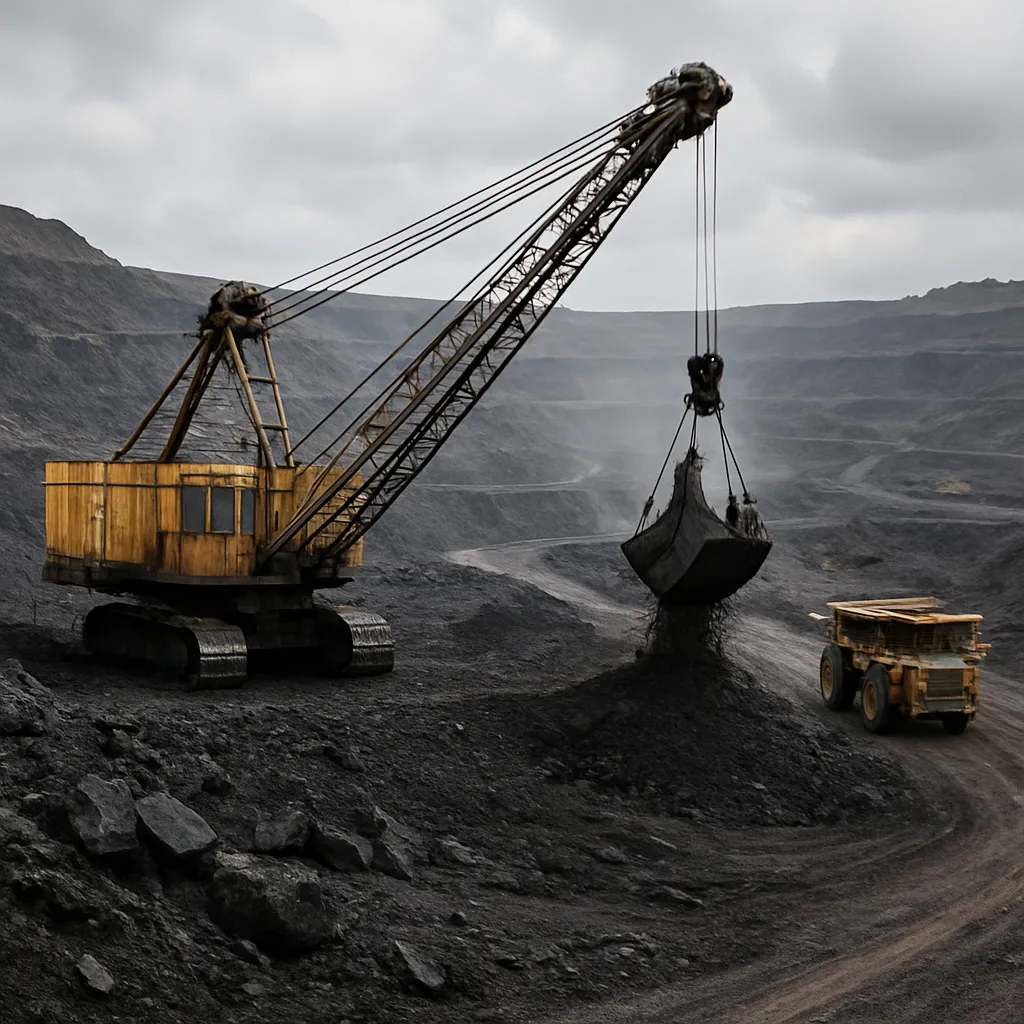
Mining in and around Umaria has historically used both opencast (surface) and underground methods, with opencast being preferred where seam geometry and cover depths allow. Opencast operations typically offer higher extraction rates and lower operating costs per tonne, while underground mines are used where seams are deeper, thinner or constrained by topography and surface land use.
Typical features of mining operations
- Open-pit benches with drilling and blasting, followed by excavation using shovels and trucks or conveyor systems.
- Underground mining in thinner seams leveraging bord-and-pillar or longwall-style methods where geology permits.
- Use of mechanized equipment for overburden removal and coal handling in larger operations.
- Rehabilitation and progressive reclamation measures implemented variably, depending on the operator and regulatory compliance.
Connectivity to transportation networks (rail and road) is a critical enabler for commercial coal extraction. The coalfield benefits from regional rail links that allow movement of coal to nearby thermal power plants and industrial consumers. In many central Indian coalfields, a combination of road, conveyor and short railway spurs serve collieries for bulk dispatch.
Economic and Industrial Significance
The economic importance of the Umaria Coalfield is multi-fold, ranging from energy supply to local employment and regional industrial development. Coal remains a backbone fuel for India’s electricity generation, and even smaller coalfields play a role in meeting local demand and providing fuel security.
- Energy supply: Coal from Umaria supplies thermal plants and local industries, reducing dependence on distant mines and potentially lowering transport costs for nearby consumers.
- Employment: Mining operations create direct jobs in extraction, maintenance and logistics, and indirect employment in communities through services, transport, and supply chains.
- Local industry support: Cement plants, brick kilns, small foundries and captive power units often rely on regional coal, fostering industrial clusters.
- Revenue: Royalties, taxes and lease payments from mining contribute to state and national revenues; employment earnings support local economies.
On a regional level, Umaria’s coal contributes to grid stability by feeding nearby thermal stations or providing a nearer-source alternative during transport disruptions elsewhere. In that sense, small to medium coalfields function as strategic assets within India’s broader energy mix.
Statistical Overview and Production
Comprehensive, field-specific statistical figures such as proved reserves, annual production volumes, and exact workforce numbers for Umaria Coalfield are compiled periodically by governmental and industry bodies (for example, the Ministry of Coal, Coal India Limited publications and Geological Survey of India reports). Publicly available documentation for some smaller coalfields may be sparser than for major basins. Broadly speaking, coalfields in this part of central India often report:
- Reserves: classifications typically listed as proved, indicated and inferred; for smaller coalfields, reserves are frequently in the order of several million to tens of millions of tonnes (exact figures subject to official surveys).
- Annual production: varies widely by operational scale; small mines may produce hundreds of thousands of tonnes per year, while larger regional operations produce millions of tonnes.
- Operational life: reserve base and extraction rate together determine remaining mine life; smaller reserves imply shorter-term operations unless new reserves are delineated.
It is recommended to consult the latest editions of the Coal Directory of India or state mining department releases for precise, up-to-date numbers on reserves and production for Umaria. Those sources provide audited, classification-based statistics (proved, indicated, inferred) and historical production records.
Social and Environmental Considerations
Mining activity in and around Umaria interfaces with sensitive natural and social environments. The district includes forested tracts and areas of ecological importance, and it is also home to rural communities and tribal populations whose livelihoods depend on agriculture, forest products and local commerce.
Key environmental and social issues
- Land use and displacement: Opencast mining can require land acquisition and may result in displacement of communities and loss of agricultural land if not carefully managed.
- Forestry and biodiversity: Proximity to forested areas raises concerns about habitat loss, fragmentation and disturbance to wildlife corridors.
- Water resources: Mine dewatering, altered runoff and sedimentation can affect river and groundwater systems important for agriculture and domestic use.
- Air quality: Dust from excavation and coal handling, as well as emissions from combustion downstream, are air quality concerns requiring mitigation.
- Socio-economic welfare: Mining can bring employment and infrastructure benefits but also pressures on local services, inequality and cultural change.
Regulatory frameworks in India mandate environmental impact assessments (EIAs), forest clearances, rehabilitation plans and community engagement. Progressive operators implement dust suppression, water treatment, greenbelt development and post-mining land rehabilitation to reduce environmental footprints. Community development programs in education, health and livelihoods are increasingly common as part of corporate social responsibility (CSR) and legal obligations.
Transport, Logistics and Market Linkages
Efficient logistics are essential to make coal mining economically viable. Umaria coal typically reaches consumers through regional rail corridors and road transport for shorter hauls. Key market linkages include:
- Power plants within the state and neighboring states that prefer locally sourced coal to reduce transportation cost and improve fuel security.
- Industrial consumers (cement, brick, steel auxiliaries) that require steady supplies of thermal coal or coal fines.
- Regional coal depots and washery facilities when available; washing can improve calorific value and reduce ash before dispatch to sensitive customers.
Investment in rail sidings, conveyor systems, washery capacity and improved road access can significantly enhance the economic value of coalfields by lowering logistics costs and improving product quality.
Regulatory and Institutional Context
Coal mining in India is governed by multiple central and state laws, covering mineral concessions, environmental clearances, forest rights, land acquisition, labour standards and royalties. Operators must secure mining leases, obtain environmental and forest clearances where necessary, and comply with the Mine Safety and Health regulations. The trend in recent years has been toward more transparent auctioning of coal blocks, increased environmental scrutiny, and stronger emphasis on local stakeholder engagement.
Depending on leases and contracts, operations in Umaria may be undertaken by public-sector undertakings under Coal India Limited, state-owned entities, or private firms operating under a license/lease regime. Partnerships with local authorities and communities are crucial for long-term social license to operate.
Challenges and Opportunities
Like many modest-sized coalfields, Umaria faces several challenges as well as opportunities:
- Challenges
- Geological complexity and seam discontinuity can raise mining costs and reduce recovery.
- High ash content limits market options and requires washing or blending to meet quality standards.
- Environmental and social constraints near forested or protected areas complicate expansion and increase mitigation requirements.
- Opportunities
- Investment in coal beneficiation (washery), conveyor-based logistics and mechanization can increase product value and operational efficiency.
- Development of captive power or industrial clusters nearby can create assured demand for coal, improving economic viability.
- Exploration and modern geological surveying may delineate additional reserves, extending mine life.
- Adoption of best-practice environmental management increases social acceptance and reduces compliance risk.
Future Prospects and Transition Context
The future of coalfields such as Umaria must be viewed within India’s evolving energy and environmental policies. While coal remains integral to India’s energy mix in the near to medium term, there is growing emphasis on renewable energy expansion, emissions control and cleaner coal technologies. Prospects for Umaria involve a balance between immediate economic benefits and long-term sustainability measures.
- Short to medium term: Continued role as a regional supplier of thermal coal, especially if logistics and coal quality improvements are implemented.
- Medium to long term: Opportunities to integrate cleaner coal technologies, invest in reclamation and rehabilitation, and diversify local economies away from single-resource dependence.
- Policy alignment: Mining plans will need to align with national commitments on emissions and forest conservation, while supporting local development goals.
Interesting Facts and Contextual Notes
- Umaria district is not only a mining region but also a location of ecological and cultural interest, hosting tourism assets that benefit from conservation of natural landscapes; this duality creates a geographic tension between mining and conservation.
- Smaller coalfields like Umaria are strategically important during periods when major supply routes are constrained — they often provide flexibility and redundancy to regional fuel supplies.
- Community-centric mining models, where benefits are shared and local employment prioritized, have shown promise in increasing social acceptance and reducing conflict.
- Modernization of mining practices — mechanization, dust control, progressive backfilling and water management — can markedly reduce the environmental footprint compared with older methods.
Conclusion
The Umaria Coalfield is a representative example of a regional Indian coalfield with important local and regional economic roles: supplying fuel for thermal power and industry, creating employment, and contributing to state revenues. The coal is generally suited to thermal use, with quality characteristics typical of central Indian coalfields (moderate calorific value and higher ash). The future viability and social acceptability of mining in Umaria depend on improved resource management, environmental mitigation, community engagement and integration with broader regional development plans. Strategic investments in beneficiation, transport infrastructure and environmentally responsible mining can enhance the economic benefits while addressing ecological and social concerns. Overall, Umaria’s value lies not only in its coal reserves but in the way mining, governance and community development are balanced to achieve sustainable outcomes.