The following article presents a comprehensive overview of the Ukhaa Khudag mining project in southern Mongolia, focusing on its location, geology, mining and processing methods, economic and social significance, trade and production statistics, environmental challenges and future prospects. The aim is to provide a balanced, informative picture of one of the more prominent coal operations in the Mongolian Gobi region and its role within national and regional energy and industrial systems.
Location, geological setting and deposit characteristics
The Ukhaa Khudag site is located in the South Gobi region of Mongolia, in Ömnögovi Province, which is part of the broader Gobi Desert area that hosts several major coal basins. The mine sits within a sequence of Mesozoic-to-Cenozoic sedimentary basins that host multiple coal-bearing horizons. The region is known for its extensive, relatively shallow coal deposits that can be exploited by surface mining methods.
Geography and access
Ukhaa Khudag is strategically positioned between significant border crossings to the People’s Republic of China and central Mongolian transport routes. Proximity to Chinese demand centers has been a key factor in the economic viability of the project. Access roads and haul routes link the mine to the border crossing at Gashuunsukhait (also spelled Gashuun Sukhait) and to regional road networks; discussions about rail connectivity in the South Gobi have been ongoing for years to improve logistics and lower transport costs.
Geology and coal type
The deposit at Ukhaa Khudag is composed of several coal seams of varying thickness. Coal types extracted from the deposit are generally in the category of low- to medium-ash, medium- to low-sulfur coals, which makes them suitable for export to thermal power stations and industrial users. The coal can be classified broadly as bituminous to sub-bituminous in many sections; some material from the South Gobi exhibits properties that make it usable for both power generation and some industrial applications, depending on wash and blending.
The geological setting yields coal that is relatively shallow and amenable to open-pit mining, which reduces capital complexity compared with underground operations but brings greater surface disturbance and specific environmental management requirements.
Mining operations, infrastructure and processing
Ukhaa Khudag has been developed as an integrated open-pit operation with on-site handling and primary processing capabilities. Mining operations typically include drilling and blasting (where necessary), loading with wheel loaders, truck haulage to primary crushers, and on-site stockpiling and blending. Where installed, washing and beneficiation facilities serve to upgrade product quality for particular export markets.
Minesite layout and equipment
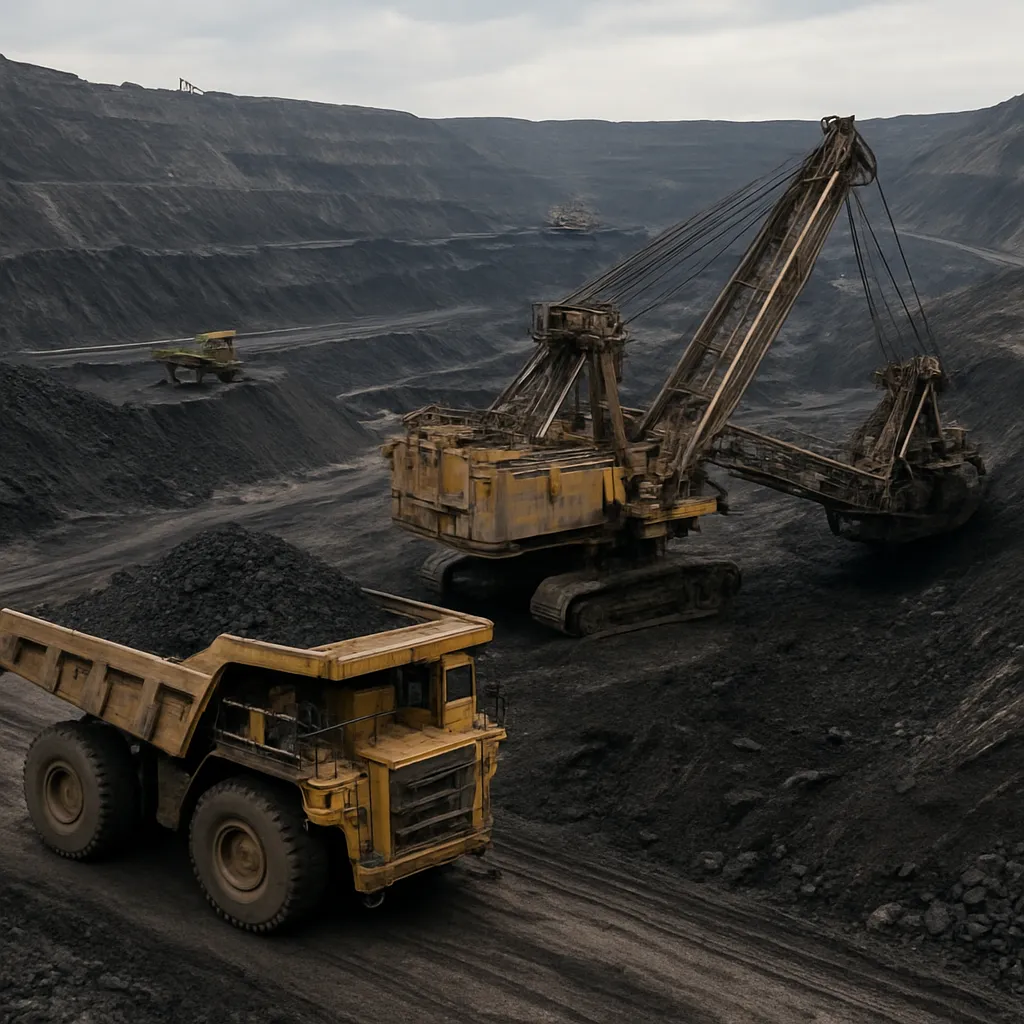
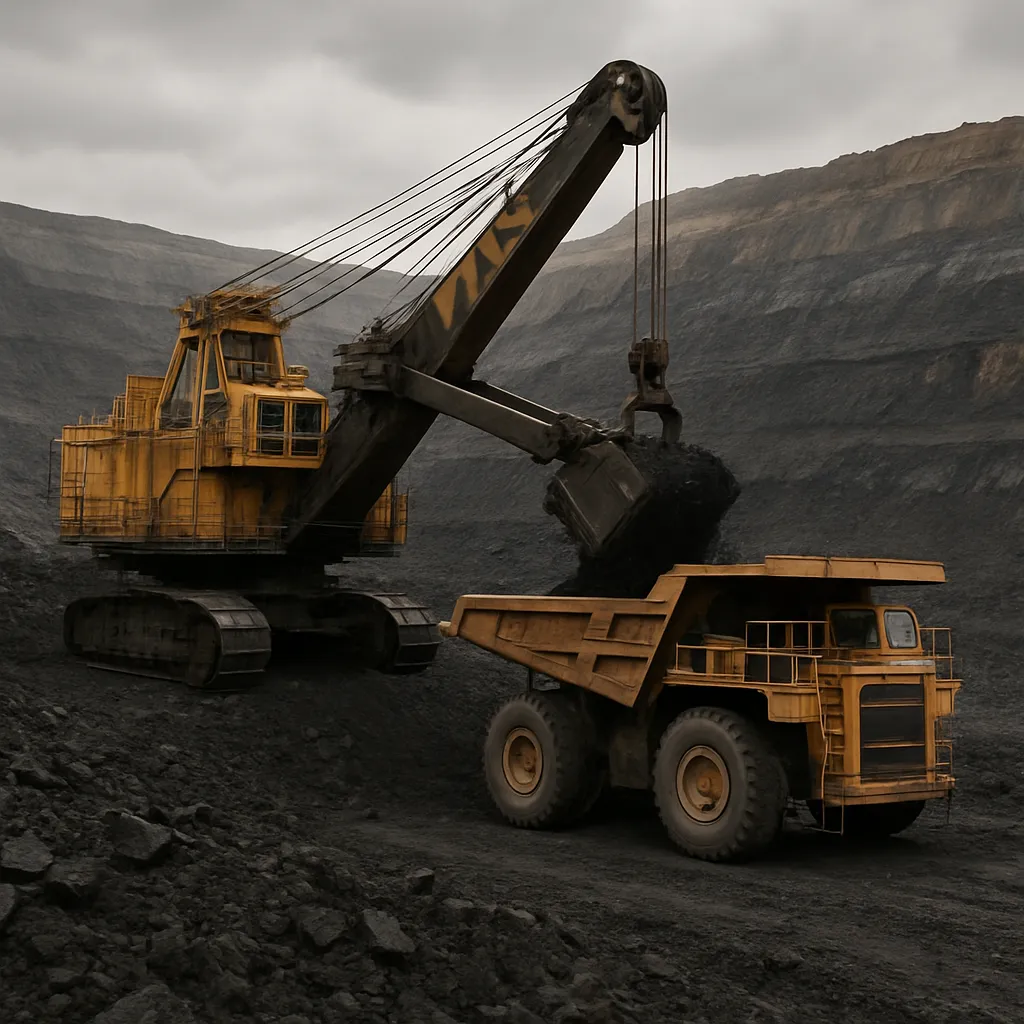
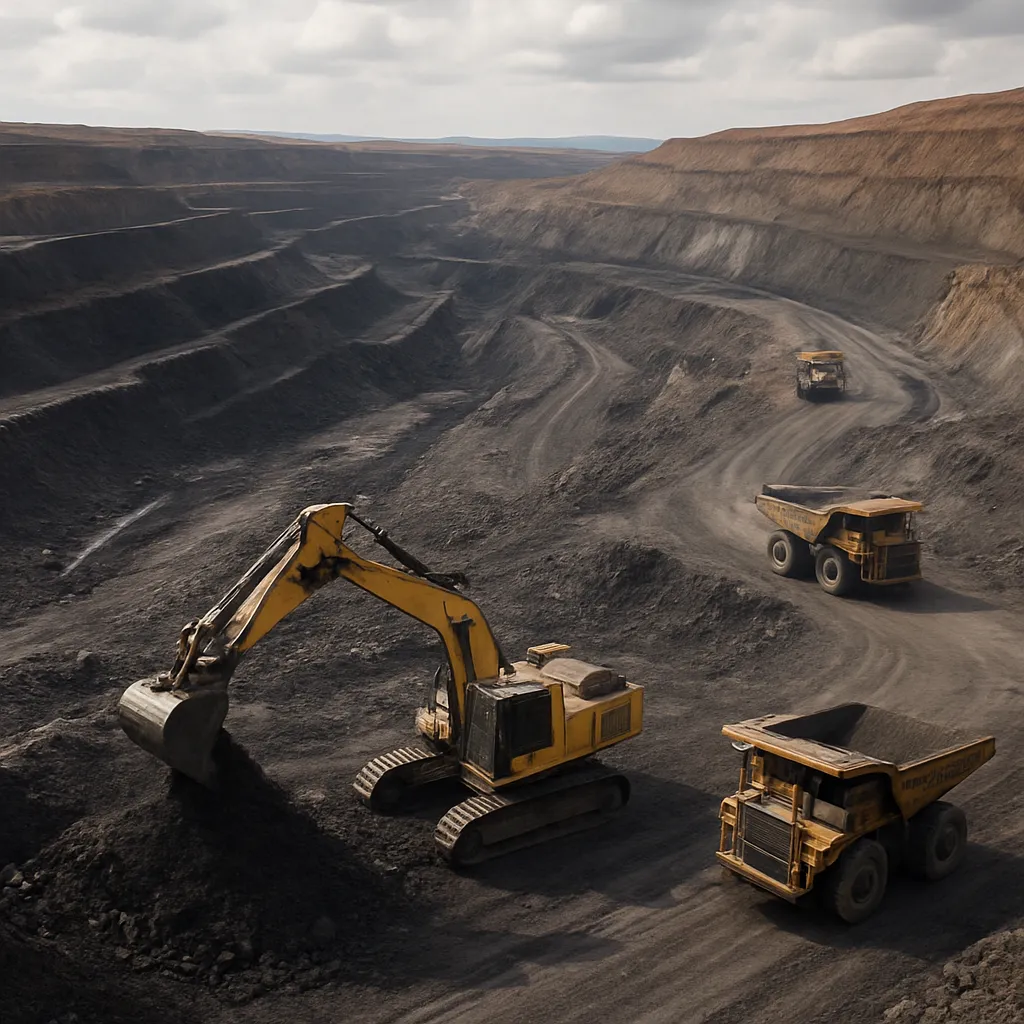
Typical surface-mining equipment at the site includes large haul trucks, hydraulic excavators, bulldozers, graders for road maintenance, and mobile or fixed crushers. Overburden removal and management of waste rock are central components of daily operations. Supporting infrastructure commonly includes workshops, fueling stations, worker accommodation camps, water supply systems, and administrative buildings.
Logistics and export routes
A key feature determining the mine’s commercial success is transport logistics. Coal from Ukhaa Khudag has primarily been transported by truck to Chinese border points, then onward by Chinese logistics to end-users. The absence of a dedicated heavy-haul railway directly to the mine has historically increased per-ton transport costs. National discussions and plans for new rail links in the South Gobi aim to reduce costs and improve export tonnage capacity; such infrastructure could change the regional competitive landscape over the medium term.
Processing, quality control and product types
Depending on the installed facilities, mined material may be sent through crushing and screening circuits and, where applicable, washing plants to produce cleaner thermal coal products and potentially some higher-grade material for industrial uses. Quality control programs at the mine monitor calorific value, ash content, moisture, sulfur and other relevant parameters to ensure product specifications agreed with buyers are met.
Economic importance, ownership and employment
Ukhaa Khudag represents an important asset within the South Gobi mining complex and contributes to both local employment and national export earnings. Revenues from coal exports have been an important driver for Mongolia’s economy in recent decades, and mines such as Ukhaa Khudag play a role in that export profile.
Ownership and investment
The development of Ukhaa Khudag has involved private investment from international and regional resource companies as well as partnerships with financiers and service providers. Ownership structures in Mongolian coal projects have often evolved over time, involving combinations of international juniors, strategic investors from neighboring countries and, in some cases, state participation. Projects of this scale generally require substantial capital for initial development, equipment procurement and construction of processing and logistics infrastructure.
Employment and local economy
At operating mines in the South Gobi like Ukhaa Khudag, direct employment commonly ranges from the low hundreds to a few thousand people at peak activity, depending on mine size and stage of development. In addition to direct jobs, the mine stimulates indirect employment in transport, services, maintenance and supply sectors. Local procurement, community investment programs and royalties help channel some of the mine’s economic benefits into the provincial economy, including local contracting and small business opportunities.
Fiscal contribution
Coal mines contribute to national and local budgets through corporate taxes, royalties, export duties where applicable, fees and other levies. For Mongolia, coal export revenues are a meaningful part of foreign exchange earnings. The exact fiscal take for any given mine varies by contract terms, production volumes and national fiscal policy, but mining royalties and taxes have been central components of Mongolia’s approach to capturing value from natural resources.
Production, trade flows and statistical context
While specific production statistics may vary year-to-year, mines in the South Gobi have collectively supplied a significant share of Mongolia’s coal exports, most of which are destined for China. Nationally, Mongolia’s annual coal exports have regularly been in the tens of millions of tonnes in recent years; the South Gobi basin is the primary source of those exports.
Estimated production and capacity
- Ukhaa Khudag’s historical and designed production capacities have commonly been cited in the range of a few million tonnes per annum. Production levels depend on operational ramp-up, market conditions and logistics capacity.
- At times, South Gobi operations in aggregate have targeted annual output in the low millions of tonnes for individual mines, contributing to the national export figure which has fluctuated around tens of millions of tonnes annually in recent years.
Export markets and trade routes
The primary export destination for coal from Ukhaa Khudag and other South Gobi mines is China, reflecting geographic proximity and demand for thermal coal and industrial coal products along China’s northern provinces. Cross-border trucking to Chinese border stations has been the dominant transport model; rail connections remain a strategic priority for Mongolia to increase export capacity and reduce unit transport costs.
Macroeconomic significance
Coal mining and exports contribute to Mongolia’s GDP, foreign exchange reserves and government revenues. For provinces such as Ömnögovi, mining revenue and employment transform local economies, but they also create dependence on commodity cycles. Nationally, Mongolia’s coal export volumes and price realizations influence fiscal planning, foreign currency reserves and investment inflows.
Environmental, social and regulatory considerations
Open-pit coal mining in arid regions like the South Gobi raises several environmental and social challenges that require proactive management and regulation. Effective mitigation and monitoring are central to socially responsible operations.
Water use and aridity
Water is a scarce resource in the Gobi. Mining operations must manage water use carefully for dust suppression, processing and camp supply. Water sourcing, reuse, and conservation strategies are important engineering and social considerations, and water access can be a source of tension between mining operations and local herding communities.
Dust, air quality and health
Dust generated by open-pit mining, crushing, haulage and truck traffic can have local impacts on air quality. Programs to control dust include water sprays, covered stockpiles, paved or well-maintained haul roads and speed limits. Health monitoring and community engagement are commonly part of environmental management frameworks.
Land disturbance and reclamation
Open-pit operations alter the landscape significantly. Progressive rehabilitation, management of topsoil and planned post-mining landforms are standard components of responsible mine planning. Reclamation objectives may include returning portions of the site to productive use, minimizing erosion and establishing vegetation adapted to local climate.
Social license and community relations
Maintaining a social license to operate requires ongoing engagement with local communities, transparent benefit-sharing mechanisms, employment opportunities for locals, and investment in local infrastructure such as roads, healthcare and education. Mines in Mongolia typically establish community programs and agreements to address these dimensions.
Challenges, risks and future prospects
Ukhaa Khudag, like other coal projects in Mongolia, faces a range of operational, market and strategic challenges as well as opportunities that will shape its future trajectory.
Market volatility and price risk
Thermal coal and industrial coal prices are subject to global and regional demand-supply dynamics. Chinese energy policy, domestic demand cycles, alternative fuel competition (including gas and renewables) and international climate policy can all influence market access and price levels for Mongolian coal exporters.
Transport infrastructure and logistics
Improvements in rail connectivity or cross-border logistics could materially lower unit transport costs and increase the competitiveness of Mongolian coal. Conversely, persistent logistical constraints can cap export growth and pressure margins.
Regulatory environment and fiscal policy
Mongolian mining companies operate within an evolving regulatory and fiscal framework. Changes to royalties, taxation, environmental standards or export regulations can affect project economics. Clarity and stability in policy are important to attract investment and support long-term project planning.
Environmental and social pressures
Increasing international and domestic attention to environmental performance and climate considerations could affect future demand for coal. Mines that can demonstrate robust environmental management, reduced emissions footprints through more efficient operations, and strong community relationships will be better positioned for longer-term viability.
Outlook and concluding observations
Ukhaa Khudag is an example of an open-pit coal operation that has played a role in Mongolia’s export-oriented mining sector. Its strategic location in the South Gobi, proximity to large markets in neighboring China, and resource characteristics have made it commercially important. At the same time, the operation reflects typical regional challenges: logistics constraints, environmental sensitivities in an arid environment, and exposure to volatile commodity markets.
Key themes for the future of Ukhaa Khudag and similar projects include continued attention to infrastructure (notably rail), disciplined environmental and social management, and adaptive strategies to remain competitive amid changing market conditions. The project’s contribution to local employment, fiscal revenues and export earnings underscores its significance within Mongolia’s resource economy.
Although exact year-by-year production figures and ownership details have varied over time, it is clear that mines like Ukhaa Khudag have contributed, at different times, millions of tonnes per annum to Mongolia’s export volumes. On the national level, Mongolia’s coal exports in recent years have typically ranged in the tens of millions of tonnes annually, with the South Gobi basin providing the bulk of that supply. Continued investments in logistics, environmental technologies and community relations will influence how Ukhaa Khudag’s role evolves in the coming decade, especially as global energy markets and regional energy policies change.
Overall, Ukhaa Khudag remains a significant asset within the Mongolian coal sector: economically meaningful, technically typical of large open-pit coal operations, and emblematic of both the opportunities and challenges that resource-rich, landlocked countries face when developing export-oriented mineral projects.
Ukhaa Khudag continues to be monitored by industry analysts, local stakeholders and policymakers as a barometer of how Mongolia manages its coal wealth, balancing economic gains with environmental stewardship, community expectations and the demands of international markets. Its future performance will depend on market dynamics, investment in infrastructure, and the sustained implementation of robust operational and social practices.