The Tutupan coal mine is one of Indonesia’s most significant coal-producing sites, forming a central part of the country’s export-oriented mining industry. Located in the resource-rich region of Kalimantan, Tutupan supplies large volumes of thermal coal to domestic and international markets, supports regional economic activity and infrastructure, and exemplifies modern large-scale open-pit mining operations in Southeast Asia. This article looks at the mine’s location and geology, the type and quality of coal produced, production and economic statistics, operational and logistical arrangements, and the broader environmental and social implications of Tutupan’s activity.
Location, geology and geology setting
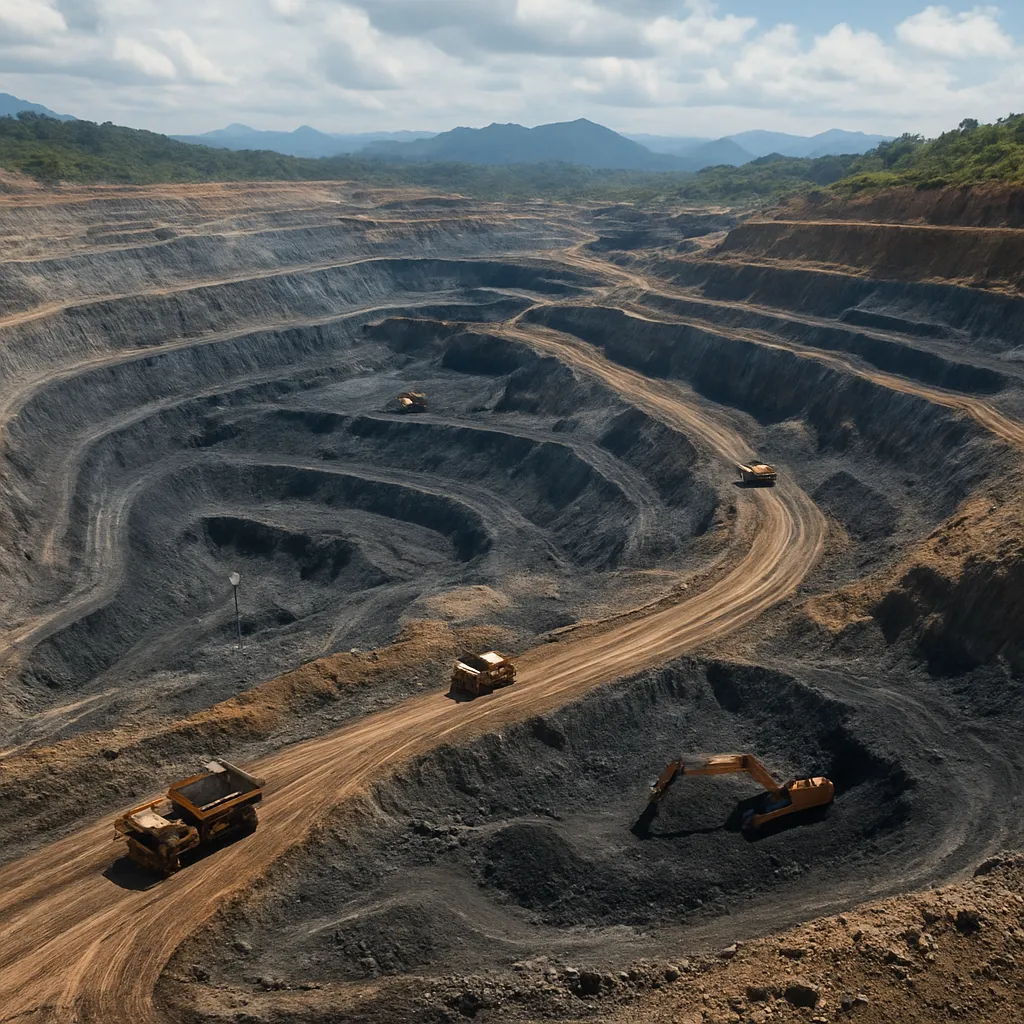
The Tutupan mine is situated on the island of Borneo in the Indonesian province of South Kalimantan. The area is characterized by lowland rivers, peatlands, and tropical forest landscapes that extend across the Barito River basin. Tutupan sits within one of Indonesia’s extensive Tertiary coal-bearing basins, where ancient peat deposits were buried and thermally altered to form significant accumulations of low- to mid-rank coal.
Geological characteristics
- The coal at Tutupan is primarily of a thermal (steam) type, formed from ancient peat swamps and typically classified as low- to mid-rank (sub-bituminous) coal.
- Coal seams are generally widespread and laterally extensive, which makes them well suited to large-scale open-pit mining methods.
- Typical characteristics of the coal from this region include relatively high moisture content compared with higher-rank coals, variable calorific value, and—depending on seam and processing—reasonably low ash and sulfur content in product coal.
The specific seam geometries, thicknesses and quality parameters vary across the Tutupan district and within the mine itself. These geological features have shaped the mine planning and extraction methods used at Tutupan and the broader mining complex of which it is often considered a part.
Coal types, quality and products
Tutupan’s output is principally marketed as thermal coal for power generation and industrial boilers. The mine produces coal that is typically classified in the sub-bituminous rank, which is characterized by:
- Moderate calorific value suitable for electricity generation, often quoted within a range of about 4,000–5,500 kcal/kg on an as-received basis depending on blending and processing.
- Relatively low ash content in processed product blends compared to many other Indonesian coals, which improves its appeal to some power generators.
- Low to moderate sulfur content, which assists in meeting environmental limits for emissions when used in thermal plants.
Operators frequently carry out blending, washing and quality control to meet contractual specifications for export and for domestic customers. The end products are shipped both as raw run-of-mine coal and as processed/washed coal grades tailored for particular markets.
Production, reserves and economic data
Tutupan has been a major contributor to Indonesia’s coal output. While company and government publications provide the most precise annual numbers, key statistical themes include mining throughput, reserves, production trends and the mine’s role in regional and national economies.
Production volumes
- Annual production from the Tutupan area has historically been substantial, commonly ranging in the tens of millions of tonnes per year when considered together with adjacent mining blocks in the same complex.
- Production levels fluctuate year to year with market demand, operational decisions and regulatory factors, but Tutupan has consistently ranked among Indonesia’s higher-volume coal mines.
Reserves and resources
Industry reporting and company disclosures indicate that the Tutupan mining complex contains significant coal resources and reserves, often reported in the order of hundreds of millions to over a billion tonnes when measured across the broader mining district. These sizeable figures underpin long-life mine planning and continued investment in mining and logistics infrastructure.
Economic importance
- The Tutupan mine is an important employer and economic engine in the local district, providing direct mining jobs, contracting opportunities, services and indirect employment across supply chains.
- Revenue streams from coal sales contribute to company earnings, local government revenues (through royalties and taxes) and national export earnings. Indonesia is one of the world’s largest coal exporters, and large mines such as Tutupan are a central part of that export profile.
- Beyond mining revenues, the mine’s presence stimulates investment in regional infrastructure, including roads, barging terminals and energy-related facilities that benefit broader economic activity.
Operational model and logistics
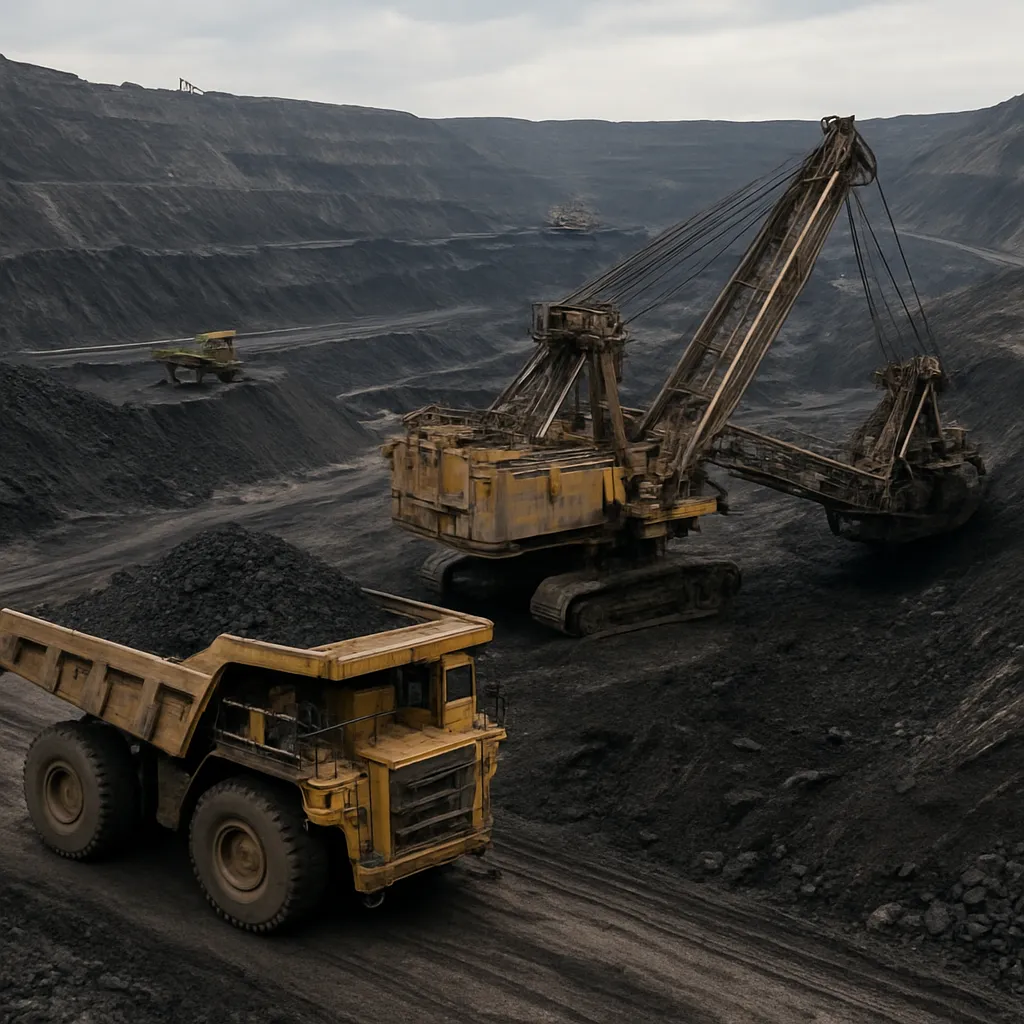
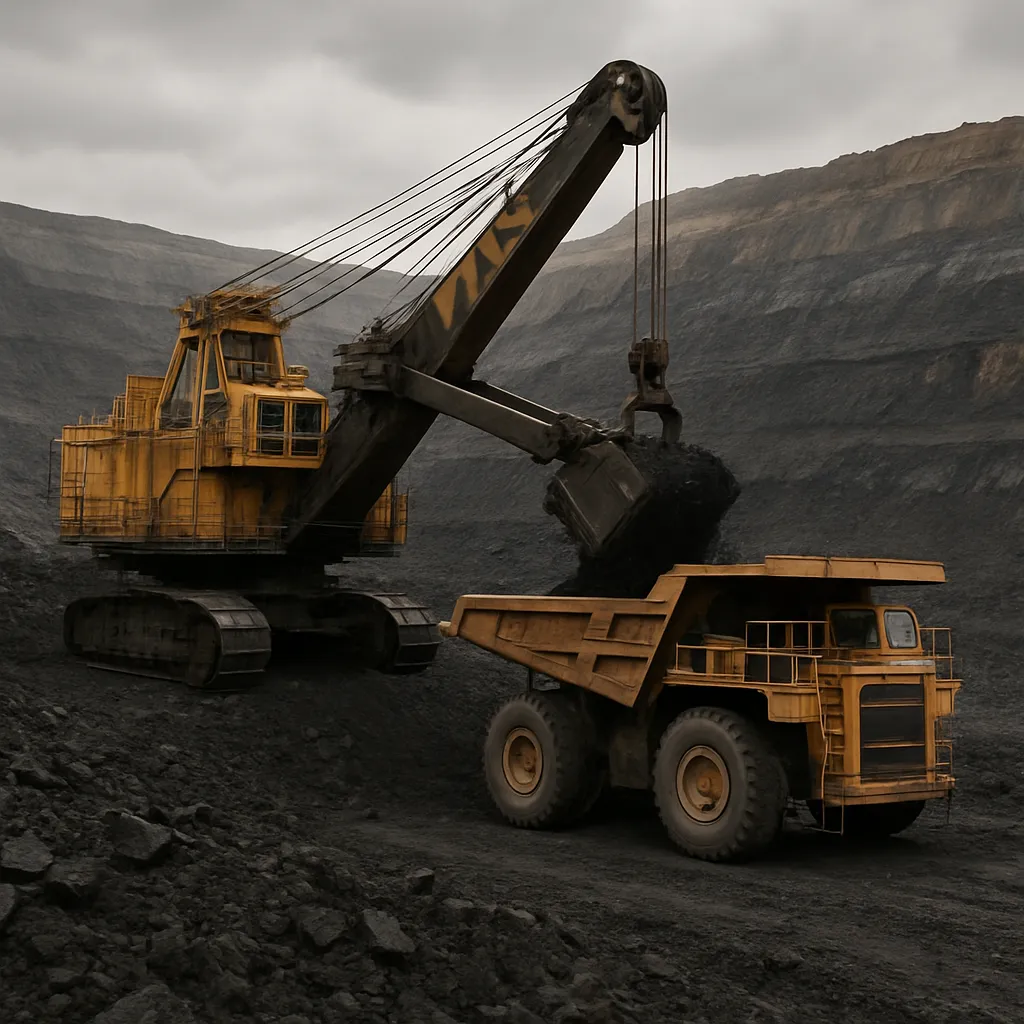
Large-scale coal mines in Kalimantan, including Tutupan, generally employ mechanized open-pit methods designed for high throughput, cost-efficient extraction and earth-moving. Operations include overburden removal, seam extraction, material handling and on-site processing when washing plants are used to improve product quality.
Material handling and transport
- Coal extracted at Tutupan is typically moved from pit to stockpile using conveyors, dump trucks and sometimes a mix of haul systems depending on pit layout and mine planning.
- A significant part of the logistics chain in South Kalimantan involves river barging. Coal is commonly transported by barge down navigable rivers to coastal transshipment or port facilities and then loaded onto ocean-going vessels for export or onto smaller vessels for domestic coastal delivery.
- Some operators maintain integrated logistics assets—barges, jetties, transshipment barges and port terminals—to control costs and ensure reliability of deliveries to customers across Asia and beyond.
Processing and product handling
Depending on market requirements, Tutupan’s coal may be supplied as run-of-mine or undergo washing and screening to reduce ash content and meet calorific value specifications. Washed coal tends to command higher prices and broader market acceptance, particularly in regions with stricter emissions and ash management requirements.
Markets and trade
Indonesian thermal coal serves a wide international customer base. Tutupan’s coal has traditionally been sold to both domestic buyers—power utilities and industrial users—and international markets.
- Key export destinations for Indonesian coal include countries across South and East Asia, with long-standing customers in India, China, Japan, South Korea, Taiwan and Southeast Asian neighbors.
- Market dynamics for Tutupan follow broader seaborne coal trends: demand driven by power generation needs, fuel-switching economics, commodity prices, and regulatory and environmental policies in consuming countries.
- Price volatility affects mine revenues and investment planning; producers often balance spot sales with longer-term contracts to manage cash flow and exposure to short-term market swings.
Environmental, social and governance considerations
Mining at the scale of Tutupan has substantial environmental and social footprints that operators and regulators must manage. Key areas of focus include land transformation, water and air emissions, biodiversity impacts, community relations and rehabilitation.
Environmental management
- Open-pit excavation requires clearing of vegetation and soil, which is typically followed by progressive reclamation and rehabilitation programs aimed at restoring landform stability and enabling post-mining land uses.
- Water handling is critical: managing runoff, preventing contamination of local river systems, and treating water discharges are central to environmental compliance.
- Dust and particulate emissions from mining, crushing and transport operations are mitigated through suppression measures such as water spraying, covered conveyor sections and controlled vehicle movements.
- Greenhouse gas emissions related to coal mining and subsequent coal use in power generation remain a broader policy and reputational challenge. Mines increasingly report emissions inventories and take measures to improve energy efficiency and reduce diesel and fugitive methane emissions where feasible.
Social impact and community engagement
Large mines typically engage in social investment programs, local hiring and supplier development to support community welfare and local economic participation. Issues sometimes requiring attention include land acquisition, resettlement, and impacts on traditional livelihoods such as fishing and small-scale agriculture.
Governance and regulatory context
- Indonesian mining regulations set out licensing, environmental assessment, royalties and local content requirements. Operators at Tutupan must comply with these legal frameworks and with evolving national policy objectives toward sustainable mining.
- Corporate governance practices and public reporting on environmental, social and governance (ESG) metrics have become increasingly important for mine operators, financiers and customers in the coal value chain.
Technological aspects and innovation
Modern coal mines like Tutupan have adopted various technologies to increase efficiency, reduce costs and improve environmental performance. These may include:
- High-capacity earth-moving equipment and draglines (where suitable) to maximize recovery and lower unit costs.
- Conveyor systems and material-handling automation to reduce reliance on truck haulage and cut operating emissions.
- Real-time monitoring systems for fleet optimization, safety oversight and environmental parameter tracking.
- Processing technologies—washing, screening and blending—to meet stricter product specifications demanded by customers.
Regional significance and long-term outlook
Tutupan’s importance reaches beyond immediate production statistics. At a regional level, the mine contributes to infrastructure development, creates employment and supports ancillary businesses. At a national level, Tutupan forms part of Indonesia’s status as a major global coal supplier, helping to satisfy energy demand across Asia.
Economic resilience and diversification
While coal has been a cornerstone of regional growth, many stakeholders emphasize the need for economic diversification, workforce skill development, and planning for post-mining land use to ensure communities remain resilient when mining activity declines.
Market and policy drivers
- Global and regional energy policy, climate commitments, and the pace of transition to renewables will influence long-term demand for thermal coal. Market access and pricing will be shaped by these broader trends.
- Domestically, Indonesia’s energy strategy—balancing export revenues, domestic supply security and emissions targets—will be a key determinant of how operations like Tutupan evolve.
Notable operational and historical points
Over its operational life, the Tutupan area has been notable for:
- Being part of a larger mining complex that has benefited from integrated logistics and scale efficiencies.
- Adoption of mechanized and high-throughput mining practices that have positioned the operation as a significant supplier in international coal markets.
- Engagement with local communities through employment, training programs and community development initiatives, alongside environmental management and rehabilitation work aimed at longer-term sustainability.
Conclusions
The Tutupan coal mine is a major piece of Indonesia’s mining landscape: a large-scale coal producer with considerable production capacity and reserves that contribute materially to regional economic activity and national export earnings. Its product—predominantly thermal coal—serves domestic power generation and international markets, while the mine’s operations reflect the broader challenges and opportunities of modern mineral extraction: the need for efficient logistics and infrastructure, careful environmental and social management, and strategic positioning in an energy market experiencing transition. As global energy systems evolve, operations like Tutupan will continue to play an important role in the near to medium term while adapting to changing market, regulatory and sustainability expectations.