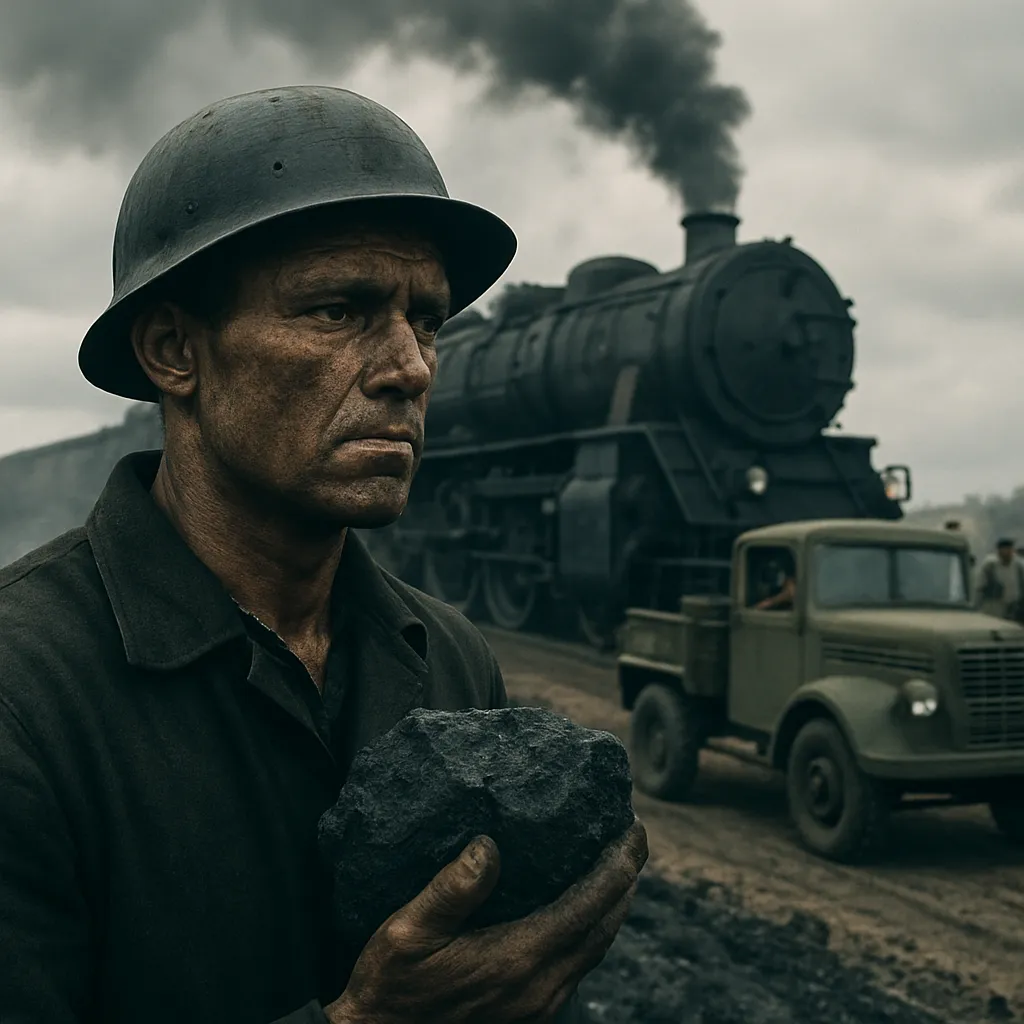
The global struggle of the 1940s was not only fought on battlefields but also in the mines, rail yards, and power stations where coal emerged as a decisive factor. This dense fossil fuel, often dubbed “black gold,” supplied the heat and energy that powered steel mills, warships, locomotives, and industries vital for military production. Nations raced to increase extraction, secure stockpiles, and protect supply lines. Understanding the multifaceted role of coal during World War II unveils how this once-ubiquitous resource shaped strategic decisions, logistical feats, and postwar reconstruction.
Origins and Strategic Value of Coal in Wartime
Long before the outbreak of hostilities, coal underpinned the industrialization that fueled national economies. By the 1930s, major powers had built vast networks of mines and transportation arteries. In peacetime, coal heated homes and powered factories; in wartime, it became the lifeblood of the wartime economy. Key considerations included:
- Energy density: Compared with wood or oil, coal offered a high energy yield per ton—a crucial metric when ships and trains needed reliable, consistent heat.
- Abundance: Coal deposits spanned Europe, North America, and parts of Asia, making it more accessible than some liquid fuels during blockades.
- Versatility: Beyond driving steam engines, coal powered chemical plants that produced explosives, synthetic rubber, and dyes essential for military uniforms and equipment.
Securing sufficient coal reserves thus became a matter of national security. Governments implemented strict controls, rationed civilian consumption, and prioritized allocation for military uses. Mines operated around the clock as competition for this finite resource intensified.
Production, Distribution, and Supply Chains
Coal production soared to unprecedented levels between 1939 and 1945. In the United States, output climbed from roughly 560 million tons in 1938 to over 650 million tons by 1944. Meanwhile, Germany, the Soviet Union, Britain, and Japan each mobilized tens of thousands of miners—including conscripted labor and POWs—to extract every available seam. Key factors shaping the coal supply chain included:
- Mechanization: Introduction of electro-hydraulic drills, conveyor belts, and improved ventilation boosted productivity, though safety hazards remained high.
- Railways: Trains served as the arteries of coal transportation. Allied bombing campaigns often targeted coal depots and rail junctions to disrupt enemy fuel flows.
- Shipping: Overseas coal shipments traversed U-boat infested waters, forcing convoys and deploying escort vessels to maintain supply to island nations like Britain and Japan.
- Labor mobilization: Women and older workers replaced enlisted men in mines, reflecting the total-war ethos that no civilian sector could remain untouched.
Despite this massive effort, bottlenecks frequently arose. Overloaded tracks, insufficient rolling stock, and retaliatory bombings forced emergency measures: stockpiles at power plants swelled, while local towns endured rolling blackouts to conserve precious fuel.
Coal Stockpiles and Strategic Reserves
Anticipating supply disruptions, governments established vast stockpiles at key military and industrial sites. Facilities ranged from shallow bunkers near coastal ports to deep caverns carved beneath mountains. Strategic planning revolved around three interconnected goals:
- Maintain a three- to six-month buffer for critical factories producing munitions, aircraft, and naval vessels.
- Ensure uninterrupted operation of rail networks and steam-powered battle fleets.
- Provide reserves for civilian safety and morale, including heating hospitals, orphanages, and emergency shelters.
In Britain, coal stockpiles at power stations often reached record heights by late 1940, only to be torched by Luftwaffe raids. In the Pacific theater, Japanese-held islands competed with local civilians for meager reserves, resulting in chronic shortages that hampered industrial output and transportation. By contrast, the United States enjoyed relative security behind the Atlantic and Pacific oceans, allowing Wall Street financiers and military planners to focus on logistic optimization rather than defending mines from air attack.
Technological Innovations and Challenges
Wartime demands spawned rapid advances in mining and combustion technology. Engineers designed higher-efficiency boilers and pulverized-coal burners for factories and ships. On the extraction side:
- Electrification of drilling and hoisting equipment reduced reliance on steam-powered lifts, speeding coal delivery to the surface.
- Explosives research led to safer blasting compounds, improving roof stability in deep shafts.
- Ventilation systems incorporating high-capacity fans mitigated deadly gas buildup, though fatal accidents remained common.
Despite these innovations, meeting skyrocketing demand proved arduous. low-grade lignite in Eastern Europe fueled quick-burning boilers but produced abundant soot, fouling machinery and pipelines. Engineers had to balance calorific value against impurities—especially sulfur and ash content—to maximize performance in steam engines powering tanks and locomotives.
Impact on the Wartime Economy and Postwar Legacy
The centrality of coal to the war effort had far-reaching economic and social consequences. Soldiers returning from battlefields found entire mining communities devastated by air raids or stretched thin by labor shortages. In many allied nations, mine nationalization became a postwar priority, reflecting the belief that critical resources should remain under state oversight to prevent future crises.
Reconstruction programs under the Marshall Plan and Soviet Five-Year Plans invested heavily in rebuilding and expanding coal infrastructure. New surface mines opened in the Ruhr and Appalachian regions, while Eastern European countries prioritized coal over other fuels to accelerate industrial recovery. However, this focus came at an environmental cost:
- Air pollution soared as outdated power plants emitted sulfur dioxide and particulates without modern scrubbers.
- Landscape degradation from open-pit mining scarred hillsides and disrupted ecosystems.
- Public health suffered in mining towns, where black lung disease and other respiratory ailments remained pervasive.
Yet the legacy of wartime coal logistics persisted. Rail networks expanded, port facilities modernized, and centralized planning models redefined energy policy in both East and West. Many boilers, turbines, and conveyor systems developed during the war continued service well into the 1960s, underscoring coal’s enduring impact on global infrastructure and industrial capacity.
Conclusions on Coal’s Pivotal Role
World War II demonstrated that modern warfare hinges not only on tanks and bombs but also on the steady hum of engines fueled by fossil reserves beneath our feet. Coal was the silent workhorse that propelled weapons factories, powered navies, and kept armies on the move. While overshadowed by petroleum in later decades, coal’s strategic stockpiles, technological breakthroughs, and logistical networks remain a testament to how resource control can decide the fate of nations.