The Oltenia coal mining area in southwestern Romania has been one of the country’s most important sources of fossil fuel for decades. Concentrated in the counties of Gorj, Dolj and parts of Vâlcea and Mehedinți, the Oltenia mines supply low-rank **lignite** to a cluster of large thermal power plants and directly shape local economies, employment patterns and regional infrastructure. This article provides an overview of where the mines are located, what type of coal is produced, their economic and industrial role, environmental and social challenges, statistical context where available, and likely future developments for the basin and the communities that depend on it.
Geography, geology and mining methods
The Oltenia coal deposits lie principally in the lower valley of the Jiu River and adjacent plains in southwestern Romania. The geology of the basin is dominated by **lignite** seams formed during the Neogene and Quaternary periods. These deposits are comparatively shallow and extensive, making them well suited to large-scale surface extraction.
Typical geological and mining characteristics include:
- Extensive lateral continuity of seams rather than very deep seams, enabling mechanized open-pit extraction.
- Variable seam thicknesses: in many pits seams reach several meters to tens of meters, interbedded with clay, sand, and alluvial deposits.
- Low calorific value and high moisture content compared with hard coals — a typical trait of lignite that makes it primarily suitable for nearby **thermal** power plants rather than long-distance export.
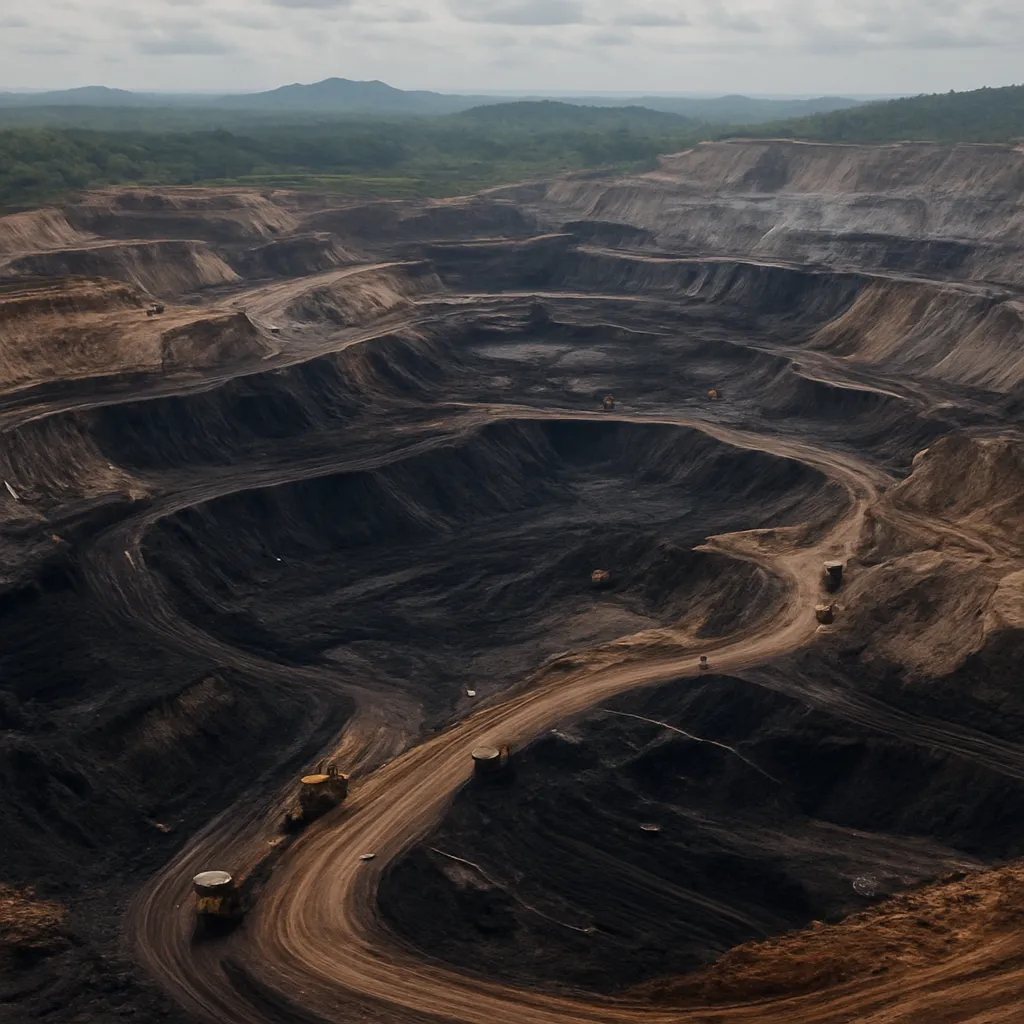
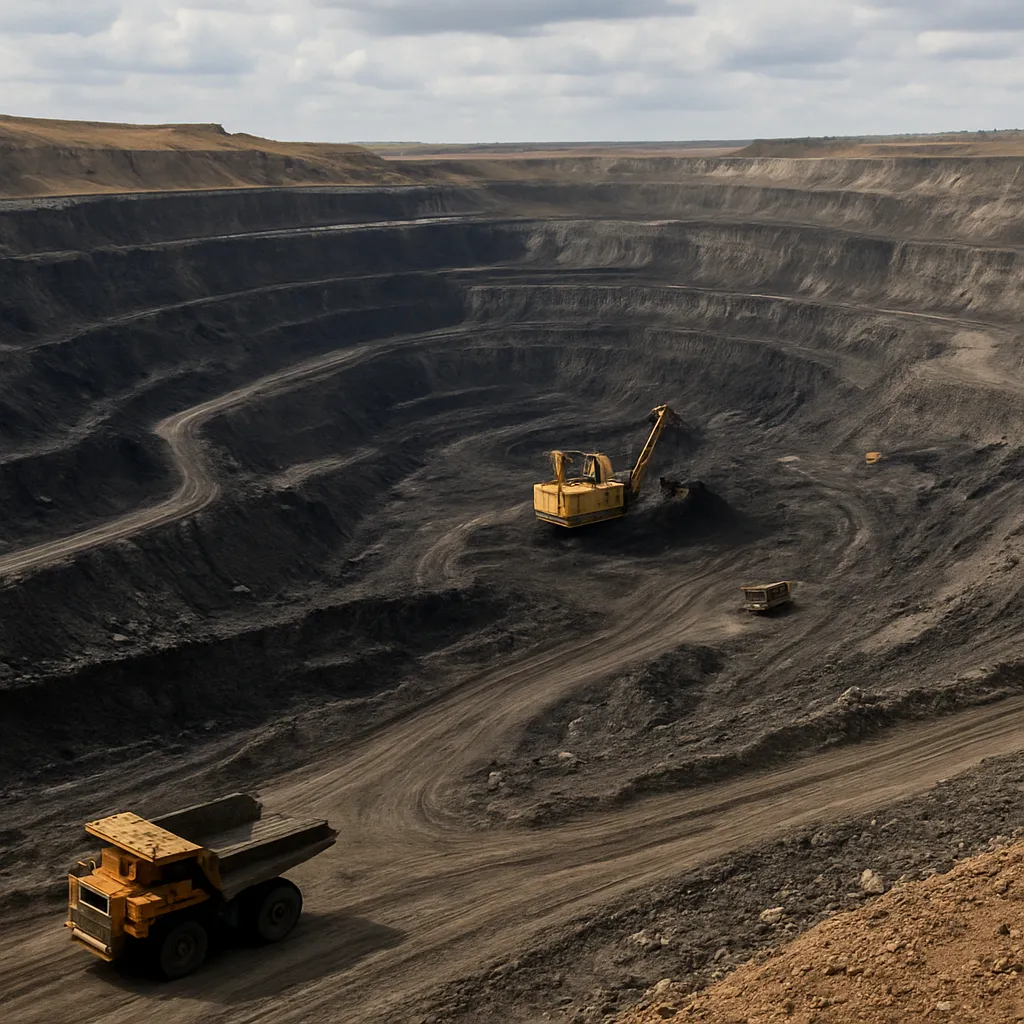
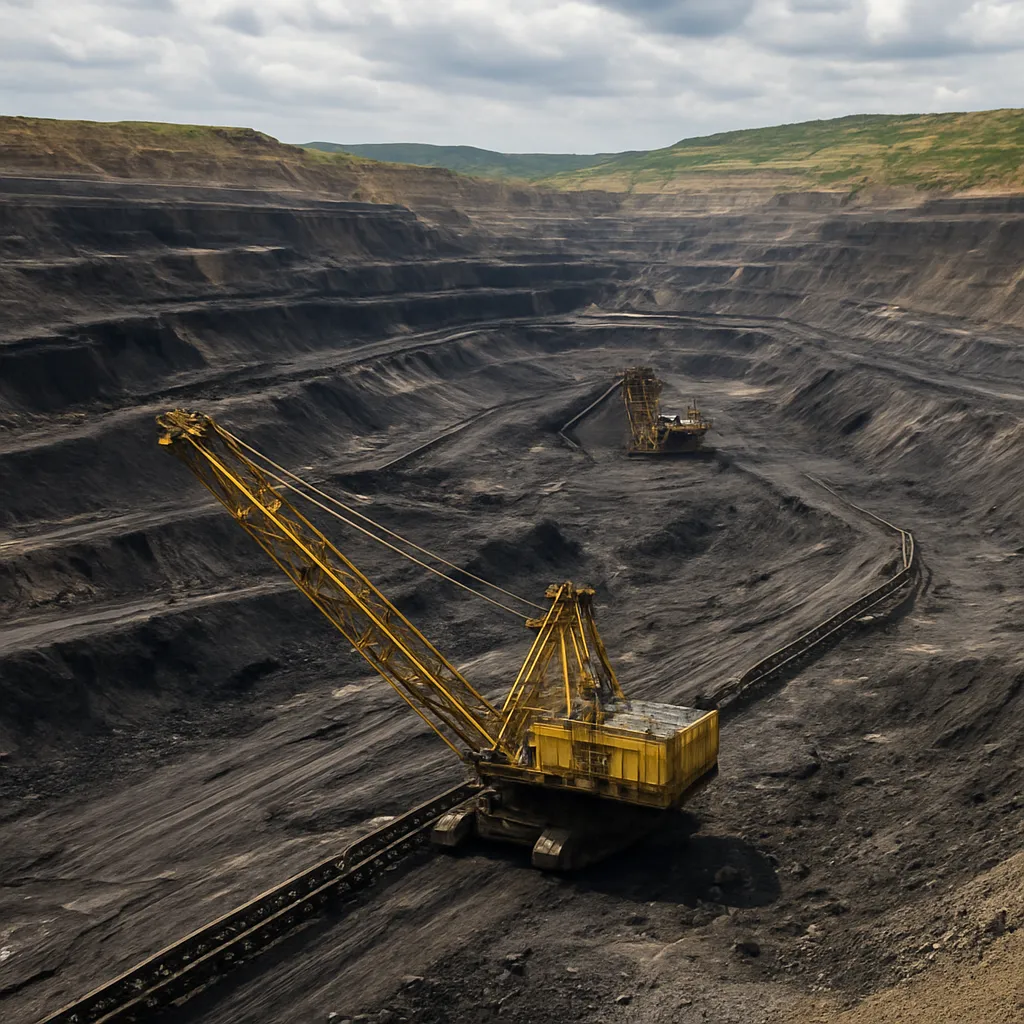
Open-cast mining is the predominant method. Large bucket-wheel excavators, draglines, and conveyor systems are commonly used to remove overburden and extract coal. Because of the basin’s morphologic characteristics, mining operations have often expanded laterally, creating large artificial terraces and spoil heaps that dominate the landscape in mining districts.
What is mined and coal quality
The Oltenia mines produce primarily **lignite**, often called brown coal, which is a lower-rank coal type characterized by:
- Relatively low calorific value compared with bituminous coal, usually in the lower range (lignite calorific values commonly fall between roughly 6 and 15 MJ/kg depending on moisture and ash content).
- High moisture and volatile matter content, which reduces transport economics and increases emissions per unit of energy produced.
- High ash content in some seams, requiring on-site handling and disposal of residues.
Because lignite has a poor energy density, it is typically used in **power plants located close to the mines**, minimizing transport costs and energy loss. This proximity model is a defining feature of Oltenia’s mining-power complex.
Industrial layout and major facilities
The Oltenia mining basin is closely integrated with a series of thermal power plants and local industrial facilities. The most prominent energy producer historically associated with the region is Complexul Energetic Oltenia (CEO), a state-owned enterprise that combined mining and power generation assets. The mining activities feed the boilers of several large lignite-fired plants, which have historically provided a large share of Romania’s base-load electricity.
Major thermal power plants served by Oltenia lignite include turbines and units historically associated with names recognized nationally: Turceni, Rovinari, and other plants that either draw directly from Oltenia mines or from nearby extraction sites. These plants vary in installed capacity and unit vintage, with a mix of high-capacity older units and smaller modernized blocks. Together they formed a substantial portion of the pre-existing thermal generation fleet.
Economic and regional significance
Mining and associated power generation have been pillars of the local economy in Oltenia for generations. The sector’s importance can be framed in several ways:
Employment and communities
- Coal mining and power generation provided direct employment to thousands of workers and supported indirect jobs in equipment maintenance, transport, supply chains and local services.
- Mining towns and settlements—often purpose-built during the communist era—developed around pits and power plants, forming communities whose livelihoods and identities are tied to coal.
Energy security and electricity supply
- Historically, Oltenia’s lignite-fired plants contributed a significant share of Romania’s domestic electricity production, enhancing national energy security by relying on local fuel resources.
- The integrated mine-to-plant model kept electricity costs relatively low for base-load generation but produced a carbon- and pollutant-intensive energy mix.
Economic multipliers
- Local and regional budgets benefited from corporate taxes, wages, and public investments tied to the mining sector.
- Infrastructure investments—roads, rail spurs, and energy networks—were often concentrated around mining zones, spurring further industrial activity in the area.
Statistical context and production trends
Nationally, Romania has been a moderate producer of coal compared with major European coal-producing countries. Over the last two to three decades, production trends have shown a decline from historic peaks because of reduced domestic demand, plant retirements, modernization of the energy mix and environmental policies encouraging lower-emission sources.
Relevant statistical patterns to note:
- Oltenia’s deposits have historically represented a large share of Romania’s lignite production—commonly cited as the primary lignite basin in the country.
- Annual lignite production from Romanian mines varied over recent decades, with numbers typically in the tens of millions of tonnes range countrywide; the Oltenia basin has often accounted for a majority of that output.
- Electricity generation from lignite-fired plants in Romania historically contributed a significant portion (double-digit percentages) to national generation, though that share has been decreasing as renewables and gas-fired plants expand and older lignite units are retired or operated at lower capacity factors.
Because precise year-on-year figures vary with policy, market and technical decisions, production volumes and employment numbers have been subject to frequent adjustment. In the late 2010s and early 2020s, for example, many operators reported reduced extraction and generation as part of restructuring and environmental compliance programs. Simultaneously, regional planning documents and national transition strategies have targeted the Oltenia basin for investment and restructuring funding, linking statistics on output to broader transition measures.
Environmental and health impacts
Coal mining and lignite combustion have generated multiple environmental pressures in the Oltenia basin:
- Air quality: Particulate matter, sulfur oxides, nitrogen oxides and carbon dioxide emissions from lignite-fired plants have affected local and regional air quality.
- Land degradation: Open-pit mining reshapes landscapes, removes topsoil and natural habitats, and leaves behind spoil heaps that require long-term stabilization and reclamation.
- Water management: Lowered water tables in mined areas, altered drainage patterns, and the need for mine water treatment are persistent challenges.
- Health impacts: Communities near mining and combustion sites have experienced elevated health risks associated with air pollution.
Addressing these impacts involves reclamation measures, dust and runoff control, selective backfilling, landscaping, and long-term monitoring of soil and groundwater. Reclamation projects can enable post-mining land uses such as agriculture, forestry, lakes for recreation, or sites for renewables—but these require careful planning and investment.
Policy environment and the transition
Romania’s energy and climate policies, together with European Union commitments to greenhouse gas reductions, have put lignite regions like Oltenia at the center of transition debates. Key elements include:
- EU decarbonization goals that incentivize gradual phasing out of unabated coal, or significant reductions in coal-fired generation over the 2020s and 2030s.
- National strategies and Just Transition frameworks to support workers and communities through restructuring, reskilling programs, and targeted investments.
- Eligibility for EU and national funds aimed at economic diversification, remediation, infrastructure and social support in coal regions.
The concept of a Just Transition is central to policy responses in Oltenia. It recognizes the social and economic costs of rapid closures and aims to provide financing, retraining, and economic development pathways that reduce unemployment and social dislocation while meeting climate targets.
Reclamation, reuse and economic diversification
Post-mining land use and economic diversification options for Oltenia include:
- Land reclamation and conversion to **agriculture**, forestry or ecological reserves in suitable areas.
- Creation of artificial lakes and recreational areas that can boost tourism and local services.
- Repurposing industrial sites for **renewable energy**: solar farms, wind installations, and energy storage projects are natural candidates for former mine sites given their scale and grid proximity.
- Development of industrial parks and logistics hubs that benefit from existing energy and transport infrastructure.
Several initiatives and proposals in recent years have explored the potential for large-scale solar installations on reclaimed mine lands, combined heat and power repurposing, and investments in energy efficiency and digital infrastructure to attract new economic activities.
Socio-economic challenges and opportunities
The human dimension is crucial: mining communities in Oltenia face a mix of risks and possibilities. Challenges include potential job losses, population decline and the need for new skills. Opportunities arise from public and private investments tied to decarbonization and redevelopment.
Practical responses that have been discussed or implemented in parts of the region include:
- Retraining programs for mine and plant workers in renewable energy technologies, construction, IT and service sectors.
- Investment in local entrepreneurship and small-to-medium enterprises to reduce reliance on a single industry.
- Targeted infrastructure improvements—transport, broadband, education—that improve the attractiveness of the area to investors.
Interesting facts and historical notes
Some notable aspects of the Oltenia coal complex:
- The mine-to-power model—co-locating large thermal plants near open pits—exemplifies a mid-20th-century industrial approach that prioritized energy security and local fuel use over transport and pollution concerns.
- Large-scale open-pit operations have left a distinctive industrial landscape, with spoil heaps, terraces and mine lakes that are now part of the region’s visual identity.
- Technological changes in mining equipment and power plant controls have intermittently extended the operational life of assets even as policy pressures mounted to reduce coal use.
Future outlook: scenarios and pathways
Multiple pathways exist for the Oltenia mines and the wider basin depending on policy, investment and market drivers:
- Managed phase-down: Gradual closure of older lignite units combined with reclamation and replacement investments in renewables and economic diversification. This path relies on public funds and private investors aligning around transition plans.
- Technological mitigation: Investments in carbon capture and storage (CCS) on remaining large units could theoretically reduce CO2 emissions, but CCS faces high costs and limited near-term economics in many contexts.
- Rapid closure and redevelopment: Swift plant retirements supported by substantial social and infrastructure investments, aiming to minimize long-term economic dependence on coal but requiring major upfront financing for affected workers and communities.
Wherever the basin moves, the success of future strategies will depend on aligning job creation, retraining, environmental remediation, and efficient use of public funds to attract private capital.
Concluding remarks
The Oltenia coal mines have played a central role in Romania’s energy history—supplying fuel for major thermal power plants, supporting regional economies, and shaping local communities. At the same time, the environmental footprint and climate impacts of lignite combustion have created pressures for transformation. The coming decade will be crucial: policy decisions, EU funding mechanisms, market forces and local initiatives will interact to determine whether Oltenia can transition to a diversified, low-carbon regional economy while protecting livelihoods and restoring mined landscapes.
Lignite production, open-pit mining, the operations of Complexul Energetic Oltenia, plants like Turceni and Rovinari, and the fate of local employment remain central issues. Efforts toward decarbonization, supported by a Just Transition framework, combined with comprehensive rehabilitation and investments aimed at stable electricity supplies, will shape the Oltenia basin’s future for decades to come.