The Amrapali Coal Mine is one of the many coal-producing sites associated with India’s extensive coal belt. Located in the eastern and central regions that host the country’s main coalfields, the mine contributes to both local economies and the national energy mix. This article reviews the mine’s geographical setting, the types of coal extracted, operational and economic aspects, environmental and social impacts, and its broader significance within India’s industrial landscape. Where precise, mine-specific statistics are available they are mentioned; otherwise, regional and national data are used to provide context.
Location and geological setting
The Amrapali Coal Mine is situated within India’s major coal-bearing districts in the eastern part of the country, a zone commonly referred to as the Damodar Valley–Gondwana coal region. This area spans portions of states such as Jharkhand, West Bengal, Chhattisgarh and Odisha, and hosts a dense concentration of both surface and underground coal operations. Geologically, the coal deposits here are part of the Permian–Carboniferous Gondwana sequences that formed large, relatively shallow seams amenable to mechanised extraction.
The mine typically overlies multiple coal seams of variable thickness and depth. These seams were formed from ancient peat swamps and have since undergone geological processes that produced different ranks of coal. The structural setting commonly includes gentle to moderate dip and faults that influence the choice of mining method and extraction sequence.
Coal types and quality
The coal extracted at Amrapali and similar regional mines is generally of the bituminous to sub-bituminous rank, with some occurrences of higher-quality non-coking and semi-anthracitic bands in localized pockets. Typical characteristics include:
- Calorific value: broadly in the range of approximately 3,000–6,000 kcal/kg for thermal-grade coals in the region, with coal quality varying by seam and washery treatment.
- Ash content: Indian coals frequently have high ash content compared with many international coals; values in the region can range from 20% to over 40% on an as-received basis, depending on geological impurity levels.
- Sulfur and moisture: generally low-to-moderate sulfur content but sometimes high inherent moisture, particularly for lesser-rank coals.
- Coking potential: while the region includes some non-coking thermal coal, certain seams may yield semi-coking qualities after beneficiation; truly prime coking coal is less common and often imported for metallurgical uses.
Waste products (such as high-ash rejects) are a typical consequence of washing and beneficiation. Modern washery and blending practices aim to meet end-use specifications (power stations, industries) by reducing ash and adjusting calorific values.
Mining methods and infrastructure
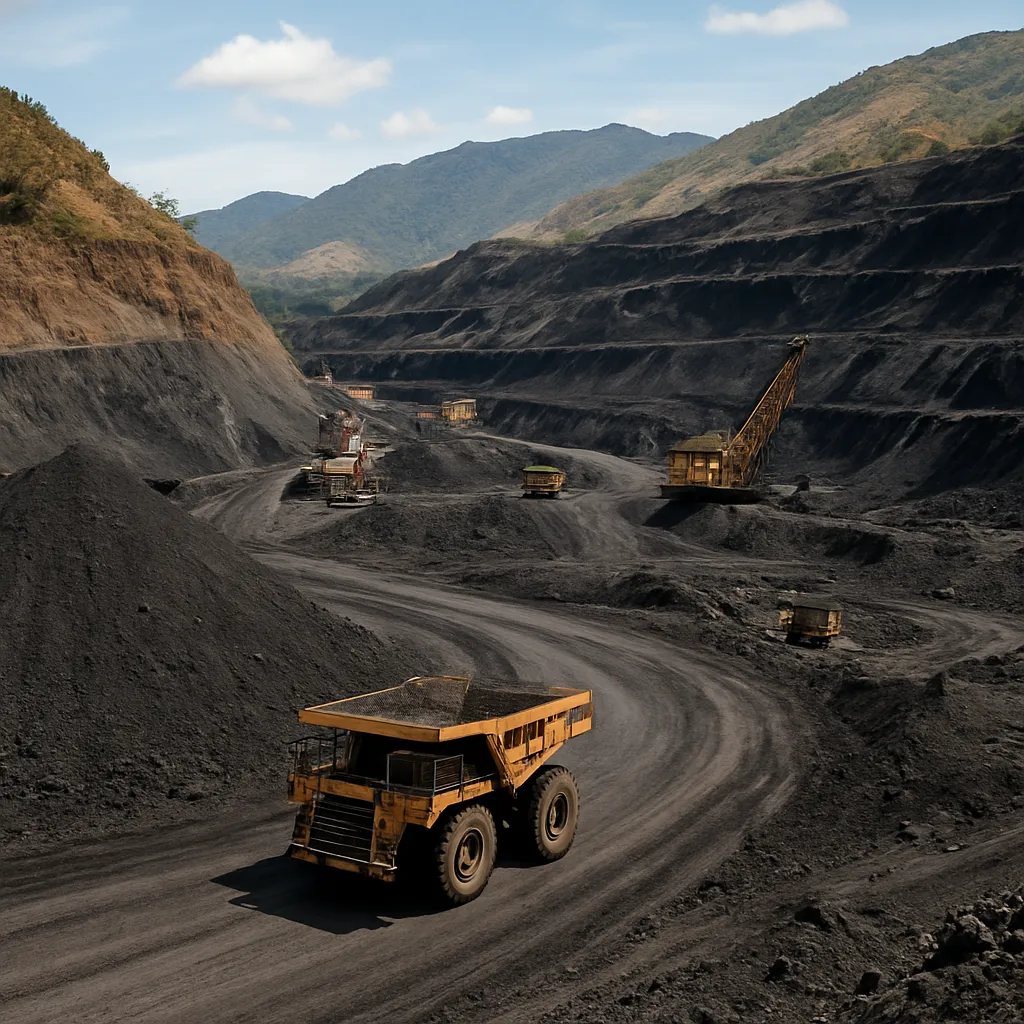
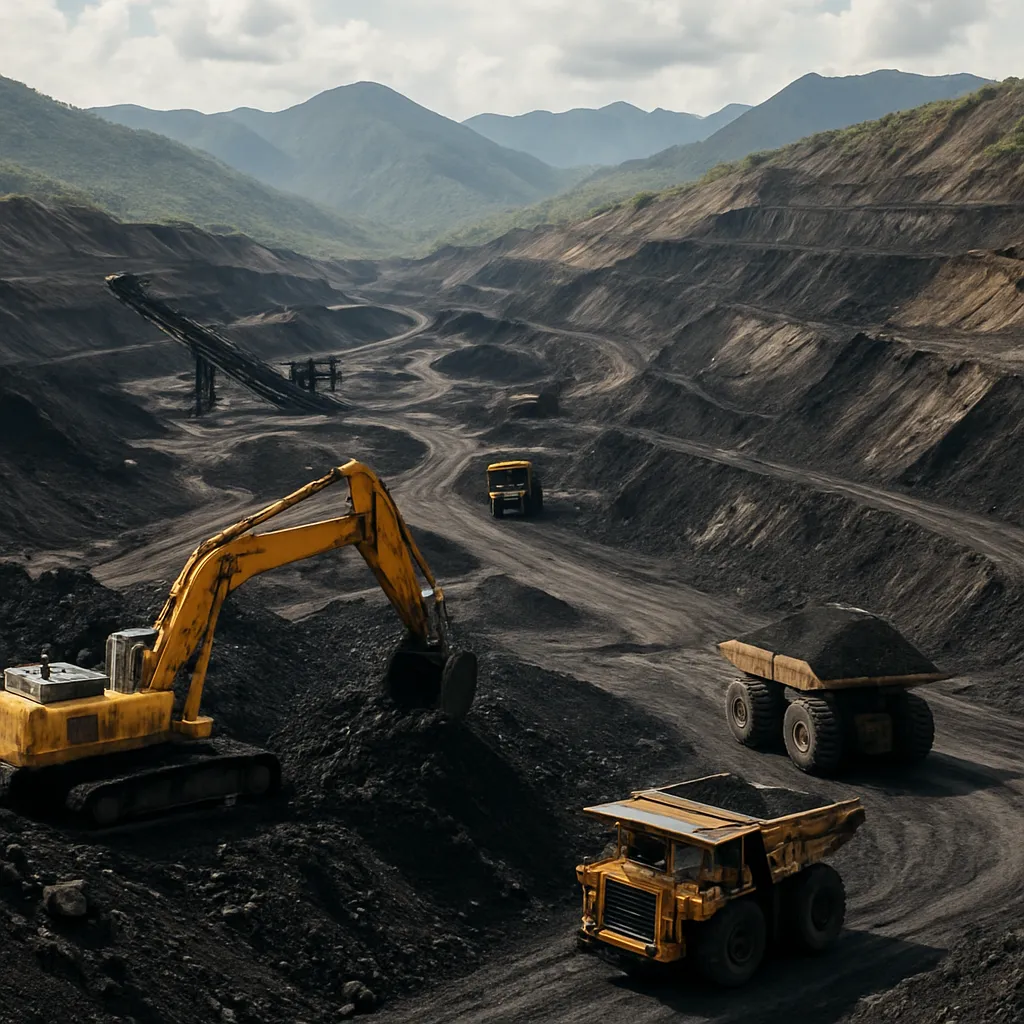
Operations at Amrapali reflect the two dominant modes of coal extraction in the region: open-pit (open-cast) mining and underground mining. The choice depends on seam depth, thickness, geotechnical conditions, and economic considerations.
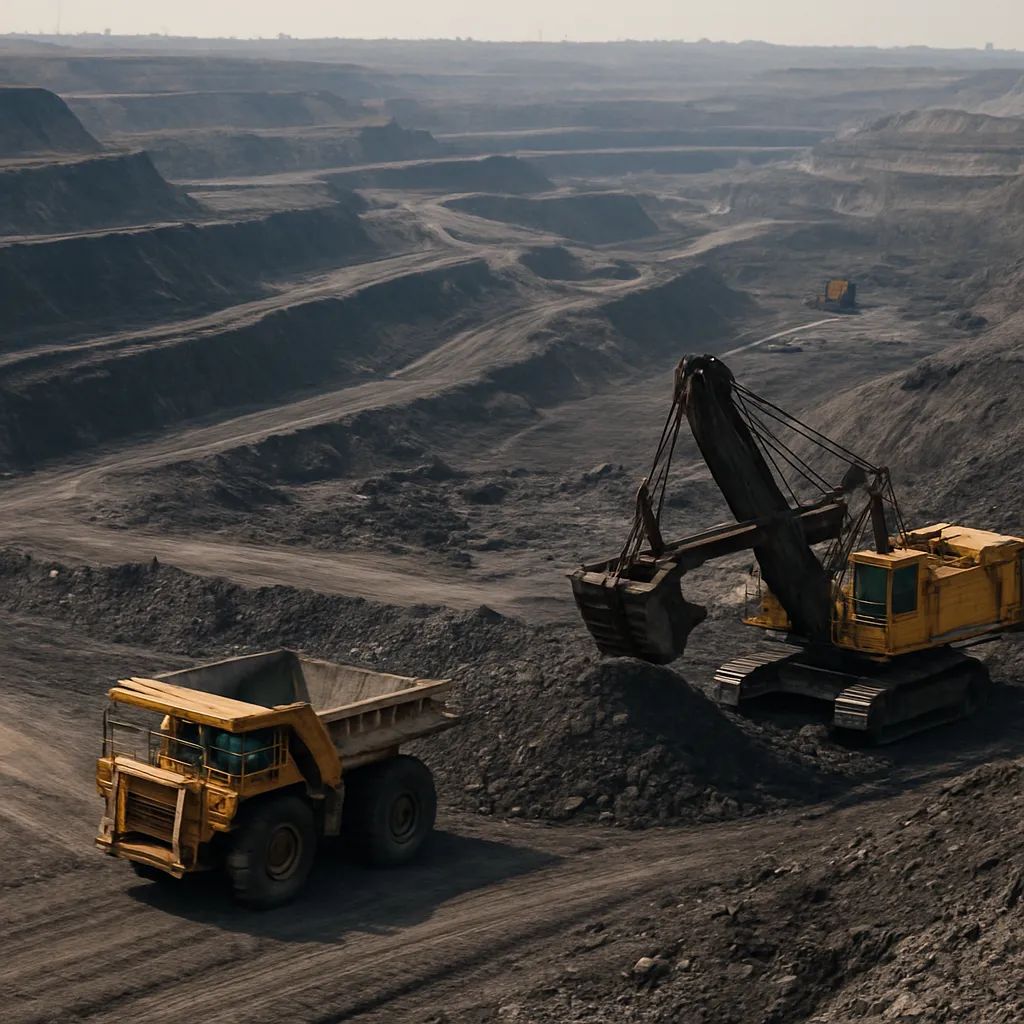
- Open-cast mining: employed where seams are shallow and extensive. It offers higher recovery rates, lower unit production costs, and faster ramp-up. Typical equipment includes large shovels, haul trucks, draglines, and supporting crushing and conveyor systems.
- Underground mining: used for deeper seams where surface removal is uneconomical or where overburden removal would cause unacceptable surface disturbance. Techniques range from bord-and-pillar systems to longwall mining where geology permits.
Key infrastructure associated with the mine includes internal haul roads, conveyor belts to washeries or processing plants, rail links or road transport to customers, and on-site power and water supply. Modern mines increasingly adopt mechanisation, digital monitoring, and emissions-control equipment to enhance productivity and regulatory compliance.
Economic and industrial significance
Coal mines such as Amrapali are integral to India’s energy security and industrial base. Coal provides a dominant share of primary energy and is the primary fuel for the country’s power sector, several large industrial facilities (steel, cement), and local thermal plants. The mine’s contributions can be viewed at several scales:
- Local economy: mining operations generate direct employment in extraction, processing, and maintenance, as well as indirect jobs in services, transport, and supply chains. A medium-to-large mine may support hundreds to several thousand direct workers, with broader multiplier effects in surrounding communities.
- Regional supply: Amrapali-type mines supply regional thermal power stations and industrial units, reducing dependence on long-distance coal transport and helping stabilise coal availability for base-load power generation.
- National context: while individual mine production may be modest relative to national totals, cumulative output from many such sites sustains India’s broader energy system. India remains among the world’s leading coal producers and consumers.
In recent decades, policy shifts and investments have sought to increase coal production efficiency, encourage private investment, and modernise rail and port links to reduce logistical bottlenecks. Mines that can reliably supply specified calorific-value coal command stronger commercial value due to contractual preferences from power utilities and industrial buyers.
Production figures and statistics
Publicly available mine-level production figures for Amrapali are not always consistently published. When assessing production performance, one typically looks at:
- Annual tonnage produced (measured in million tonnes per year, Mtpa).
- Run-of-mine versus washed coal output (post-beneficiation yields).
- Strip ratio (the amount of overburden removed per tonne of coal), which significantly affects unit costs for open-cast mines.
In the absence of consistent mine-specific public data for Amrapali, it is useful to note broader figures: India’s coal production in recent years has been in the hundreds of millions of tonnes annually, with domestic output fulfilling the vast majority of thermal coal demand. Major producers include Coal India Limited (CIL) and its subsidiaries, as well as a growing private sector segment. Typical high-performing open-cast mines in India can produce several million tonnes per year, while underground operations often have lower annual tonnage but can operate for decades.
Employment, revenue, and local development
Mines like Amrapali contribute to local revenue through direct wages and tax receipts as well as through payments to local governments and royalties. Specific economic impacts include:
- Employment: direct mine employment, contract-based labour, and ancillary service providers.
- Local procurement: purchase of materials and services (fuel, spares, food, transport) from local businesses, supporting micro-enterprises.
- Community investment: many operators maintain corporate social responsibility (CSR) programs that fund education, healthcare, rural infrastructure, and livelihood training.
- Government revenue: royalties on coal, lease rentals, and other statutory payments add to state and central government finances.
The magnitude of these contributions depends on production scale, the operator’s policies, and the effectiveness of local governance in channeling benefits to communities.
Environmental and social considerations
Coal mining carries significant environmental and social obligations. Key concerns at Amrapali and similar sites include:
- Land use and displacement: open-cast operations require large land areas, sometimes necessitating resettlement. Effective and fair rehabilitation of displaced communities is a major policy and ethical requirement.
- Air quality: dust from blasting, overburden handling, and coal transport can affect local air quality. Emission-control measures, green belts, and dust suppression systems are widely implemented mitigation strategies.
- Water management: dewatering of mines and potential contamination from runoff or slurry ponds necessitate careful water treatment and monitoring to protect surface and groundwater resources.
- Acid mine drainage: although more common in certain geological settings, sulfide-bearing strata can produce acidic effluents, requiring treatment.
- Post-mining land use: progressive reclamation, backfilling (where feasible), and conversion to lakes, parks, or agricultural land are used to restore landscapes.
- Health and safety: both underground and surface mining require strong occupational health and safety regimes to minimise accidents, respiratory illnesses, and long-term occupational exposure risks.
Regulators and operators increasingly focus on sustainability metrics, emissions reporting, and community consultations. Carbon emissions associated with coal use remain a critical climate-related consideration; while mines can improve extraction efficiency and reduce methane release, the primary emissions occur when coal is combusted for power and industry.
Regulatory framework and governance
Coal mining in India is subject to a layered regulatory framework involving central and state authorities. Important components include:
- Mineral rights and leaseholding: leases and licenses define operational rights and are subject to renewal and statutory conditions.
- Environmental clearances: mines must obtain clearances from environmental authorities, complete impact assessments, and adhere to consent-to-operate conditions.
- Labour and safety regulations: national labour laws and mine-safety codes govern work conditions, safety training, and incident reporting.
- Royalties and fiscal terms: fiscal arrangements determine royalty rates and contributions to state revenues.
Recent policy reforms have aimed to increase transparency in allotment of coal blocks, encourage private investment, and improve mineral governance. Public scrutiny, legal challenges, and community activism also shape how individual mines operate and evolve.
Technological trends and modernisation
Modern mines, including Amrapali-type operations, are adopting innovations to improve productivity and reduce impacts:
- Mechanisation: high-capacity shovels, longwall shearers, and large haul trucks raise extraction efficiency.
- Digitisation: real-time monitoring of production, predictive maintenance, and fleet management improve uptime and safety.
- Beneficiation: washeries and blending reduce ash and tailor coal to customer specifications, adding commercial value.
- Land reclamation technologies: progressive rehabilitation techniques and phytoremediation support ecological recovery.
- Methane capture: where geology permits, methane drainage and utilisation can reduce greenhouse-gas emissions and provide small-scale energy resources.
Role in the energy transition and future outlook
Coal will remain a significant part of India’s energy mix for at least the near to medium term, given existing power infrastructure and energy demand growth. Nonetheless, the broader global and domestic policy environment favors diversification into lower-carbon sources. Implications for Amrapali and comparable mines include:
- Short-to-medium term demand stability driven by thermal power needs and industrial uses.
- Longer-term uncertainty as renewable energy scales up, energy storage solutions advance, and stricter emissions policies emerge.
- Opportunity for mines to diversify revenues by rehabilitating land, developing renewable projects on reclaimed land, and engaging in methane recovery projects.
Operators that invest in efficiency, environmental performance, and social licence to operate are better positioned to adapt to future market and regulatory changes.
Interesting facts and broader significance
Several broader points highlight the significance of Amrapali-esque mines within India:
- The eastern Indian coal belt is historically the backbone of India’s industrial revolution and remains central to steel, cement, and power industries.
- Coal quality heterogeneity in India has driven the emergence of complex logistics, blending, and washery systems to meet a variety of end-use requirements.
- Community and environmental pressures have encouraged a steady increase in technological sophistication and regulatory oversight in recent decades.
- Coal mines are often focal points for regional development, funding roads, schools, and primary healthcare, though outcomes depend heavily on governance and corporate practice.
Summary and closing considerations
Amrapali Coal Mine, as part of India’s extensive coal network, exemplifies the multiple roles coal plays in the national economy: supplying energy, supporting industrial activity, and contributing to local livelihoods while posing environmental and social challenges. Precise mine-level statistics can vary by year and source; where public figures are unavailable, regional and national production and quality trends provide useful context. The future of mines such as Amrapali will be shaped by market demand, policy choices on energy and climate, technological advances in extraction and reclamation, and how effectively operators engage with local communities and environmental concerns.