The Minjova Mine, referenced in some regional reports and local accounts, is part of the broader story of coal mining in Mozambique. While detailed public records specifically naming Minjova are limited, its mention typically places it within the context of the Tete Basin and adjacent coal-bearing areas that have attracted national and international attention over the past two decades. This article synthesizes available information on the mine where possible and places Minjova in the larger geological, economic and social framework of Mozambique’s coal industry. It covers location and geology, types of coal produced, economic impact, logistics and export routes, environmental and social considerations, and prospects for the future.
Location and geological setting
The exact publicly documented coordinates and formal licensing details for the Minjova Mine are not widely available in international mining databases or major corporate disclosures. References to Minjova typically align it with the coal-rich regions of northwestern Mozambique, notably the Tete Basin and adjacent Permian–Triassic coal-bearing formations. The Tete Basin is the country’s principal coal province and hosts the largest concentrated deposits in Mozambique.
Regional geology
- Tectonic and stratigraphic context: The coal-bearing strata in the basin are generally interbedded sandstones, siltstones and coal seams deposited in fluvial and deltaic settings during the Paleozoic–Mesozoic transition.
- Seam geometry: Coal seams in the region vary in thickness and lateral continuity; some mineable seams achieve economically meaningful thicknesses over tens of kilometres, which has attracted both large-scale open-pit and smaller underground operations.
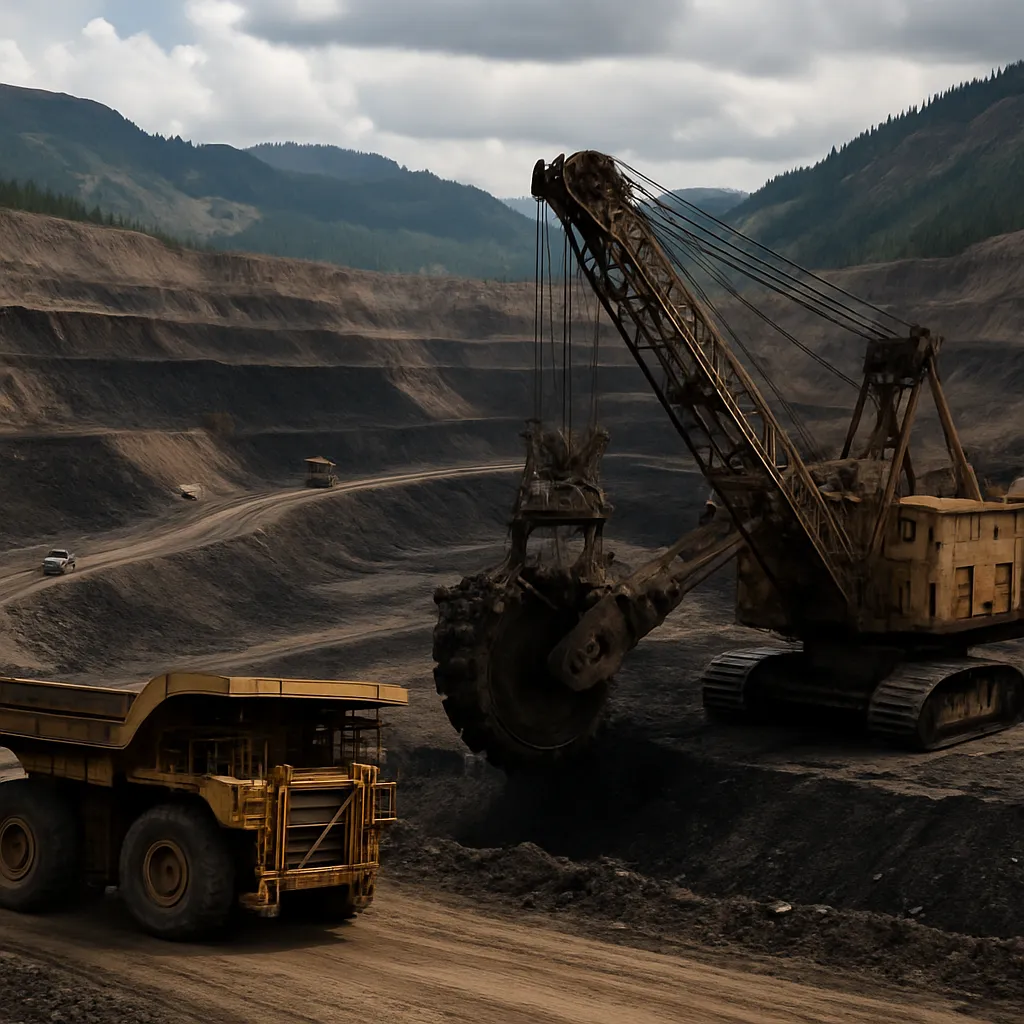
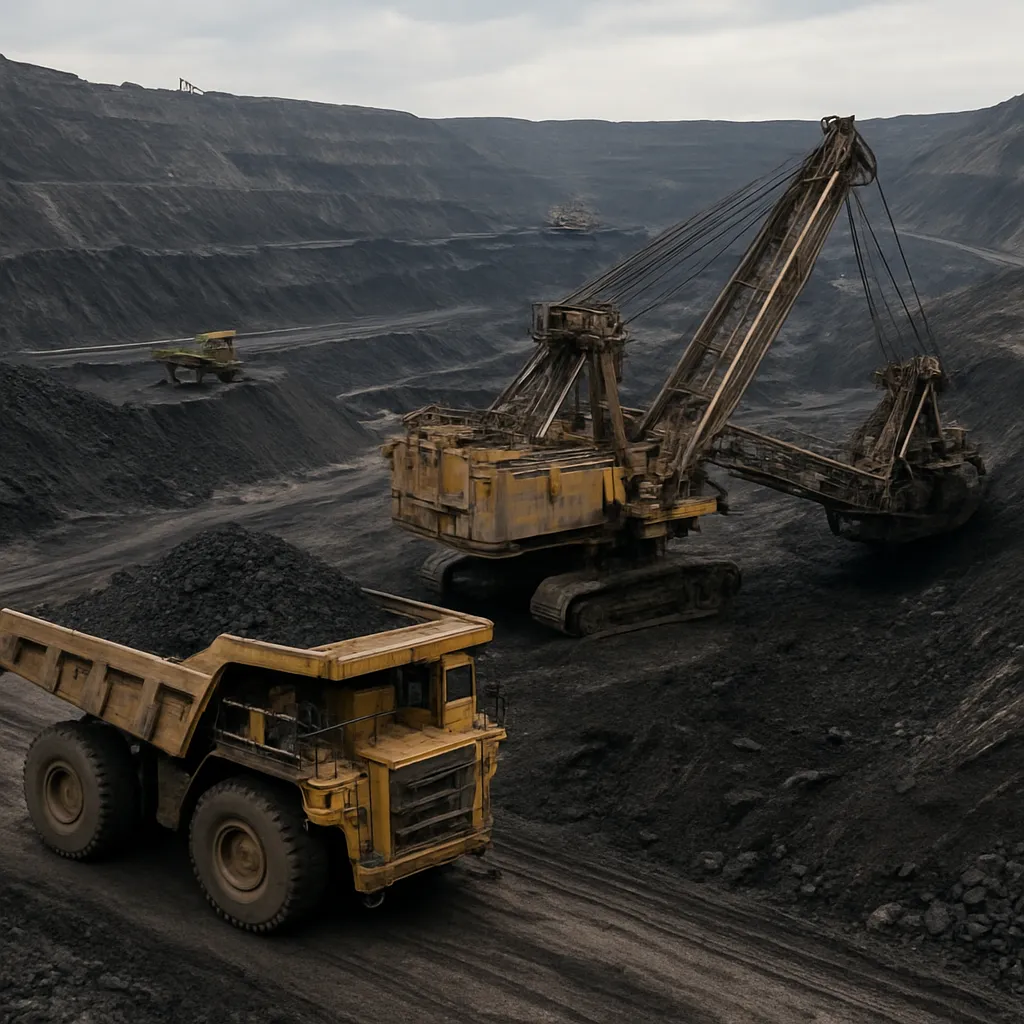
- Typical mining methods: Where seams are near surface and laterally extensive, open-pit methods are commonly used; in narrower or deeper sections, underground or selective mining is employed.
Given the association of Minjova with these basinal deposits, it is likely that the mine exploits similar seam types and geological conditions as larger nearby operations.
Coal type and quality
Coal from Mozambique’s Tete region ranges from thermal coal used for power generation to higher-rank coals with qualities that can be suitable for metallurgical (coking) applications, depending on the seam and local variation. For Minjova, precise coal quality data (proximate/ultimate analyses, calorific value, volatile matter, sulphur and ash content) are not widely published. However, the broader region provides useful context:
- Thermal coal: Many seams in the broader basin are medium- to high-ash thermal coals with calorific values suitable for electricity generation after washing and beneficiation.
- Coking and PCI potential: Some seams in the Tete Basin have been characterized as having low to moderate ash and volatile matter consistent with partial coking properties; these are often targeted by buyers seeking pulverized coal injection (PCI) or blend components for coke-making.
- Beneficiation needs: High raw ash content in parts of the basin typically requires washing and processing to upgrade the product for export and higher-value markets.
In short, Minjova coal—if typical of neighboring deposits—would likely require processing to meet international export specifications, and might be marketed as either thermal coal or, selectively, as a PCI/coking blend depending on washability test results.
Operations, workforce and local infrastructure
Wherever located, a mine like Minjova would require a combination of on-site processing, haulage infrastructure and access to a port corridor. Major coastal corridors used in the region include the Beira and Nacala corridors, linked to ports via the Sena railway and other rail lines. The logistics chain is a core determinant of economic viability for coal operations.
Typical operational components
- Extraction: Open-pit operations with fleets of shovels and haul trucks or smaller-scale continuous miners in underground settings.
- Processing: Crushing, jigging or dense media separation (DMS) plants for coal washing and sizing.
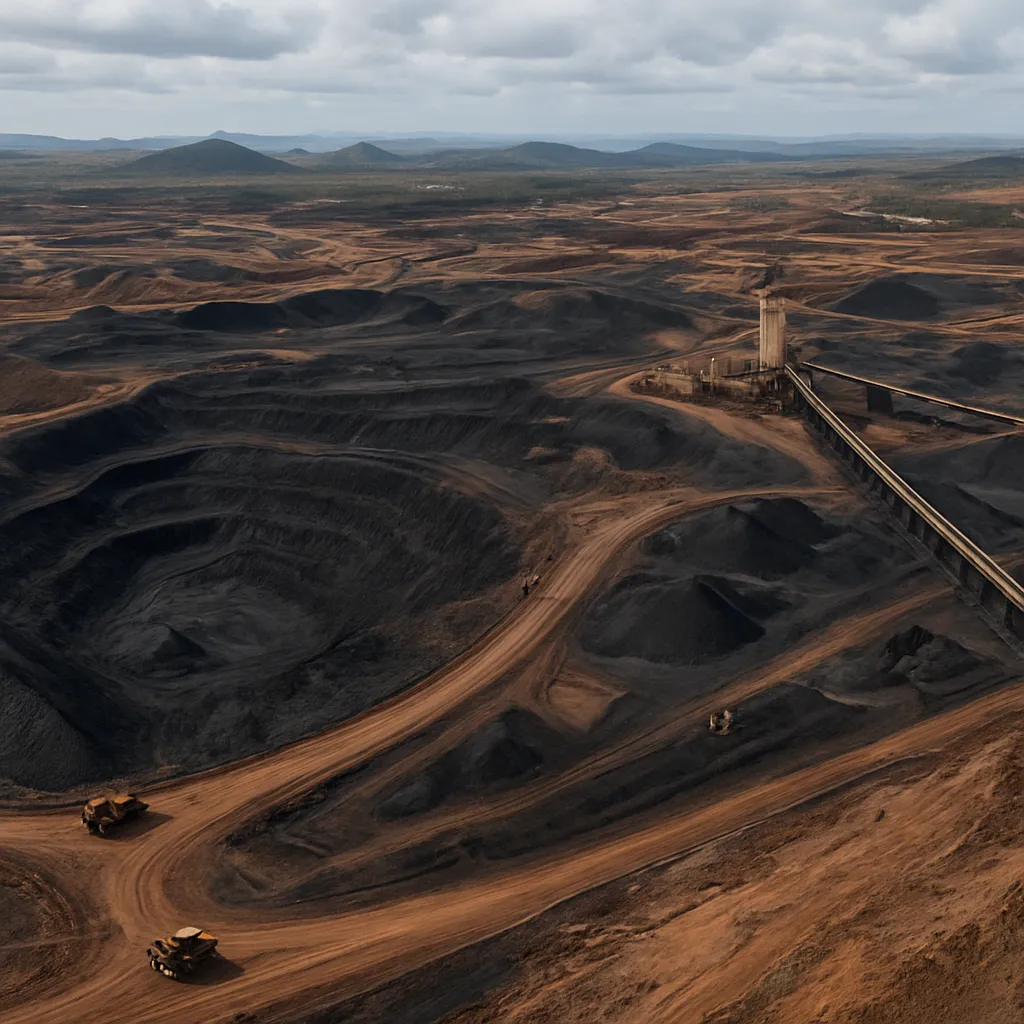
- Stockpiling and loading: Facilities for coal storage and train loading, often with concern for dust suppression and spontaneous combustion prevention.
- Workforce: A mix of local labour and technical staff; mines in the region commonly provide hundreds to a few thousand direct jobs depending on scale. Mine contractors and service providers expand indirect employment.
Local supplier networks—fuel, maintenance, catering, security—are important economic multipliers. Investment in roads, power and water is routinely required, sometimes in partnership with government or through project-level contractors.
Economic importance and value chain
Coal projects in Mozambique have been central to the country’s ambitions to generate export revenues, attract investment, and develop regional infrastructure. Even modest mines contribute to district economies through taxes, royalties and employment. For Minjova, economic significance should be considered at two levels: local impact and its role in the national export economy.
Local economic impacts
- Employment: Direct and indirect jobs, skill development and demand for local goods and services.
- Revenues: Payments to local government entities, possible community development agreements and supplier contracts.
- Infrastructure spillovers: Road improvements, electrification and water projects that can benefit nearby communities if properly implemented.
National and export relevance
On the national scale, coal is one of the major mineral commodities alongside natural gas and heavy mineral sands. Large projects in the Tete Basin created momentum for further exploration and development. For an operation like Minjova to contribute meaningfully to national figures, it would need consistent annual production and reliable access to export corridors.
Trade, logistics and export corridors
Coal from Mozambique is typically exported via a few principal corridors that connect mines in the interior to coast ports:
- Nacala Corridor: Linking inland mines to the deepwater port of Nacala, facilitating larger vessel loading and more direct routes to Asian markets.
- Beira/Sena Corridor: Connecting to the port of Beira via the Sena railway, a historically important route subject to rehabilitation and investment phases.
- Smaller routes and truck-to-ship operations: For smaller mines or interim production, trucking to local river ports or barging may be used but at higher unit cost.
The relative competitiveness of Minjova’s coal on international markets would depend heavily on the cost and reliability of rail and port access, wash plant performance, and global coal prices. Export markets for Mozambican coal historically include India, Europe and parts of Asia; destination shifts with price dynamics and logistics costs.
Environmental and social dimensions
Mining in Mozambique faces many of the same environmental and social challenges observed globally. Responsible operations must address impacts on water, biodiversity and local livelihoods while providing meaningful benefits to host communities.
Key concerns
- Water management: Dewatering, contamination risks and competition for scarce water resources require careful monitoring and mitigation.
- Air quality and dust control: Coal handling, crushing and transport generate dust that affects human health and agriculture.
- Land use and biodiversity: Rehabilitation plans and offset measures are standard expectations for modern mines.
- Community relations and resettlement: Where extraction overlaps villages or agricultural lands, negotiated resettlement and compensation are sensitive, complex issues.
Sustainability practices increasingly shape investor and lender expectations. Modern mines pursue emissions reduction, reclamation, and community investment programs; these practices influence social license to operate.
Statistical outlook and production context
Specific, verifiable production figures for Minjova are not part of major public datasets available internationally. Many smaller or privately-held operations do not release detailed public statistics. Nevertheless, context from the broader coal sector in Mozambique provides useful perspective:
- The Tete Basin hosts the majority of the country’s coal resources and has attracted the largest investments and infrastructure projects.
- Coal production in Mozambique has been variable, influenced by global prices, infrastructure bottlenecks and project-specific issues. Large projects have produced millions of tonnes per annum when operating at scale, while smaller mines produce in the hundreds of thousands to low millions of tonnes range.
- Export economics depend on wash plant yields: a mine with high raw ash may see large mass reductions after beneficiation, affecting saleable tonnes.
Where Minjova stands within this spectrum (small local operation, mid-sized exporter, or exploratory development) determines what numerical footprint it would have in yearly national statistics.
Regulatory, fiscal and investment environment
Mozambique’s mining sector is governed by national legislation that sets licence requirements, environmental permitting, local content rules and fiscal terms including royalties and corporate taxation. Investors in coal have navigated:
- Licensing complexity: Exploration, mining and environmental licences with multi-stage approvals.
- Fiscal regime: Royalties and taxes that affect project economics; stability of terms is often a negotiation point for large capital projects.
- Local content and community commitments: Expectations to hire locally and contract local suppliers where feasible.
For a mine like Minjova, securing clear title, environmental compliance, and predictable access to export routes would be priority preconditions for scaling production and attracting outside capital.
Industrial significance and value chain linkages
Coal operations play multiple roles in industrial value chains:
- Energy security: Domestic coal can support national power generation projects or cement and industrial users.
- Metallurgy and steel: High-quality coking or PCI coals feed into regional steelmaking value chains when available and economically transported.
- Services and manufacturing: Mining demand supports local equipment maintenance, fabrication and logistics sectors.
A mine such as Minjova would contribute to these linkages if it can supply reliable product volumes that meet buyers’ specifications.
Risks, challenges and mitigation
Mining projects in Mozambique face a range of risks:
- Commodity price volatility: Coal prices fluctuate with global demand, affecting profitability and investment decisions.
- Infrastructure risks: Rail and port constraints can cause costly delays and limit market access.
- Environmental and social conflict: Poorly managed resettlement or environmental impacts can trigger stoppages and reputational harm.
- Security and political risk: Regional stability, governance and contract enforcement matter to investors.
Mitigation measures include strong stakeholder engagement, investment in resilient logistics, third-party financing with environmental safeguards, and phased development that aligns capex with market signals.
Future prospects and strategic considerations
The future of mines like Minjova depends on several intersecting factors:
- Access to reliable and cost-effective export corridors. Continued rehabilitation and investment in rail and port assets would materially improve project economics.
- Ability to deliver competitively priced, quality-assured coal through effective beneficiation and quality control.
- Integration into regional energy and industrial plans—if domestic demand for coal-fired power or industrial feedstock grows, smaller mines could find stable local markets.
- Investor appetite and financing conditions: global trends toward decarbonization affect capital allocation to coal; projects with lower emissions intensity or those serving steelmaking markets (metallurgical coal) may be more resilient.
Strategically, companies and governments increasingly consider diversification of revenue streams, community benefit schemes, and progressive rehabilitation plans as part of project lifecycles.
Interesting and lesser-known aspects
- Local entrepreneurship: Small-scale contractors and service companies often grow around mining towns, fostering local economic ecosystems that can outlast the mine itself with adequate planning.
- Geological surprises: Exploratory drilling in the Tete Basin has occasionally revealed unexpected seam continuity or quality improvements, underscoring the value of modern geological analysis.
- Multi-commodity potential: Some licence areas show potential for other resources (e.g., heavy minerals or clays) which can complement coal operations in a diversified local economy.
- Heritage and archaeology: Mining corridors sometimes intersect areas of cultural importance; careful heritage assessments are therefore essential.
Concluding remarks
Publicly available data specifically identifying the operational, production and fiscal details of the Minjova Mine are limited. Therefore, the most reliable way to understand Minjova is to place it within the known characteristics of the Tete Basin and Mozambique’s coal sector. Mines in the region present both substantial economic opportunity and significant environmental and social responsibilities. The success and legacy of Minjova would depend on transparent management of community relations, investments in processing and logistics, compliance with environmental regulation, and adaptability to shifting global energy markets. For stakeholders interested in precise figures—production, reserves, employment and fiscal flows—direct inquiries to license holders, national mining authorities and local government offices would be required, as many site-specific data are maintained at the project or state level rather than in centralized open datasets.