The Lanna Harita Mine is one of the coal mining sites in Indonesia that illustrates the complex interplay between resource endowment, industrial demand, and local development. Situated within Indonesia’s extensive coal-bearing regions, the operation exemplifies modern open-pit mining practices, logistical chains linking mines to global markets, and the socio-economic and environmental challenges that accompany large-scale mineral extraction. This article reviews the mine’s likely geological setting and location, the type of coal produced, operational and economic features, available statistical context, industrial significance, and broader implications for communities and the environment.
Location, ownership context and geological setting
The Lanna Harita Mine is located in the Indonesian archipelago’s major coal provinces—areas typically concentrated in the islands of Kalimantan (Borneo) and Sumatra. While specific public documentation naming a single consolidated operation under the title “Lanna Harita Mine” is limited in open sources, the name brings together two recognizable corporate elements in Southeast Asian mining: the Harita Group (an Indonesian conglomerate with established mining and natural resources interests) and Lanna Resources or similarly named regional investors from Thailand/ASEAN who have pursued upstream coal ventures in Indonesia. The result is a mining operation characteristic of the region: large open pits developed within Paleogene–Neogene sedimentary basins where coal seams are interbedded with sands, clays and local carbonaceous shales.
Geologically, mines in these basins typically mine thermal coal of low to medium calorific value (commonly sub-bituminous or high-volatile bituminous ranks depending on the seam), formed in ancient peat deposits that were rapidly buried and converted under relatively low coal rank conditions. Coal seams in the region range from a few meters to tens of meters in thickness; overburden and interburden vary, dictating the mine design and stripping ratios. These geological characteristics directly influence mining methods, costs and the quality of product available to domestic and export markets.
Type of coal, processing and product characteristics
The coal mined at sites like Lanna Harita is primarily destined for power generation and industrial fuel markets. Typical product characteristics include:
- Calorific value: generally in the low to medium band (e.g., approximately 4,000–6,500 kcal/kg on an as-received basis), which makes it suitable for utility boilers after blending or washing.
- Sulfur and ash: many Indonesian thermal coals are low in sulfur but vary substantially in ash content. Washing plants are often used to reduce ash and improve calorific value for export-specification cargos.
- Moisture and volatility: tropical coals may retain higher inherent moisture; handling and transport are designed to mitigate quality degradation (stockpiles management, covered conveyors, rapid shiploading).
Basic processing at the mine typically includes initial crushing, screening and sometimes coal washing (wet or dense medium) to remove clay and rock and to produce marketable grades. Product is graded, blended and stockpiled for shipment. Typical commercial products from such mines are marketed under standard categories—thermal coal for export (for example, sub-bituminous grades) and coal for the domestic power market under Indonesia’s domestic supply schemes.
Mining methods, infrastructure and logistics
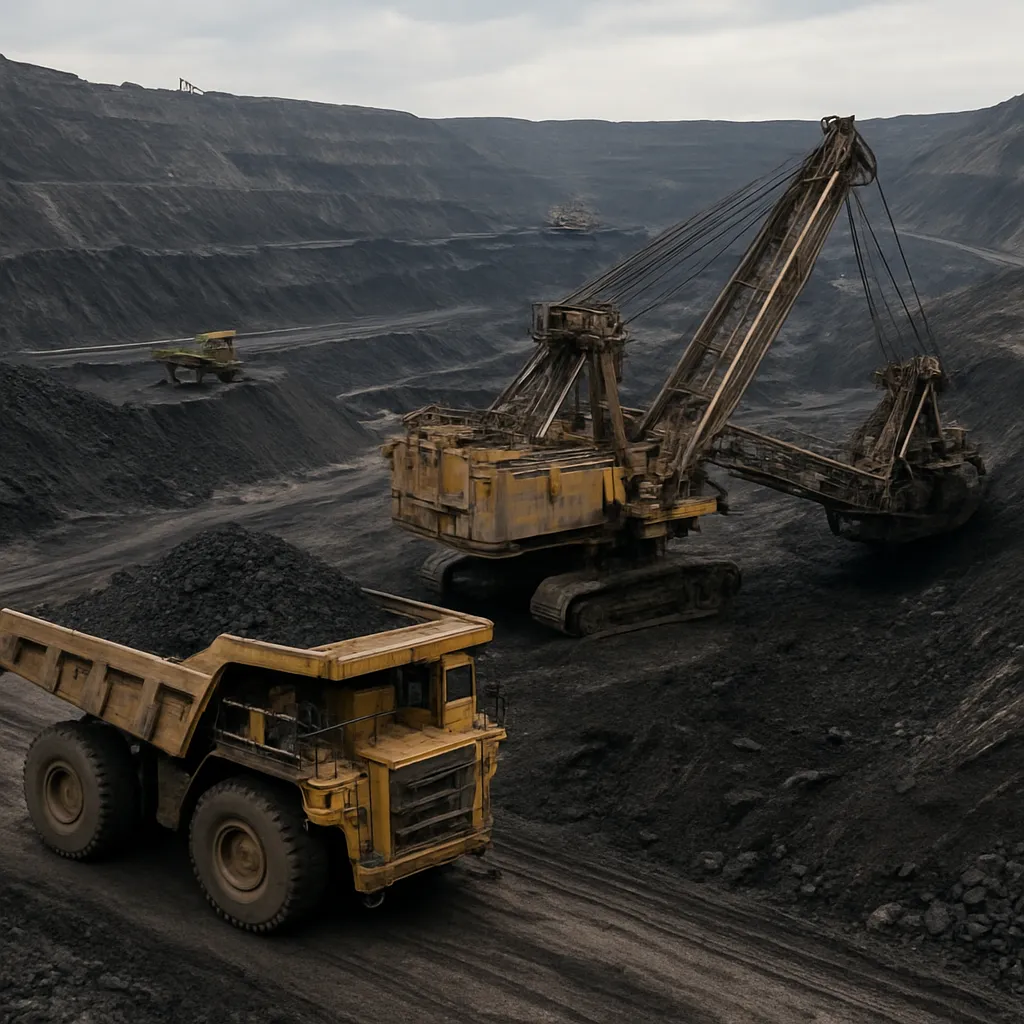
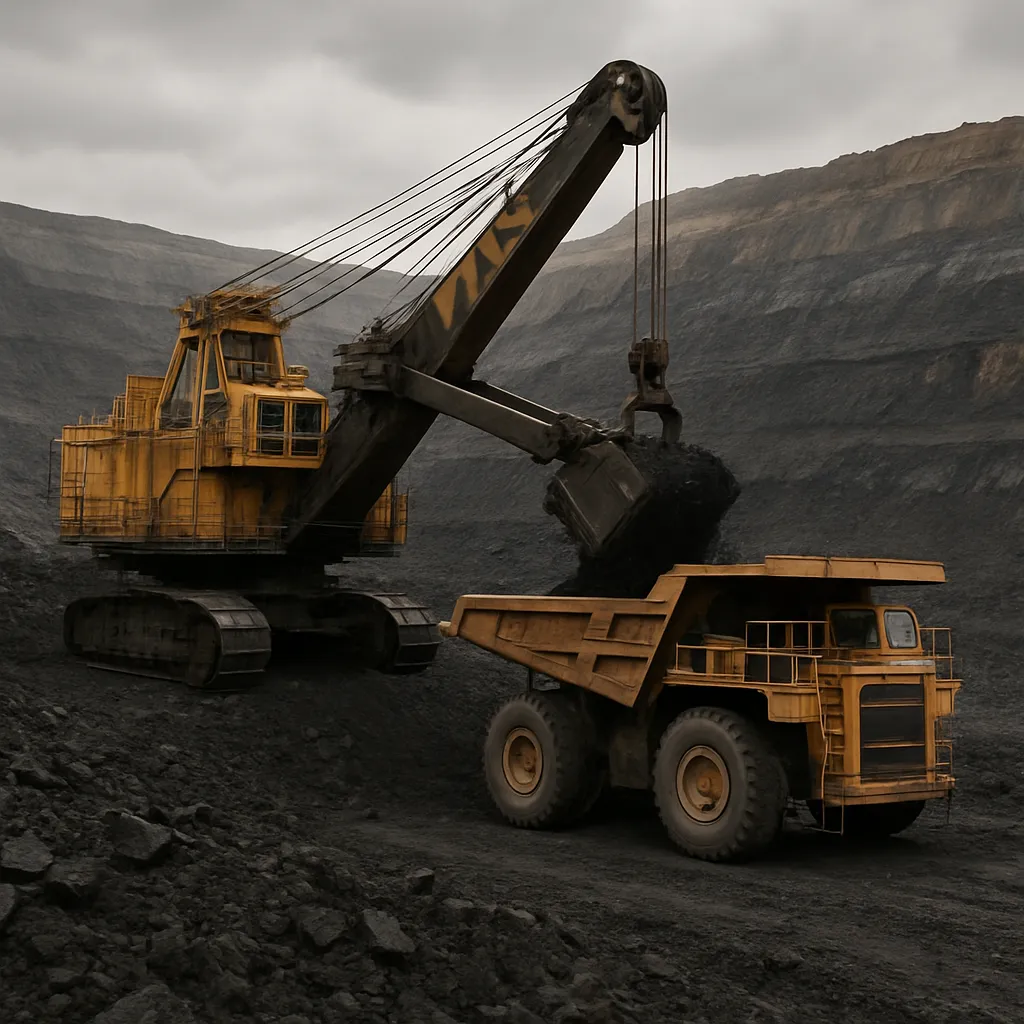
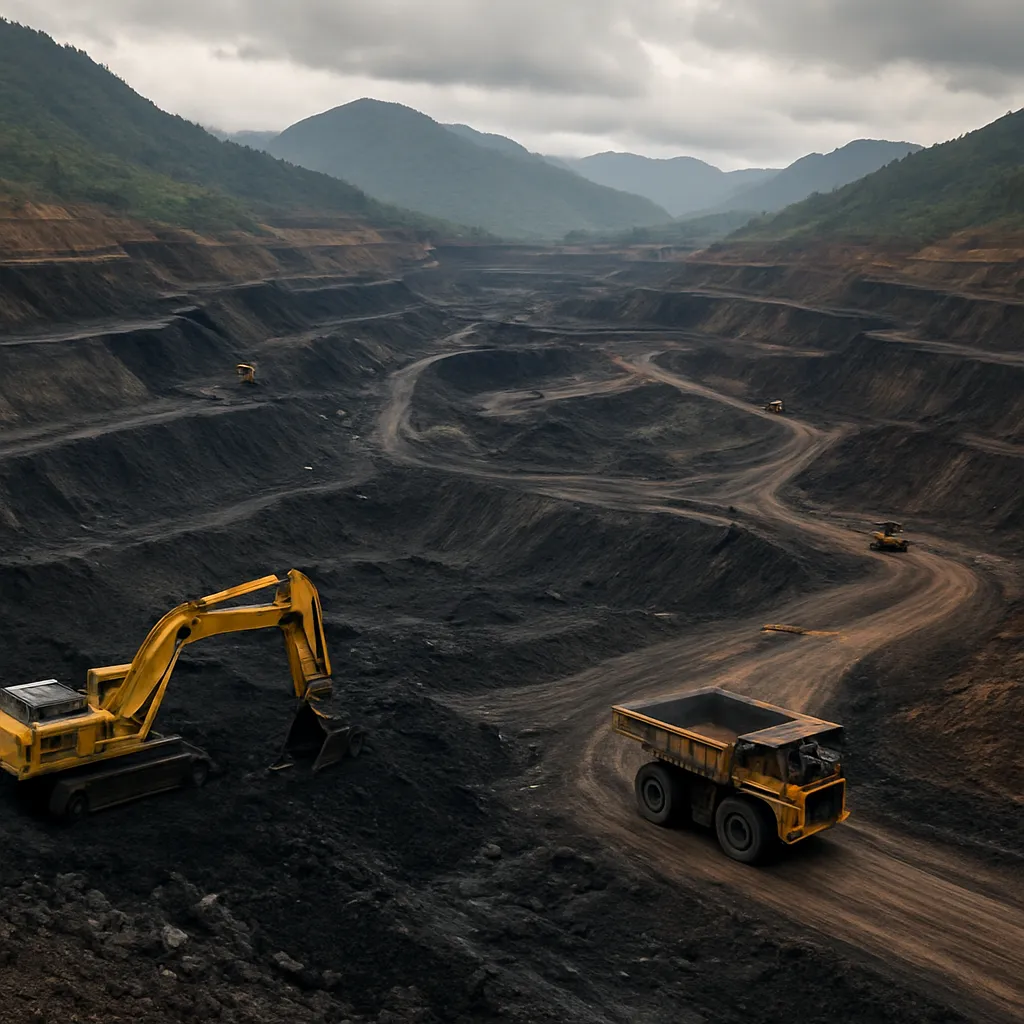
Operations at Lanna Harita-type sites are generally dominated by open-pit mining methods. Equipment fleets consist of hydraulic excavators, large wheel loaders, dump trucks, bulldozers and ancillary graders. In wetter seasons, dewatering and drainage infrastructure are necessary. Stripping ratios and pit sequencing are planned to balance short-term production with long-term reserve recovery.
Logistics and transport are central to the operation’s viability. Key elements include:
- Road networks connecting pits to local processing areas and to public highways.
- Conveyor belts and overland conveyors where terrain and economics permit, reducing truck haulage costs and emissions.
- Barges and shallow-draft river terminals in inland Kalimantan operations, used to move coal to coastal transshipment points.
- Dedicated jetties or transshipment via floating cranes and transshipment hubs for Panamax and Capesize vessels when direct deepwater ports are not available.
- Stockyards with weather protection, dust suppression systems and sampling facilities to maintain cargo quality and comply with contracts.
Mine infrastructure also encompasses workshops, fuel storage, workers’ camps, medical facilities and basic amenities for a largely local workforce augmented by mobile specialized crews. Integration with regional ports—such as facilities around Balikpapan, Bontang and Samarinda in East Kalimantan or Muara Enim and Tanjung in Sumatra—determines export capacity and turnaround times.
Economic role, markets and statistical context
The Lanna Harita Mine is representative of Indonesia’s wider coal industry, which plays a central role in national and regional energy and trade balances. At the national level, Indonesia has been one of the world’s major thermal coal producers and exporters for decades. Indonesian coal supplies major markets in China, India, Japan and South Korea, with shipments also reaching Southeast Asia, Europe and other regions depending on price and logistical competition.
While specific production and reserve figures for the Lanna Harita Mine are not always publicly disclosed in great detail, some broader and generally reliable industry-scale numbers provide context:
- Indonesia’s annual coal production has fluctuated widely depending on market demand and policy, but it constitutes several hundred million tonnes per year in recent periods. Exports typically represent a substantial proportion of that volume, making Indonesia a leading global exporter of thermal coal.
- Indonesian coal tends to be priced attractively on global spot markets because of large-scale availability and proximity to Asian buyers, although prices and export volumes are sensitive to global demand, freight costs and domestic policy changes.
- For individual large-scale mines in Indonesia, recoverable reserves commonly range from tens to several hundreds of millions of tonnes. Annual output for mid-to-large operations often ranges from 1 to 10+ million tonnes per year depending on capital intensity, strip ratio and market strategy.
The mine’s direct economic contributions include royalty and tax payments to central and regional governments, wages for employees, contracting work for local suppliers and multiplier effects in local services and commerce. Indonesian mining law frameworks require companies to pay production-based royalties, corporate taxes, and to participate in community development programs. At the same time, national policies such as the Domestic Market Obligation (DMO) require a portion of production to be offered to domestic power producers at regulated prices, which can affect exportable volumes and revenue composition.
Social impact, employment and local development
Coal mines like Lanna Harita often become major local employers, directly hiring operational, technical, and administrative staff while indirectly supporting contractors, service providers and informal sector activities. Employment effects include:
- Direct jobs in mining, processing and logistics—ranging from heavy-equipment operators to engineers and environmental specialists.
- Contractor and service sector jobs—mechanical maintenance, fuel supply, catering, transportation and security services.
- Community development initiatives—education, healthcare, infrastructure improvements (roads, electrification) and localized enterprise support that companies commonly undertake as part of their Corporate Social Responsibility (CSR) commitments.
However, social impacts are not uniformly positive. Mining can contribute to land-use conflicts, displacement issues, and changes in traditional livelihoods—particularly when local communities depend on agriculture, fisheries or forest products. Effective mine-community relations rely on transparent consultation, fair compensation, livelihood restoration programs and participatory monitoring of environmental performance.
Environmental considerations and mitigation measures
Environmental management is a central challenge for coal mines. Key concerns and standard mitigation approaches include:
- Deforestation and habitat loss: clearing for pits and infrastructure is mitigated through progressive land rehabilitation, reforestation and biodiversity offset programs where appropriate.
- Water management: prevention of sediment-laden runoff, management of pit dewatering and monitoring of water quality to reduce impacts on rivers and groundwater. Sealing of tailings and proper design of sedimentation ponds reduce downstream sedimentation and turbidity.
- Air quality and dust control: use of water sprays, covered conveyors, windbreaks and limiting haul road speeds to reduce particulate emissions during operations and transport.
- Acid mine drainage (AMD): although more common in sulfide-rich metalliferous mines, coal operations that disturb pyritic layers can create AMD; monitoring and neutralization systems are needed where risk exists.
- Greenhouse gases and combustion emissions: Scope 1 and 2 emissions from coal mining (methane release, diesel use) are increasingly monitored and in some cases mitigated through methane capture projects and fuel-efficiency improvements in fleets.
Rehabilitation commitments are enforced through permits and financial assurance mechanisms (bonding or escrow) mandated by Indonesian authorities. Progressive rehabilitation—where disturbed land is reclaimed while mining continues in other areas—is a best-practice approach that reduces legacy liabilities and accelerates ecosystem recovery.
Regulatory environment and governance
Mining in Indonesia is governed by a suite of national and local regulations. Important elements include licensing regimes, environmental approvals (Analisis Mengenai Dampak Lingkungan—AMDAL), royalty and tax structures, and requirements for social and environmental performance. The 2009 Mining Law (and later amendments and implementing regulations) set out the framework for mining business licensing and obligations, including domestic supply priorities for certain commodities.
Governance issues that affect mines like Lanna Harita include:
- Permitting complexity and changes: regulatory changes affect the pace of approvals and the financial terms for operations.
- Land tenures and customary rights: recognition of adat (customary) land rights can require negotiated agreements, benefit-sharing arrangements, or resettlement planning.
- Local content and procurement policies: expectations for hiring and purchasing from local suppliers influence capital planning and contractor selection.
Industry significance and market positioning
As a representative coal operation, Lanna Harita contributes to regional energy security and to global thermal coal supply chains. Key points of significance include:
- Supply role: delivering coal for base-load power generation in Asia, where coal retains a substantial share of generation despite global decarbonization trends.
- Price setting: Indonesian coal pricing often sets benchmarks for regional thermal coal markets due to its scale and logistics advantages.
- Economic multipliers: royalties, taxes and local procurement stimulate regional economies—particularly in less urbanized provinces where mining provides alternative livelihoods.
The mine’s competitiveness depends on factors such as strip ratio (affecting production costs), quality and washing yields, port access, freight rates and contract structures (spot vs. long-term supply agreements). In times of strong demand, operators may increase production rates; during market downturns, marginal mines may reduce output or suspend operations.
Challenges, controversies and social license to operate
Mining companies face persistent challenges in maintaining a social license to operate. Some common issues relevant to Lanna Harita-type operations include:
- Community grievances over land acquisition, environmental impacts, and perceived inequities in benefit sharing.
- Concerns about health impacts from dust, water contamination and noise, especially where monitoring is limited.
- Illegal mining and local-scale artisanal extraction that can threaten safety and reduce recoverable reserves.
- Transboundary environmental impacts such as river sedimentation and coastal degradation affecting fisheries and agriculture downstream.
Mitigation requires robust stakeholder engagement, transparent grievance mechanisms, proactive environmental management, and investment in local economic diversification to reduce dependency on a single extractive activity.
Future prospects, decarbonization pressures and adaptation strategies
The global energy transition places long-term pressure on thermal coal demand, but regional demand dynamics are nuanced. Southeast Asian electricity demand growth, delays in the retirement of existing coal fleets, and the cost-competitiveness of coal in some markets extend prospects for continued operation of Indonesian coal mines in the medium term. At the same time, several adaptation strategies are in play:
- Operational efficiency: lowering unit costs through equipment modernization, digital mine planning and fleet optimization to remain competitive on price.
- Product quality improvement: investment in washing and blending facilities to produce higher-grade coal that meets stricter emission and efficiency requirements of modern plants.
- Emissions management: methane capture, lower-emission diesel alternatives, and electrification of mine fleets where feasible to reduce Scope 1 and 2 footprints.
- Economic diversification: companies and local governments increasingly pursue downstream activities (power generation, coal-to-liquids/chemicals where economical) or non-mining investments to hedge long-term decline risks.
Policy developments—both domestic (e.g., prioritization of renewables and national climate commitments) and international (carbon pricing, buyer-country regulations)—will shape the strategic choices for mines like Lanna Harita going forward.
Interesting facts and observations
- Indonesian coal’s logistical advantage: The country’s proximity to Asia’s largest coal importers often makes it a preferred supplier even when other producers offer similar coal qualities farther afield.
- Seasonality and river logistics: Many Indonesian coal operations rely on river transport; the seasonal water level variations can constrain barge movements and affect monthly shipment schedules.
- Community co-financing: In some regions local communities participate in mining-related ventures, including small-scale logistics or service provision enterprises, enhancing local economic retention.
- Safety performance improvements: Modern Indonesian mines increasingly adopt international safety standards (training, mechanized handling, emergency response) to reduce historically high accident rates in some areas.
Data transparency and research limitations
Publicly available data specific to individual mines like Lanna Harita can be limited, particularly when operations are privately held or part of complex joint ventures. Company annual reports, government mining cadastres and commodity market reports are typical primary sources for verified tonnage, reserve estimates and financial performance. For readers seeking precise production figures, reserve certifications and fiscal contributions for Lanna Harita specifically, the most direct sources would be corporate disclosures from the operating company (Harita Group or a relevant JV entity), permit filings lodged with Indonesian authorities, and notified export statistics published by national trade agencies.
Summary
The Lanna Harita Mine is emblematic of Indonesia’s broader coal sector: geologically endowed basins exploited by modern open-pit operations, supplying thermal coal to domestic and international markets. Its significance spans economic benefits (jobs, taxes, exports) and complex environmental and social responsibilities (rehabilitation, community relations, emissions management). While long-term demand faces pressures from the global transition away from fossil fuels, operational adaptation—through improved quality control, efficiency gains and community engagement—can sustain value in the medium term. For those wanting precise numerical metrics on production, reserves, revenues or environmental performance specific to Lanna Harita, targeted searches of company filings, Indonesian mining registries and regional trade statistics are recommended because publicly aggregated national statistics may not reflect individual mine-level details.