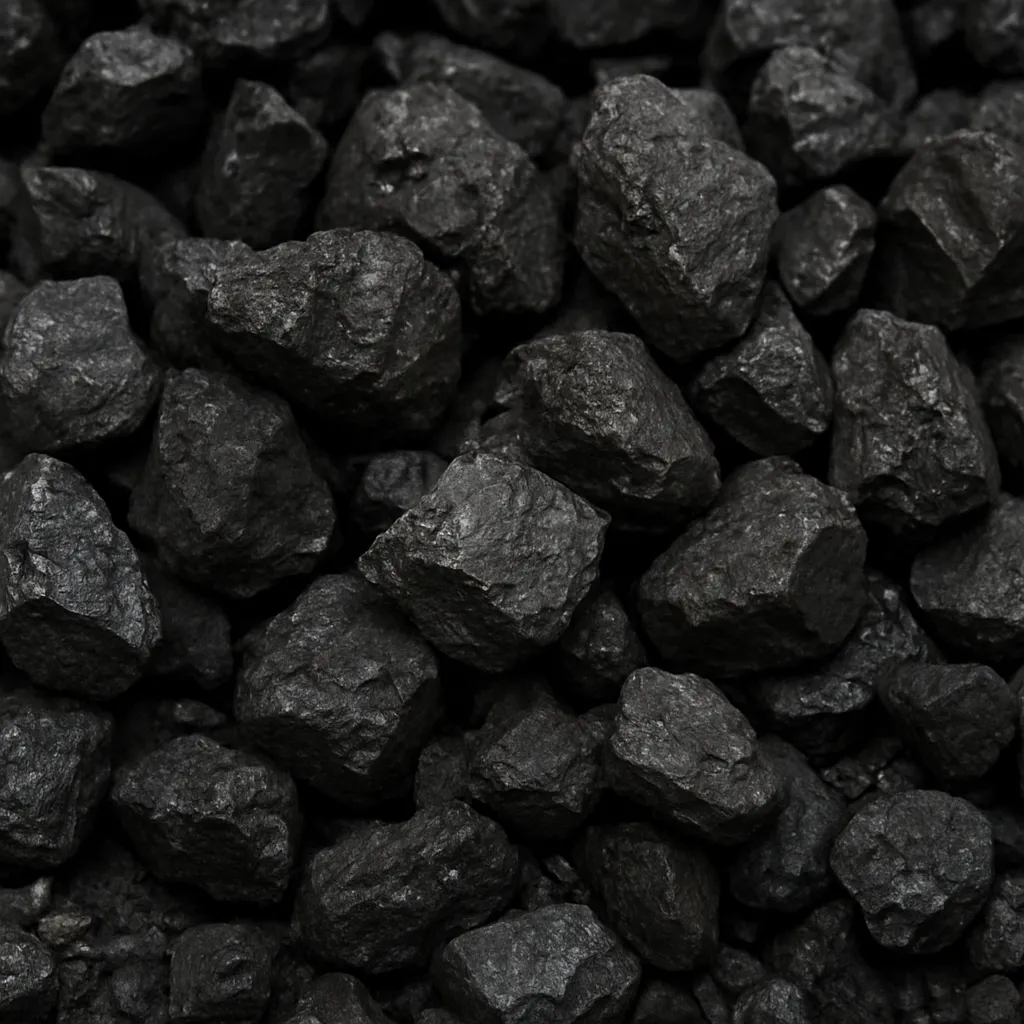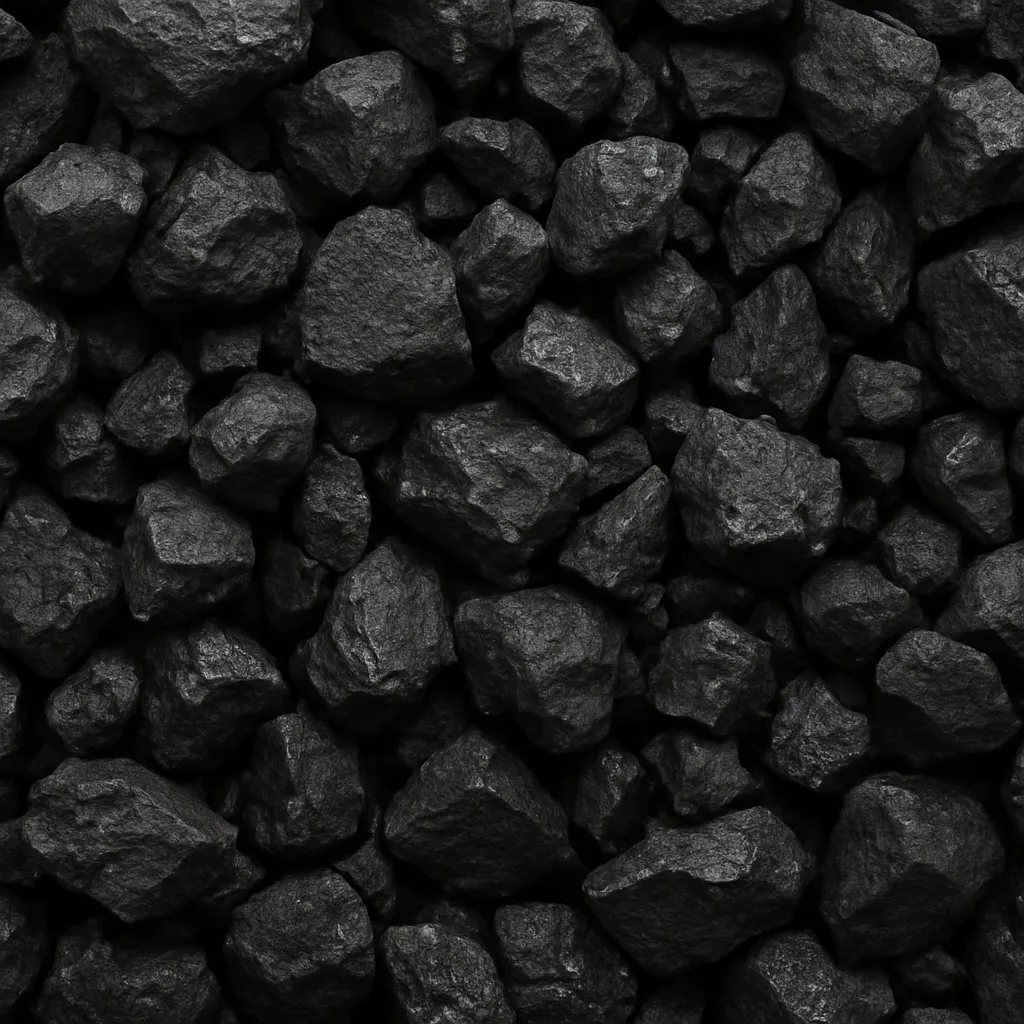
Coal concentrate is a processed form of coal produced by cleaning and concentrating raw coal to increase its energy content and reduce impurities. It plays a key role in modern industry, especially in steel production and power generation, and is a focal point of trade, policy and environmental discussion. This article examines where coal concentrate occurs and is produced, how it is made, economic and statistical aspects, its industrial importance, environmental challenges and future prospects.
Occurrence, types and geological context
Coal originates from the burial and alteration of plant material in swamps and peatlands over geological time. Different ranks of coal — from lignite to sub-bituminous, bituminous and anthracite — provide feedstock for producing concentrates. A coal concentrate is not a separate geological commodity but a product of processing: raw mined coal is upgraded through mechanical and sometimes chemical means to a more uniform, higher-grade material.
Two broad categories of coal concentrates are most relevant commercially:
- coking (metallurgical) coal concentrate — produced from bituminous coals that, when coked, produce a porous, strong carbon material used in blast furnaces and other metallurgical processes;
- thermal coal concentrate — upgraded coal intended mainly for power generation and industrial heating where consistent calorific value and low impurities are important.
Geologically, the most suitable seams for producing high-quality concentrates are medium- to high-rank bituminous seams and anthracitic seams. Regions with extensive basin development and thick, laterally-continuous seams are particularly favorable because they enable economies of scale in mining and preparation. Major coal basins that supply coal suitable for concentration include:
- The North China Plains and Shanxi, Inner Mongolia and Xinjiang basins in China;
- The Bowen and Hunter Basins in Australia;
- The Powder River Basin, Appalachian Basin and Illinois Basin in the United States;
- Coal-bearing basins across India (e.g., Raniganj, Jharia, Talcher);
- Donets Basin and Siberian basins in Russia;
- Basins in South Africa (Highveld), Colombia (Cerrejón and others) and Indonesia (Sumatra, Kalimantan).
Extraction, preparation and quality characteristics
Producing a coal concentrate involves several stages: mining, comminution (crushing and grinding), beneficiation (separation to remove gangue), dewatering and sometimes agglomeration or drying. Plant configurations vary by coal type and market requirements.
Common preparation processes
- Screening and sizing — separating lumps and fines to optimize downstream processing.
- Density separation (dense medium separation, jigging) — exploiting differences in specific gravity between coal and mineral impurities.
- Flotation — commonly used for fine coal particles to separate hydrophobic coal from hydrophilic mineral matter.
- Magnetic and electrostatic separation — applied in some cases to remove specific mineral contaminants.
- Dewatering, filtration and thermal drying — producing a stable product with reduced moisture for transport and use.
- Agglomeration or pelletization — sometimes used to improve handling properties or reduce dust for higher-value concentrates.
Key quality parameters of coal concentrate include calorific value (gross calorific value expressed in MJ/kg or kcal/kg), moisture, ash content, sulfur content, volatile matter and fixed carbon. Typical calorific values for high-quality concentrates can range widely:
- Anthracitic concentrates: roughly 30–34 MJ/kg (7,200–8,100 kcal/kg).
- High-grade bituminous concentrates: roughly 25–33 MJ/kg (6,000–7,900 kcal/kg).
- Thermal concentrates may be lower, depending on feedstock and targeted markets.
For coke-making, additional properties such as caking ability, rheology during carbonization and petrographic characteristics (vitrinite reflectance, maceral composition) are critical. For thermal markets, low ash, low sulfur and stable calorific value are priorities.
Where coal concentrate is produced and global distribution
Coal concentrates are produced wherever modern coal preparation plants are integrated with mining operations. Major producing countries reflect the world’s biggest coal mining industries:
- China — by far the largest coal producer and consumer; integrated mines and washing plants supply both domestic power stations and metallurgical users. China’s internal beneficiation capacity is substantial to meet domestic environmental and quality standards.
- Australia — a major exporter of high-quality metallurgical coal concentrates; its open-cut and underground mines supply seaborne markets in Asia and beyond.
- United States — hosts substantial coal preparation plants, especially for metallurgical coal in Appalachia and for thermal coal in Powder River Basin (PRB) operations which often focus on low-sulfur, low-ash concentrates.
- Indonesia and Colombia — important suppliers of thermal and low-rank concentrates to Asian markets via seaborne trade.
- Russia and South Africa — both produce concentrates for domestic industry and export.
- India — large domestic coal processing for thermal and some metallurgical needs, with growing beneficiation capacity to improve coal quality for both power and steel sectors.
Seaborne trade concentrates are dominated by a subset of producers that can supply consistent quality at scale. Australia is the largest exporter of metallurgical coal to global steelmakers, while Indonesia and Russia play large roles in thermal coal trade. Many countries rely on domestic concentrates for energy security and to reduce transport of low-quality raw coal.
Economic and statistical overview
Coal remains a major global commodity despite declines in some regions. It continues to underpin electricity generation and heavy industry in many countries. Key economic and statistical points include production volumes, trade volumes, prices and employment impacts.
Production and consumption trends
Global coal production and consumption saw growth through the late 20th and early 21st centuries, followed by regional divergence in the 2010s and early 2020s. As of the early-to-mid 2020s:
- Global coal production is on the order of several billion tonnes per year (roughly 7–8 billion tonnes in recent years, depending on the reporting year and whether lignite is included).
- China accounts for the largest share of both production and consumption — commonly estimated at around half of global production and an even larger share of domestic consumption for electricity and industry.
- India is a major and rising consumer, with domestic production largely dedicated to thermal power but with growing interest in higher-quality concentrates for industrial users.
- Australia, Indonesia, Russia, South Africa and Colombia are important exporters; seaborne trade volumes of thermal and metallurgical coal together number in the hundreds of millions of tonnes annually.
Within these production figures, a significant proportion of mined coal undergoes beneficiation to produce concentrates. The exact fraction varies by country and seam quality; in places with high impurity levels, washing rates are higher to meet market and regulatory standards.
Trade and price dynamics
Coal prices are volatile and depend on the type (thermal vs metallurgical), quality (calorific value, ash, sulfur), logistics and geopolitical factors. Metallurgical coal prices tend to be more volatile due to linkage with steel demand and inventory dynamics. Thermal coal is affected by power sector demand, gas and renewables competition, and regional environmental policies.
Important economic impacts of coal concentrates include:
- Export revenues for producing regions and countries that supply seaborne markets;
- Employment in mining, preparation, logistics and associated industries;
- Inputs to the steel industry — where metallurgical concentrates are a critical raw material for blast furnace operations and other coke-dependent processes;
- Price transmission to electricity costs in coal-dependent power systems.
Employment and regional development
Coal concentrate production supports direct and indirect employment in mining regions. Preparation plants create skilled jobs in process operation, maintenance and quality control. In many countries, coal projects are a major source of regional fiscal revenue through taxes, royalties and local procurement. At the same time, automation in mining and preparation has reduced some labor intensity, changing workforce needs toward technical and environmental management roles.
Industrial significance and applications
Coal concentrate is central to several industrial chains:
- Steelmaking: Metallurgical coal concentrates are converted into coke in coke ovens; coke then serves as both a fuel and a reducing agent in blast furnaces. Quality and consistency of coking coal concentrate directly affect coke strength and, therefore, blast furnace efficiency and emissions.
- Power generation: Thermal concentrates provide predictable combustion properties improving boiler efficiency and emissions control. Low-ash, low-sulfur concentrates help plants meet emissions limits with less downstream flue gas treatment.
- Cement and industrial heat: Coal concentrates are used in rotary kilns and industrial furnaces where consistent heat release and low ash/slag-forming mineral content are desired.
- Chemicals and metallurgy: Coal can be gasified to produce syngas for chemical feedstocks, methanol, ammonia or for producing hydrogen; concentrates with low impurities are preferred to reduce downstream cleanup costs.
- Specialty carbons: High-rank concentrates can be feedstock for activated carbon, carbon electrodes, and other carbon products.
Because coal concentrate offers a controlled and higher-quality feed, industries can design processes for efficiency and emissions control around the material’s specifications.
Environmental, regulatory and social considerations
Producing and using coal concentrate raises environmental and social issues that shape policy and market dynamics.
Environmental impacts of production
- Water use and contamination — coal washing consumes water and generates effluents and slurry. Improper handling can lead to sedimentation, reduced water quality and risks to aquatic ecosystems.
- Tailings and slurry dams — storage of washery rejects requires secure facilities to prevent catastrophic failures and long-term contamination.
- Dust and air emissions — crushing, screening and transport produce dust; drying operations and combustion release particulates and gases.
- Greenhouse gas emissions — methane emissions from underground mines and CO2 from combustion remain central climate concerns.
Regulation and mitigation
Regulatory regimes increasingly require:
- Advanced water treatment and recycling in preparation plants;
- Dust control and enclosed material handling systems;
- Tailings management aligned with international best practice and independent oversight;
- Monitoring and reporting of fugitive methane and CO2 emissions.
In many jurisdictions, environmental requirements influence the scale and economics of coal concentrate production. Stricter air quality rules encourage washing to reduce ash and sulfur before combustion, while climate policies and carbon pricing can change demand patterns for concentrates.
Social and transition challenges
Communities dependent on coal concentrate production face complex transitions. While the industry provides jobs and local revenue, decarbonization trends can create risks of stranded assets and job losses. Managed transitions emphasizing reskilling, economic diversification and community engagement are increasingly part of policy responses in mining regions.
Market risks, innovation and future outlook
The future of coal concentrate is shaped by competing forces: persistent demand for steel and certain industrial processes; the pace of global decarbonization; technological innovation in both coal use and alternative processes; and geopolitical supply considerations.
Technological innovation
- Improved beneficiation technologies — more efficient fine-coal recovery and cleaner concentrates reduce environmental footprint and improve resource efficiency.
- Advanced drying and agglomeration — lowering moisture and improving handling for export and direct injection into industrial processes.
- Carbon Capture, Utilization and Storage (CCUS) — potential to decarbonize some coal-dependent industrial processes, especially where chemical reductions are needed (e.g., steelmaking).
- Alternative steelmaking — direct reduced iron (DRI) using hydrogen, and electric arc furnaces (EAF) fed by scrap or DRI, can reduce demand for metallurgical coal over time, though transition pace will vary regionally.
Market and policy scenarios
Short-to-medium term demand for coal concentrate is likely to remain supported by:
- Ongoing industrialization in some emerging economies;
- Need for metallurgical coal in conventional blast furnace steelmaking where scrap and alternative routes are not yet viable at scale;
- Energy security considerations favoring domestic concentrate production in some countries.
Over the longer term, pathways that significantly reduce global coal use — either through aggressive decarbonization or through breakthroughs in alternative industrial routes — would reduce global concentrate demand. However, transition timelines differ markedly by country and sector, so a complete phase-out is not immediate.
Interesting facts and technical tidbits
- Beneficiation can recover valuable energy from low-grade seams that otherwise would be discarded, improving overall resource utilization.
- Fine coal slurries once posed disposal challenges; newer technologies allow higher recovery of fines and production of stable concentrates from these streams.
- The term coal concentrate is sometimes used interchangeably with washed coal, black coal, or prepared coal, though regional industry usage varies.
- In steelmaking, small changes in coking coal concentrate quality can materially affect coke strength and blast furnace productivity, making testing and consistency paramount.
- Some high-rank concentrates can be blended to meet specific customer requirements, enabling flexibility in both domestic and export markets.
Practical considerations for buyers and policymakers
For industrial buyers, coal concentrate procurement must balance price, quality specifications, logistics and regulatory compliance. Key contracting elements include calorific value guarantees, ash and sulfur limits, moisture specifications, and delivery reliability.
Policymakers must weigh coal concentrate’s economic benefits against environmental and climate goals. Effective policy tools include:
- Incentivizing cleaner preparation practices and investments in water- and energy-efficient washery technologies;
- Mandating best-practice tailings and slurry management;
- Designing just transition programs for coal-dependent communities;
- Coordinating industrial decarbonization strategies that consider the timing and scale of reductions in metallurgical and thermal coal needs.
Summary and conclusions
Coal concentrate represents a significant, processed form of coal that enhances calorific value and reduces impurities for industrial use. It is produced worldwide in regions with coal mining and preparation infrastructure, with major production and trade centers in China, Australia, the United States, Russia, Indonesia, India and several other countries. Economically, coal concentrate underpins steelmaking, power generation and several industrial processes, contributing to export earnings and regional employment. At the same time, environmental impacts and climate policy create challenges and push innovation in preparation technologies, emissions control and alternative industrial routes. The medium-term outlook suggests continued, though regionally uneven, demand, while long-term trajectories depend on technological change and decarbonization policies.
Key words: coal concentrate, coking, thermal, beneficiation, dewatering, ash, sulfur, metallurgical, power generation, coke