This article examines the coal mining site commonly associated with the Kosovo A complex in central Kosovo: the open-pit mining operations in the Kosovo Basin that have supplied lignite to the region’s thermal power plants for decades. The text covers the mine’s location and geology, the type of coal extracted, production and economic statistics (where available), the mine’s role in Kosovo’s energy system and economy, environmental and social impacts, and prospects for the future. The objective is to provide a comprehensive, balanced overview of this key energy asset in Kosovo.
Location, geology and mine layout
The coal-bearing area tied to Kosovo A is part of the larger **Kosovo Basin**, a lignite-rich depression located in central Kosovo, approximately 10–15 km west of the capital, Pristina, near the town of **Obiliq** (Obilić). The basin is one of several lignite fields in the Western Balkans and has been mined continuously since the mid-20th century to feed nearby thermal power plants. Mining is carried out in large-scale, surface (open-pit) operations that removed overburden and extracted layers of **lignite** (brown coal) laid down in Neogene sediments.
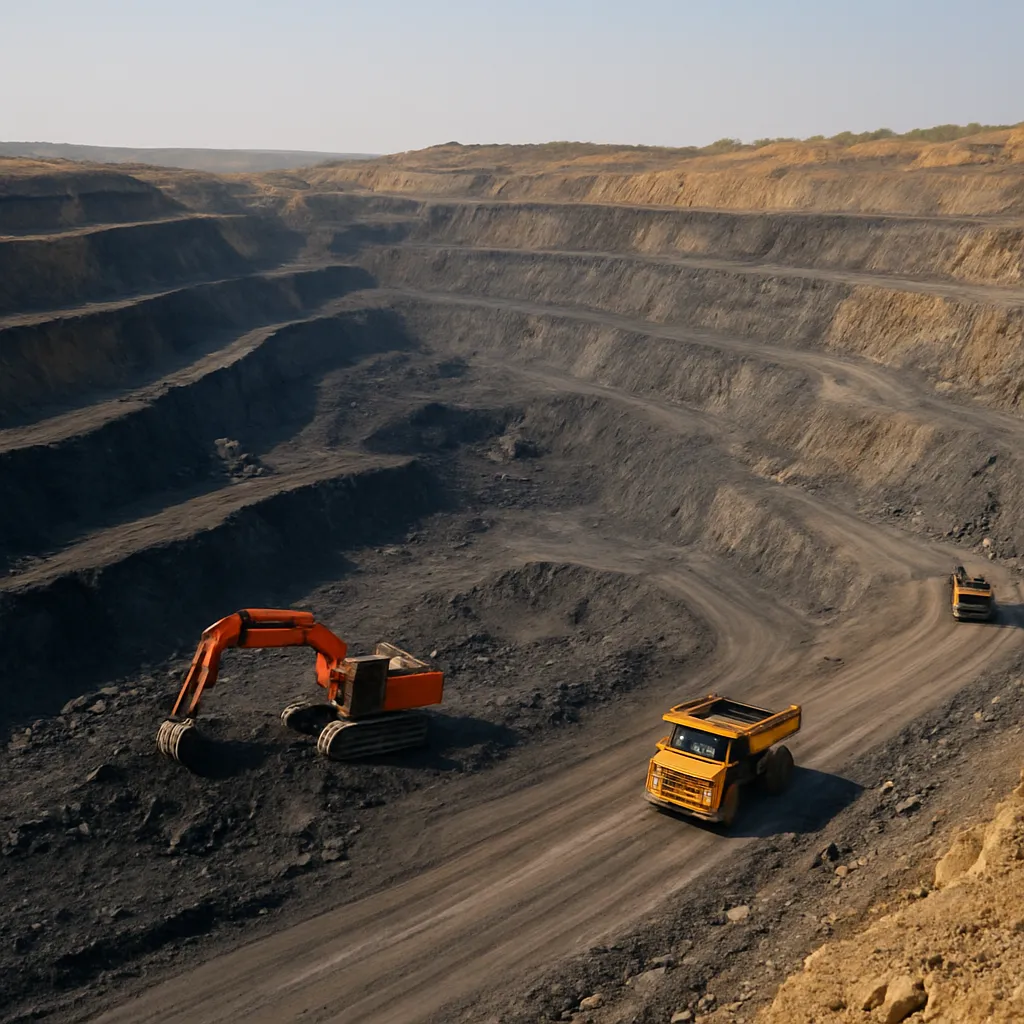
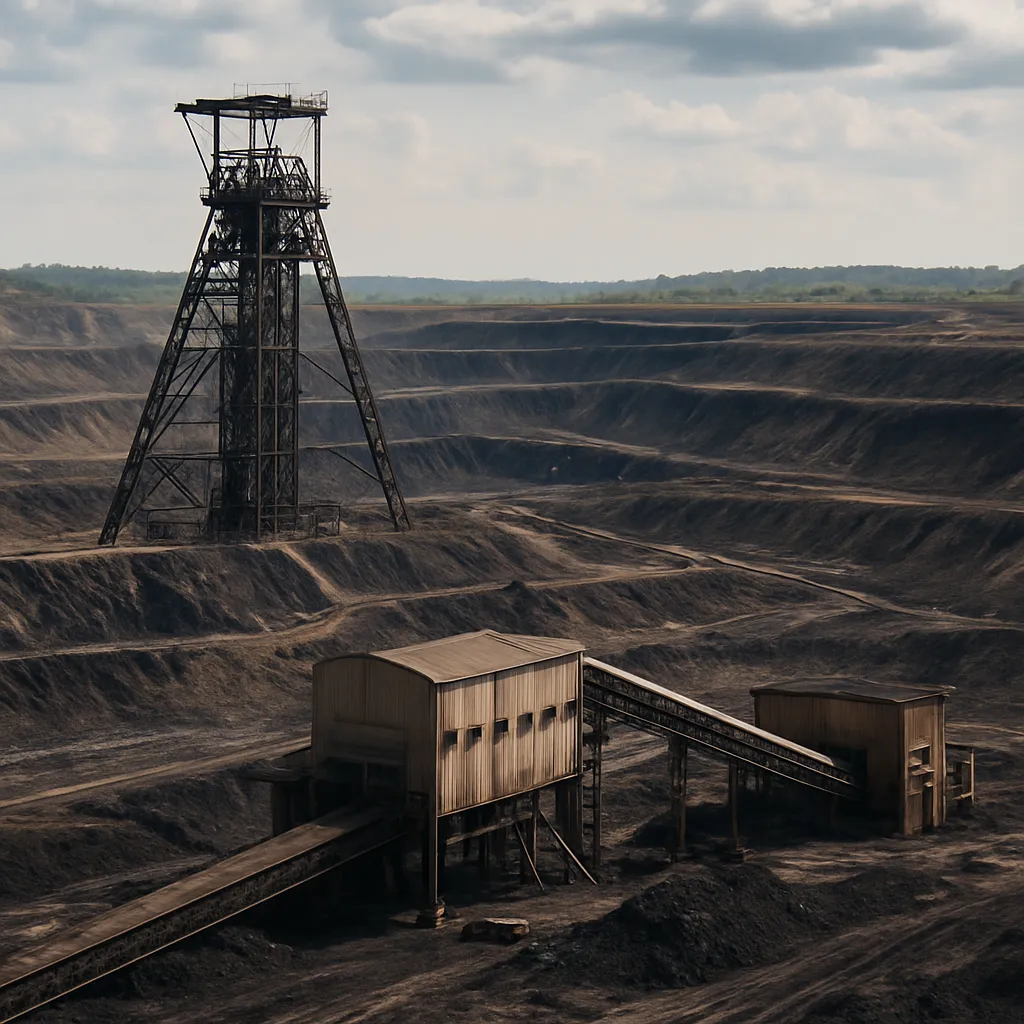
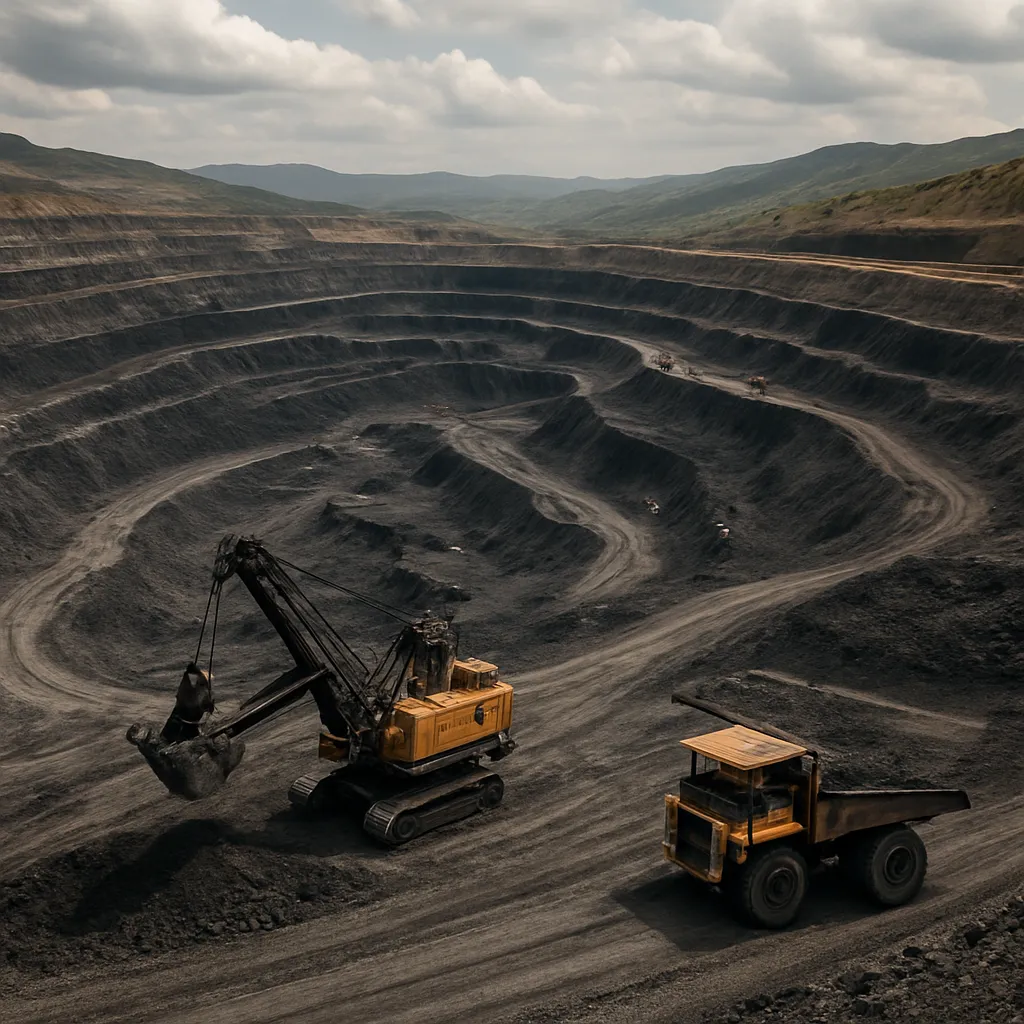
Geologically, the Kosovo Basin hosts sequences of **Pliocene** and Pleistocene age lacustrine and fluvial deposits in which lignite seams occur. The lignite layers are relatively shallow, making them amenable to economical open-pit extraction. Typical mining complexes in the basin include extensive excavation benches, conveyors, overburden dumps and connectivity to thermal plants by belt conveyors or haul roads. The mining landscape is characterized by large, terraced pits and adjacent spoil heaps, which have significantly reshaped the local topography.
Type of coal and its properties
The coal extracted in the Kosovo Basin and delivered to Kosovo A and surrounding power stations is **lignite**, commonly referred to as brown coal. Lignite is a low-rank form of coal with:
- Low calorific value compared with bituminous coal and anthracite — typically in the single- to low double-digit megajoules per kilogram range (MJ/kg).
- High moisture content and high volatile matter, which lower combustion efficiency and increase particulate and gaseous emissions per unit of energy produced.
- Relatively high ash content in some layers, requiring ash handling systems at power plants.
Because of these properties, lignite is primarily used for short-distance, mine-mouth electricity generation rather than transport or export to distant markets. The proximity of mines to thermal plants has historically offset many logistical disadvantages of lignite and enabled cost-competitive domestic power generation.
Operation, methods and infrastructure
Mining in the Kosovo Basin employs large-scale opencast methods. Key operational features include:
- Surface mining with mechanical excavation of overburden by excavators or draglines where applicable, followed by extraction of lignite seams.
- Use of heavy equipment such as **bucket-wheel excavators**, haul trucks and conveyor systems that transport coal directly to adjacent power plants.
- Extensive **coal-mill and ash-disposal** infrastructure at plant sites — ash lagoons, landfills and dry ash handling in recent upgrades.
- Support infrastructure including workshops, administrative facilities, and resettlement/compensation systems for affected communities.
In many cases the mining sites and power plants are integrated in a mine-mouth system to minimize the distance coal travels and reduce logistics costs. This setup has defined the industrial landscape around Obiliq and adjacent municipalities.
Production, reserves and statistical overview
Kosovo is widely reported to possess substantial lignite reserves within its three main basins (Kosovo, Dukagjin, and Drenica), with the **Kosovo Basin** being the most exploited. Estimates commonly cited in international literature place Kosovo’s lignite reserves in the billions of tonnes — frequently quoted figures are around **12–14 billion tonnes** for the country overall, with a significant proportion located in the Kosovo Basin. Such figures should be regarded as countrywide estimates; basin-specific reserves vary by source and depend on exploration, seam continuity and economic cut-off criteria.
Annual production from the Kosovo Basin has fluctuated depending on demand, plant operation schedules and modernization projects. In recent decades, combined lignite extraction to supply Kosovo A, Kosovo B and related industrial uses has typically been in the range of several million tonnes per year. Broad historical and approximate figures:
- National lignite production: commonly reported in ranges such as **7–15 million tonnes per year** in different periods (note: actual annual output varies by year and operational context).
- Electricity generation dependence: lignite-fired power plants have traditionally provided **around 90% or more** of Kosovo’s domestic electricity, making coal production central to the national power sector.
- Employment: mining and thermal power operations in the basin historically employed several **thousands of workers**, including direct mine staff, power plant employees and support services.
Because official statistics vary with time and reporting agencies, the numbers above should be treated as indicative ranges. For specific year-by-year production and employment counts consult Kosovo’s national energy and mining statistics, the Energy Regulatory Office, and recent World Bank or European Commission reports that track Kosovo’s energy sector.
Economic and social significance
The Kosovo Basin, supplying Kosovo A and other units, plays a pivotal role in the national economy and energy security:
- Energy security: Domestic lignite resources have allowed Kosovo to generate the majority of its electricity domestically rather than depending on imports, which is particularly important for a small, transition-economy country.
- Affordability: Mine-mouth lignite has historically provided low-cost fuel for thermal generation, contributing to relatively low wholesale electricity prices for households and basic industry.
- Employment and regional development: Mining and power generation have been major employers in Obiliq and surrounding municipalities, supporting local economies, services and supply chains.
- Fiscal contribution: Taxes, royalties and utility revenues linked to coal mining and electricity production have been important sources of public income, though the structure and magnitude vary over time and depend on market prices, subsidies and institutional arrangements.
The strategic importance of the mines has translated into intensive political and economic attention from national authorities and international partners. Debates over privatization, rehabilitation, modernization and environmental compliance have influenced investment decisions and regulatory measures.
Environmental and public health considerations
Large-scale lignite mining and combustion present significant environmental and health challenges, many of which are visible around the Kosovo Basin:
- Air quality impacts: Lignite combustion releases particulates (PM), sulfur oxides (SOx), nitrogen oxides (NOx) and carbon dioxide (CO2). Older plants historically had limited emission controls, contributing to local and regional air pollution problems and associated health burdens.
- Greenhouse gas emissions: Lignite is a carbon-intensive fuel; the Kosovo Basin’s mine-to-plant system has been a major source of national CO2 emissions, a focus of climate policy and international assistance efforts.
- Land disturbance: Open-pit mining reshapes landscapes and requires overburden dumps, relocation of communities in some areas, and long-term land reclamation efforts to restore soils and vegetation.
- Water impacts: Mining operations can affect groundwater and surface water quality and hydrology; ash disposal and leachates need careful management to avoid contamination.
Addressing these issues has been central to modernization projects and financing conditions attached to investments: upgrades to flue gas desulfurization (FGD), electrostatic precipitators or bag filters, improved ash handling, and mine reclamation plans have been components of conditional assistance or investment programs. Public health studies have highlighted elevated risks in mining and plant-adjacent communities, prompting calls for accelerated mitigation, stricter regulation and broader energy transition planning.
Role in the power sector and industrial links
The mining operations supplying Kosovo A have been part of an integrated national power system that includes:
- Mine-mouth thermal plants: Coal is fed directly to nearby thermal power plants; Kosovo A and Kosovo B are the most prominent, though there are smaller industrial uses as well.
- District and grid supply: Electricity produced in Obiliq is transmitted across Kosovo and exported or traded with neighboring countries at varying scale depending on availability and market conditions.
- Industrial feedstock: While lignite is primarily used for electricity, energy-intensive industries in the country have relied on stable electricity supply enabled by domestic coal-fired generation.
Consequently, disruptions to mining or plant operations can have broad ripple effects on electricity availability, industrial production and economic stability. This has historically informed policy choices to maintain production and to pursue modernizations that keep plants operating while meeting emission standards.
Modernization, policy pressures and the energy transition
In recent years, Kosovo’s coal sector has been subject to growing policy and financial pressure to modernize operations and reduce emissions, alongside increasing calls for transition toward cleaner energy sources:
- EU and international influence: European Union accession ambitions, donor conditionality and environmental regulations have pushed for emission reductions, plant retrofits and plans for eventual replacement of old, inefficient units.
- Investment and upgrade projects: Some funding packages and projects have targeted improvements in plant emission controls, ash handling and mine reclamation; however, financing large-scale retrofits or new plants often comes with strict environmental conditions.
- Future scenarios: Policy options being discussed include gradual retirement of the oldest coal units, replacement by gas or renewables, or construction of modern combined-cycle plants with lower emissions — each choice involves trade-offs in cost, security and social impacts.
Transition planning typically considers phasing frameworks that aim to protect workers and communities through retraining, economic diversification and social safety nets while securing clean energy financing for renewable and grid projects.
Social impacts and community relations
Social aspects around the Kosovo A mining complex include:
- Resettlement: Open-pit expansion has occasionally required relocation of villages and farmland, necessitating compensation programs and social services adjustment.
- Health concerns: Residents near plants and mines often report respiratory and other health problems linked to air pollution and dust; these concerns drive civil society advocacy and policy attention.
- Local dependence: Communities have become economically dependent on mining and power sector jobs, making the pace and manner of any transition a socio-political challenge.
Successful management of these impacts requires transparent stakeholder engagement, fair compensation, environmental monitoring and investments in alternative livelihoods and local infrastructure.
Interesting facts and historical notes
Here are several notable aspects that illuminate the characteristics and history of the Kosovo Basin and its mining legacy:
- Mine-mouth model: The Kosovo Basin is a classic example of mine-mouth power generation where mining and electricity production are tightly spatially integrated to reduce fuel transport costs.
- Long-term resource: The scale of lignite reserves in Kosovo means that, from a purely resource perspective, the basin could supply energy for many decades under current consumption patterns — though environmental and policy constraints strongly affect actual exploitation timelines.
- Regional significance: For decades the lignite-based system has made Kosovo one of the most coal-dependent countries in the Balkans, with implications for regional electricity markets and cross-border environmental impacts.
- Transition debates: Because of the socio-economic reliance on mining, the move away from lignite in Kosovo raises complex issues about job replacement, retraining and attracting investment into alternative sectors.
Future prospects and concluding considerations
The future of the mining complex associated with Kosovo A sits at the crossroads of energy security, economic necessity and environmental sustainability. Key considerations going forward include:
- Balancing short-term reliability with long-term sustainability: Ensuring stable electricity supplies while planning an orderly transition away from the most polluting coal units.
- Securing investment: Attracting financing for modernization, pollution abatement and renewable energy projects while complying with international environmental standards.
- Protecting communities: Implementing social policies to protect workers and local economies through retraining, economic diversification and targeted social support.
- Rehabilitation and land reuse: Designing and financing reclamation of former pits and ash disposal sites to reduce long-term environmental liabilities and create opportunities for new land uses.
In sum, the coal mining operations that supply Kosovo A and neighboring plants have been central to Kosovo’s development, energy independence and regional industrial profile. However, they are also a focal point for environmental concern and policy debate. The path forward will require integrated strategies that address energy, economic and social goals concurrently, and prudent use of data-driven planning to manage both the remaining resource base and the people who depend on it.