The Nacala Corridor is a major transport and resource-development axis in southeastern Africa that has reshaped Mozambique’s mining landscape. Centered on the rich coal-bearing basin around Moatize in Tete Province and linked to the deep-water port at Nacala, this corridor has become synonymous with large-scale coal extraction, regional logistics investment and complex socio-environmental dynamics. This article examines where the sites are located, what type of mineral is extracted, geological and technical characteristics, economic and statistical data where available, and the broader significance of the operations for Mozambique and the region.
Location and geology: where the mines are and what lies underground
The coal mining activity associated with the Nacala Corridor is primarily concentrated in the Moatize coal basin in western Tete Province, central-northern Mozambique. The basin lies within the Zambezi River catchment and is part of a larger Karoo-age sedimentary sequence that hosts multiple coal seams. Although the broader corridor includes railway infrastructure stretching to the port of Nacala in Nampula Province and passes through Malawi, the coal deposits themselves are clustered around the Moatize district and neighboring concessions.
Geologically, the Moatize basin contains multiple coal seams of varying thickness and quality, deposited during the Permian–Triassic periods. The coal is generally described as a mix of high-quality thermal coals and coals with semi-soft metallurgical properties in places, making the deposits attractive to both power-generation and some industrial markets. Typical gross calorific values reported for different seams fall broadly within the range of approximately 4,500–6,500 kcal/kg (on an as-received basis), depending on seam selection and washing. Ash and moisture contents vary by seam and washing processes; beneficiation is commonly used to improve product quality.
Estimates of the resource base in the Moatize basin have varied across studies and company reports. Publicly reported resource and reserve figures from the early development period suggested measured and indicated resources on the order of billions of tonnes and recoverable reserves in the order of magnitude of 1.5–3 billion tonnes for portions of the basin. These figures must be interpreted cautiously, as they depend on cut-off grades, mining methods and ongoing geological evaluation. Nonetheless, the basin is widely recognized as one of Mozambique’s most important coal endowments.
Mining operations and infrastructure: extraction, transport and export
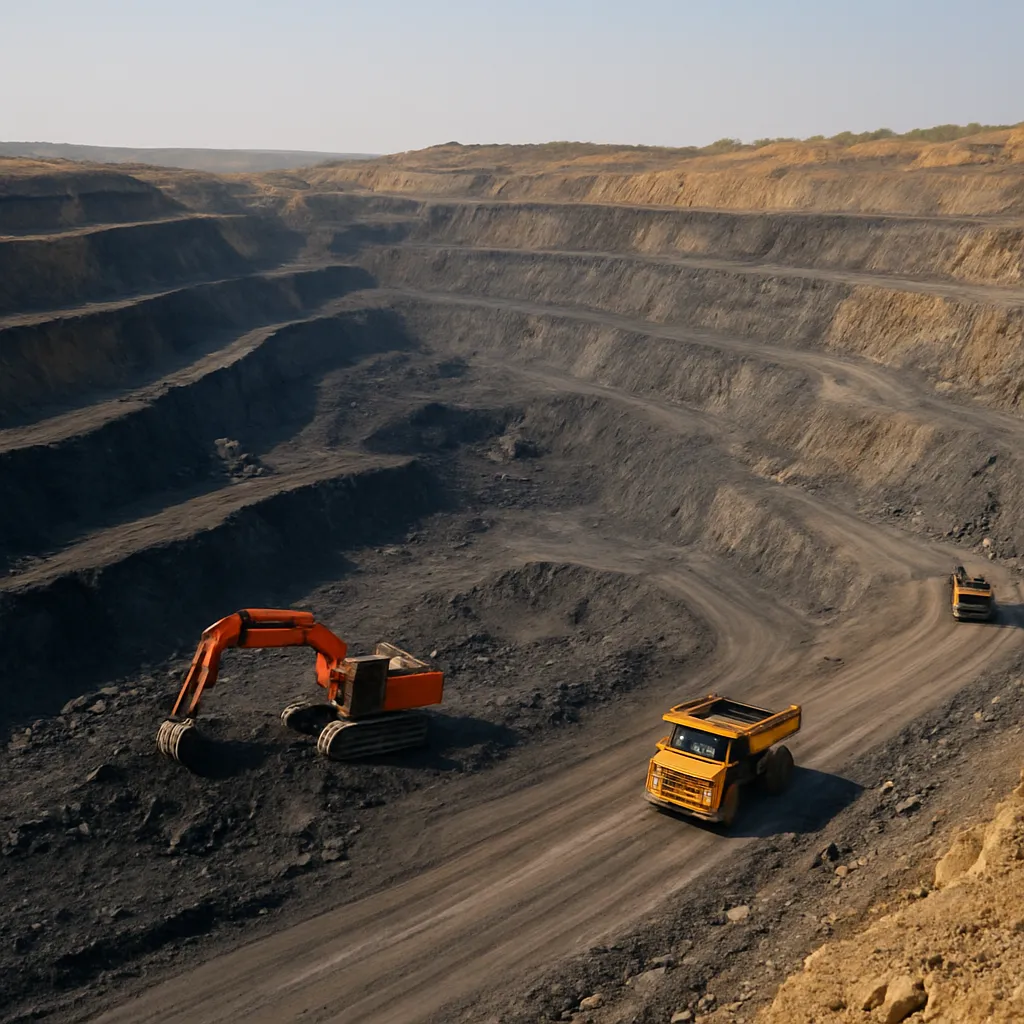
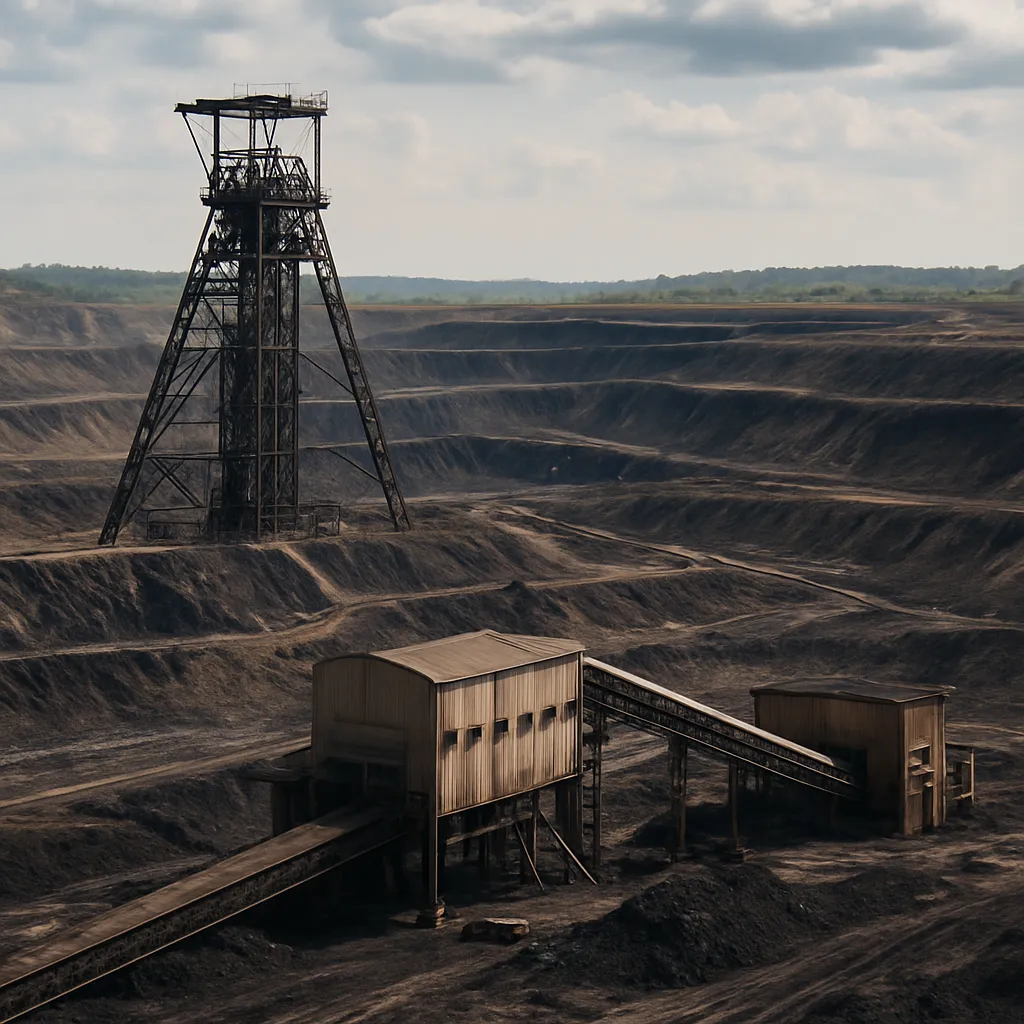
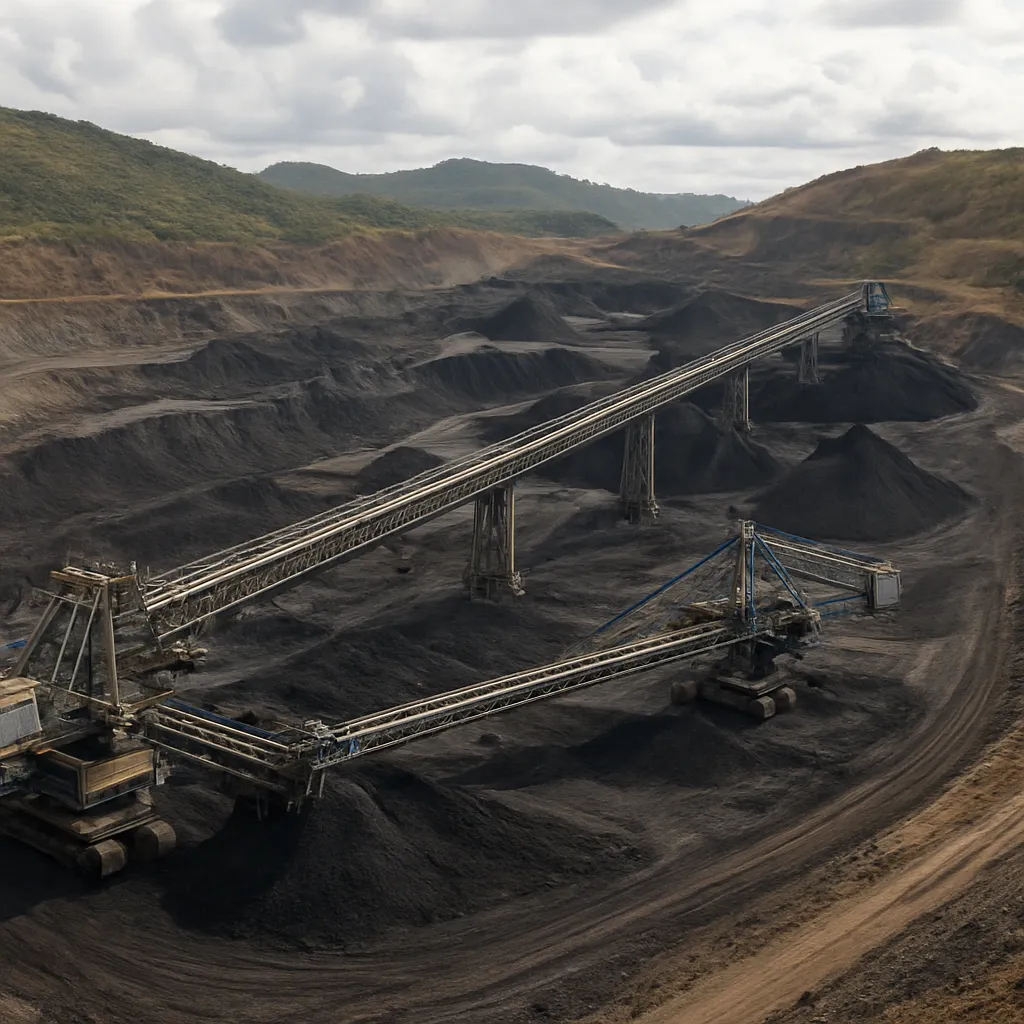
Mining at Moatize has predominantly been carried out as large-scale open-pit operations using conventional drill-and-blast, loading and hauling methods with heavy mobile equipment. The scale of the operations—both in terms of mine footprint and production capacity—has necessitated extensive surface works, waste-rock management systems and on-site coal handling and washing plants. Coal beneficiation (washing) is used to improve calorific value and lower ash content for export specifications.
One of the defining features of the project is the integrated logistics solution: the Nacala Corridor. This multi-modal corridor links inland mines to the deep-water port of Nacala-a-Velha on Mozambique’s northern coast. The logistics chain comprises an upgraded and extended railway network that traverses Mozambique and Malawi, rolling stock and terminals, and port-handling facilities capable of accommodating Panamax-size vessels. The corridor not only handles coal but has been designed to support agricultural and general freight flows, improving regional connectivity.
Key companies and stakeholders have included international mining firms, project developers and state actors. Large-scale investment was mobilized to develop both the mines and the corridor infrastructure, combining private capital, project finance and public-sector cooperation. Over time, the operations have involved joint ventures and concession arrangements with Mozambican national entities and regional partners. The involvement of major miners contributed technical expertise, financing and market links that enabled commercial-scale exports.
Rail and port logistics
- The railway link from Moatize to Nacala is central to export capacity. Trains carry washed and raw coal to port terminals, where it is stockpiled and loaded onto ships for international markets.
- Ports at Nacala-a-Velha provide deep-water access, allowing larger vessels and more reliable shipping schedules than some alternative outlets in the region. Use of Nacala reduces transit times compared with routes via central or southern Mozambican ports for some markets.
- Because the railway crosses international borders, the corridor enhances regional trade by connecting Malawi and Mozambique, and by extension facilitating access to seaports for landlocked neighboring countries.
Economic and statistical overview: production, exports and fiscal impact
The development of Moatize and the Nacala Corridor has had notable macroeconomic and fiscal impacts in Mozambique. Coal quickly became one of the country’s major mineral export commodities, alongside recent natural gas discoveries in other provinces. Revenues from coal production, through royalties, corporate taxes, employment and ancillary economic activity, contributed to local and national income.
Production volumes have varied with market conditions, operational ramp-up and logistical constraints. At its operational peak, Moatize-related exports and throughput via the corridor were reported in multi-million tonne annual figures—reflecting the large reserve base and committed production programs. Typical large-scale thermal coal projects seek annual production in the range of several million tonnes per annum; Moatize-era targets and capacities were commonly discussed in that order of magnitude. Exact yearly numbers have changed over time due to market demand, infrastructure availability and company strategies.
Export destinations historically included major coal consumers in Asia (notably India and China), as well as markets in Europe and other regions depending on product quality and contract structures. The corridor’s access to a deep-water port made it feasible to reach long-haul customers with competitively priced logistics and large shipment sizes.
On employment, the project generated thousands of jobs during the construction phase (for the railway, port and mines) and sustained hundreds to a few thousand direct operational roles in mining, plant operations, logistics and administration. A considerably larger number of indirect jobs were created in service sectors, local procurement chains and community development projects. Public revenue streams—royalties and taxes—depend on production volumes and global coal prices; in boom years the fiscal contribution was significant for provincial budgets and for national public finances.
However, financial performance and export earnings have been affected by several factors: commodity price volatility, changing global coal demand patterns, infrastructure bottlenecks (including railway capacity and port handling constraints), and broader macroeconomic dynamics. As global energy markets move toward decarbonization, demand for thermal coal faces long-term structural uncertainty, which affects project planning and investment horizons.
Social and environmental considerations
Large-scale mining in the Moatize basin has had important social and environmental implications that are intrinsic to modern extractive projects. Communities close to mine sites experienced both benefits and challenges: improved roads, schools and health facilities funded through company programs and government revenues, but also displacement, changes in land use, and pressure on local livelihoods such as small-scale agriculture and fishing.
Resettlement programs were implemented to relocate households in mining footprints; the effectiveness of these programs has been the subject of scrutiny by civil society, academics and affected communities. Critical issues include adequacy of compensation, restoration of livelihoods, culturally sensitive relocation, and long-term monitoring of social outcomes. Companies often implemented community-development initiatives (schools, clinics, water systems) and local procurement policies to enhance the positive impact of mining presence.
Environmental management has focused on water resource protection, dust and air-quality control, waste-rock and tailings management, and biodiversity conservation. Because the basin lies within important catchments, water usage and effluent control are priorities. Rehabilitation and progressive closure planning are required to reduce long-term environmental liabilities, while environmental-impact assessments inform mitigation and monitoring measures. International financing and buyers increasingly demand demonstrable environmental stewardship and ESG (environmental, social and governance) compliance, influencing operational practices.
Strategic importance and future outlook
The Nacala Corridor and the Moatize coalfields remain strategically important for Mozambique and the wider region. The corridor has delivered a transport legacy—upgraded rail and port infrastructure—that can support diversified cargo flows beyond coal, including agricultural exports and general freight. For landlocked Malawi, the corridor offers an alternate gateway to international markets, thus having a regional integration dimension.
From an energy-markets perspective, the future of coal-dependent operations hinges on global demand trajectories, coal-price cycles and policy shifts toward lower-carbon energy sources. While some markets and industrial processes will continue to rely on thermal coal in the medium term, long-term prospects are constrained by decarbonization goals and investments in renewables and gas. Projects with flexible product mixes, cost-competitive logistics and diversified customer bases are better positioned to adapt.
Potential future developments could include optimization of remaining reserves, reevaluation of mining life under different price scenarios, repurposing of logistics assets for other commodities, and deeper integration of community development into project planning. Technological innovations—improvements in coal washing, emissions controls and digital mine management—can also influence operational efficiency and environmental performance.
Risks and opportunities
- Market risk: shifting demand and prices for thermal coal create uncertainty for long-term contracts and asset valuations.
- Infrastructure risk: railway and port capacity constraints can choke throughput and raise unit costs unless continuous investment and maintenance are sustained.
- Social license: ongoing community engagement and demonstrable social benefit are essential to maintaining operating stability.
- Environmental risk: water management, habitat impacts and legacy liabilities require robust mitigation and closure planning.
- Opportunity for diversification: transport assets and logistics capabilities can be leveraged for other exports, supporting regional economic resilience.
Concluding observations
The mining sites connected to the Nacala Corridor—notably the deposits around Moatize—represent a major chapter in Mozambique’s resource-led development story. The extraction of coal from these sites has generated substantial export earnings, infrastructure investment and employment opportunities while also raising complex social and environmental challenges. Companies such as Vale and other stakeholders have played pivotal roles in developing both the mine and the corridor, enabling growth that extended well beyond the immediate project footprint.
Key strategic assets such as the railway and the port at Nacala-a-Velha provide long-term value for the region, even as the global energy transition reshapes demand for thermal coal. The size of the basin’s reserves, the established export channels and the connectivity benefits all contribute to the corridor’s ongoing importance. Yet future viability will depend on adaptive management—balancing economic benefits, environmental stewardship and social equity—so that the corridor and its communities can sustain value as global markets and local priorities evolve.