This article provides a detailed overview of the Kolmar Inaglinskiy Mine — a coal mining site associated with the Russian coal producer Kolmar LLC — describing its location, geology, mining methods, coal quality, economic and industrial significance, infrastructure and logistics, environmental and social aspects, available statistics and estimates, and notable challenges and prospects. Where precise public data on the Inaglinskiy site are limited, the text makes clear which points are based on company reports, industry context or reasonable estimates.
Location and geological setting
The Kolmar Inaglinskiy site is reported to be located in the Russian Far East within the broader area where Kolmar LLC has concentrated its activities, primarily in the northeastern regions of the Russian Federation such as the Sakha Republic (Yakutia) and nearby administrative territories. The region is characterized by large, often remote coal basins formed in Mesozoic and Paleozoic sedimentary sequences. These basins host coal seams that vary in thickness, depth and rank depending on local geology.
Geologically, deposits in this part of Russia typically contain coal that ranges from high-quality coking coal to thermal grades used for power generation. The local stratigraphy often includes multiple coal seams separated by sandstones, siltstones and occasional volcanic tuffs, creating a complex but exploitable resource base. Mineralization, seam continuity and structural factors such as folding and faulting determine whether mining is carried out by open-pit methods or underground operations.
What is extracted: coal type and quality
Kolmar’s operations, including projects like Inaglinskiy, have been focused on producing coal suitable for the metallurgical industry and for export markets. The most commercially valuable product from this region tends to be metallurgical or coking coal, which is used in steelmaking, though thermal coal for power generation is also present and sometimes produced depending on market demand.
Coking coal from these deposits is typically assessed by parameters such as volatile matter, fixed carbon content, ash yield, sulfur and phosphorus levels, and caking properties. High-quality metallurgical coals have low ash and sulfur, good coke strength and plasticity. While specific laboratory analyses for the Inaglinskiy seams are not widely published, company descriptions of Kolmar’s portfolio emphasize production of high-grade coals suitable for blast-furnace and pulverized coal injection (PCI) applications in steelmaking.
Mining methods and operations
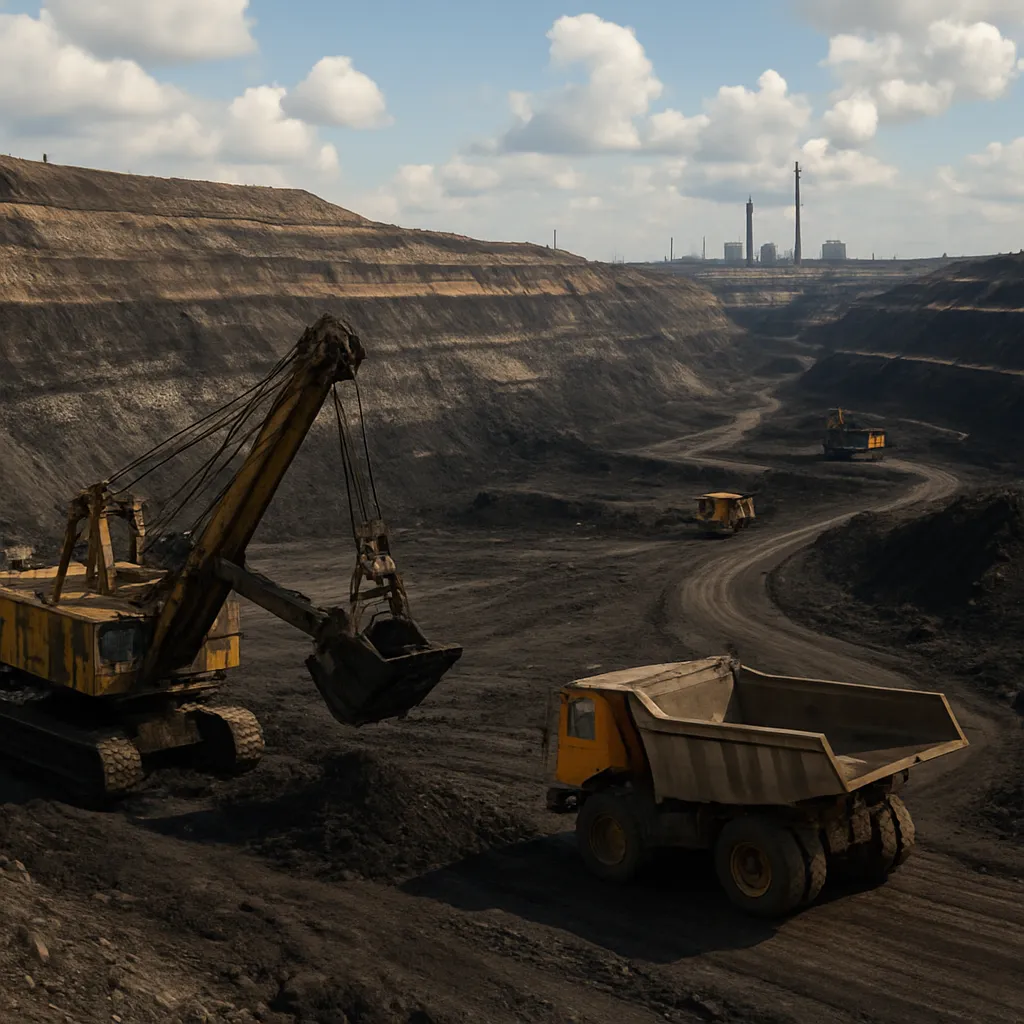
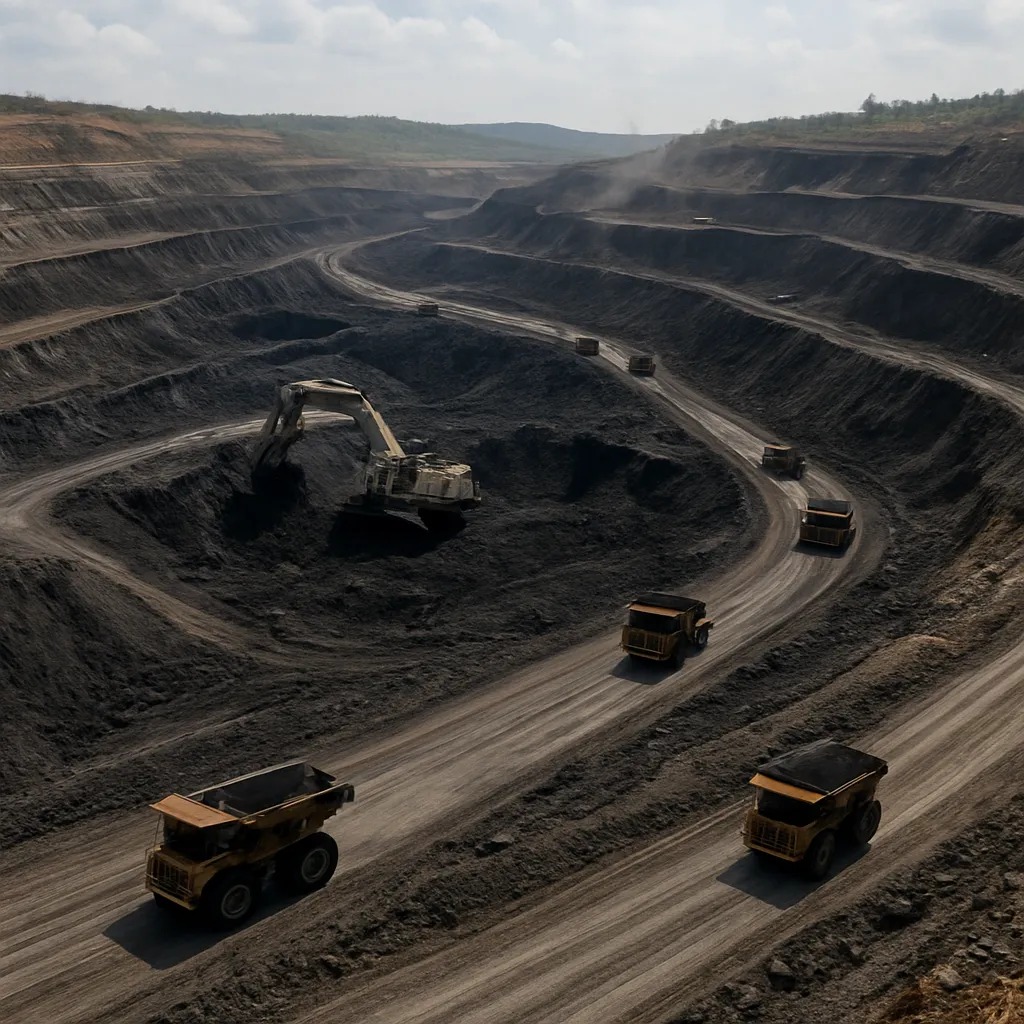
Whether Inaglinskiy operates as an open-pit or underground mine depends on seam depth and geometry. In the Russian Far East many modern projects favor large-scale open-pit development where overburden and seam thickness make that approach economically viable. Open-pit methods allow mechanized stripping, staged benches, and high-apparent rates of production; they also require significant capital for earthmoving, drainage, and rehabilitation.
Operational elements typical for a mine like Inaglinskiy include:
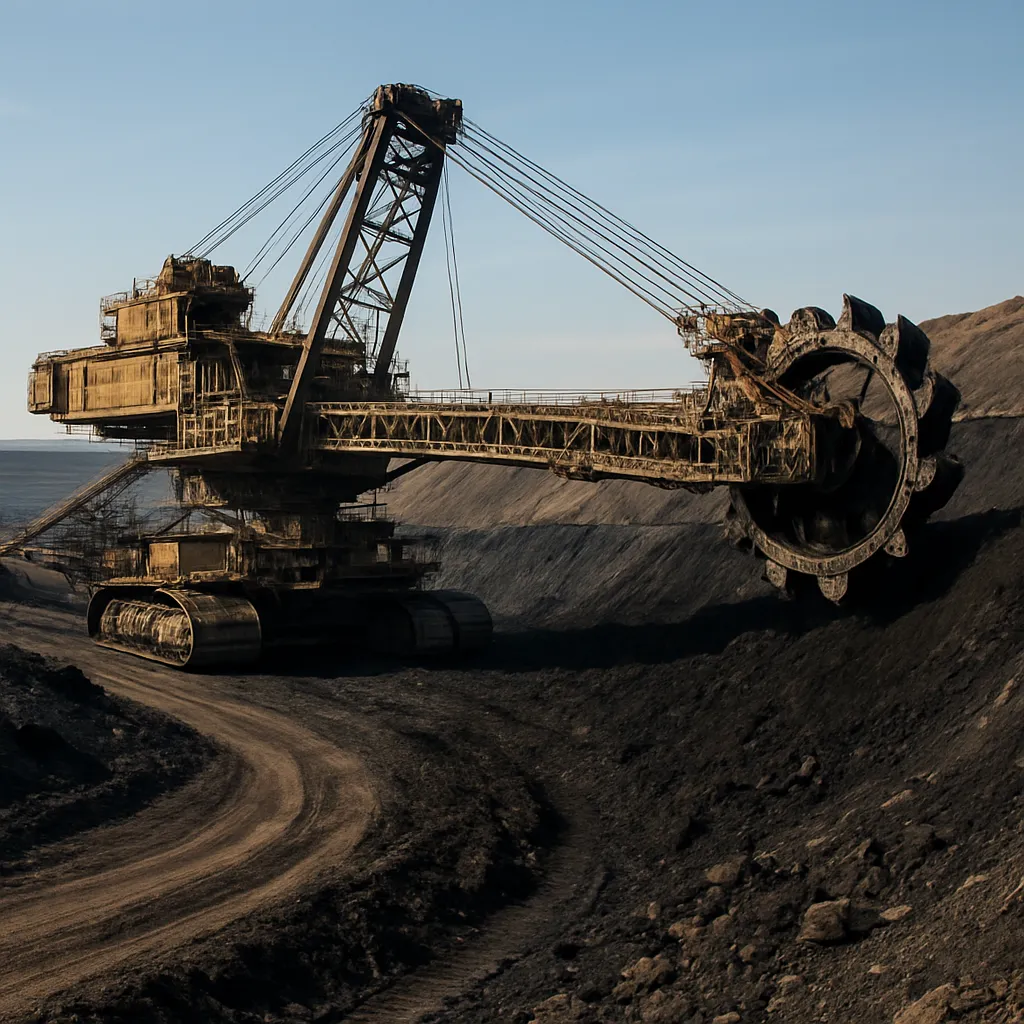
- Draglines, electric shovels and trucks for overburden removal and coal haulage in open-pit settings.
- Continuous miners and longwall systems in underground scenarios where seams are thick and extensive continuity is present.
- On-site crushing and screening plants to produce size-graded product streams (lumps, fines) and to prepare material for washing.
- Coal-washing and beneficiation facilities to reduce ash and sulfur content and to create specific products for metallurgical customers.
- Support infrastructure including workshops, fuel and materials storage, and employee accommodation in remote locations.
Infrastructure and logistics
One of the defining characteristics of coal production in remote Russian regions is the critical role of logistics. Transport routes, rail connections, sea ports and seasonal constraints shape the economic viability of a mine. Kolmar and similar companies typically invest in multi-modal infrastructure:
- Rail links: To move large volumes of coal to domestic consumers or to export terminals, dependable rail links are essential. Where direct rail access does not exist, companies may develop or partner in constructing spur lines or transshipment hubs.
- River and sea transport: In regions with navigable waterways, river barging can be cost-effective seasonally. For exports, proximity to Arctic or Pacific ports determines shipping routes and costs; transshipment through established export terminals is common.
- Roads and on-site logistics: All-weather haul roads, internal conveyors, and truck fleets support short-distance movement from mine face to processing facilities.
- Energy and utilities: Reliable power generation (often diesel or gas-fired in remote regions), water supply for washing and dust control, and communications networks are part of the operating envelope.
Kolmar’s business model historically emphasizes export-oriented production, so investments in port access and rail capacity are major components of project planning. Seasonal constraints such as ice cover in Arctic ports require flexible logistics planning, including use of ice-class vessels where necessary.
Economic and industrial significance
Coal mines like Kolmar’s Inaglinskiy play several important roles:
- Employment and regional development: Mines create jobs directly at the pit or in underground crews and indirectly through services, logistics, and supply chains. In remote regions with limited alternatives, mining can be a primary source of income and infrastructure investment.
- Export earnings: High-quality metallurgical coal earns valuable foreign exchange, supporting regional and national trade balances. Supply relationships with Asian steelmakers are particularly important for Far Eastern Russian producers.
- Feedstock for heavy industry: Metallurgical coals are critical for steelmaking. Reliable supply underpins domestic industry and long-term trade partnerships.
- Fiscal contributions: Taxes, royalties and lease payments provide revenue to federal and regional budgets, funding public services and infrastructure.
The macroeconomic footprint of such a mine therefore extends beyond direct production: it affects freight and port operations, local service sectors, and strategic supply security for metallurgy and power sectors. Given the commodities nature of coal, the value of a site like Inaglinskiy is strongly tied to global steel demand, coking coal price cycles, shipping costs and geopolitical factors affecting trade.
Production statistics and estimates
Publicly available, site-specific production statistics for the Kolmar Inaglinskiy Mine are limited in open sources. Kolmar LLC as a group has reported varying output levels over time depending on project ramp-up and market conditions. Industry commentary typically places regional producers in the range of several million tonnes per year when operations are at scale, with larger flagship projects potentially targeting double-digit millions of tonnes annually.
Where precise figures for Inaglinskiy are not disclosed, it is reasonable to consider the following contextual points:
- Small to medium-scale open-pit mines in the Russian Far East commonly produce from a few hundred thousand to several million tonnes per year.
- Fully developed operations supplying export markets aim for consistent annual shipments to support long-term contracts; seasonal logistics can cause intra-year variability.
- Project economics and production planning are highly sensitive to coal prices, exchange rates, and the cost of transport to port hubs.
If exact numerical data are required for investment or reporting purposes, the most reliable sources are company financial reports, regulatory filings, or official publications by regional mining authorities. These documents sometimes disclose mine-level output, reserve statements and development timelines.
Environmental and social aspects
Mining in remote and environmentally sensitive regions raises several concerns and obligations:
- Land disturbance and habitat impacts: Open-pit mining involves removal of overburden and alteration of landscapes. Progressive reclamation plans and careful management of tailings and spoil are key mitigation measures.
- Water management: Coal washing and dust suppression require water use and generate effluents; treatment plants and closed-loop systems minimize impacts on local water bodies.
- Air quality: Dust and emissions from haulage, processing and combustion can affect air quality; control measures include covered conveyor systems, water sprays and emission control on equipment.
- Indigenous communities and social license: Many remote Russian mining districts intersect lands used by indigenous peoples. Engagement, benefit-sharing and respect for traditional livelihoods are necessary for long-term operations.
- Greenhouse gas considerations: While coal production itself generates relatively small direct GHGs compared to combustion of coal by end-users, lifecycle considerations and investor pressure increasingly require transparency on emissions and decarbonization plans.
Kolmar and other major mining firms typically present environmental management systems, rehabilitation commitments and community engagement programs in their public materials. Effective mitigation requires ongoing monitoring, investment in modern processing technology and adherence to national environmental regulations.
Challenges and risks
Several factors can affect the viability and performance of a mine like Inaglinskiy:
- Logistical constraints: Remote location increases capital and operating costs for transport, energy and workforce accommodation.
- Market volatility: Prices for metallurgical coal respond to global steel demand, making revenues cyclical.
- Regulatory risk: Changes in permitting, environmental rules, and export controls can affect operations.
- Environmental and social opposition: Local or international concerns might delay projects or raise operating costs due to mitigation obligations.
- Climate policy risk: Long-term shifts away from coal for climate reasons could reduce demand, though metallurgical coal may remain essential for certain steelmaking routes absent widespread substitution.
Future prospects and strategic importance
Prospects for a site like Kolmar Inaglinskiy depend on upstream investment decisions and downstream demand:
- If demand for high-quality metallurgical coal remains steady or grows with global steel output, producers with accessible, high-grade deposits and reliable logistics will be advantaged.
- Opportunities to add value through on-site beneficiation, pelletizing or blending facilities can improve market competitiveness.
- Strategic partnerships with steelmakers and long-term offtake contracts can stabilize revenues and enable infrastructure investments.
- Technological improvements in mining, water recycling and dust control lower environmental footprints and operating costs over time.
Other interesting points and context
- Export orientation: Many Far Eastern Russian coal projects are oriented to Asian markets (China, South Korea, Japan), making shipping lanes and port capacity critical strategic assets.
- Seasonality of logistics: Arctic and sub-Arctic routes impose seasonal constraints that can be mitigated by specialized vessels or by shifting shipments to Pacific ports.
- Value chain integration: Producers that integrate rail, port and shipping operations can capture more value and reduce exposure to third-party bottlenecks.
- Resilience and diversification: Mines that can produce both metallurgical and thermal coal grades have flexibility to adapt to changing price signals.
- Local economic multiplier: Beyond direct employment, mines stimulate construction, services, maintenance and small business development in their regions.
Concluding remarks
The Kolmar Inaglinskiy Mine, as part of the broader portfolio of operations associated with Kolmar LLC in Russia’s Far East, represents the interplay of geology, logistics and market demand that characterizes modern coal projects. Its primary value lies in supplying metallurgical coal for steelmakers, supporting regional economies through employment and infrastructure, and contributing to export revenues. At the same time, challenges related to remoteness, environmental management and market volatility shape its operating environment. Precise mine-level statistics are best obtained from company disclosures and official filings; absent those, the information above synthesizes typical attributes, risks and strategic considerations relevant to a project of this type.