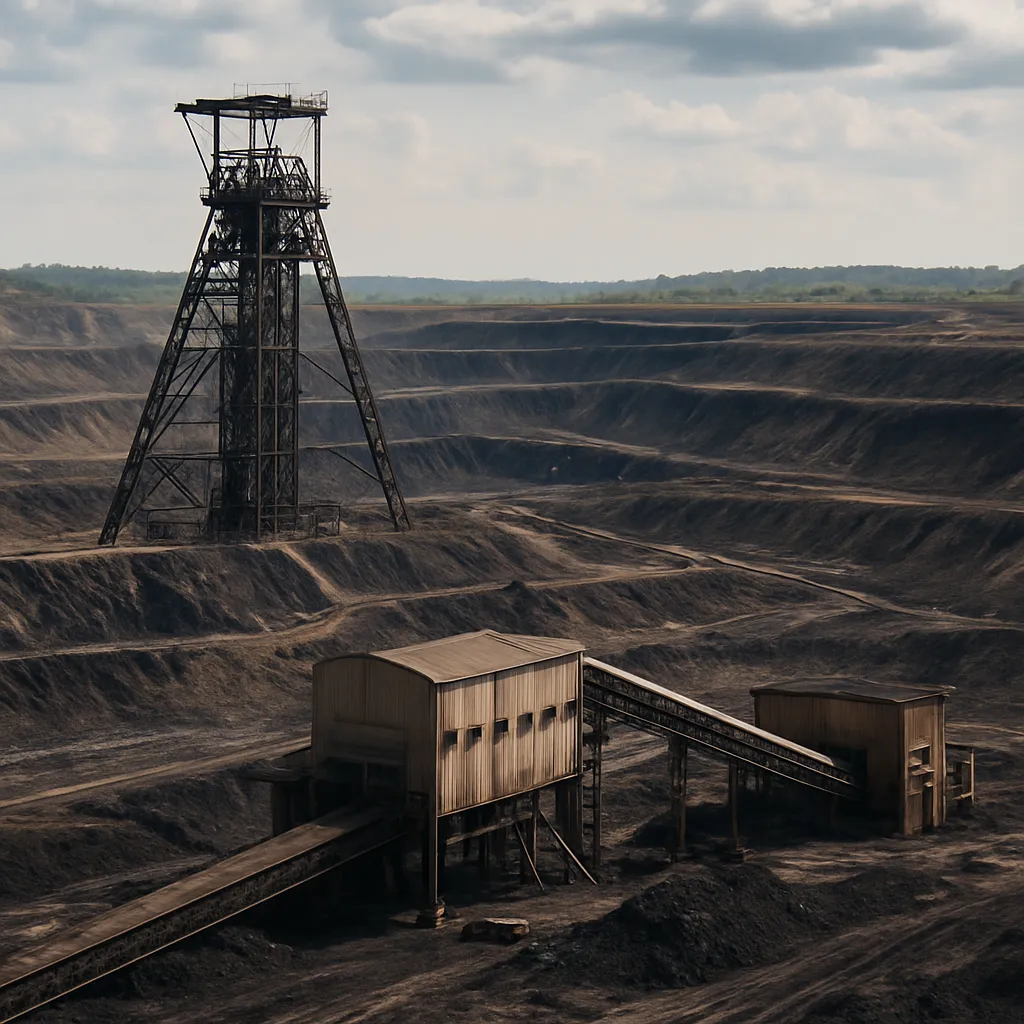
The Kosovo B coal mine is one of the central elements of Kosovo’s energy system and industrial landscape. Located in the central Kosovo basin near the town of Obiliq (also spelled Obilić), the mine supplies the adjacent Kosovo B thermal power plant and represents a long-standing source of lignite used for electricity generation. This article provides an overview of the mine’s location and geology, the type and quality of the coal produced, operational and economic data, the mine’s role in the national and regional energy system, environmental and social considerations, and current trends and future prospects. Throughout the text some key terms are highlighted to assist readers in identifying the most important concepts.
Location, Geology and Historical Development
The Kosovo B mine lies in the central part of Kosovo’s largest lignite-bearing region, the Kosovo Basin. The basin occupies a roughly northwest–southeast trending depression that developed during the Neogene and Quaternary periods. Depositional processes filled the basin with lignite-bearing sediments that now form a layered sequence of coal seams separated by clays, sands and occasional carbonates.
Development of major coal mining infrastructure in the Kosovo Basin began in the mid-20th century during the Socialist Federal Republic of Yugoslavia. The establishment of the large-scale open-pit mines and accompanying power plants at Obiliq was driven by the need for a reliable domestic energy supply for Kosovo and downstream industrial centers. The Kosovo B mine was developed specifically to supply the Kosovo B power station, built in the late 20th century as part of that program.
Geologically, the coal seams in the Kosovo Basin are typical of low-rank, high-moisture lignites formed in lacustrine and paludal environments. The seams are relatively shallow and extensive, which allows for open-pit mining methods using large mechanical excavators, bucket-wheel machines and conveyor systems.
Coal Type and Quality
The coal extracted at Kosovo B is predominantly lignite, a low-rank form of coal characterized by:
- High moisture content (often in the range of 30–50% by weight),
- Low calorific value compared with bituminous coal (typical gross calorific values for Kosovo lignite are often cited in the range of 6–10 MJ/kg, depending on seam and sampling),
- Moderate-to-high ash content and variable sulfur levels,
- Relatively high volatile matter, which affects combustion properties.
Because of these properties, lignite from Kosovo is most economically used in nearby thermal power plants where transport distances are short and ash handling systems are established. The coal’s low energy density and high moisture make it unsuitable for long-distance export unless dried or upgraded, which is generally uneconomic for this grade of fuel.
Mining Operations and Techniques
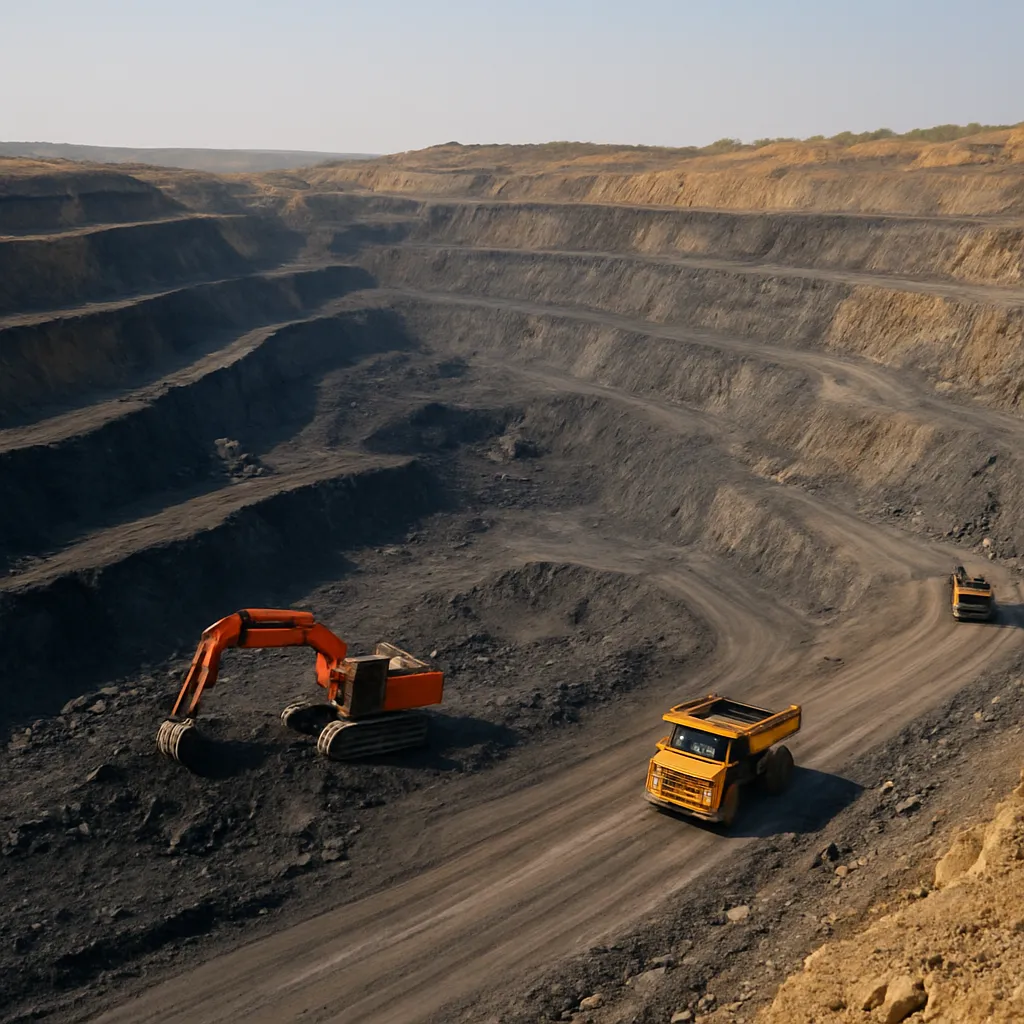
Mining at Kosovo B is carried out by open-pit methods. Key operational features include:
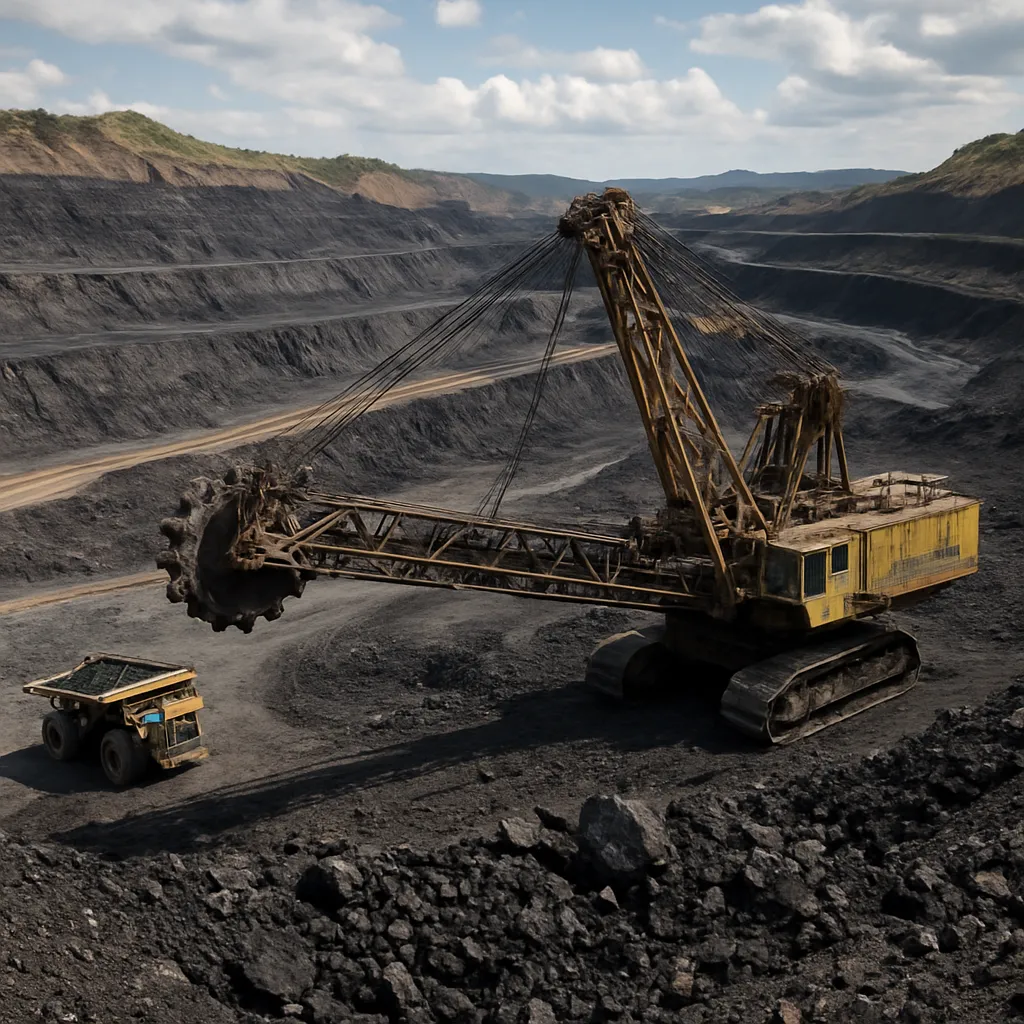
- Use of large-scale continuous mining equipment—such as bucket-wheel excavators, spreaders, and conveyor belts—that enable high daily throughput.
- Sequential benching and haulage to expose and remove lignite seams while managing overburden that can include sands, clays and occasional harder layers.
- On-site processing steps such as coarse crushing and screening before direct feeding into the adjacent thermal power plant conveyors.
- Integration with the coal-fired power plant facilities, which allows direct feed and minimizes transportation costs.
These techniques favor economies of scale and continuous operations that have made the Kosovo B mine a backbone supplier for local thermal generation for decades. The mine’s proximity to the power station reduces logistics complexity but also concentrates environmental impacts in a relatively small area.
Economic and Statistical Overview
The Kosovo B mine and associated power plant have been critical to Kosovo’s post-industrial economy. While precise figures change annually and depend on operational conditions, a few key economic and statistical points help illustrate the mine’s importance:
- Electricity supply: Historically, lignite-fired plants in Kosovo—including those supplied by Kosovo B—have provided the overwhelming majority of the country’s electricity, in some years accounting for more than 90% of domestic generation. Kosovo B power station itself has an installed capacity of approximately 680 MW (two units around 300–350 MW each), making it one of the largest generating units in the country.
- Production volumes: Annual lignite extraction for the entire Kosovo mining complex (including sources serving Kosovo A and regional consumers) has varied in recent decades. Estimates of aggregate annual output typically fall in the range of about 15–25 million tonnes of lignite per year, with Kosovo B’s portion representing a significant share of that total depending on operational scheduling and plant demand.
- Reserves: Kosovo’s lignite resources are widely cited as substantial. Public figures and geological assessments commonly estimate the Kosovo Basin’s lignite reserves in the order of several billion tonnes—often cited as between about 10 and 14 billion tonnes depending on the classification (proven, probable, inferred) and the methods used. These resources are among the largest lignite deposits in Europe on a national basis.
- Employment: Mining and thermal generation have been significant employers locally and nationally. Combined workforce numbers for coal extraction and power generation have historically been in the several thousands—often quoted in ranges of roughly 6,000–9,000 people—for state-owned companies or operators managing the pits and plants. Indirect employment (supply chains, maintenance, transport, services) adds to the wider local economic footprint.
- Fiscal and economic contribution: Revenue from electricity sales, payroll, and procurement contributes to Kosovo’s national economy and local budgets in the Obiliq area. The energy sector’s share of GDP varies with market conditions but the mines and power plants have been key contributors to industrial activity and energy security for the country.
Because many figures are sensitive to annual operational changes, maintenance outages, reconstruction or decommissioning plans, and international financing decisions, the numbers above are best treated as indicative ranges rather than precise annual constants.
Role in National and Regional Energy Systems
The Kosovo B mine is principally a supply asset for domestic thermal generation. Its importance includes:
- Providing baseload generation capacity that supports grid stability. Coal-fired thermal plants like Kosovo B deliver continuous power and reserve capacity that have been difficult to replace immediately with intermittent renewables.
- Reducing import dependence for electricity and fossil fuels by using a locally available resource. For Kosovo—a country with limited domestic oil and gas resources—lignite has historically been the dominant indigenous fuel.
- Supporting industrial consumers and households through relatively predictable electricity pricing linked to domestic fuel availability.
At the regional level, the plants supplied by Kosovo B have sometimes been engaged in export patterns to neighboring countries when surplus generation allowed. However, exports have been limited by market access, contractual arrangements, and environmental regulations in neighboring power markets.
Environmental, Health and Social Impacts
Like most lignite mines and lignite-fired power plants, Kosovo B and associated operations have a significant environmental footprint. Key issues include:
- Air pollution: Combustion of high-moisture, high-ash lignite generates particulate matter (PM), sulfur dioxide (SO2) and nitrogen oxides (NOx). These pollutants affect local air quality and public health. Kosovo has faced challenges meeting European air quality norms, and emissions from coal plants are a major contributor.
- Greenhouse gas emissions: Lignite combustion is carbon-intensive. The electricity sector in Kosovo has been responsible for a high share of the country’s greenhouse gas emissions per capita. This poses economic and reputational challenges as European and global climate policies tighten.
- Land use and landscape change: Open-pit mining reshapes the landscape, requiring removal of vegetation and soil and creating large pits and spoil piles. Progressive land rehabilitation is technically possible but costly; legacy pits require long-term planning for closure and reuse.
- Water management: Mining and plant operations interact with groundwater and surface water systems. Managing water quality, preventing contamination, and ensuring adequate water for industrial and community use are ongoing operational priorities.
- Social impacts: Local communities experience both benefits (jobs, local procurement) and costs (health impacts, relocation in some cases, changes to agriculture and local ecosystems). The distribution of benefits and burdens is central to public discourse on the future of the sector.
Mitigation and compliance measures include installation of flue gas desulfurization, electrostatic precipitators, dust control measures at mines, improved ash handling, and community health initiatives. Financing and implementation of advanced emission control technologies are often tied to international funding, policy reforms and restructuring of the energy sector.
Policy, Rehabilitation and Future Prospects
The future of the Kosovo B mine is intertwined with national energy policy, international financing, and technological choices:
- Plant life and modernization: Some units in Kosovo’s coal-fired fleet are aging and require refurbishment or replacement. Decisions on whether to modernize existing plants, build new capacity (such as proposed Kosovo C projects in the past), or accelerate a transition to alternative sources are subject to political, economic and environmental weighing of costs and benefits.
- International obligations: As Kosovo seeks closer alignment with European standards and potential integration into regional markets, pressure to reduce emissions and improve environmental performance grows. Access to European Bank for Reconstruction and Development (EBRD) or World Bank finance often comes with conditions regarding emissions, restructuring and the social safety net for workers affected by closures.
- Rehabilitation and closure planning: Long-term plans for mine closure must include land reclamation, management of overburden and waste, groundwater restoration, and repurposing of land for agriculture, forestry, recreation or industrial uses. Proper closure is capital intensive but essential for long-term environmental and social sustainability.
- Economic diversification: Dependence on a single fuel and a few large employers is a vulnerability. Policies to diversify the local economy around Obiliq—through retraining, attracting new industries, and investing in renewable energy—are being discussed as part of a broader energy transition.
Interesting Facts and Contextual Notes
- The Kosovo Basin’s lignite reserves are among the most significant in the Balkan region; estimates of total national lignite resources often place Kosovo in a prominent position regionally.
- Mining and power production have been central to Kosovo’s industrial identity since the mid-20th century, shaping settlement patterns, infrastructure and local economies around Obiliq.
- Because lignite from Kosovo is low in calorific value, generation is optimized by proximity—hence the co-location of mine and power plant. This reduces transport costs and allows continuous supply chains.
- Environmental improvements in recent decades have included measures to reduce dust from mining operations and to modernize certain power plant control systems, although full alignment with best available techniques (BAT) requires further investment.
- Discussions about the future of Kosovo’s energy sector often revolve around balancing energy security, affordability, employment and environmental commitments. Kosovo B and its mine are at the heart of that balancing act.
Key Statistical Snapshot (Indicative)
Below is an indicative snapshot combining commonly cited numbers and ranges for the Kosovo B mine and associated sector. These figures are presented as approximate and can change with operational decisions and investments:
- Installed capacity of Kosovo B power plant: approximately 680 MW (two units around 300–350 MW each).
- Annual lignite production (regional, all mines): roughly 15–25 million tonnes/year, with Kosovo B supplying a major share when operating at full capacity.
- Estimated lignite reserves in Kosovo Basin: commonly cited in the range of 10–14 billion tonnes (varies by source and classification).
- Local employment in mining and generation: several thousand direct jobs (indicative range 6,000–9,000), with additional indirect employment in services and supply chains.
- Share of electricity from lignite: historically above 80–90% of Kosovo’s total generation in many years; the sector remains dominant though diversification efforts are underway.
Conclusion
The Kosovo B coal mine is a vital component of Kosovo’s energy infrastructure. It supplies lignite to a major thermal power plant, supports local employment and contributes to national energy security. At the same time, the mine and its associated power production face substantial environmental and health challenges inherent in lignite use—challenges that shape national policy, international financing decisions and the debate over the energy transition. The future of Kosovo B will be determined by a mixture of technical choices (modernization versus closure), economic considerations (costs of alternatives, financing) and social policies (worker transition and community rehabilitation). Given the scale of the lignite resource, Kosovo has options, but those options require careful planning to reconcile the competing demands of energy, economy and environment.