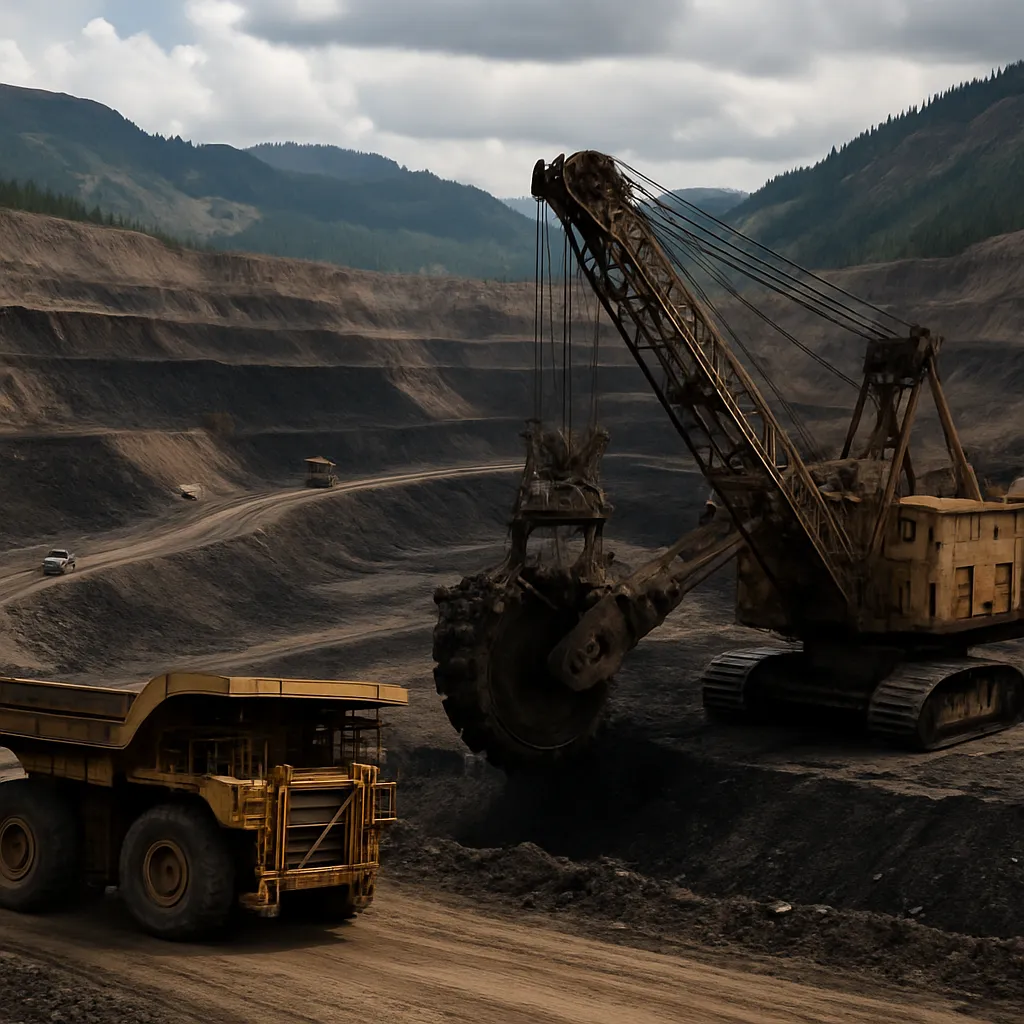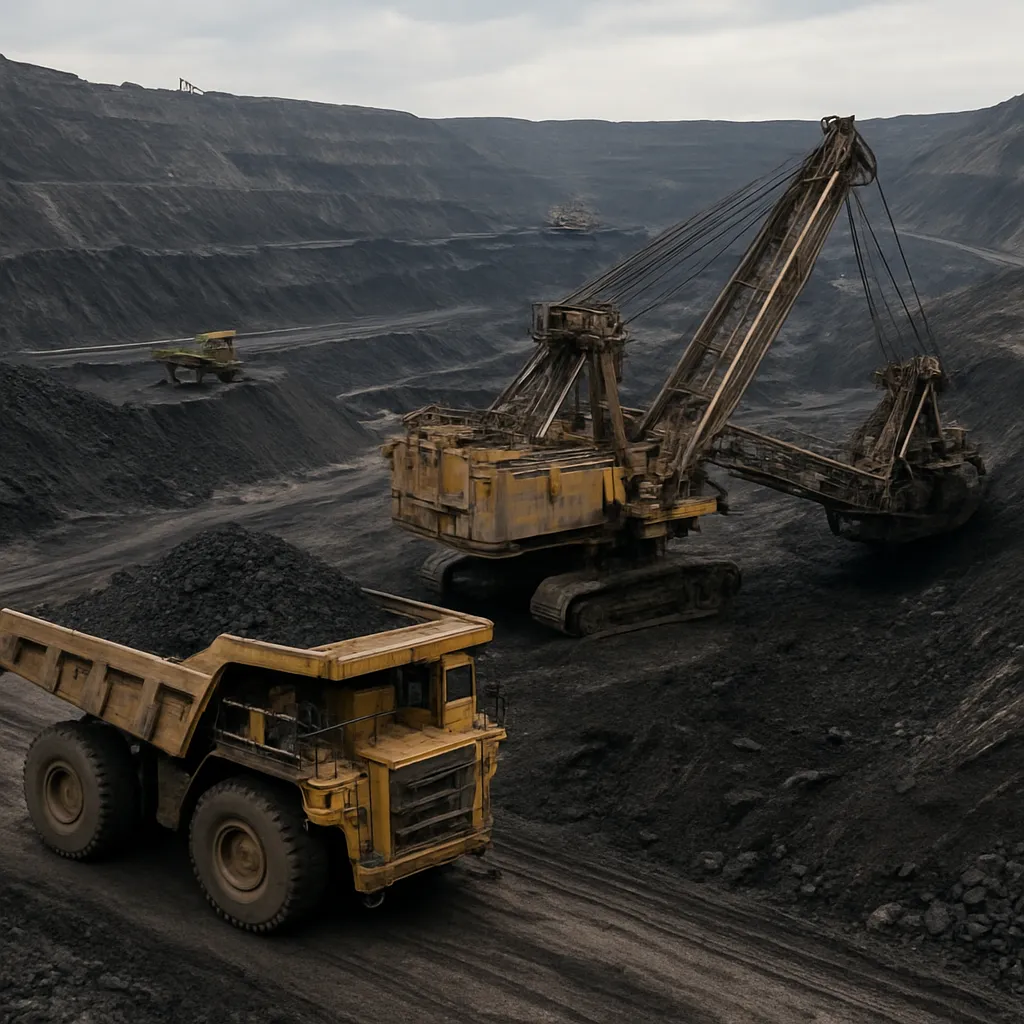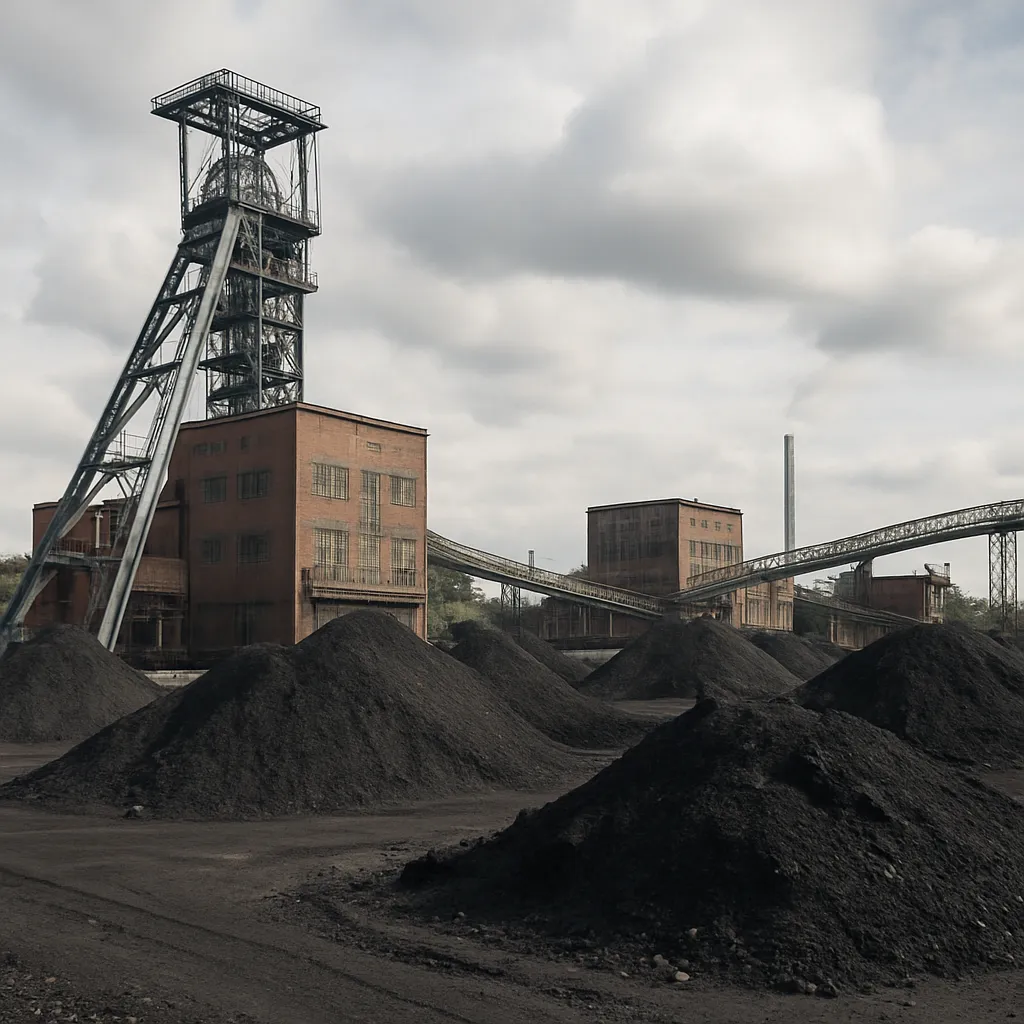
The Knurów–Szczygłowice mine is one of the notable coal operations in the Polish Upper Silesian Coal Basin. This article provides a comprehensive overview of the mine’s location, geology, operational characteristics, economic significance, environmental and social aspects, and current challenges and prospects. The aim is to present an informative synthesis useful for readers interested in mining, regional economics, and Poland’s energy and metallurgical sectors.
Location, Ownership and Historical Background
The Knurów–Szczygłowice complex is located in the Silesian Voivodeship in southern Poland, near the town of Knurów and the locality of Szczygłowice. It lies within the densely industrialized Upper Silesian Coal Basin, an area with a long tradition of hard coal mining that has been a backbone of Poland’s heavy industry and energy supply for well over a century.
Historical development
Mining activity in the Knurów and Szczygłowice areas dates back to the late 19th and early 20th centuries, when numerous shafts and collieries were established to exploit the rich coal seams of the basin. Over time, smaller shafts and operating units were consolidated, and modern underground workings were developed. The mine in its modern configuration reflects both this long historical legacy and the restructuring of the Polish mining sector in recent decades.
Ownership and administrative context
The mine has been part of broader restructuring processes typical for Polish coal industry enterprises. Ownership and corporate alignment have changed over the years as national and regional companies reorganized, merged or transferred assets. The mine serves both local energy needs and industrial consumers, particularly those in the steel and metallurgical sectors, reflecting its strategic role within regional supply chains.
Geology and Types of Coal Mined
Geologically, the Knurów–Szczygłowice workings exploit seams of Carboniferous age, typical for the Upper Silesian Coal Basin. These seams vary in thickness, depth and quality, and are characterized by different ranks of hard coal.
Coal quality and classification
- The coal extracted from the mine is primarily bituminous hard coal. Within that category, portions of the output are suitable as coking coal (used in steelmaking) while other fractions are more typical of thermal or power coal.
- The presence of higher-grade coal suitable for coking makes the mine relevant to the metallurgical industry. Coking coal is valued for its volatile matter, ash and sulfur characteristics, which affect the quality of coke produced in blast furnaces.
- Coal seams in the area commonly require deep underground extraction techniques, and seam conditions influence both productivity and the selection of mining methods.
Mining methods
Extraction at Knurów–Szczygłowice uses conventional underground mining techniques adapted to the geological conditions: longwall mining is a typical method in the region, supplemented by development headings, room-and-pillar approaches where appropriate, and modern mechanized equipment such as armored face conveyors, shearers and roof support systems. Ventilation, water management and rockburst mitigation are important engineering considerations due to depth and geomechanical stresses.
Production, Workforce and Economic Role
The mine plays a significant local economic role by providing raw material for industry and employment for the surrounding communities. Its production and workforce dynamics reflect both the technical capacities of the operation and broader market demand for different coal grades.
Production volumes and product mix
Annual extraction volumes at Knurów–Szczygłowice have varied over time according to market demand, investment cycles, and regulatory conditions. While specific yearly figures fluctuate, the mine’s output includes a mix of coking and thermal coal grades. Reported annual production estimates available in public sources and industry reports commonly place mines of this scale within a range of roughly a few million tonnes per year, but actual values depend on the year and operational constraints.
Employment and local economy
The mine is a major employer in the region, providing jobs both directly in mining operations and indirectly through supplier networks and service industries. Employment contributes to local incomes, municipal revenues, and the viability of ancillary businesses (transport, maintenance, engineering). Modernization initiatives often focus on improving productivity while managing workforce transitions through training and redeployment programs.
Supply chains and industrial linkages
Coal from Knurów–Szczygłowice supplies domestic power plants, district heating systems and industrial consumers, notably in steelmaking and metallurgy where higher-grade coking coal is required. Transport connections—rail links and road infrastructure—enable distribution to domestic and, when applicable, export markets. The mine therefore represents an important node in regional raw material logistics.
Economic and Strategic Significance
In the Polish context, coal mines like Knurów–Szczygłowice carry both economic and strategic weight. They supply critical feedstock for energy and industry, support employment, and contribute to local budgets via taxes and payments.
Contribution to industry and energy security
Coal remains a component of Poland’s energy mix and a key input for metallurgical processes. Mines producing coking coal are strategically important for the domestic steel sector because coking coal quality directly affects coke yield and furnace performance. The availability of domestic coking coal can reduce dependence on imports and support national industrial resilience.
Fiscal and regional development impact
Through wages, procurement and local taxes, the mine supports municipal development projects, public services and social infrastructure. Investment cycles in mining often have multiplier effects: capital expenditures for modernization create demand for engineering contractors, equipment suppliers and technical services.
Environmental, Safety and Social Issues
Mining operations such as Knurów–Szczygłowice face a range of environmental and social challenges, many of which are common across modern underground coal operations.
Environmental management
- Subsidence: Underground extraction can cause surface subsidence that affects buildings, transport routes and agricultural land. Monitoring and mitigation programs are essential to manage risks.
- Water: Dewatering and mine water management are necessary to maintain safe underground working conditions; discharged water must meet quality standards to protect surface waterways.
- Emissions and dust: Processing, stockpiling and transport of coal generate particulate emissions that require dust suppression and monitoring.
- Waste handling: Coal mine spoil, tailings and industrial waste must be managed to minimize long-term environmental impacts; reclamation plans aim to restore surface areas after closure.
Health and safety
Worker safety in deep coal mines is a constant priority. Hazards include methane, rockbursts, roof falls and longwall face incidents. Modern mines implement ventilation systems, methane drainage, monitoring networks and automated safety equipment. Continuous training, emergency preparedness and adherence to regulatory standards are key to reducing accident rates.
Community relations and social responsibility
The mine typically engages with local communities through social programs, sponsorships and infrastructure projects. Effective dialogue with residents, local authorities and environmental groups is important for maintaining a social license to operate. Worker retraining and diversification efforts are also part of social responsibility as the energy transition reshapes demand for coal.
Statistics, Performance Indicators and Context
Precise statistics for a given year depend on company reporting and national statistical offices. Publicly available indicators that readers often consult include annual production (tonnes), proven and probable reserves, workforce numbers, safety incidence rates and financial performance metrics.
- Production: Mines of comparable size in the Upper Silesian region typically report annual outputs ranging from under 1 million tonnes to several million tonnes. The exact figure for Knurów–Szczygłowice varies by year and operational situation.
- Reserves: Reserve estimates reflect geological surveys and can be expressed as proven and probable reserves measured in millions of tonnes. These estimates determine the mine’s lifespan under current extraction rates.
- Employment: Workforce figures for medium-to-large underground mines typically range from several hundred to several thousand employees depending on mechanization and scope of operations.
- Safety: Lost-time injury rates and accident frequencies are tracked and reported as part of occupational health monitoring; continuous improvement aims to lower these indicators over time.
Because figures change, stakeholders looking for up-to-date numerical data on Knurów–Szczygłowice should consult the mine’s or parent company’s official reports, regional statistical yearbooks, and governmental mining registries. These sources provide audited numbers for production, reserves and financial performance.
Modernization, Technology and Efficiency
To remain competitive and meet stricter environmental and safety standards, mines in the region have adopted modern technologies. Knurów–Szczygłowice has followed trends toward higher mechanization, automation and digitalization.
Mechanization and digital tools
- Continuous miners, high-capacity conveyors and longwall shearers increase recoveries and lower unit costs.
- Automation systems improve face control, allow more precise ventilation management and enhance safety monitoring.
- Digital asset management, predictive maintenance and geological modelling reduce downtime and optimize extraction sequencing.
Energy efficiency and emissions control
Energy-saving initiatives, such as more efficient electric drives, optimized ventilation and waste heat recovery at associated surface facilities (e.g., for mine heating), contribute to lowering the mine’s environmental footprint. Dust suppression, sealed conveyor systems and covered stockpiles mitigate particulate emissions during handling and transport.
Challenges, Transition and Future Prospects
The future of Knurów–Szczygłowice, as with many coal mining operations in Europe, is shaped by market trends, energy transition policies, and technical feasibility.
Market and policy pressures
Declining demand for thermal coal driven by decarbonization, EU climate policy and competition from alternative energy sources affects long-term prospects. Mines with significant coking coal production retain strategic importance for steelmaking, but the sector also faces pressures to reduce carbon intensity and explore alternative technologies for steel production.
Adaptation and diversification
- Operational improvements can lower costs and extend economic life.
- Investment in retraining and redeployment of workers helps communities adjust as extraction levels change.
- Exploration of diversification into mine-site reclamation projects, renewable energy installations on reclaimed surfaces, or use of mine water for geothermal applications are potential pathways.
Closure planning and reclamation
Responsible planning for eventual mine closure includes financial provisioning, environmental remediation, and socio-economic programs to mitigate impacts on the local economy. Successful reclamation can convert former industrial sites into recreational areas, commercial developments or nature reserves.
Interesting Facts and Local Impact
Beyond raw figures, the Knurów–Szczygłowice mine is intertwined with local identity, industrial heritage and technical expertise. It has contributed to shaping urban development patterns in the surrounding towns and remains a source of specialized mining skills that have been passed through generations. Cultural and community activities often reflect this heritage: local museums, memorials and educational programs recount the mining history and its social dimensions.
Technological pride and education
Mining colleges and vocational schools in the Silesian region draw on nearby operational mines for practical training, internships and applied research. This synergy supports continuous improvement and knowledge transfer in mining engineering, safety practices and environmental management.
Conclusion
The Knurów–Szczygłowice mine is a representative example of a modern underground coal operation in the Upper Silesian Coal Basin: geologically rich, technically complex and economically significant at the local and industrial level. It produces valuable grades of hard coal, including coal suitable for coking, and supports livelihoods and industry. At the same time, it confronts environmental, regulatory and market challenges that shape its operational choices and long-term trajectory. Monitoring production data, investment in modernization, and careful planning for environmental and social outcomes will determine how the mine adapts in a period of energy transition and shifting industrial demand.