This article provides an in-depth look at the Indominco Mandiri coal mining operations in Indonesia, covering its location, geology, the type of coal produced, mining methods, economic and statistical aspects, industry significance, and environmental and social considerations. The goal is to assemble a comprehensive profile that is useful for industry observers, students, policy makers and general readers interested in one of Indonesia’s important coal assets.
Location, Geological Setting and History
The Indominco Mandiri operation is situated on the island of Borneo, within the Indonesian province of East Kalimantan. East Kalimantan is one of Indonesia’s principal coal-bearing regions and hosts a dense concentration of coal mines and related infrastructure such as ports, power stations and heavy industry support services. The geological setting of the area is characterized by Tertiary coal-bearing sedimentary basins where thick sequences of peat-derived coal seams were deposited in fluvial and deltaic environments.
Coal seams in this part of Kalimantan typically vary in thickness, lateral continuity and depth. Mines like Indominco Mandiri exploit relatively shallow, laterally extensive seams that allow for large-scale surface operations. Over decades, the operation evolved from smaller scale extraction into a modern, mechanized mining complex, reflecting broader trends in Indonesian coal mining where international capital, evolving technology and export demand shaped rapid growth from the late 20th century onward.
Coal Characteristics, Quality and Mining Methods
Indominco Mandiri primarily produces **thermal coal**, intended for electricity generation and other heat-based industrial uses. The coals from East Kalimantan typically belong to the low- to medium-rank categories (sub-bituminous to high-volatile bituminous in some cases) with calorific values that commonly fall in a range suitable for power plants and direct shipment to international customers. Typical attributes of coals from the region include moderate to low sulfur content, variable ash content that depends on the part of the seam, and moisture that affects net calorific value.
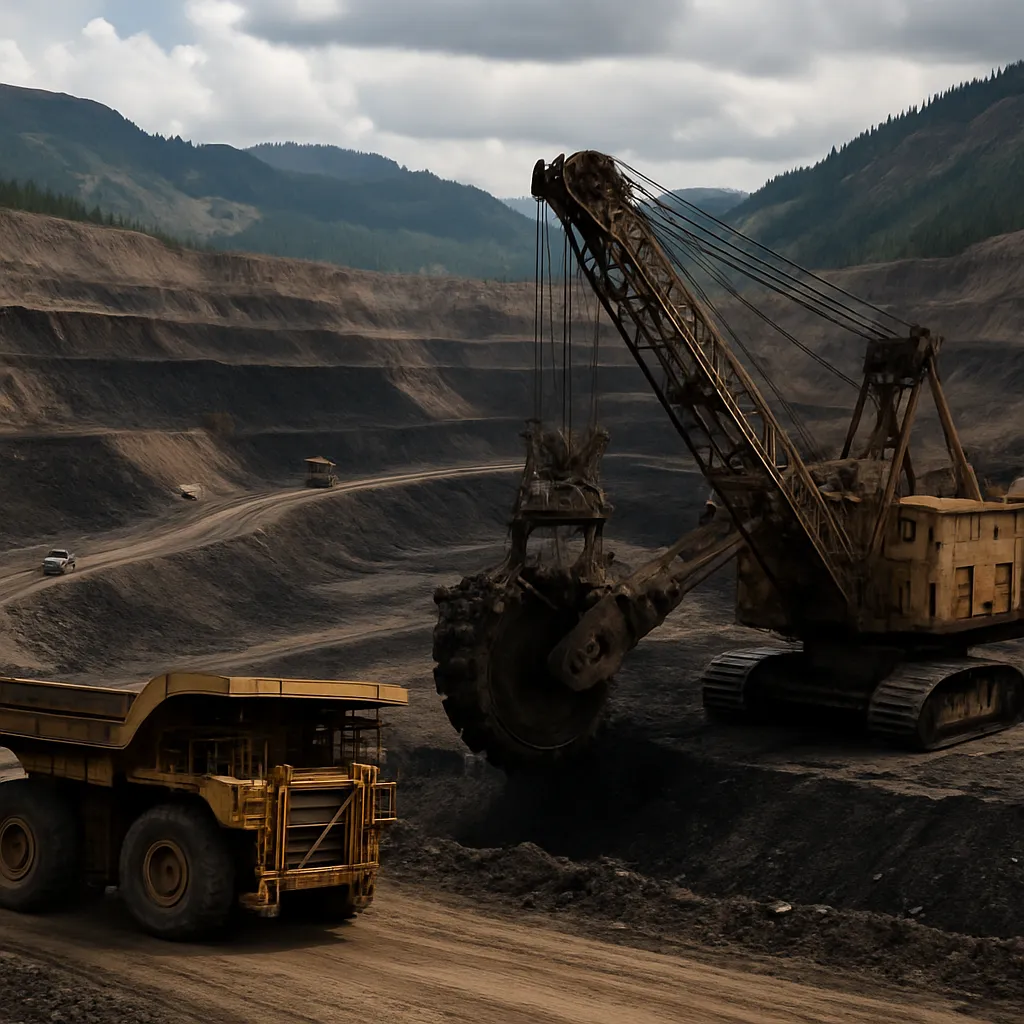
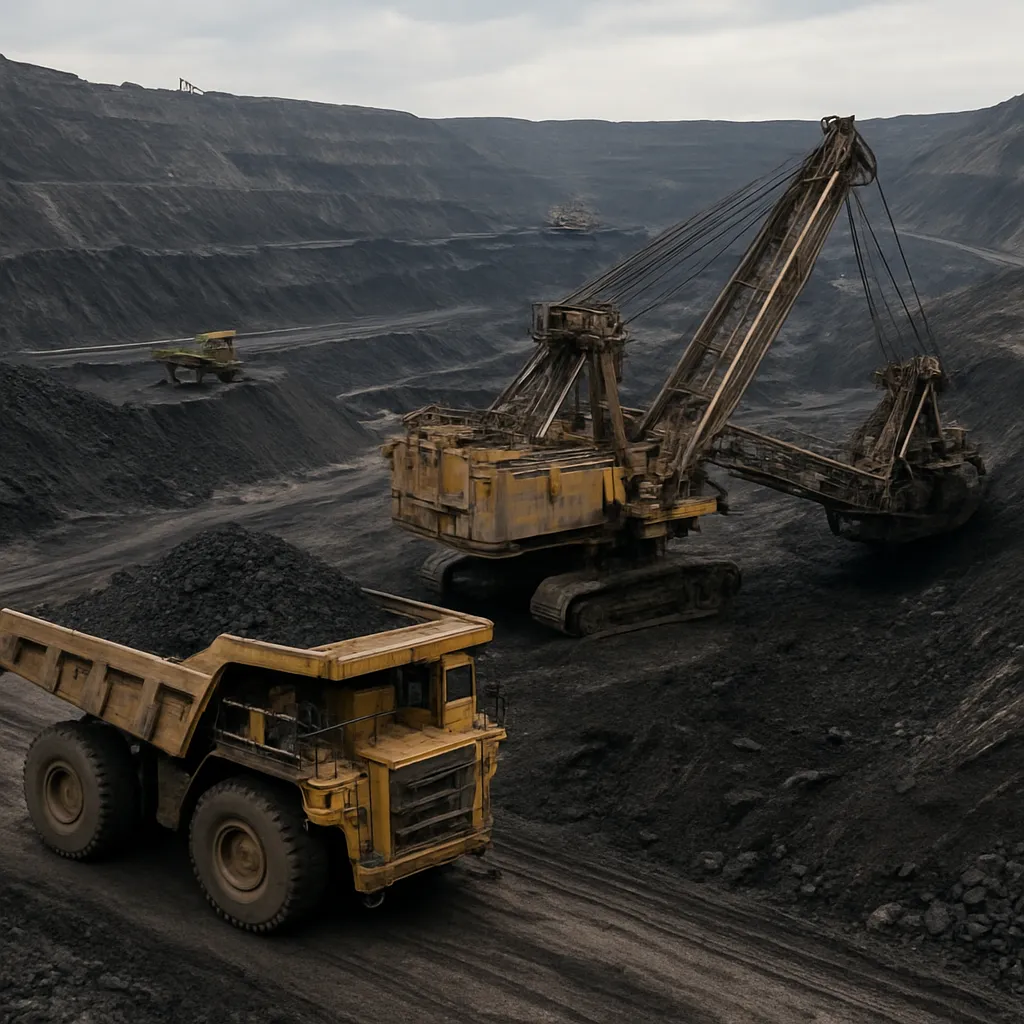
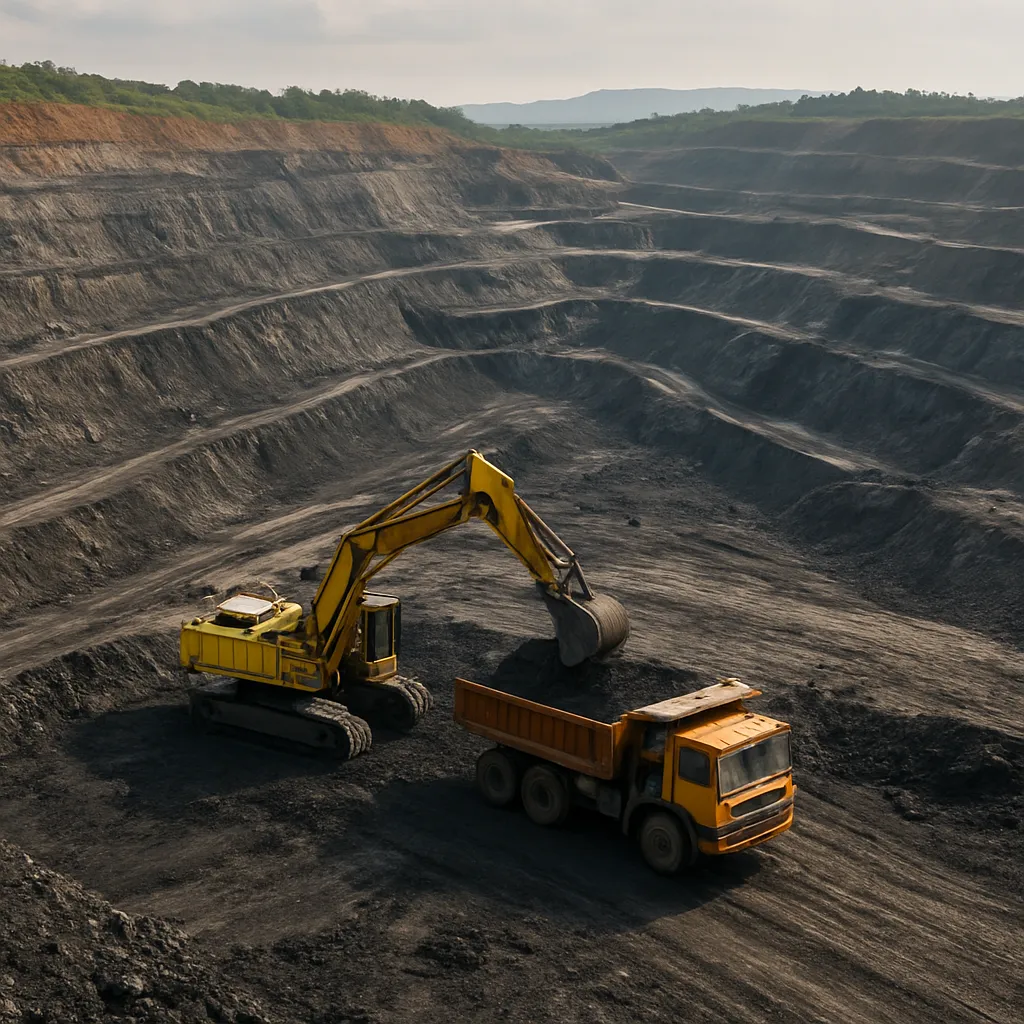
Mining is predominantly conducted using open-pit methods. Open-pit extraction is favored because of seam geometry and the shallow depth of reserves. Typical equipment found on-site includes large excavators, haul trucks, conveyor systems and drilling and blasting support where necessary. Overburden removal, progressive pit development, and staged reclamation are standard parts of operations. The mine also employs coal handling and preparation facilities to manage product sizing, screening and blending — ensuring that sales contracts are met for calorific value, ash, and other quality specifications.
Production, Reserves and Statistical Profile
Estimating production and reserves in Indonesian mining operations often draws on a combination of company reports, government statistics and independent assessments. Indominco Mandiri has historically contributed material volumes to Indonesia’s coal export pool. Annual production figures for significant operations in East Kalimantan are commonly in the order of several million tonnes per year, and larger complexes may produce tens of millions of tonnes annually. Reserves associated with long-running operations like Indominco are typically measured in the hundreds of millions of tonnes at various classification levels (proven, probable and inferred), though depletion over time and ongoing exploration adjustments affect reported numbers.
Indonesia as a whole has been one of the world’s largest thermal coal exporters, with annual export volumes over the past decade frequently exceeding 400 million tonnes in peak years. Operations in East Kalimantan, including Indominco Mandiri, are important contributors to that national export picture. Domestic consumption is also significant; Indonesia’s rapid electrification and industrial activity have driven rising domestic demand, affecting how mines allocate supply between local power plants and export contracts.
Key statistical points to consider (illustrative of the sector and applicable trends for Indominco Mandiri-type operations):
- Annual production: typically in the low- to mid-single-digit millions of tonnes for medium-sized operations, while large complexes are higher.
- Coal quality: thermal coal with calorific values generally in the 4,000–6,000 kcal/kg range (gross as-received basis), depending on seam and wash plant processing.
- Reserves: long-life mines in East Kalimantan often report reserves that support multi-decade production horizons at current mining rates.
- Employment: mining complexes employ thousands of workers directly and indirectly across operations, logistics, and service industries.
Economic Impact and Market Role
Indominco Mandiri plays a multi-faceted role economically. At a local level, mines provide direct employment, stimulate local businesses that supply goods and services, and generate royalty and tax revenues for regional governments. On a national and global level, the mine contributes to Indonesia’s stature as an exporter of thermal coal, supplying power utilities and industrial consumers in Asia and beyond. Export logistics typically involve trucking or conveyors to nearby river ports or coastal terminals, where coal is loaded into barges and vessels bound for major buyers in China, India, Japan, South Korea and Southeast Asia.
Coal revenue is a major source of foreign exchange for Indonesia. Taxes, royalties and production sharing systems underpin how the state captures value. Companies operating mines like Indominco Mandiri also generate significant company-level revenue and, if part of larger corporate groups, contribute to investor returns. Financial performance, however, is sensitive to global coal prices, shipping costs, and regulatory changes—particularly those concerning export rules and domestic market obligations.
Significance in the Energy and Industrial Landscape
Thermal coal from mines such as Indominco Mandiri supports base-load electricity generation across Southeast and East Asia. Coal-fired power stations remain a bedrock of energy systems in many importing countries, and Indonesia’s role as a low-cost coal supplier has influenced regional power economics. Additionally, coal feedstock supports industries that require steam or heat — cement, steel-making (as a reductant in certain processes), and other heavy industries.
In supply chains, the strategic value of a mine like Indominco Mandiri includes:
- Reliability of supply over long contract terms;
- Physical proximity to deep-water ports that facilitate lower shipping costs;
- Ability to blend coals to meet specific calorific and quality requirements for customers;
- Operational scale that can meet both spot-market demand and long-term contractual obligations.
Environmental Management, Social Programs and Governance
Mining operations in Indonesia face increasing scrutiny regarding environmental and social performance. Key environmental issues include deforestation and land use change, water management and potential impacts on river systems, dust and air emissions, and the handling of mining waste such as overburden and coarse rejects. Companies respond through progressive land rehabilitation, sediment and water control measures, dust suppression, and mine closure planning.
Social license to operate is critical. Operations commonly implement community development programs that focus on local employment, health services, education, infrastructure improvements and livelihood support. Many companies also invest in skills training to transition local workforces toward higher-value roles within the mining value chain or in post-mining economic activities.
Governance includes compliance with Indonesian mining law, environmental permits (AMDAL), royalties and tax obligations, and in many cases voluntary reporting via sustainability or integrated annual reports. International stakeholders increasingly look for transparency on greenhouse gas emissions (Scope 1–3), reclamation progress, and the robustness of community engagement.
Challenges, Risks and Ongoing Developments
Several challenges shape the operating environment for mines like Indominco Mandiri:
- Market volatility: thermal coal prices are cyclical, making revenue and investment planning complex.
- Regulatory change: adjustments to export rules, royalties, domestic market obligations and environmental standards can materially impact operations and profitability.
- Infrastructure constraints: port capacity, road networks and power availability are critical to efficient operation and can become bottlenecks.
- Environmental scrutiny and transition risk: as global energy systems shift toward lower-carbon sources, coal producers face demand risk, potential stranded assets and pressure to decarbonize operations.
To manage these risks, mines increase operational efficiency, pursue cost reductions, diversify product offerings (e.g., higher-value washed coal), invest in environmental improvements, and engage in stakeholder consultations to anticipate and adapt to policy changes.
Rehabilitation, Closure Planning and Post-Mining Uses
Modern mining practice places emphasis on the entire life cycle of a mine — from exploration through to closure and post-mining land use. Rehabilitation involves reshaping landforms, restoring topsoil, replanting native vegetation where feasible, and creating landforms that can support agriculture, forestry or conservation functions post-mining. Closure plans are typically required by regulators and include financial assurance mechanisms to ensure funds are available for reclamation.
Post-mining land uses in Kalimantan have included aquaculture ponds, agricultural land, community facilities, and nature conservation areas. Effective planning requires early engagement with communities and regulators so that closure outcomes align with local development aspirations.
Future Outlook and Strategic Considerations
The near- to medium-term outlook for operations like Indominco Mandiri depends on demand in Asia, the trajectory of coal prices, and national policy in Indonesia. While many importing countries are decarbonizing power sectors over decades, coal will continue to play a role in energy security and industrial processes for the foreseeable future in parts of Asia. Indonesia’s own domestic energy policy — including how it manages coal in the energy transition, supports renewables, and regulates emissions — will shape production and export patterns.
Strategic considerations for the mine include strengthening operational resilience, improving energy efficiency and emissions performance, diversifying product streams, and deepening community partnerships to secure a robust social license to operate. Investments in digitalization, autonomous equipment, and predictive maintenance can also improve productivity and safety while lowering operational costs.
Interesting and Notable Aspects
Several broader observations make mines like Indominco Mandiri noteworthy:
- They are part of an ecosystem that links remote resource regions with global energy markets — from pit to port to power plant.
- Technological evolution continues to transform mining productivity and safety through automation and data-driven management.
- Social and environmental expectations are elevating the importance of transparent reporting and meaningful local development programs.
- Their continuing economic significance contrasts with long-term global decarbonization trends, creating a complex strategic context for operators and governments alike.
Summary
Indominco Mandiri represents a significant example of Indonesia’s coal industry presence in East Kalimantan. Producing primarily thermal coal via large-scale open-pit techniques, the operation contributes to local employment, regional economies and Indonesia’s export earnings. While precise numbers for reserves and annual production vary by report and over time, such mines have historically been capable of producing multiple millions of tonnes annually and holding long-life reserves. The site’s economic role is balanced by complex environmental and social responsibilities: water and land management, rehabilitation, community development and governance. Going forward, market dynamics, regulatory choices and the global energy transition will shape how operations like Indominco Mandiri adapt to a changing world.
Overall, the operation’s importance lies in its contribution to energy supply chains, its local and national economic impact, and the example it sets for balancing resource development with environmental and social stewardship. For stakeholders, the key metrics to watch are production rates, product quality, rehabilitation progress, and evolving policy and market signals that will determine the future role of Indonesian coal in regional and global energy systems.