The discovery and exploitation of coal reserves in Britain fueled a transformation that resonated through industry, finance, and society. From powering the steam engine to shaping global trade routes, this unassuming mineral became the bedrock of the industrial revolution. Its influence extended beyond mines and factories, giving birth to new financial instruments, stock markets, and corporate structures that underpinned the economy of the British Empire.
Economic Foundations of Coal Power
Coal’s ascendancy began as simple demand outgrew the capabilities of water and wind. As early as the 17th century, entrepreneurs recognized the potential of deep-mined Britain coal to sustain burgeoning industries. With energy density far surpassing wood and charcoal, coal catalyzed rapid expansion in sectors such as ironworks, textiles, and transportation.
By the mid-18th century, the capital required to open new pits and build rail lines called for collective investment. This gave rise to corporate entities and early forms of public share issuance. Investors purchased stakes in mining concerns, sharing risks and profits in a system that anticipated modern stock exchanges.
Key Drivers Behind Coal’s Economic Rise
- Steady improvements in mining technology
- Expanding urbanization and demand for heat
- Development of the steam engine by innovators like James Watt
- Integration with iron smelting and heavy industry
- Emergence of a professional banking sector ready to finance large-scale projects
Together, these factors created a self-reinforcing cycle: deeper shafts yielded richer seams, higher output reduced costs, and cheaper coal fueled a wider array of industrial processes. As infrastructure grew, so did Britain’s military and merchant fleet, projecting imperial power across the globe.
Evolution of Coal Stock and Financial Instruments
When coal mines multiplied, so did the need for capital. The traditional patronage and private financing models gave way to joint-stock companies, whose shares were bought and sold in early markets. Shareholders ranged from aristocrats to middle-class speculators, each seeking returns from upward-trending coal prices.
By the 19th century, the London Stock Exchange counted dozens of coal-related listings. Investors tracked metrics such as daily tonnage, pit safety records, and export volumes. Dividends were paid proportionally to shareholding, incentivizing mine-owners to increase efficiency.
Innovations in Coal Financialization
- Introduction of standardized share certificates for coal collieries
- Use of futures contracts to hedge against price volatility
- Emergence of mining trusts and conglomerates consolidating smaller pits
- Development of corporate governance practices to protect minority investors
- Publication of annual reports detailing reserves, production costs, and profit margins
These mechanisms laid the groundwork for modern commodity trading. As markets matured, speculative booms and busts followed coal stocks, teaching lessons about leverage, transparency, and risk management that endure in today’s exchanges.
Technological Advances Driven by Coal
Coal’s abundant energy prompted continual innovation. From pumping water out of flooded shafts to powering locomotive engines, each challenge inspired new solutions:
- High-pressure boilers and condensers refined by James Watt
- The Davy lamp and other mine safety devices to reduce explosion risks
- Strong iron rails supporting heavier trains and larger loads
- Mechanized cutting, haulage systems, and ventilation networks
These breakthroughs were often funded by public stock offerings or reinvestment of profits. Engineering schools and technical societies spread best practices, while inventors secured patents that further monetized coal-driven machinery.
Simultaneously, engineers built the backbone of the empire: railways stretching from London to Scotland, canals linking industrial centers, and steamships plying colonial routes. Coal bunkers became as strategic as naval ports, ensuring Britain’s reach remained unrivaled.
Social and Environmental Legacy
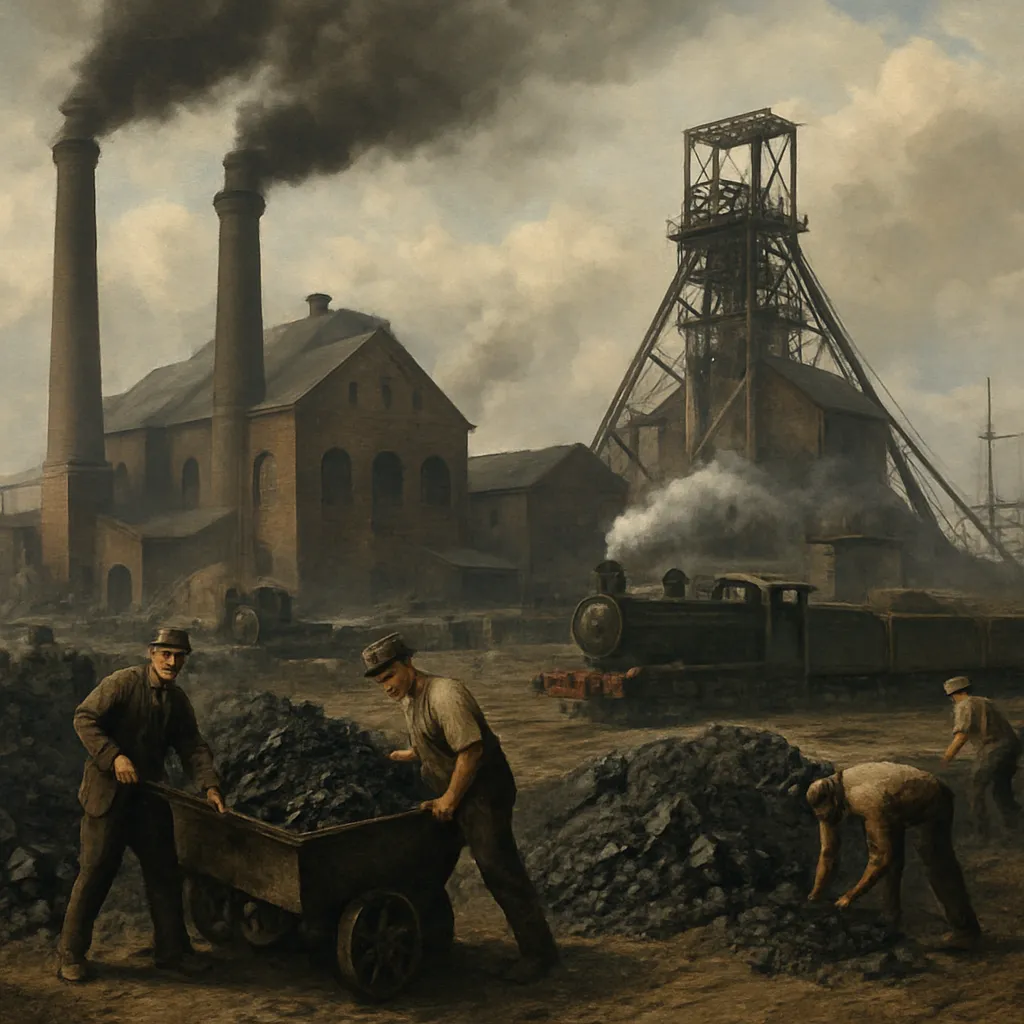
The mines and factories powered by coal altered the demographic and ecological landscape. Entire towns emerged around colleries, their residents reliant on mining wages and company provisions. While some families prospered, others faced dangerous working conditions and chronic health hazards.
Urbanization and Labor Movements
- Rapid growth of industrial cities like Manchester and Newcastle
- Formation of trade unions demanding safer practices and fair wages
- Legislative reforms such as the Coal Mines Act regulating working hours
- Rise of political movements advocating for workers’ representation
On the environmental front, widespread use of coal led to soaring emissions and air pollution. London’s infamous pea-souper fogs often resulted from coal smoke trapped in the urban canyons. Landscapes scarred by slag heaps and deforested valleys evidenced the heavy toll of extraction.
Nevertheless, the legacy of coal persists. Many of the techniques and infrastructures developed during Britain’s coal era form the basis of modern industry and finance. The experience taught powerful lessons in resource management, corporate structure, and the interplay between technology and capital.