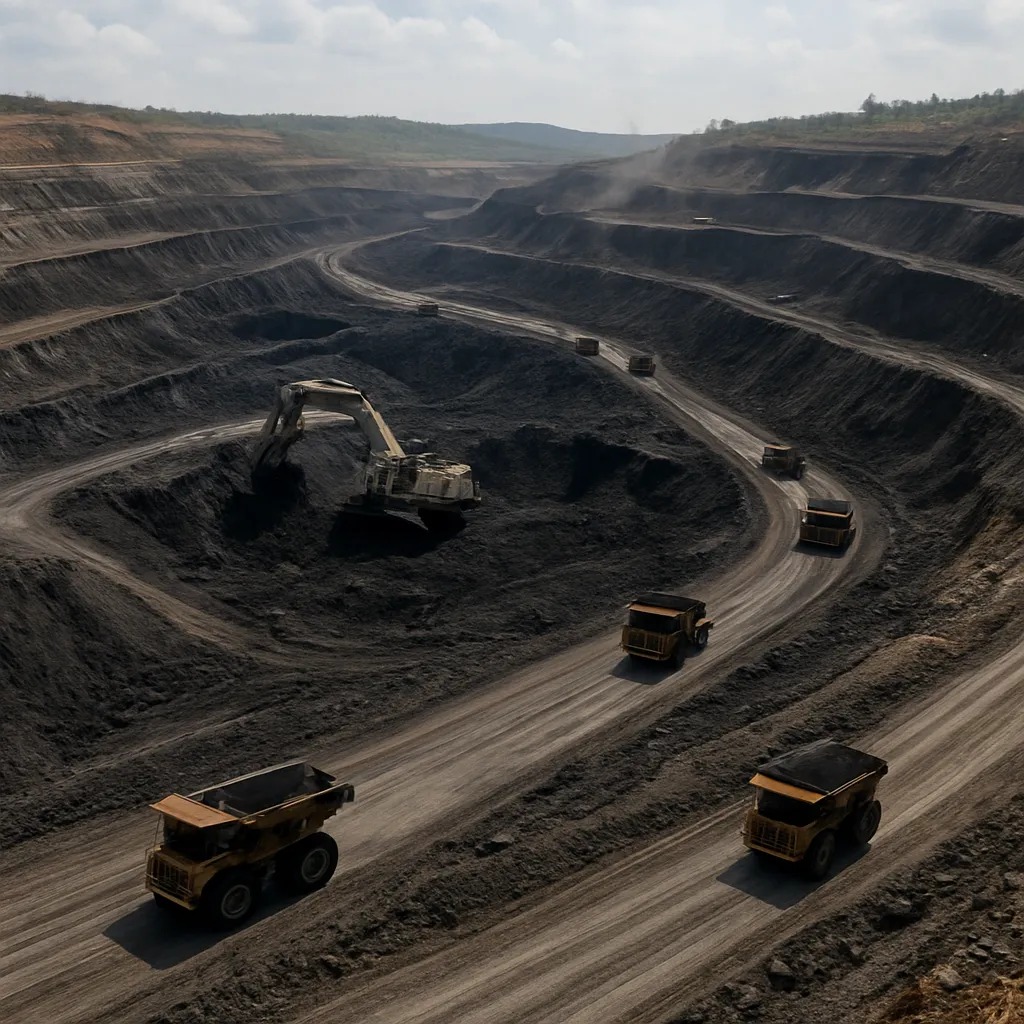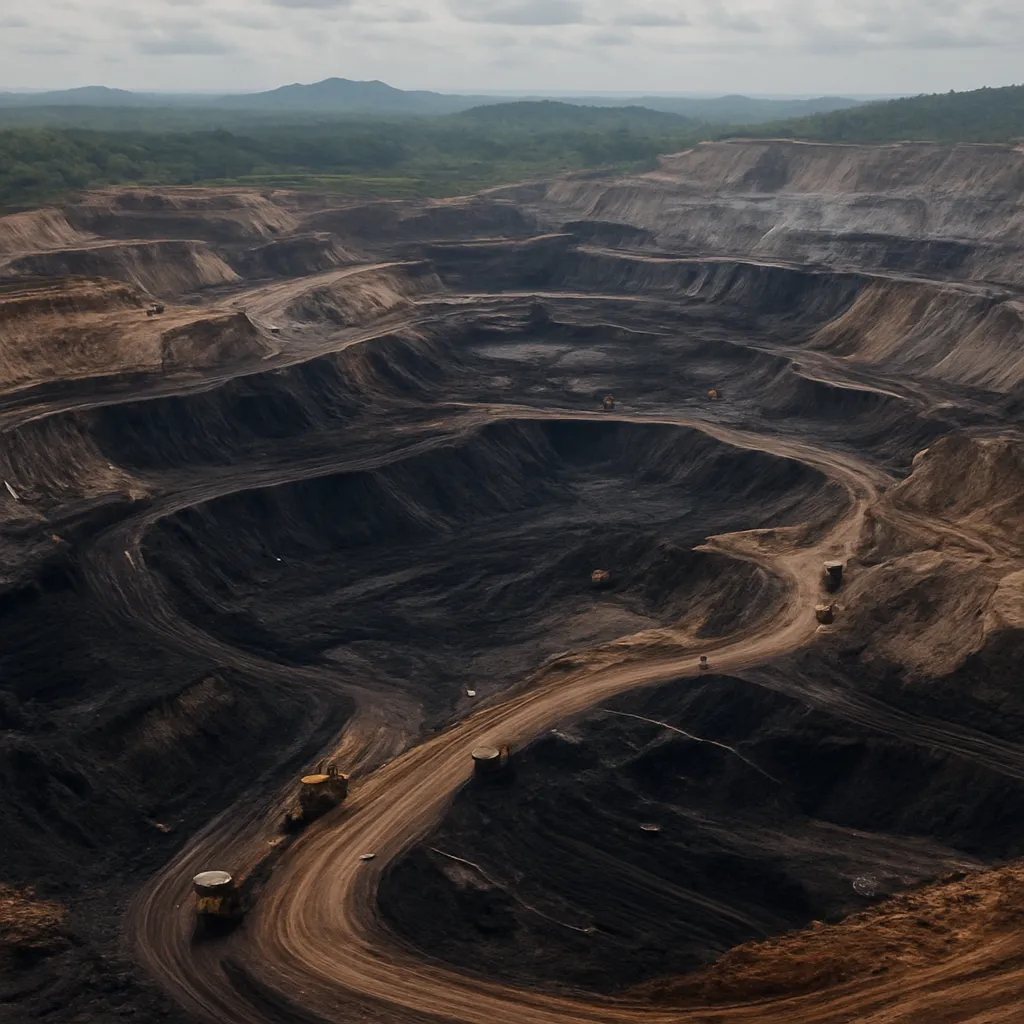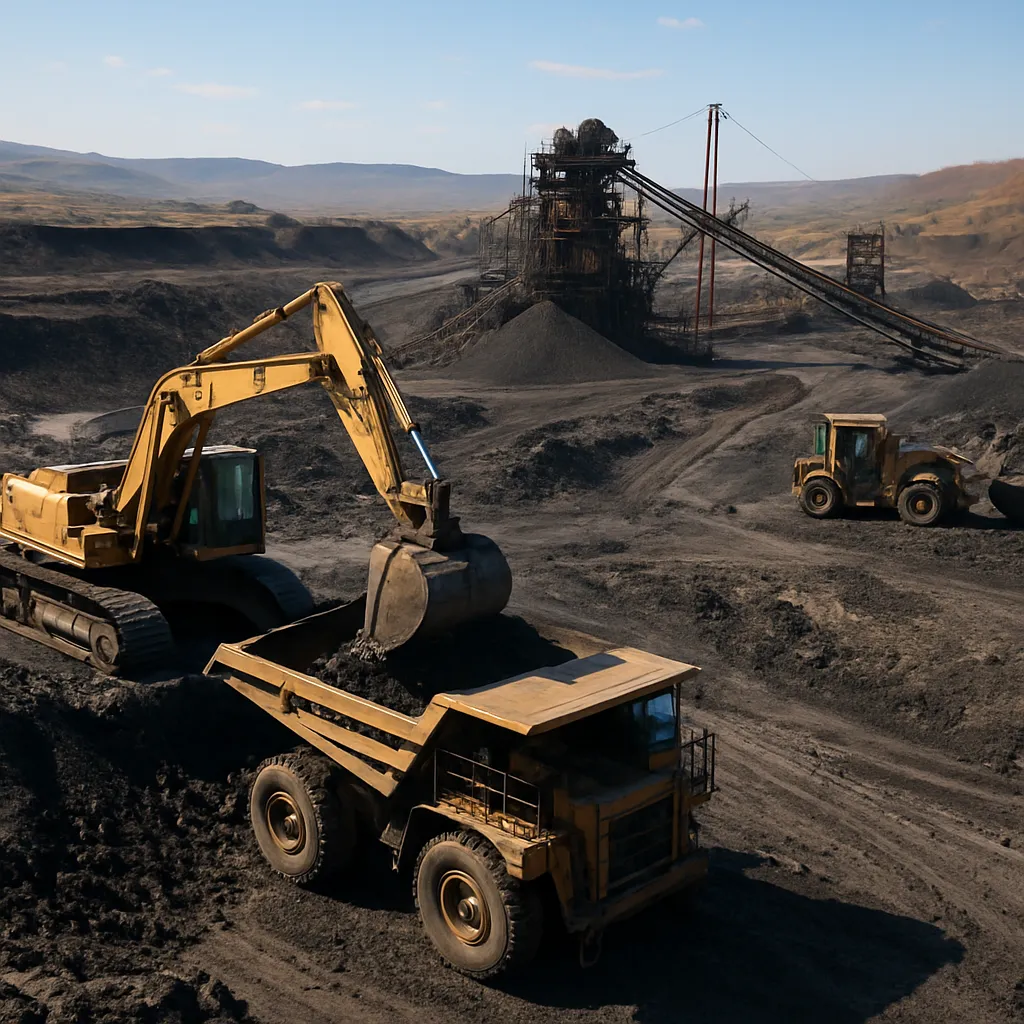
The following article provides a comprehensive overview of the Glisa Coal Mine in South Africa and situates it within the broader context of the country’s coal sector. Publicly available mine-specific documentation for Glisa is limited; where precise data for the mine are not accessible, regional and industry-wide information is provided to offer a realistic picture of geology, production, economic role, logistics, and environmental considerations. The text combines likely mine characteristics with verified general patterns from South African coal mining to give a coherent, practical account.
Location and geological setting
The Glisa Coal Mine is located in South Africa, a country whose coalfields are mostly concentrated in the northeastern part of the country. The major coal-producing provinces are Mpumalanga, Limpopo, and the Free State. Coal in South Africa originates largely from the Permian-aged deposits of the Karoo Supergroup (Ecca and Beaufort groups), where extensive coal seams formed in ancient swamps and deltaic environments. Although specific geographic coordinates and basin identification for Glisa are not readily available in public sources, most operational coal sites in the country are sited in or near the Mpumalanga Highveld, the Waterberg, and the Witbank basins—areas known for reliable seam continuity and relatively shallow cover.
Typical geological features of South African coalfields that likely apply to Glisa include:
- Multiple, relatively thick coal seams (from less than a meter to several meters thick) interbedded with mudstones and sandstones.
- Coal rank generally ranging from sub-bituminous to high-volatile bituminous; some areas produce higher-grade metallurgical coal.
- Discontinuous lateral variation in seam thickness and quality, requiring detailed drilling and resource modeling for any commercial mine.
Coal type, reserves and mining methods
Coal mined in South Africa serves both domestic energy markets and export customers. The primary practical categories are thermal coal (used for electricity generation and industrial heat) and metallurgical coal (coking coal used in steelmaking). While exact coal quality for Glisa is not publicly documented, most collieries in the historically active basins produce thermal coal of medium calorific value and moderate to high ash content. If Glisa is sited in a central Highveld basin, the coal is likely to have:
- Calorific values in a typical range for South African thermal coal (roughly 4,000–6,500 kcal/kg on an as-received basis).
- Moderate sulfur content (generally lower than many international coals, but variable) and variable ash content (commonly 15–30% for raw run-of-mine material).
- Usable seams that favor either open-pit (opencast) or underground methods depending on overburden depth and seam geometry.
Common mining techniques used in the region:
- Open-pit mining—favored where seams are near surface and allows high productivity and lower unit costs for large tonnages.
- Underground mining (bord-and-pillar or longwall)—applied where seams are deeper or to reduce surface footprint; used by some legacy operations.
- Blend and beneficiation—many operations include screening, crushing, and washing to produce saleable coal products that meet domestic power station or export terminal specifications.
Reserve reporting for individual mines follows codes such as SAMREC; however, official, downloadable reserve and resource figures for Glisa are limited in public records. In many South African coal operations, proven and probable reserves range from a few million tonnes in smaller mines to hundreds of millions of tonnes in large complexes. The precise reserve base of Glisa would determine mine life, capital investment profile, and long-term economic prospects.
Production, markets and logistics
Even when a mine-specific production figure is not publicly declared, the pattern of coal flows in South Africa provides insight into how Glisa’s production would likely be marketed and moved. Key aspects include:
- Domestic market: A substantial share of South African coal production is consumed domestically, primarily by Eskom (the national power utility) for electricity generation and by large industrial consumers such as Sasol for coal-to-liquids and chemicals. Mines near industrial centers typically allocate a portion of product to domestic contracts under long-term supply agreements.
- Export market: South African export coal flows mainly through the Richards Bay Coal Terminal (RBCT) and, to a lesser extent, other ports such as Maputo. Major export destinations include India, China, South Korea, and other Asian and European markets. If Glisa produces export-grade thermal coal, it would likely be railed to a port terminal for shipment overseas.
- Transport infrastructure: Transnet Freight Rail and private rail linkages provide the main coal corridors from production areas to ports and inland consumers. Road haulage is used for shorter distances or where rail capacity is constrained.
Typical product streams of a mine similar to Glisa:
- Run-of-mine (ROM) coal shipped to local power stations (less processed).
- Washed, sized thermal coal for export markets (higher price, blended quality).
- Higher-grade coking coal fractions (if present) sold to metallurgical markets at premiums.
Economic and regional significance
Coal remains a cornerstone of South Africa’s energy and industrial systems. Although mine-level economic statistics for Glisa aren’t publicly available, the broader economic role of coal in the region helps illustrate likely impacts:
- Employment: Coal mining directly supports thousands to tens of thousands of jobs across the country when including ancillary services and contractors. A typical medium-sized mine contributes several hundred to a few thousand direct jobs, plus indirect employment in supply and logistics sectors.
- Local economies: Mines often form vital parts of local economies—providing wages, stimulating small business activity, and supporting municipal revenues through taxes and royalties.
- Government revenue: Mining royalties and taxes contribute material revenue streams for national and provincial governments. Royalties from coal sales and corporate taxes on mining companies support public budgets.
- Industry supply chains: Coal supply underpins electricity generation, industrial feedstocks, and export earnings—sectors critical to national GDP and trade balances.
On a national scale, coal historically supplied the majority of South Africa’s primary energy and the lion’s share of electricity generation; the sector has also been a major export earner. While the global energy transition is reshaping demand, coal’s near-term importance in South Africa remains substantial due to the country’s reliance on coal-fired power plants and coal-based chemical industries.
Environmental, social and regulatory context
Coal mining in South Africa faces significant environmental and social challenges. These are relevant to any operational site, including Glisa:
- Water use and quality: Coal mining consumes water for processing and dust suppression. Acid mine drainage (AMD) from reactive spoil and exposed pyritic materials can lead to long-term water contamination if not managed. Mines must comply with water-use licensing and wastewater discharge standards.
- Air quality and dust: Dust and emissions from blasting, hauling, and coal handling affect local air quality and human health. Continuous dust suppression, covered conveyors, and stack management are common mitigation measures.
- Land disturbance and rehabilitation: Opencast mining creates large surface disturbances. South African environmental law requires progressive rehabilitation and final closure plans. Successful rehabilitation programs aim to restore land for agriculture, conservation, or controlled post-mining uses.
- Community impacts: Mining projects can alter local livelihoods, cause resettlement pressures, and shift economic structures. Effective community engagement, benefit-sharing, and local employment policies are central to social license to operate.
- Greenhouse gas emissions and methane: Coal production and combustion are significant sources of CO2 and methane. Mines are increasingly assessing methane capture for safety and greenhouse gas mitigation, and some operators are investigating carbon-offset and carbon-capture opportunities.
South African regulators and industry stakeholders have strengthened requirements for environmental management, social programs, and closure financial provisioning. Companies operating a mine like Glisa would be expected to maintain monitoring programs and invest in long-term remediation to meet permit conditions.
Statistical context and industry indicators
When mine-specific statistics are unavailable, national and provincial figures provide useful context. Key industry indicators for South Africa (approximate trends and ranges based on recent multi-year data) include:
- National production: South Africa’s annual coal production in the early 2020s fluctuated in the range of roughly 200–270 million tonnes per year, reflecting changes in domestic demand, export markets, and operational disruptions.
- Export volumes: Export throughput via major terminals has historically been on the order of several tens of millions of tonnes annually (with Richards Bay Coal Terminal having an upper capacity near 90 million tonnes per annum, though actual shipments are often lower).
- Employment: The coal sector employs tens of thousands of people directly and supports broader employment indirectly across transportation, beneficiation, and services.
- Electricity dependence: Coal-fired plants generate the majority of South Africa’s electricity—commonly cited estimates put coal’s share of power generation above 70% in recent years—making coal security a strategic concern.
Note that these numbers are national aggregates and will vary year to year. For Glisa, production and reserve figures would be disclosed through mine reports or company filings if the operation is privately or publicly reported. In the absence of such disclosure, conservative planning and environmental compliance are typical requirements established by authorities.
Industry significance and strategic roles
A mine such as Glisa has several strategic roles within the national and regional economy:
- Energy security: By supplying coal to domestic power plants, mines contribute to grid stability and energy availability, especially important in a country with limited alternative baseload generation capacity.
- Export earnings: Exporting coal improves foreign-exchange inflows, supports port and logistics sectors, and integrates domestic mining operations into global commodity markets.
- Industrial feedstocks: Mines supplying cokable or specific thermal coal grades support steelmaking, petrochemical feedstocks, and coal-to-liquids operations—industries that provide higher-value outputs beyond raw tonnages.
Strategic planning for coal mines now increasingly includes considerations of how to adapt to long-term declines in thermal coal demand in some export markets, while seeking opportunities in higher-grade metallurgical coal, local beneficiation, or alternative uses such as coal-to-chemicals and carbon capture initiatives.
Challenges and opportunities for the future
The future of a coal operation in South Africa, including Glisa, will be shaped by several converging trends:
- Energy transition pressures: International climate policies and shifting investor preferences are reducing appetite for thermal coal in some markets. Mines and financiers are responding by improving environmental performance, increasing transparency, and exploring diversification.
- Local demand dynamics: South Africa’s electricity system faces generation constraints and rolling outages. This can sustain domestic coal demand, but long-term energy policy and the pace of renewable deployment will determine future coal consumption.
- Value addition: Opportunities exist for moving up the value chain—washing and beneficiation to increase calorific value and reduce ash, producing separated coking coal fractions, or developing coal gasification/chemicals projects where economically feasible.
- Technological improvements: Automation, improved safety systems, methane capture, and remote monitoring can reduce costs and environmental footprints while increasing productivity.
- Rehabilitation and community legacy: Proactive investment in mine closure, post-mining land use, and community development can improve social outcomes and reduce long-term liabilities.
Practical notes and data transparency
For readers seeking specific numeric details about Glisa Coal Mine—such as annual production, reserve tonnage, exact coal quality parameters, employee numbers, or ownership—these are best obtained from:
- Company annual reports or investor presentations if the mine is operated by a publicly reporting company.
- Permitting and environmental impact assessment (EIA) documents lodged with South African regulatory authorities for the relevant province.
- Mineral resource reporting systems and databases that conform to the South African Code for the Reporting of Exploration Results, Mineral Resources and Mineral Reserves (SAMREC).
Absent publicly released mine-level reports, any numerical figures presented in media or analyst summaries should be treated as estimates. National agencies, industry associations, and port terminals publish aggregate statistics that provide reliable context for understanding where an individual mine fits into the larger picture.
Key takeaways
The Glisa Coal Mine, situated within the broader framework of South African coal mining, contributes to a sector that is central to national energy security, regional employment, and export earnings. While mine-specific public data are limited, the typical attributes of South African coal operations—geological setting within the Karoo-derived basins, a mix of thermal and potential metallurgical outputs, reliance on rail-to-port logistics, and significant environmental and social responsibilities—are instructive for understanding Glisa’s likely profile.
South Africa’s coal industry faces a transitional period in which economic and policy forces will shape future production profiles. Operators like Glisa will likely focus on:
- maintaining reliable coal supplies to domestic customers,
- maximizing product quality and capture of higher-value streams,
- investing in environmental mitigation and rehabilitation, and
- exploring diversification or value-add opportunities to remain resilient in shifting markets.
Overall, coal remains an important resource for the country’s present energy and industrial systems, even as the sector adapts to evolving global and domestic pressures. The specific trajectory for Glisa will depend on its reserve base, product quality, ownership strategy, and the company’s ability to navigate regulatory, environmental, and market changes while delivering economic benefits to host communities.