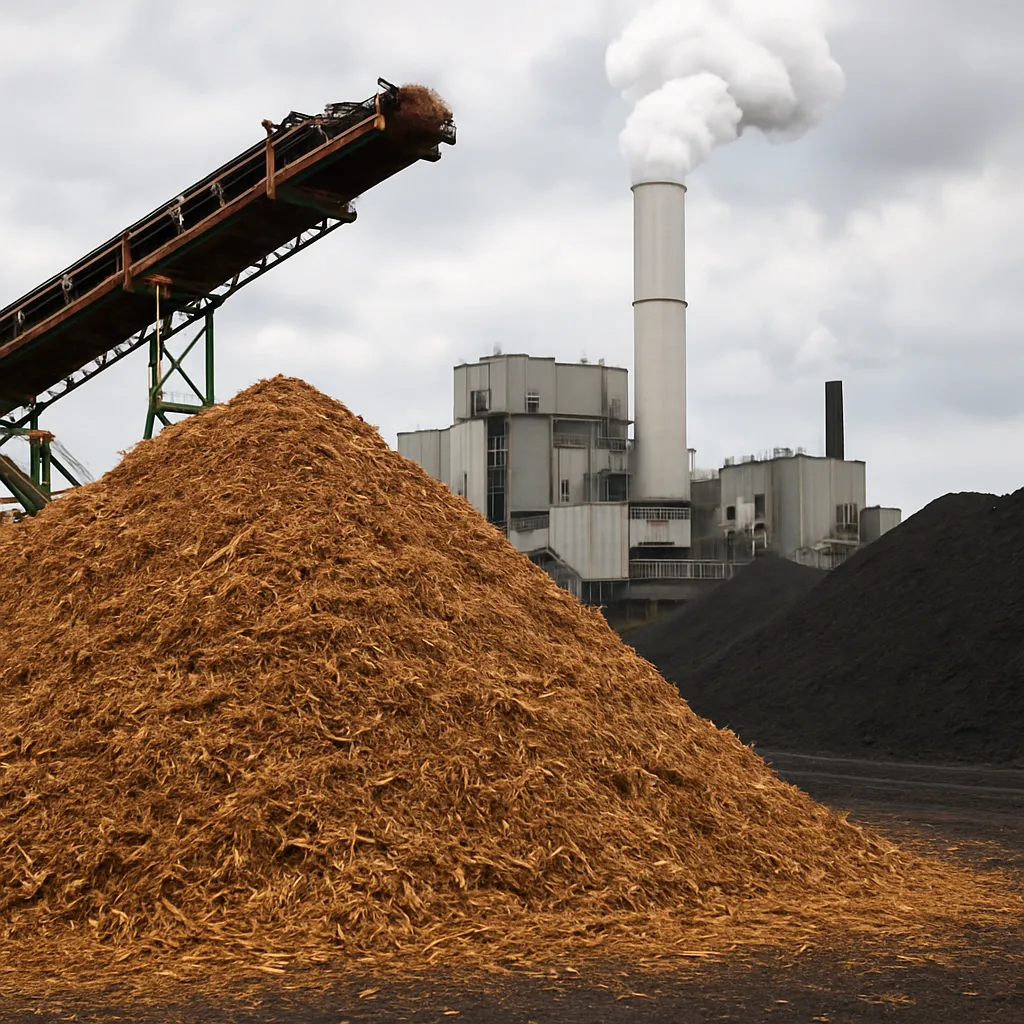
Coal has been a cornerstone of the global energy landscape for centuries, fueling industrial revolutions, powering electricity grids, and driving economic growth. Despite rising concerns over carbon footprints, coal remains abundant and versatile, with vast reserves distributed across continents. Understanding its composition, extraction methods, market dynamics, and emerging cleaner applications—such as biomass co-firing—can illuminate pathways toward more sustainable use. This article delves into the fundamental aspects of coal, explores the state of global stocks, examines technological innovations, and assesses the potential of combining coal with renewable feedstocks to reduce emissions and improve overall efficiency.
Coal: Composition and Classification
Fundamental Characteristics
Coal is a sedimentary rock primarily composed of carbon, hydrogen, and oxygen, along with variable amounts of nitrogen, sulfur, and mineral matter. Its calorific value and applicable uses depend on rank, moisture content, and ash composition. Geologists classify coal into four major types:
- Lignite: Also known as brown coal, lignite has the lowest carbon content and highest moisture, making it suitable for power generation near mining sites.
- Sub-bituminous Coal: With higher carbon and lower moisture than lignite, it offers moderate heating value and is often used in electricity production.
- Bituminous Coal: This mid-rank coal features greater carbon content and calorific value, finding use in both power plants and metallurgical processes.
- Anthracite: As the highest-rank coal, anthracite boasts the greatest energy density, low impurities, and minimal smoke, though it is less abundant globally.
Chemical Traits and Energy Content
The heating value of coal, often expressed in British Thermal Units (BTU) or megajoules per kilogram, is directly tied to fixed carbon content. Higher-rank coals like bituminous and anthracite deliver up to 30 MJ/kg, whereas lignite may yield less than 20 MJ/kg. Sulfur levels can range from under 1% to over 4%, impacting emissions of sulfur dioxide during combustion. Advanced cleaning processes and desulfurization units mitigate these pollutants, but the core challenge remains balancing environmental concerns with energy requirements.
Global Coal Stocks and Reserves
Distribution of Reserves
Worldwide, proven reserves of coal exceed 1 trillion tonnes, with the largest deposits found in the United States, Russia, China, India, and Australia. Despite a gradual shift toward renewables, coal continues to supply roughly 35% of global electricity. Key statistics include:
- United States: Approximately 250 billion tonnes of recoverable coal, primarily in the Powder River Basin.
- Russia: Holds an estimated 150 billion tonnes, with significant reserves in Siberian basins.
- China: Despite major renewable investments, over 140 billion tonnes remain exploitable, fueling rapid industrialization.
- Australia: Known for high-quality black coal, reserves exceed 80 billion tonnes, largely exported to Asia-Pacific markets.
- India: Around 110 billion tonnes, supporting a nation with surging electricity demand and planned thermal power expansions.
Economic Significance
Coal’s affordability and accessibility underpin its critical role in developing economies. It provides stable baseload power and bolsters employment across mining regions. However, price volatility driven by policy changes, export controls, and environmental regulations can disrupt markets. Long-term contracts, strategic stockpiles, and diversified import sources help utilities manage supply risks.
Technologies in Coal Extraction and Processing
Mining Methods
Coal extraction techniques fall into two broad categories: surface mining and underground mining. Surface methods, including strip mining and open-pit operations, account for over 70% of global output. Underground mining, such as room-and-pillar and longwall systems, accesses deeper seams but entails higher operational costs and safety challenges.
- Strip Mining: Efficient for shallow deposits but can cause significant land disturbance and habitat loss.
- Open-Pit Mining: Involves removal of overburden to expose large seams; requires reclamation efforts post-extraction.
- Longwall Mining: Utilizes mechanized shearers and hydraulic supports, offering high productivity but complex ventilation requirements.
- Room-and-Pillar: Balances safety and extraction rates by leaving pillars of coal to support the roof.
Processing and Beneficiation
Once extracted, raw coal undergoes preparation steps to remove impurities and enhance efficiency. These include crushing, screening, density separation, and dewatering. Advanced beneficiation methods, such as froth flotation and selective agglomeration, can reduce sulfur and ash content, improving boiler performance and lowering pollutant output.
Biomass Co-Firing and Environmental Implications
Principles of Co-Firing
Biomass co-firing involves substituting a fraction of coal with organic materials—such as wood pellets, agricultural residues, or energy crops—in existing coal-fired boilers. Typical substitution rates range from 5% to 20% by energy content. Benefits include reduced net carbon intensity, minimal infrastructure modifications, and compatibility with varied feedstocks.
Operational Strategies
- Direct Co-Firing: Blends coal and biomass at the fuel yard or pulverizer, offering simplicity but potential slagging issues.
- Indirect Co-Firing: Processes biomass into gas or liquid intermediates before combustion, enhancing fuel flexibility.
- Parallel Co-Firing: Burns biomass in a separate furnace, sharing steam and flue gas treatment systems, allowing independent optimization.
Environmental Outcomes
Co-firing can achieve up to 20% reduction in net emissions of CO₂, depending on biomass lifecycle assessments. Additionally, it lowers sulfur dioxide and nitrogen oxide emissions, given the typically lower sulfur and nitrogen content in biomass. However, proper biomass sourcing is crucial to ensure true carbon neutrality and avoid negative impacts on land use and biodiversity.
Market Dynamics and Policy Frameworks
Regulatory Drivers
Government policies shape coal’s future through carbon pricing, emissions trading schemes, and renewable portfolio standards. Carbon taxes create economic incentives to adopt cleaner technologies, while subsidies for biomass and co-firing encourage innovation in technology development. Key initiatives include:
- European Union Emissions Trading System (EU ETS): Sets caps on power plant emissions, driving fuel-switching and efficiency upgrades.
- Renewable Energy Certificates (RECs): Reward biomass use in thermal plants, making co-firing more financially viable.
- Clean Coal Funding Programs: Provide grants and low-interest loans for carbon capture, utilization, and storage (CCUS) projects.
Industry Trends
The global coal market is experiencing a gradual contraction in OECD nations alongside robust demand in Asia-Pacific regions. Emerging economies balance energy security with climate commitments by deploying high-efficiency low-emission (HELE) coal plants and integrating biomass where feasible. Investments in digitalization and automation enhance operational safety and reduce costs, with real-time monitoring and predictive maintenance becoming industry standards.
Future Outlook and Research Frontiers
Advancements in Combustion and Emissions Control
Research into ultra-supercritical (USC) and advanced supercritical (ASC) boilers aims to push steam temperatures above 600°C, achieving thermal efficiencies exceeding 50%. Coupled with flue gas desulfurization, selective catalytic reduction, and particulate filters, these systems can minimize pollutants per megawatt-hour generated.
Carbon Capture, Utilization, and Storage
CCUS technologies represent a pivotal sustainability pathway for coal plants. Post-combustion capture, pre-combustion gasification, and oxy-fuel combustion each offer distinct trade-offs in cost, purity, and scalability. Successful pilots demonstrate potential for retrofit installations, capturing up to 90% of CO₂ emissions.
Integration with Renewable Systems
Hybrid energy systems combining coal, biomass, solar thermal, and wind can deliver reliable baseload power while reducing carbon intensity. Energy storage solutions, such as molten salts and grid-scale batteries, enable dispatchable output and smoother integration with intermittent renewables.