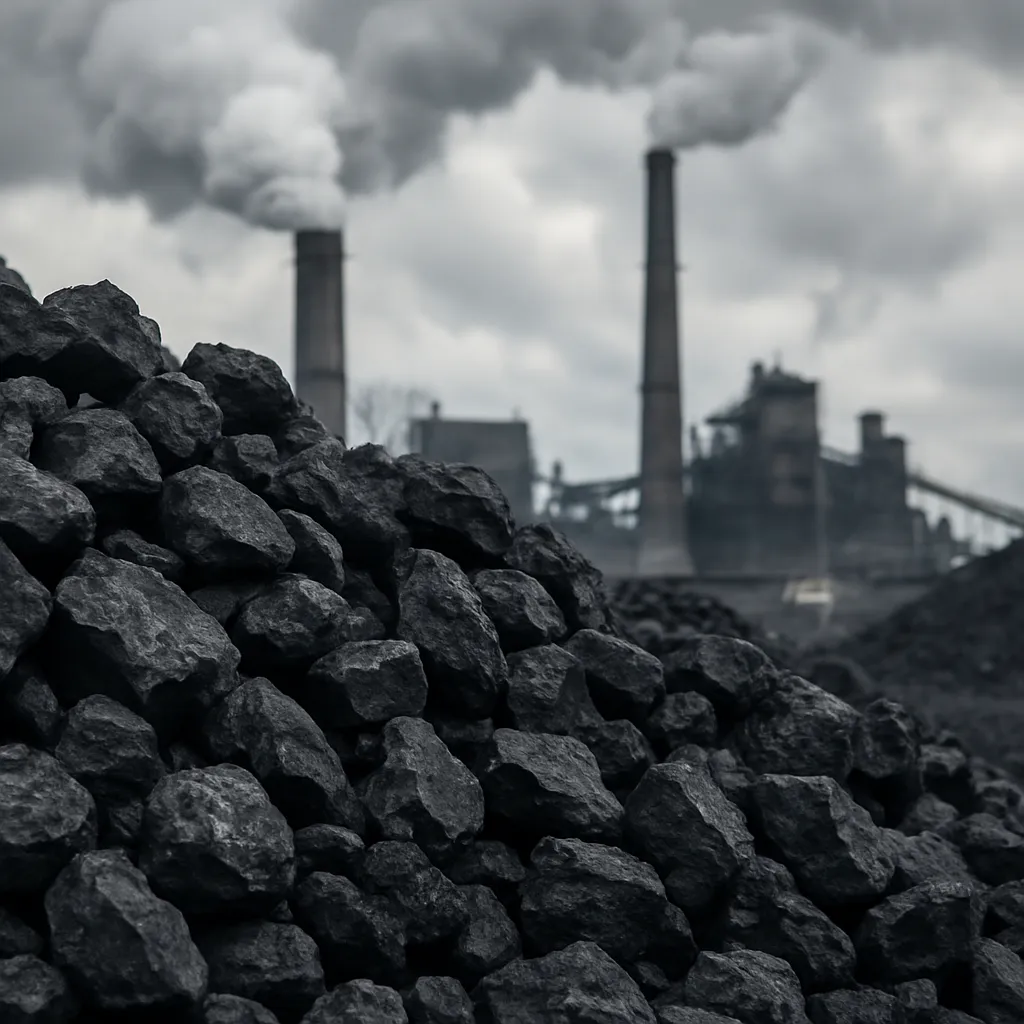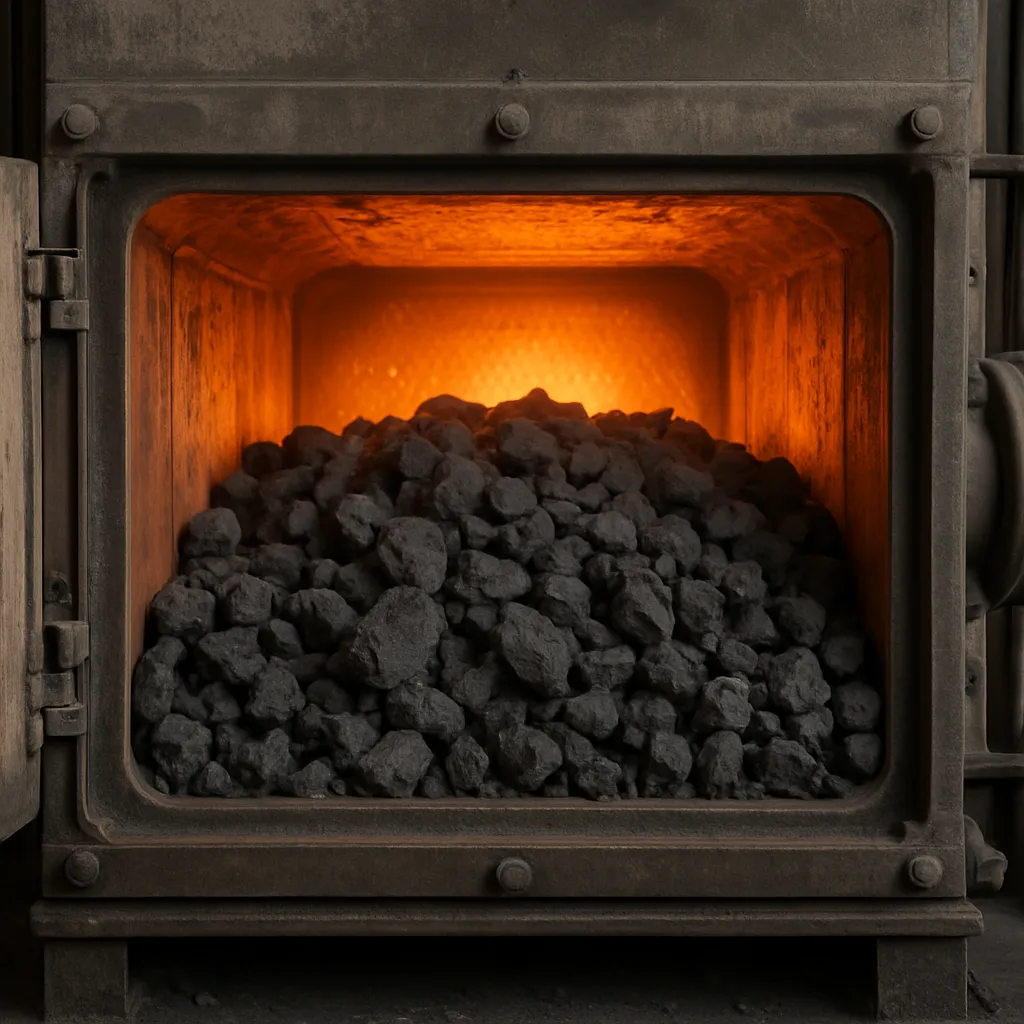
The following article examines coal used in coke ovens — commonly referred to as coking coal or metallurgical coal — focusing on its geological occurrence, mining and processing, economic and statistical aspects, industrial significance (particularly for the steel industry), environmental issues and future trends. The text provides technical descriptions, global production and trade context, and practical notes on quality, uses and innovation. Wherever exact figures are given they are presented as estimates reflecting trends of the early 2020s.
Occurrence and geological characteristics
Coal suitable for coke production is a distinct subset of bituminous and higher-rank coals that possess the right combination of physical and chemical properties enabling them to form coherent, porous carbonaceous mass (coke) when heated in the absence of air. These properties are controlled by the coal’s botanical precursors and the degree of geological metamorphism (rank). In geological terms, metallurgical coal typically occurs in sedimentary basins where extensive peat-forming mires were later buried, heated and compacted over millions of years.
Key geological indicators for coking quality include low to moderate ash and sulfur content, suitable volatile matter, and important petrographic parameters such as vitrinite reflectance, free swelling index (FSI) and plasticity. Vitrinite reflectance gives an indication of rank (commonly in the range consistent with bituminous coal), while fluidity and caking behavior determine whether a coal will soften, become plastic and then resolidify into a coherent coke mass during carbonization.
Major metallurgical coal deposits are associated with the same major coal basins that produce thermal coal, but the distribution of coal quality varies considerably within basins and between seams. Typical source basins and regions with significant coking coal resources include:
- Australia: Bowen Basin, Surat Basin and other Queensland/NSW deposits — hosts many of the world’s highest-quality hard coking coals.
- North America: Appalachian Basin (USA), Illinois Basin, and coalfields in Canada (British Columbia and Alberta) — historically important sources for blast-furnace coke.
- Russia and Kazakhstan: large bituminous coal reserves with both domestic consumption and export flows.
- China: vast reserves across many provinces; China is the largest producer and consumer of coal overall, including metallurgical grades for domestic steelmaking.
- Colombia and Mongolia: important exporters of seaborne metallurgical coal and growing producers in the international market.
- South Africa: has significant metallurgical coal resources that supplement its large thermal coal industry.
Mining, processing and quality parameters
Mining methods for metallurgical coal mirror those used for other underground and surface coal. They include open-pit (surface) mining in thick seams and longwall and room-and-pillar underground methods in deeper deposits. Because coke quality is sensitive to geological variability and contaminants, metallurgical coal operations place heavy emphasis on:
- seam selection and geological characterization,
- blending strategies to achieve target coke properties, and
- washing and processing to remove rock (ash) and reduce sulfur.
After mining, coal destined for coke ovens is processed through coal preparation plants where it is crushed, screened and often washed in dense medium separators or other facilities to reduce mineral matter and improve proximate analysis (ash, moisture, volatile matter, fixed carbon). Washing increases yield of higher-quality coal fractions and improves coke yield and quality.
Important analytical parameters used by steelmakers and coal traders include:
- Proximate analysis — moisture, ash, volatile matter, fixed carbon.
- Ultimate analysis — carbon, hydrogen, nitrogen, sulfur, oxygen.
- Free Swelling Index (FSI) and Gieseler plastometer values — indicating plasticity and caking properties.
- Carbonization behaviour — strength and reactivity of resultant coke (e.g., Coke Strength after Reaction, CSR; Coke Reactivity Index, CRI).
- Petrographic composition — proportions of vitrinite, inertinite and liptinite macerals.
Blending is a central operational tool: single-seam coal often cannot meet the full suite of coke oven requirements, so producers blend different coals to achieve desired volatile matter, swelling, and sulfur/ash targets. For example, a hard coking coal may be blended with a softer coking coal to optimize fluidity and coke strength.
The coke oven, carbonization process and by-products
The core industrial step that distinguishes coking coal from thermal coal is its behaviour in the coke oven. Carbonization (coking) is the heat-driven transformation of coal into coke under oxygen-deficient conditions. Traditional industrial ovens operate in two principle regimes:
- by-product (recovery) ovens, where volatile products (tars, light oils, ammonia, and coal gas) are recovered and processed, and
- non-recovery (heat-recovery) ovens or slot ovens where gases are combusted for heat but not chemically recovered.
During carbonization, temperatures typically reach about 1000–1100°C and the process can last from 12 to 36 hours depending on oven design. Coal softens, fuses, volatilizes and then resolidifies into a porous, high-strength carbon material — coke — that is critical for blast-furnace ironmaking. The process yields several streams:
- Coke — the solid carbonaceous product used as a reactive fuel and structural support in blast furnaces.
- Coke oven gas — a combustible mixture (H2, CO, CH4, light hydrocarbons) that can be used to fuel on-site boilers, generate electricity or be chemically processed.
- Coal tar, ammonia liquor and light oils — valuable chemical feedstocks if recovered.
- Particulates and condensable tars — environmental contaminants if not managed.
Quality metrics for coke include mechanical strength indices (e.g., coke strength after reaction), size distribution, and reactivity with CO2. High-quality blast-furnace coke must be mechanically robust to support a tall column of burden in the furnace and chemically suitable for ironstone reduction.
Economic, trade and statistical overview
Metallurgical coal is a globally traded commodity whose fortunes are tightly coupled to the steel industry and broader economic cycles. Some key economic points:
- Global steel production — a primary driver of demand: as of the early 2020s, crude steel output was on the order of 1.8–1.9 billion tonnes annually, with the majority produced in China.
- Share of coal demand — metallurgical coal represents a relatively small fraction of total coal by volume but commands disproportionate economic importance because of its higher price and essential role in steelmaking.
- Seaborne trade — a substantial portion of metallurgical coal is seaborne: estimates place annual seaborne metallurgical coal trade in the low hundreds of millions of tonnes (roughly 200–300 million tonnes per year), though figures vary by source and year due to market disruptions and demand shifts.
- Major exporters — Australia is the largest seaborne exporter of metallurgical coal and routinely supplies a majority of seaborne volumes. Other important exporters include Russia, Canada, Colombia, and the United States (for specific grades and regional markets).
Price dynamics are influenced by steelmaking demand, shipping costs, inventory levels, weather-related supply disruptions and geopolitical events. Benchmark prices for premium hard coking coal (PHCC) and other grades are tracked by industry price reporting agencies; price spikes have been observed in periods of tight supply or strong steel demand, and conversely prices have fallen in economic downturns.
Employment and regional economies in coking-coal producing regions can be substantially affected: mines, preparation plants, coke plants and associated logistics provide high-value jobs, tax revenue and export earnings. For major exporters, metallurgical coal export revenues contribute materially to national trade balances.
Representative statistical snapshots (estimates)
- Global coal production (all types): roughly 7–8 billion tonnes per year in the early 2020s.
- Global crude steel production: roughly 1.8–1.9 billion tonnes per year.
- Seaborne metallurgical coal trade: approximately 200–300 million tonnes annually (estimate).
- Australia’s share of seaborne met coal exports: often in excess of 50%, varying by year and product grade.
- Share of metallurgical coal used in blast furnace coke production: around 70–75% of met coal demand (remaining share used in pulverized coal injection, foundry coke, and other metallurgical processes).
These figures are indicative rather than prescriptive: commodity balances shift year to year depending on demand from major consumers (notably China, India, Japan, South Korea, and the EU), supply changes and macroeconomic conditions.
Industrial importance and applications
The single most important industrial application of coking coal is production of coke for the blast furnace route to iron and steel. Coke plays two essential roles in the blast furnace:
- structural: forming a permeable bed that allows gas flow and physical support of burden material, and
- chemical/energetic: acting as both fuel and reducing agent (providing carbon monoxide for iron oxide reduction).
Approximately three quarters of global steel historically has been produced via the blast furnace/basic oxygen furnace (BF-BOF) route, which depends on coke. Other uses of metallurgical coal and coke include:
- pulverized coal injection (PCI) into blast furnaces to partially substitute coke, lowering coke rate;
- foundry coke for molding and casting applications;
- chemical feedstocks from by-product recovery (e.g., coal tar derivatives, ammonia compounds);
- specialty carbon products and activated carbon derived from selected coals and coke.
Because steel is foundational to infrastructure, construction, machinery, transport and many consumer goods, metallurgical coal is strategically important despite constituting a small fraction of total coal tonnage.
Environmental, health and regulatory considerations
Coke production and the broader chain from mining to steelmaking present environmental and public health challenges. Key concerns include:
- greenhouse gas emissions: the blast furnace route is carbon-intensive; coal mining and coke ovens contribute CO2 emissions and fugitive methane (from mining); transitioning to lower-carbon steel pathways is therefore a climate policy focus;
- local pollution: coke ovens — particularly older or poorly controlled plants — emit particulate matter, volatile organic compounds (VOCs), polycyclic aromatic hydrocarbons (PAHs), benzene and other harmful substances; modern plants implement gas cleaning, benzene recovery and dust control;
- water management: coal washing and coke plant operations require water handling, and effluents may contain phenolic compounds and other contaminants requiring treatment;
- land disturbance and mine rehabilitation: surface mining affects landscapes and ecosystems; regulatory frameworks increasingly demand progressive rehabilitation and closure plans;
- worker health and safety: mining and coke operations pose hazards (coal dust, operational safety), managed through industrial hygiene, ventilation, and safety protocols.
Regulation and technology have reduced many environmental impacts: modern by-product coke ovens recover and process chemical streams that were historically emitted, and integrated steelworks increasingly capture and reuse energy streams. Nonetheless, coke-based steelmaking remains a major industrial source of CO2, prompting policy and technological responses.
Trends, innovations and future outlook
The future of coal for coke ovens is shaped by two partially countervailing forces: persistent demand for steel (especially in emerging economies) and decarbonization pressures driving innovation in both steelmaking and coal use.
Notable trends and innovations include:
- fuel efficiency and substitution: wider adoption of pulverized coal injection (PCI) reduces coke consumption per tonne of hot metal; blending and improved cokemaking processes also enhance efficiency.
- emission controls and process integration: modern coke plants incorporate advanced gas cleaning and by-product recovery to minimize local pollution and improve resource efficiency.
- alternative ironmaking routes: direct reduced iron (DRI) using natural gas or hydrogen, and electric arc furnaces (EAFs) using scrap, reduce dependence on coke; however, these routes require reliable supplies of electricity, scrap or low-carbon reductants to scale up.
- carbon capture, utilization and storage (CCUS): pilot projects aim to capture CO2 from blast furnaces and coke oven gas streams, though commercial deployment remains limited by cost and infrastructure challenges.
- innovation in coke quality: tailored coals, agglomeration technologies and synthetic cokes are areas of research that may reduce reliance on traditional coking coals for certain applications.
From a market perspective, medium-term demand for metallurgical coal is expected to remain significant because large portions of the current global steel capacity still rely on the BF-BOF route. Over the longer term (decades), structural declines in coke demand are plausible if low-carbon iron and steel technologies are widely adopted and if scrap availability and recycling increase.
Social and geopolitical dimensions
Metallurgical coal resources can have pronounced social and geopolitical impacts. Regions rich in coking coal have experienced economic booms tied to mining investment, but also face challenges related to resource dependency, community displacement, environmental degradation and fluctuating commodity prices. At a geopolitical level, supply security of high-quality coking coal matters for countries with limited domestic resources but significant steel industries; this drives long-term contracts, strategic stockpiles and diversified sourcing arrangements.
Trade disputes, sanctions and transport bottlenecks can rapidly affect seaborne flows and prices. Because high-quality hard coking coals suitable for certain steelmaking applications are comparatively scarce on the global market, producers and consumers often negotiate multi-year contracts and logistical arrangements to ensure continuity.
Interesting historical and technical facts
- The development of coke use in ironmaking was pivotal for the Industrial Revolution; Abraham Darby and other early ironmasters transitioned from charcoal to coke in the 18th century to overcome wood shortages and scale up production.
- Coke differs from charcoal: both are carbon-rich, but coke is produced from coal and has structural properties tailored for blast-furnace work, whereas charcoal is derived from biomass.
- Coke ovens historically were notorious pollution sources; the advent of by-product recovery ovens in the late 19th and 20th centuries allowed capture of valuable chemicals and curtailed some emissions.
- Modern metallurgical analytics can predict cokemaking performance using petrographic and rheological measurements, enabling highly engineered blends that maximize yield and quality.
Practical considerations for stakeholders
Producers, steelmakers, traders and policymakers approach metallurgical coal with specific priorities:
- producers focus on seam characterization, yield optimization, blending logistics and access to ports;
- steelmakers prioritize consistent coke quality, supply security and price management, while exploring coke rate reductions and alternative technologies;
- traders and financiers evaluate market cycles, shipping cost volatility and contract structures (spot vs long-term);
- policymakers balance employment and export revenues from coal with climate goals and community environmental health.
Summary outlook
Coal used in coke ovens — metallurgical coal — occupies a central but complex role in the global industrial economy. It is indispensable today for a large share of steel production, and thus for construction, transport and machinery worldwide. The industry is typified by technologically advanced mining and processing, specialized quality metrics and a global trade in seaborne cargos. Simultaneously, it faces strong environmental pressures and a technological shift toward lower-carbon iron and steel production. Over the coming decades, demand for metallurgical coal will be shaped by the pace of steel-sector decarbonization, regional infrastructure needs and the success of substitutes (DRI, scrap-based EAF) and carbon mitigation technologies.