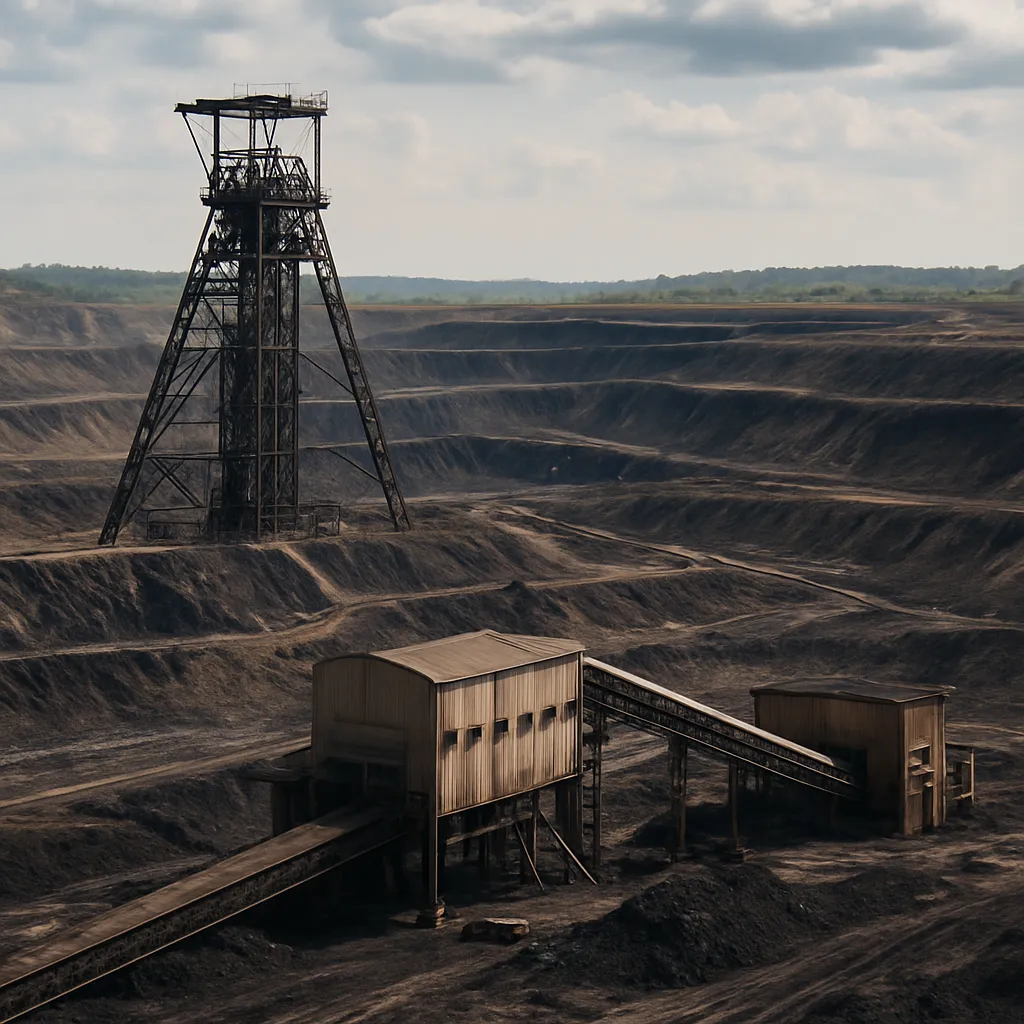
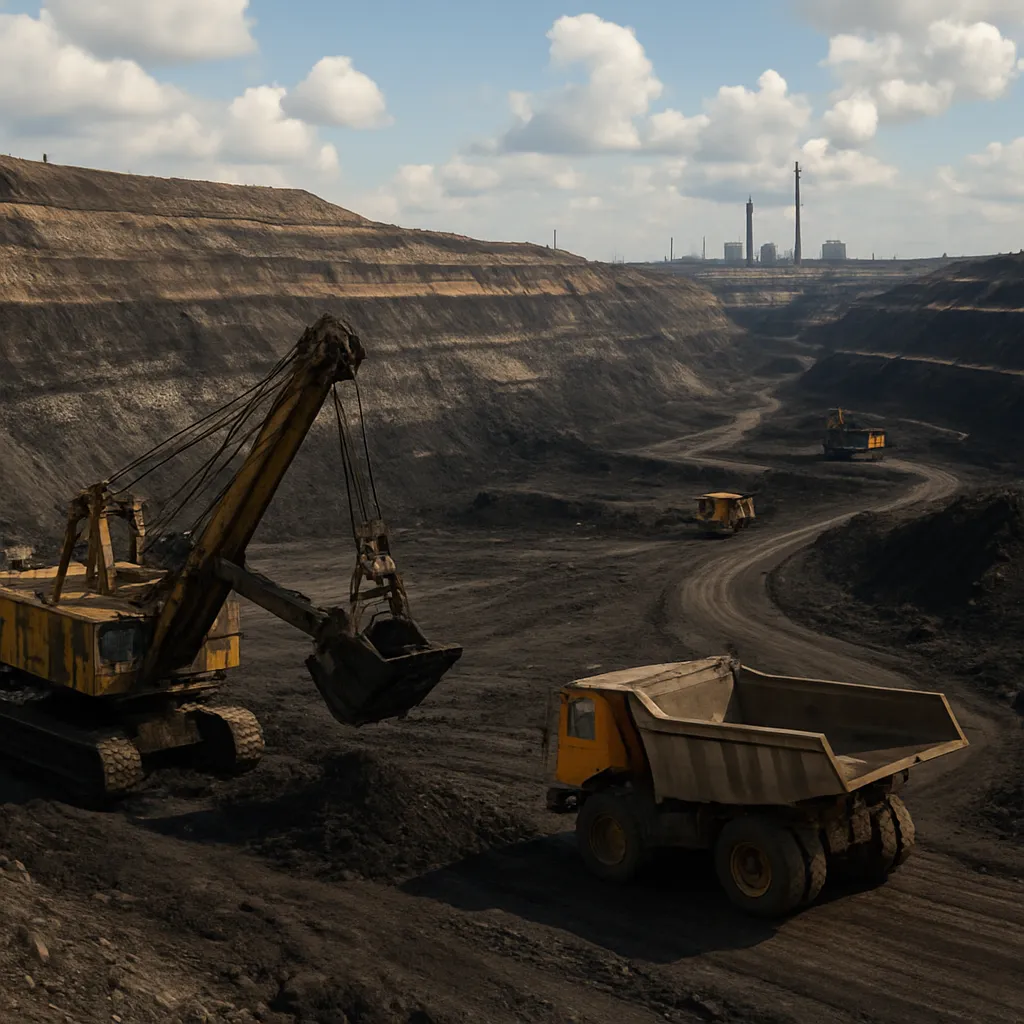
The Calentura Mine is one of the many coal mining sites associated with Colombia’s extensive coal-producing regions. While specific public data on the Calentura operation (ownership, yearly output and exact coordinates) can be limited for smaller or less-prominent concessions, this article places the mine in the broader geological, economic and social context of Colombian coal mining. It describes the likely type of coal, extraction methods and logistics used in the country, and outlines the economic, environmental and industrial implications that a site such as Calentura represents for regional development and the national energy-export matrix.
Location and geological setting
Colombia’s coal endowment is concentrated in a few major basins in the northern and central parts of the country. The most important of these are the Cerrejón basin (La Guajira), the Cesar-Ranchería Basin (departments of Cesar and La Guajira), and smaller coal-bearing zones in the Middle Magdalena Valley and the Eastern Cordillera foothills. Mines called Calentura or La Calentura may appear as local or small-scale concessions within these broader basins, often in areas where coal seams outcrop or are accessible by open-pit or shallow underground methods.
Geologically, Colombian coal deposits formed largely during the Cretaceous and Paleogene periods within fluvio-deltaic and lagoonal environments. Typical seam characteristics in major Colombian basins include relatively thick beds (meters to tens of meters), generally low sulfur content and, in many key deposits, a high calorific value. These geological attributes make Colombia’s coal particularly attractive for thermal power generation in importing countries.
Typical seam and mining types
- Open-pit operations dominate in large mines where seams are near the surface. Smaller sites may use underground or bench-mining methods.
- Coal seams in major basins range from a few meters to several tens of meters in thickness; local mines like Calentura may exploit thinner seams using selective extraction.
- Coal rank in Colombia is commonly low- to medium-volatile bituminous to high-volatile bituminous for much of the export-quality coal, though variations occur by basin.
Product: what kind of coal and its uses
The coal from Colombian mines is predominantly used as thermal coal for electricity generation and industrial heat, with some quantities suitable for metallurgical processes depending on rank and impurities. Characteristics typical of Colombian export coal include:
- Calorific value often between approximately 5,500 and 7,000 kcal/kg (depending on basin and wash quality).
- Low to moderate sulfur concentrations, which are attractive to international buyers aiming to meet emissions standards.
- Variable ash content; higher-quality washed products are sought for export markets.
For a mine such as Calentura, the likely product profile would be a thermal bituminous coal targeted to domestic power plants and/or export markets after processing to reduce ash and other impurities. If Calentura is a smaller local mine, a portion of production might serve nearby industries and local electricity needs rather than large-scale export.
Production, statistics and economic footprint
Publicly available, mine-level statistics for smaller operations such as Calentura are often limited or aggregated under broader company or regional reporting. National and regional data provide useful context:
- Colombia is one of the world’s leading coal exporters. During the 2010s and early 2020s, annual coal exports typically ranged within tens of millions of tonnes per year, with fluctuations driven by global demand and logistical constraints.
- Major Colombian mines such as Cerrejón and El Cerrejón contribute a large share of national output, while dozens of medium and small mines supply the remainder and domestic markets.
- Coal has been a significant component of Colombia’s export revenues, historically representing a substantial share of non-oil commodity exports and contributing to foreign exchange earnings.
At a local level, a functioning mine—whether medium-scale like many open-pit operations or smaller artisanal operations—creates direct and indirect economic value:
- Employment: Direct mining jobs (operators, technicians, maintenance) and indirect employment in transport, services and supply chains.
- Royalties and taxes: Payments to municipal and departmental governments and central taxation contribute to public budgets—though distribution and impact vary.
- Local purchasing and infrastructure: Coal operations often stimulate road improvements, workshop services, and energy access in surrounding communities.
For the Calentura Mine specifically, unless the owner or operator publishes data, precise employment numbers, production tonnages and revenue figures are not readily available in public registries. Smaller mines frequently report production to national authorities but aggregate reporting makes site-level transparency challenging.
Logistics, processing and export routes
Colombian coal logistics are structured around several key export ports, rail corridors and road connections. Large-scale producers use dedicated rail links and conveyor systems, while medium and small mines often rely on trucking to major collection points. Important logistic points include:
- Ports on the Guajira coast and the Caribbean such as Puerto Bolívar and specialized coal terminals for international shipping.
- Road haulage to railheads or bulk terminals; condition of roads can significantly affect operational costs and delivery times.
- Coal washing and processing plants to reduce ash and improve calorific value prior to export.
A mine like Calentura would typically connect to regional transport infrastructure to move product to a terminal—either via trucking fleets or through local cooperatives that consolidate coal from several small producers for shipment.
Socio-economic and community impacts
Coal mining operations in Colombia have mixed social outcomes depending on scale, corporate practice and governance. Common socio-economic themes include:
- Creation of local employment and business opportunities linked to the mine’s supply chain.
- Local revenue streams via royalties and taxes that can fund public services when effectively managed.
- Potential social tensions over land use, displacement, and the distribution of benefits—particularly where informal or ancestral land claims exist.
- Health impacts and public services pressure: dust, water stress and increased demand for social infrastructure.
Best-practice operations implement community engagement programs, worker training, local procurement policies and social investment projects. The scale and effectiveness of such measures at Calentura would depend on operator policies, community organization and regulatory oversight.
Environmental and safety considerations
Coal mining impacts are a major focus for regulators, civil society and communities. Key environmental issues relevant to any Colombian coal site include:
- Land disturbance and deforestation from open-pit operations and supporting infrastructure.
- Water use and potential contamination of rivers and aquifers from runoff, tailings and inadequate wastewater management.
- Dust and particulate emissions affecting local air quality and health.
- Post-closure land rehabilitation and biodiversity recovery challenges.
Safety in mining operations varies with investment in training, equipment and oversight. Large modern mines commonly have comprehensive safety programs, while smaller operations can face higher occupational risk. Colombia’s mining regulators and international partners emphasize improved safety practices, environmental monitoring and rehabilitation planning. A responsible operator at Calentura should employ dust suppression, water treatment, progressive rehabilitation and emergency response protocols.
Regulatory framework and royalties
Mining in Colombia is governed by national laws that require concessions, environmental permits and social commitments. The regulatory framework includes environmental impact assessments, monitoring, and rules for payment of royalties and taxes. Royalties are divided among national, departmental and municipal budgets, with the potential to fund local development—though effectiveness depends on transparency and governance.
Small and medium mining sites must comply with the same permitting processes as larger operations, but enforcement capacity varies regionally. Compliance with environmental and social commitments is a recurring policy focus.
Industrial significance and market linkages
Coal from Colombian mines feeds both domestic energy needs and export markets in Asia, Europe and the Americas. The industrial significance of a mine like Calentura is expressed through:
- Support for national energy security where coal-fired plants remain part of the generation mix.
- Foreign currency earnings through exports, helping to balance trade and finance imports.
- Integration in global thermal coal markets—price dynamics, freight costs and environmental policy in importing countries shape demand.
While global trends show structural declines in coal use in many regions due to decarbonization efforts, some markets continue to rely on imported thermal coal for power and industrial heat. Colombian producers have historically positioned their product as competitively priced, relatively low in sulfur and accessible to Atlantic shipping lanes.
Trends, risks and future outlook
The future of coal mining in Colombia faces multiple forces:
- International decarbonization policies and the rise of renewable energy are reducing long-term demand in some traditional markets.
- Short- to medium-term market opportunities persist in regions with slower energy transitions or where coal remains cost-competitive.
- Regulatory tightening on environmental and social standards increases compliance costs but improves sustainability outcomes.
- Technological advances—such as cleaner coal technologies, carbon capture (where feasible), and improved mine rehabilitation—may alter the sector’s profile.
For a mine like Calentura, adaptability will be key: maintaining operational efficiency, meeting environmental and social commitments, and finding stable markets or domestic buyers as international demand evolves.
Practical and interesting facts
- Calentura Mine could refer to small or medium concessions which are common across Colombia’s coal basins; names like La Calentura often reflect local toponyms rather than large corporate brands.
- Coal quality in Colombia is regionally variable but the country is known for generally low-sulfur thermal coal—an attribute valued by importers seeking to meet emissions standards.
- Major export ports and logistical corridors determine the feasibility and profitability of individual mines; proximity to a railhead or port reduces transportation costs substantially.
- Colombia’s coal sector, while concentrated in a few large mines, comprises many smaller operations that feed local economies and national statistics in aggregate.
Data caveats and where to find more information
Specific, up-to-date numbers for production, employment and revenue at the level of individual smaller mines such as Calentura are often not widely published. For authoritative, mine-level or basin-level statistics, consult the following sources:
- Ministry of Mines and Energy of Colombia (Ministerio de Minas y Energía): official statistics and concession registers.
- Geological surveys and basin studies published by national or regional geological institutes.
- Company reports and environmental impact assessments (EIAs) submitted to regulators—useful when an operator is known.
- International trade databases and customs statistics for export tonnages and destination markets.
To summarize, the Calentura Mine represents the archetypal features of Colombian coal operations—anchored in rich geological basins, producing thermal bituminous coal with good calorific properties, and linked to significant economic and social dynamics. While detailed site-level statistics may require direct access to concession records or operator disclosures, the role of such mines in local employment, logistics networks and export revenue is clear. The broader trajectory of the sector will depend on market demand, environmental regulation and the capacity of operators to manage impacts while delivering value to communities and the national economy.