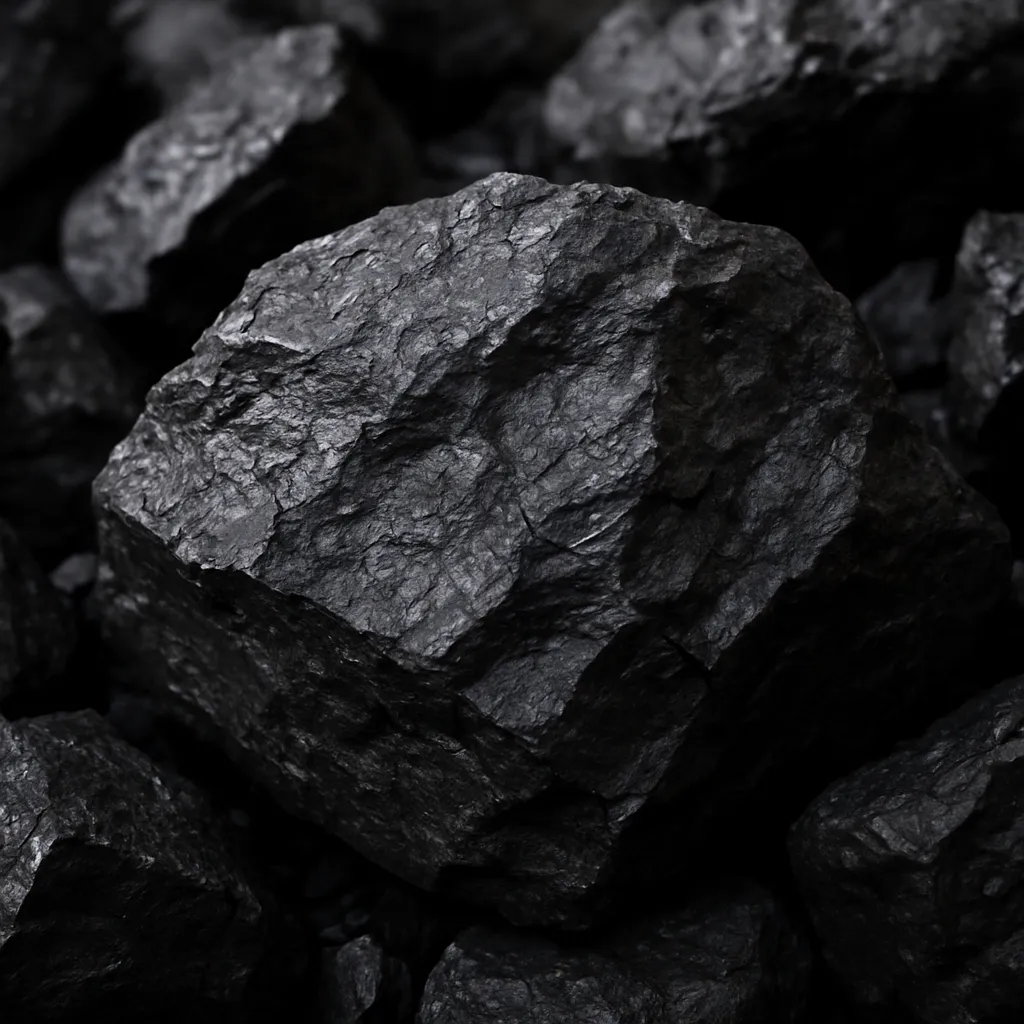
This article examines the properties, occurrence, extraction, economic role and industrial importance of oxyfuel-grade coal — coal types most suitable for combustion in an oxyfuel environment aimed at facilitating post-combustion CO2 capture. It explains the geological distribution and major producing regions, summarizes the technical and environmental considerations that make some coals more attractive for oxyfuel combustion than others, outlines commercial and pilot projects, and presents relevant economic and statistical context. The discussion emphasizes coal quality parameters, market flows and the implications for carbon capture and storage strategies in power generation and industry.
Characteristics and quality requirements of oxyfuel-grade coal
Oxyfuel combustion replaces air with high-purity oxygen (often with recycled flue gas) to produce a flue stream enriched in CO2, simplifying capture. Not all coals perform equally well in this environment; desirable coal qualities reduce operational risks, minimize additional processing costs and limit adverse environmental impacts.
Key physical and chemical properties
- Calorific value: Higher heating value (HHV) is a primary parameter. Typical ranges are: anthracite > 30 MJ/kg, bituminous 24–35 MJ/kg, subbituminous 17–24 MJ/kg and lignite < 17 MJ/kg. For oxyfuel applications, coals with moderate-to-high calorific values are usually preferred to maximize thermal efficiency and reduce flue gas volumes.
- Moisture: Low intrinsic moisture favors higher net plant efficiency. High-moisture coals (e.g., some lignites and certain subbituminous coals) impose a larger energy penalty because extra energy is required to evaporate water.
- Ash: Low ash content reduces fouling, slagging and the need for ash handling. Ash composition and fusion temperatures influence boiler operability under oxygen-rich conditions, where flame temperatures and ash behavior may differ from air-fired combustion.
- Sulfur: Low sulfur reduces the burden on flue gas desulfurization systems; however, sulfur will still be present in the flue and must be removed prior to geological CO2 storage or utilization.
- Volatile matter and fixed carbon: These influence ignition, flame stability and combustion staging. Coals with balanced volatile content perform predictably in oxyfuel burners.
- Trace elements (mercury, chlorine, alkali metals): These affect corrosion, emissions control and CO2 purity. Low concentrations are preferable for oxyfuel systems intended for long-term capture and sequestration.
In short, the ideal oxyfuel-grade coal tends to be a low-ash, low-sulfur, moderate-to-high calorific value bituminous or subbituminous coal with moderate moisture and benign trace element content. However, pilot projects have tested a wide variety of coals, and technological adaptations (e.g., fuel pretreatment, additives, and specialized boiler designs) can expand the usable range.
Global occurrence and major mining regions
Coal is a sedimentary rock found in many parts of the world. Oxyfuel-grade coals are not restricted to a single basin; rather, suitable coal seams can be found within the major coal-producing regions. The global coal industry is geographically concentrated in several countries whose basins produce coal of varied rank and quality.
Principal producing regions with suitable coals
- China – Shanxi, Inner Mongolia, Shaanxi and other provinces supply a wide spectrum from low-rank lignite to high-rank anthracite and bituminous coals. China is the largest global producer and consumer; many Chinese coals have been tested in oxyfuel and CCS demonstrations.
- United States – Major basins include the Powder River Basin (Wyoming/Montana; subbituminous, low-sulfur, high-moisture), Appalachian Basin (bituminous), and Illinois Basin (bituminous). The Powder River Basin produces vast volumes of low-sulfur subbituminous coal that presents both opportunities and challenges for oxyfuel due to high moisture.
- Australia – Bowen, Gunnedah and other basins produce bituminous thermal coals and metallurgical coals. Australian coals are widely traded and have been used in demonstration projects for oxyfuel and post-combustion capture.
- Russia – Kuzbass (Kemerovo), Pechora and other basins supply primarily bituminous and subbituminous coals, with large reserves supporting domestic power and export markets.
- India – Major fields in Jharkhand, Odisha, Chhattisgarh and West Bengal produce bituminous and subbituminous coals. Indian coals often have higher ash and sulfur content, necessitating beneficiation or combustion adaptations for oxyfuel systems.
- South Africa – High-ash bituminous coals from the Highveld and Witbank regions dominate, primarily used domestically for electricity and synfuels. Ash and mineral matter are important considerations for oxyfuel retrofit.
- Indonesia and Colombia – Export-oriented subbituminous and bituminous coals used widely by power plants in Asia and elsewhere; quality is variable depending on seam and wash practices.
Across these regions, mines include both large-scale open-pit operations (e.g., Powder River Basin, Australian Bowen Basin, Indonesian surface mines) and underground mines (e.g., Poland, parts of Russia and South Africa). Oxyfuel-grade coal is therefore globally distributed, though the exact quality control and beneficiation practices vary by country and operator.
Mining, processing and supply chains
Meeting oxyfuel specifications often requires careful upstream practices. Mining and processing steps that affect final fuel quality include washing, blending, drying and briquetting. Logistics and trade flows further determine which coals reach oxyfuel-equipped plants.
- Washing and beneficiation reduce ash and sulfur levels and can increase calorific value per tonne.
- Blending coals from different seams enables operators to meet combustion and emissions criteria while optimizing cost.
- Drying (thermal or mechanical) lowers moisture and increases net efficiency — particularly useful for subbituminous coals with high inherent moisture.
- Transport (rail, barge, ship) and storage practices can affect spontaneous combustion risks and moisture uptake, which are relevant for plant performance under oxyfuel conditions.
Economic and statistical overview
The economics of oxyfuel deployment depends on a combination of fuel quality, plant size, retrofit versus greenfield choices, the cost of oxygen production, and policy environment (carbon pricing, emissions standards, incentives for CCS). Coal remains a major global primary energy source and is intricately tied to fuel markets, electricity systems and industrial heat provision.
Global production and trade
Recent global figures (estimates and reported ranges across agencies and years) place annual world coal production on the order of several billion tonnes per year. China accounts for the largest share of production and consumption, often representing roughly half of global output. Other major producers include the United States, India, Australia, and Russia. Major exporters by volume include Indonesia, Australia and Russia, supplying thermal coal for power plants worldwide.
It is important to note that coal trade volumes and prices are highly sensitive to policy, fuel competition (natural gas, renewables), and short-term supply disruptions. For example, geopolitical events and energy transitions can rapidly shift export flows and domestic consumption.
Costs and investment factors specific to oxyfuel
- Capital expenditure: Oxyfuel plants require an air separation unit (ASU) to produce high-purity oxygen and additional CO2 purification/compression equipment; this increases upfront costs relative to conventional air-fired plants.
- Operational expenditure: The ASU and CO2 handling require considerable energy, creating an energy penalty typically in the range of 10–20 percentage points of plant net efficiency in many studies. The penalty varies with technology maturity and plant integration.
- Fuel costs: Higher-quality coals (lower ash, lower sulfur, higher heating value) command price premiums in some markets but can reduce operating costs and maintenance in oxyfuel applications.
- Revenue streams: Potential revenue from CO2 utilization (e.g., enhanced oil recovery) or carbon credits can alter the economic balance in favor of oxyfuel/CCS investments.
Example indicators (approximate and illustrative): coal-fired plants retrofitted with oxyfuel and CCS may face a levelized cost of electricity (LCOE) premium of 20–50% compared with conventional coal plants without capture, depending on local fuel and carbon prices. Where carbon is priced or where incentives for CCS exist, oxyfuel becomes more competitive.
Industrial significance and applications
Oxyfuel systems have applicability beyond large power plants. Industrial processes that require high-temperature heat and produce concentrated CO2 streams can also benefit from oxyfuel combustion or oxyfuel-like approaches.
- Power generation: Retrofit and new-build coal-fired boilers designed for oxyfuel combustion aim to capture >90% of CO2 from flue streams with appropriate downstream processing.
- Industrial heat: Cement kilns, steel reheating furnaces and chemical process heaters can use oxyfuel for improved combustion control and easier CO2 capture.
- Integration with CCS: Oxyfuel produces a flue gas with reduced nitrogen content, simplifying subsequent CO2 purification and compression for transport and storage.
- Co-firing and biomass: Oxyfuel systems can be adapted for co-firing biomass with coal, potentially enabling negative emissions when combined with CCS (BECCS) if biomass supply and sustainability criteria are met.
Demonstration projects and operational experience
Several notable oxyfuel and oxyfuel-CCS demonstration projects have advanced practical knowledge:
- Germany – Pilot-scale oxyfuel test facilities (e.g., Vattenfall’s Schwarze Pumpe project) demonstrated capture performance and operational issues related to ash and corrosion under oxygen-rich conditions.
- Australia – The Callide Oxyfuel Project (Callide A) served as a prominent demonstration, examining full-chain oxyfuel capture and integration challenges in an existing power plant context.
- China, Japan and Europe – Various research and pilot installations have contributed to understanding oxygen supply, flue gas recycle strategies and CO2 conditioning for transport and storage.
These projects highlighted practical challenges such as ash behavior changes, materials corrosion, start-up/shutdown management and integration of large air separation units. Nonetheless, they also demonstrated that oxyfuel capture rates and overall performance can meet ambitious emissions-reduction targets with engineered solutions.
Technical and environmental considerations
Oxyfuel combustion has several environmental advantages but also technical hurdles that interact with fuel quality.
Environmental performance
- CO2 reduction: Oxyfuel facilitates high-concentration CO2 streams that are easier and less energy-intensive to capture than dilute flue gases from air-fired systems.
- NOx formation: With nitrogen largely removed from the combustion oxidizer, thermal NOx formation is typically reduced; however, fuel-bound nitrogen can still form NOx.
- SOx and trace emissions: Sulfur oxides, mercury and other trace pollutants remain a concern and require downstream removal to protect storage integrity and meet environmental standards.
Fuel-related operational challenges
- Ash melting and slagging: Higher flame temperatures can increase ash fusion issues. Coals with problematic ash mineralogy require additives or boiler design adaptations.
- Corrosion and material stress: Oxygen-rich combustion and chlorides/alkali metals can accelerate corrosion; material selection and plant operation strategies must mitigate risk.
- Oxygen supply: ASUs are capital- and energy-intensive. Emerging oxygen production technologies (e.g., ion transport membranes) could reduce costs over time.
Careful fuel selection and preprocessing mitigate many of these issues. For example, washed and blended coals lower ash and sulfur, while drying reduces moisture penalties. Such interventions make marginal coals more attractive for oxyfuel use, albeit at an added cost.
Statistical notes and market context
When assessing oxyfuel-grade coal’s role in the wider energy landscape, several statistical and market observations are important:
- Global coal remains a dominant fuel in many electricity systems, especially in rapidly developing regions. This creates ongoing demand for technological solutions to reduce emissions from existing coal fleets.
- International coal trade is concentrated: a few exporters supply large regions, so supply chain and price volatility can affect project economics for oxyfuel plants relying on imported coal.
- Carbon policy matters: jurisdictions with strong carbon pricing or CCS incentives drastically change the investment calculus, making oxyfuel plus CCS more attractive.
Published figures from energy agencies in recent years commonly show annual global coal production and consumption on the order of multiple billions of tonnes. The largest single-country producer, China, accounts for a very large share of that total. Exact numbers vary year by year with economic cycles, energy transitions and policy shifts.
Future prospects and innovation
The role of oxyfuel-grade coal in future energy systems will be shaped by multiple factors: the pace of coal-to-clean transitions, the cost trajectories of oxygen production and CO2 handling, and the availability of policy instruments that reward deep emissions reductions.
- Technology improvements: Advances in high-efficiency oxygen production, membrane technologies and integrated plant designs can reduce the energy penalty and lower capital costs.
- Hybrid approaches: Combining oxyfuel with gasification or chemical looping may broaden application space and improve overall CO2 capture efficiency.
- Decarbonization pathways: In regions where coal will persist for decades, oxyfuel plus CCS offers a pathway to decarbonize large stationary CO2 sources, particularly where renewable penetration or gas infrastructure is constrained.
- Industry decarbonization: Industrial heat users may adopt oxyfuel processes earlier than power generation because of the concentrated CO2 streams and the challenge of electrifying high-temperature processes.
Concluding observations
Oxyfuel-grade coal is not a single, narrowly defined product but rather a set of coal quality attributes—low ash, low sulfur, suitable calorific value, manageable moisture and benign trace element content—that together make a coal seam attractive for oxyfuel combustion with downstream CO2 capture. Suitable coals are geographically widespread, appearing across major basins in China, the United States, Australia, Russia, India and other coal-producing nations. The economics of deploying oxyfuel systems depend on fuel quality, plant integration, the cost of oxygen and CO2 handling, and prevailing carbon policy. Demonstration projects have shown the technical feasibility of oxyfuel capture but also highlighted the importance of fuel-specific operational strategies to manage ash, corrosion and combustion stability. As technologies mature and policy frameworks evolve, oxyfuel combustion of carefully selected and processed coals can play a role in reducing emissions from hard-to-abate sectors while the global energy transition progresses.