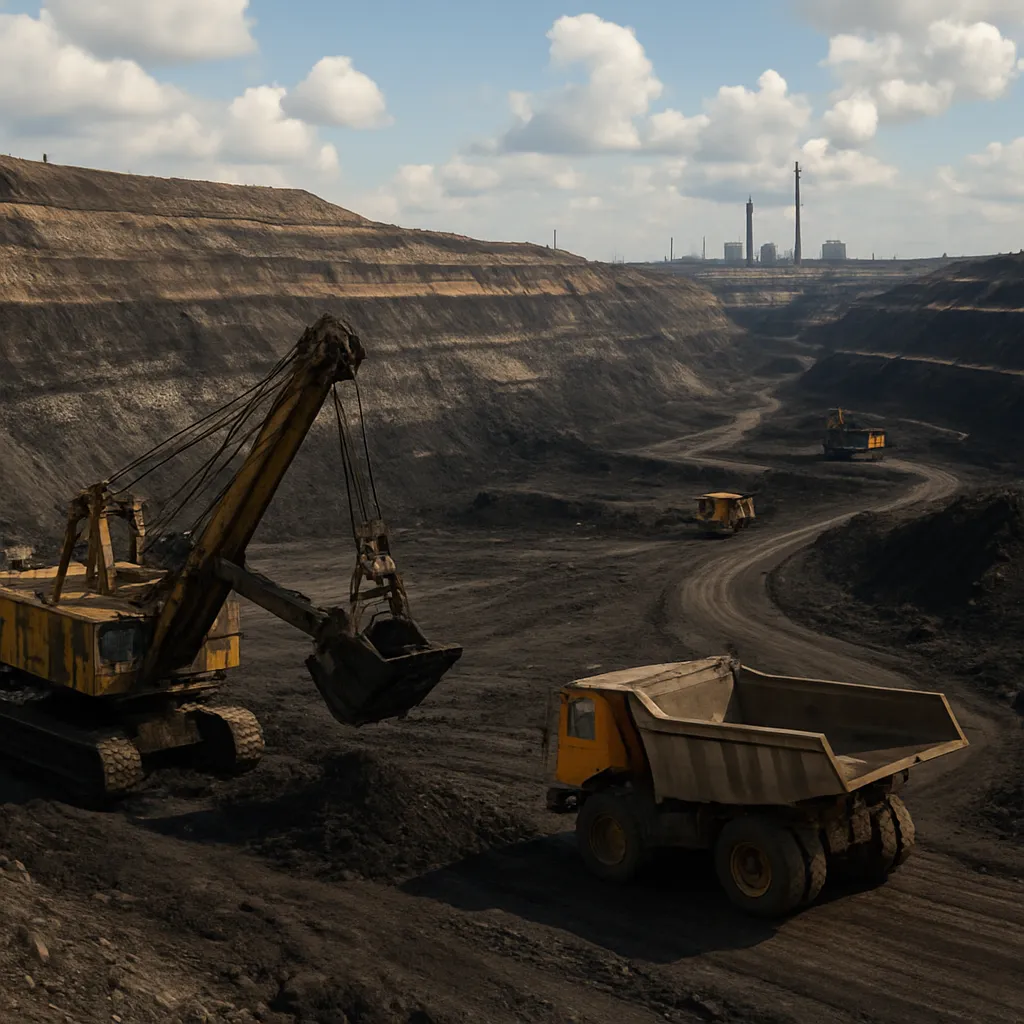
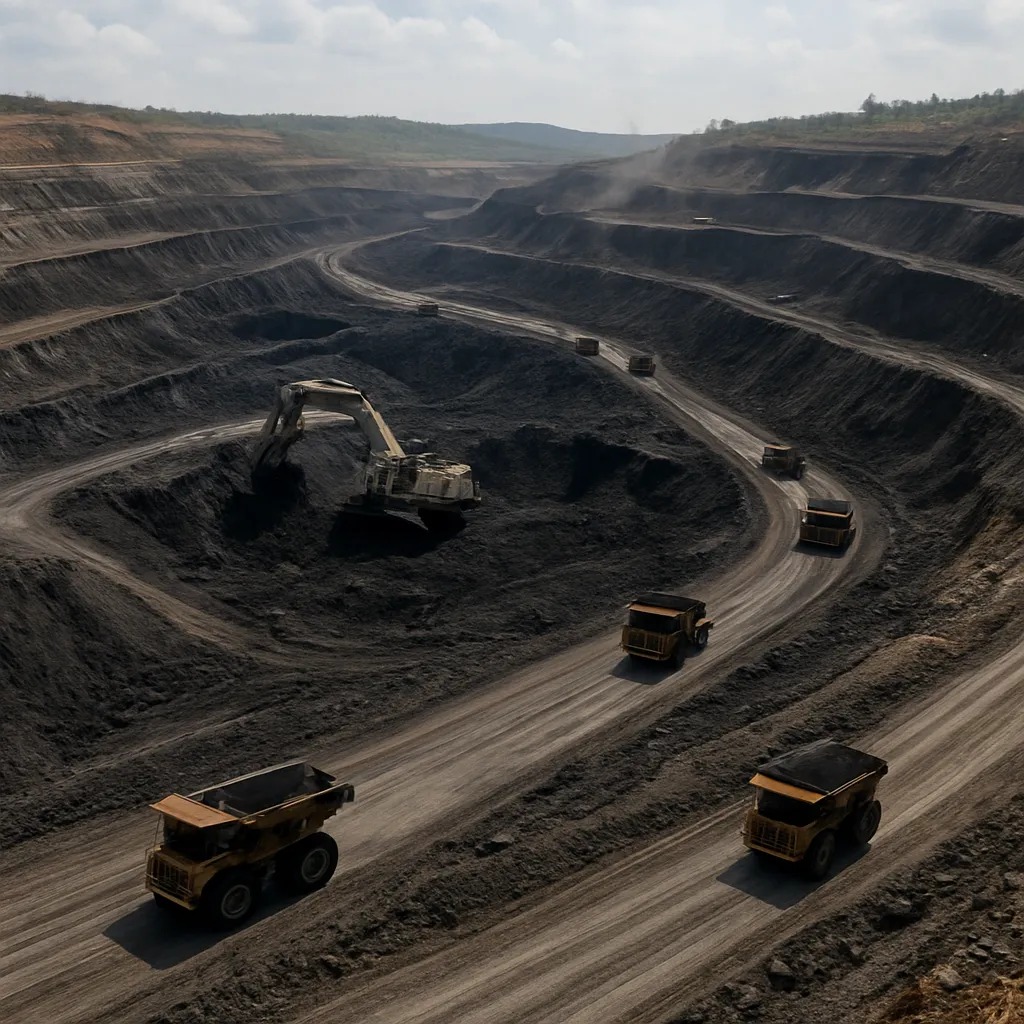
The following article provides an in-depth overview of the Bureinsky coal mine and its regional context in the Russian Federation. It covers the mine’s location, geological setting, the types of coal produced, economic and industrial significance, logistics and transport connections, environmental and social aspects, and prospects for the future. Wherever possible the text places the mine within broader national and regional statistics to give a clear perspective on its role in Russian energy and mining sectors.
Location and Geological Setting
The Bureinsky coal mine is situated in the Russian Far East, in the general area associated with the Bureya river basin and adjacent highlands. The mine forms part of a set of deposits that developed during Mesozoic–Cenozoic geological processes that affected eastern Siberia and the Far East. The geological context is typical for the region: folded basins and intermontane depressions filled with sedimentary sequences hosting coal seams of varying thickness and rank.
Coal-bearing strata in the area were formed from accumulated plant material in ancient floodplains and swamps, later buried and subjected to diagenesis and low-grade metamorphism. As a result, coal seams in this part of the Russian Far East are often of lower to medium rank compared with the higher-rank coals found in Kuzbass (Kemerovo Basin) or the Pechora Basin. The deposit geology influences mining technique and coal processing choices — open-pit methods are common where seams lie close to the surface, while underground workings are used for deeper deposits.
Types of Coal and Production Characteristics
The main commodity extracted from the Bureinsky mine is coal, primarily intended for domestic thermal power generation and regional industrial users. The deposit typically yields thermal coal grades (sometimes classified as sub-bituminous to high-volatile bituminous depending on local metamorphic conditions). In some parts of the Far Eastern deposits there are seams with better caking properties that can be blended for metallurgical use, but the dominant product from Bureinsky is thermal coal suited for power plants and local heat generation.
Coal characteristics commonly reported for Far Eastern deposits include moderate calorific values, variable moisture content and ash levels, and moderate sulfur content. These traits influence how the coal is marketed: high-ash or high-moisture material is often used in nearby power stations or blended at export terminals to meet specifications. Processing—such as washing, screening and blending—is used to improve product characteristics for both domestic consumption and export.
Economic and Regional Importance
The Bureinsky mine has a role that extends beyond pure commodity extraction; it is an economic node for the local and regional economy. Mining operations typically generate employment, purchase goods and services locally, and stimulate the development of transport and logistics infrastructure. In remote parts of the Russian Far East such as Amur or Khabarovsk regions, a single medium-sized mine can be a significant employer and tax base for municipal budgets.
At the national level, Russian coal production and exports are major contributors to the energy balance and foreign trade. Russia is among the world’s largest coal producers and exporters, with annual production commonly in the range of several hundred million tonnes and exports that account for a substantial fraction of global seaborne coal markets. While the Bureinsky mine is not among the largest nationwide producers, its strategic importance lies in supplying nearby consumers and supporting export flows through Pacific ports that serve Asian markets.
- Local employment and services: mining operations create direct jobs (miners, technicians, site staff) and indirect jobs (transport, maintenance, retail).
- Regional supply: coal from the mine supports power plants, heating systems and sometimes industrial facilities in the surrounding areas.
- National logistics: production contributes to freight volumes on rail lines leading to Pacific ports, influencing the viability of rail investments.
Transport, Logistics and Export Routes
Transport is a decisive factor for the commercial viability of mines in the Russian Far East. The Bureinsky mine’s proximity to the Trans-Siberian Railway or the Baikal–Amur Mainline (BAM), depending on exact location, dictates how coal is moved to end users and export points. Access to transcontinental rail corridors allows coal to reach Pacific ports such as Vanino, Vladivostok, Vostochny, Nakhodka or other loading terminals, from where it is shipped to markets in East and Southeast Asia.
Key logistical considerations include:
- Rail capacity and tariffs, which determine unit transport cost to ports.
- Availability of washing and blending facilities to meet client specifications.
- Seasonal constraints in port operations (ice, winter weather) and use of ice-class vessels where needed.
Because the Russian coal industry competes on global markets primarily with Australian, Indonesian, South African and Colombian producers, low-cost, efficient transport is essential. Mines closer to Pacific terminals have a competitive edge in Asian markets, which are among the world’s largest importers of thermal and metallurgical coal.
Statistics and Quantitative Context
When placing a regional mine like Bureinsky in perspective, it helps to view it against national and regional statistics. Broadly speaking, recent years have seen Russia producing in the order of 350–450 million tonnes of coal annually (figures vary by year and source), with exports often comprising around half of that volume. The Russian Far East accounts for a modest but strategically important share of export-oriented production because of its proximity to Asian consumers.
Direct production figures for the Bureinsky mine specifically are not always published in international datasets; many mines report production in company disclosures or regional statistical bulletins. Where data are available, medium-sized Far Eastern mines may produce anywhere from a few hundred thousand to several million tonnes per year. Reserves are typically measured in tens to hundreds of millions of tonnes for economically exploitable seams, depending on deposit size and quality.
Local energy balances show that regional thermal power plants in the Far East often rely on a mix of local coal and imported fuel oil or gas, making local coal mines important for energy security and price stability. Rail freight volumes associated with coal shipments impact regional infrastructure utilization and investment planning.
Environmental and Social Considerations
Coal mining, including at Bureinsky, has environmental impacts that require management and mitigation. The primary environmental challenges include landscape disturbance (especially from open-pit mining), waste rock and tailings management, dust and particulate emissions, water use and potential contamination, and greenhouse gas emissions associated with combustion of coal.
Typical mitigation and management measures adopted in modern operations include:
- Progressive rehabilitation of disturbed land and revegetation programs.
- Installation of dust-control systems and water treatment plants.
- Monitoring programs for air quality, surface water and groundwater.
- Socioeconomic programs: investment in local infrastructure (roads, schools, clinics) and community engagement plans.
Socially, mining operations can bring both benefits and challenges. Benefits include jobs, local procurement and improved public services from taxes and fees. Challenges can include labor migration, changes in traditional livelihoods, and pressures on local infrastructure. Good practice involves stakeholder consultations, transparent grievance mechanisms and investment in skills training to ensure local communities gain sustainable benefits.
Technology, Safety and Operational Practices
Mining operations in Russia vary widely in technology level. Mature operations in more accessible regions typically use mechanized longwall or open-pit shovel-and-truck systems with modern equipment and computerized monitoring. In remote areas like parts of the Far East, operations may be smaller-scale and adopt a mix of mechanized and semi-mechanized methods depending on seam geometry and investment scale.
Safety is a key priority. Russian mining regulations require safety management systems, ventilation standards, and emergency response preparedness. Modern mines emphasize automation, remote monitoring, and predictive maintenance to improve safety outcomes and productivity. Training programs for miners and technical staff, adherence to occupational health standards, and investment in protective equipment are standard components of responsible operations.
Market Dynamics and Industrial Role
Coals from mines like Bureinsky primarily serve two markets: domestic power generation and regional export markets. In the industrial context, coal supports local electricity grids and district heating systems, contributing to energy security in remote regions where gas supply may be limited or expensive. On the export side, thermal coal is sold to power utilities and industrial customers in East and Southeast Asia, while any coking-grade carbon content can be blended into metallurgical coal supplies where available.
Global market dynamics affect the mine’s economics: variations in seaborne coal prices, freight rates, exchange rates and demand in Asia all influence revenue. Additionally, environmental policies in importing countries (e.g., coal phase-downs or carbon pricing) can create both risks and incentives for diversification—such as investing in cleaner coal technologies or pursuing reclamation and carbon-offset projects.
Regulatory and Institutional Framework
Mining activity in Russia operates within a framework of federal and regional laws covering subsoil use, environmental protection, labor relations and taxation. Licenses for subsoil use define the legal rights to explore and extract minerals and come with obligations for environmental protection, reporting and socio-economic contributions. Regional governments play an important role in facilitating infrastructure, workforce development and local planning.
Institutional support for mining regions in the Far East often includes infrastructure subsidies, preferential tax treatment for strategic projects, and programs aimed at stimulating investment. At the same time, environmental permitting and compliance are enforced through a combination of inspections and public reporting.
Future Prospects and Challenges
The future outlook for the Bureinsky mine depends on several interacting factors:
- Market demand in Asia for thermal coal and any metallurgical blends.
- Investment in transport infrastructure (rail and port capacity) that affects delivered costs.
- Costs of production, including labor, energy and compliance with environmental standards.
- Regulatory changes and broader shifts in energy policy, including decarbonization trends.
Opportunities for mines in the region include improving coal quality through processing, integration with regional energy projects (e.g., thermal plants or combined heat-and-power units), and participation in corporate programs for environmental performance and community development. Challenges include competition from lower-cost exporters, volatility in commodity markets, and the long-term global trend toward lower-carbon energy sources.
Interesting Aspects and Additional Notes
Several aspects make mines like Bureinsky noteworthy:
- Strategic geography: proximity to Asian markets gives regional mines an export advantage if logistics are competitive.
- Seasonality and logistics complexity: Pacific ports and rail corridors face winter and ice-related constraints that require specialized planning.
- Blending potential: regional coals can be blended to meet specific calorific and coking requirements, adding commercial flexibility.
- Local development impact: in remote localities mine investment often catalyzes broader economic development and infrastructure upgrades.
Operational transparency and adherence to environmental and social best practices can enhance a mine’s long-term license to operate and reduce community and regulatory risks. At the same time, ongoing technological upgrades—automation, improved geological modeling, and efficient processing—can improve productivity and reduce environmental footprint.
Summary
In summary, the Bureinsky coal mine is an example of a regional resource development that is embedded in the broader Russian coal industry. It produces mainly thermal coal used in local power and heating, and potentially contributes to exports via Pacific corridors. The mine’s significance is both economic—through jobs, taxes and regional supply—and strategic—by linking local production to transcontinental logistics. Environmental and social impacts require careful management, while future prospects hinge on market demand, infrastructure, and alignment with evolving energy policies.
Key words highlighted
Throughout this article, several important terms have been emphasized to signal core themes: Bureinsky, Bureya, Russia, coal, thermal, coking, reserves, exports, transport, rehabilitation, environmental.