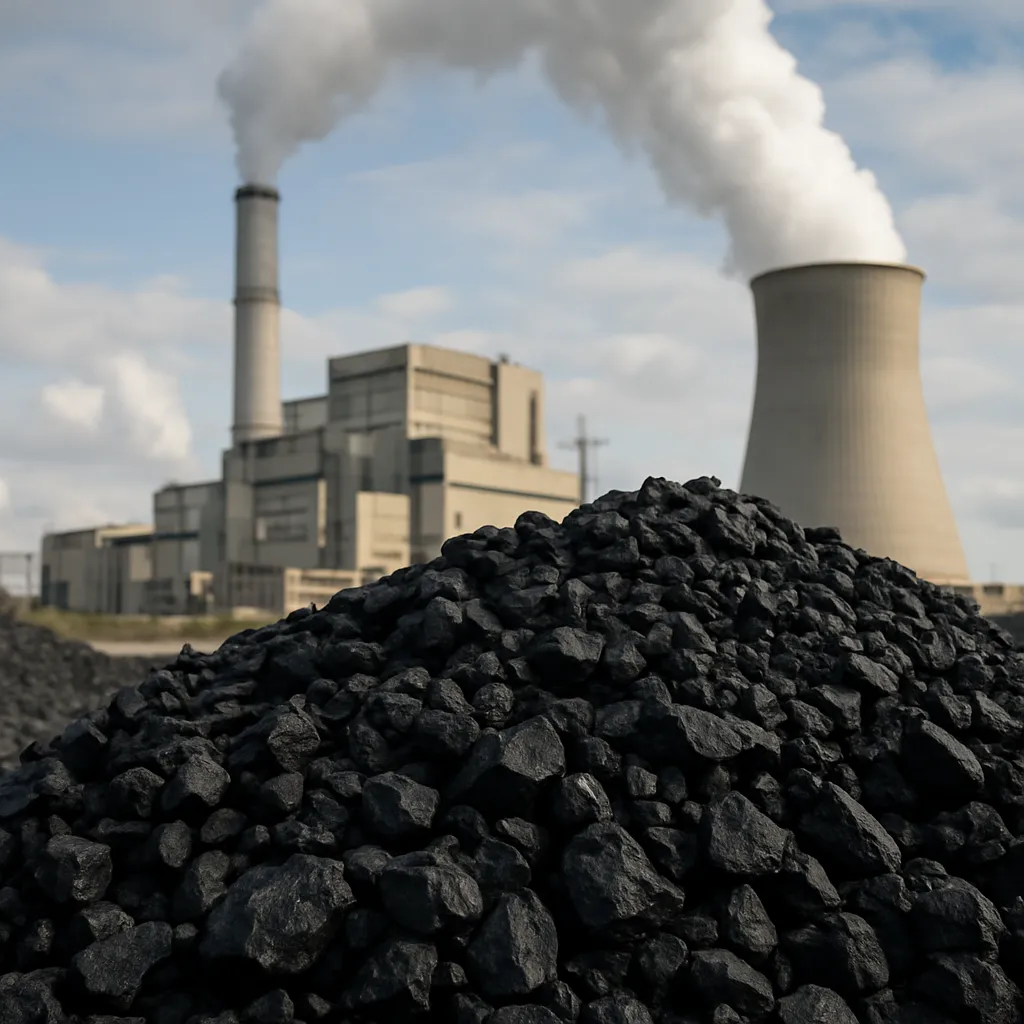
This article examines the role, distribution, economics and industrial importance of coal used for advanced supercritical and ultra‑supercritical power plants — commonly referred to here as advanced supercritical coal fuel. It covers where these coals are found, how they are mined and processed, key statistical trends, and why certain coal qualities matter for modern high-efficiency plants. The text explains technical and economic drivers, environmental trade-offs, and future prospects for coal that is intended for use in the most efficient coal‑fired technologies available today.
Geological occurrence and major producing regions
Coal is a sedimentary rock formed from accumulated plant matter that, under pressure and heat over millions of years, converts into peat and then successively into lignite, sub‑bituminous, bituminous and anthracite ranks. Not all coal types are equally suitable for advanced high‑pressure, high‑temperature plants: the best fuels for supercritical and ultra‑supercritical boilers are typically medium‑ to high‑rank coals (higher calorific value, lower moisture) with moderate ash and sulfur levels. Coal deposits occur on all continents except Antarctica and are concentrated in several major basins.
- China: The largest single producer and consumer of coal globally. Major basins include the Shanxi, Shaanxi and Ningxia regions. China’s domestic production historically supplies the bulk of its vast thermal power fleet; China also invests heavily in ultra-supercritical technology to improve plant efficiency.
- Australia: Extensive reserves in the Bowen and Sydney Basins and major export ports on the east coast. Australia is a major exporter of both thermal and coking coals, supplying Asia, especially China, Japan and South Korea.
- Indonesia: Large resources of sub‑bituminous and thermal coal concentrated in Kalimantan and Sumatra; a leading exporter, particularly of low‑rank thermal coal used in many Asian power systems.
- United States: Significant resources in the Powder River Basin (PRB), Appalachia and Illinois Basin. PRB coals are low‑sulfur, low‑rank sub‑bituminous fuels widely used in power generation. The PRB remains critical in the North American thermal coal market.
- Russia: Large eastern and western basins support domestic power generation and exports to Europe and Asia.
- India: Large reserves concentrated in Jharkhand, Odisha, Chhattisgarh and West Bengal. India relies heavily on coal for electricity and steel production.
- South Africa: Major reserves of high‑ash bituminous coals used both for power and for metallurgical coke production.
- Colombia and Poland: Important regional suppliers to adjacent markets; Poland’s reserves have historically supported its coal‑intensive electricity sector.
Within these regions, the specific seam characteristics determine suitability for advanced supercritical plants. High calorific value (often >24 MJ/kg for thermal coals intended for higher efficiency applications), lower ash (<10–15% preferred), and manageable sulfur content are typical targets. When local coals fall short, blending and beneficiation (washing and upgrading) are common practices to meet boiler and emissions specifications.
Mining methods, processing and fuel specification for advanced plants
Mining methods for coals destined for advanced supercritical plants vary by deposit depth and geology:
- Open‑cut / surface mining: Dominant in basins like the PRB and Australia where seams are shallow and extensive. Mechanized extraction yields large, relatively low‑cost volumes but often lower rank (higher moisture) coal.
- Underground mining: Employed in deeper deposits, including longwall and room‑and‑pillar systems in regions such as China and parts of Europe. Underground coals can be of higher rank and lower moisture.
After extraction, coals may undergo processing to meet the strict fuel requirements of high‑pressure boilers:
- Crushing and screening to achieve consistent particle size and combustion characteristics.
- Washing and beneficiation to reduce ash and sulfur and to increase calorific value; washed coals are preferred for advanced plants to reduce slagging, fouling and emissions.
- Blending of coals from different seams or suppliers to achieve targeted heat content, ash profile and reactivity.
For modern ultra-supercritical (USC) and advanced ultra‑supercritical (A‑USC) boilers, fuel specifications typically emphasize:
- Higher gross calorific value (often expressed in MJ/kg or kcal/kg).
- Lower moisture content to maintain steam generation efficiency.
- Controlled ash composition (low alumina and silica to minimize slagging).
- Lower sulfur and mercury content to ease compliance with emissions standards.
Advanced boilers operate above the thermodynamic critical point of water (22.1 MPa / 374°C), meaning design and materials must accommodate extreme pressures and temperatures. The fuel must therefore be predictable in combustion behavior; highly variable or very high‑ash coals complicate operations.
Technical advantages of supercritical and ultra‑supercritical systems
Supercritical and ultra‑supercritical power plants represent the most efficient conventional coal‑fired technologies in widespread use today. Key technical benefits include:
- Higher thermal efficiency: Compared with older subcritical plants, supercritical designs can improve plant thermal efficiency by roughly 3–7 percentage points, and USC/A‑USC designs can reach another 3–6 percentage points beyond that. Typical ranges: subcritical ~33–37%, supercritical ~38–42%, ultra‑supercritical ~42–46% and advanced A‑USC target efficiencies >47% in ideal conditions. Higher efficiency directly reduces coal consumption and CO2 per MWh.
- Lower specific fuel consumption and reduced per‑unit emissions of CO2, SO2 and NOx per kWh generated, assuming similar emission control systems are present.
- Better flexibility and cycling performance in modern designs, which helps integrate variable renewables in some grids.
However, these advantages depend on fuel quality, plant design and environmental controls. Some coals — particularly very high‑ash or high‑moisture varieties — can limit achievable efficiencies and increase maintenance costs due to slagging, corrosion and ash handling challenges.
Economic and trade aspects
Coal remains an important global commodity despite shifts toward low‑carbon generation in many markets. Important economic dimensions include production value, trade flows, employment, and the cost competitiveness of coal‑fired electricity.
- Global production and consumption: In the early 2020s, global coal production and consumption were on the order of several billion tonnes annually (range ~7–8 billion tonnes of coal equivalent for hard coal and lignite combined in recent years). Exact annual totals vary with economic cycles, policy shifts and energy demand. Emerging economies, notably in Asia, continue to drive significant coal consumption growth.
- Major exporters: Australia, Indonesia and Russia are among the largest exporters of thermal and metallurgical coal, generating substantial export revenues. Coal export earnings are a major component of national trade balances in supplier countries.
- Price volatility: Coal prices can be highly volatile, responding to global demand, logistical constraints, currency movements and regulatory changes. Periods of rapid price spikes (e.g., during tight supply or energy crises) have been observed in the past decade, affecting electricity costs and prompting fuel switching in some markets.
- Employment and regional economies: Coal mining and coal‑fired power generation support significant employment in producing regions. The socioeconomic importance of coal towns and regions complicates transitions away from coal and drives political support for continued coal use or managed transition programs.
As an example of scale: China accounts for roughly half of global coal consumption and a substantial share of production; India and Southeast Asian markets are rapidly growing consumers. Regions like the Powder River Basin in the United States supply large volumes of relatively low‑sulfur coal to domestic power plants at low delivered cost per unit of energy, influencing the economics of U.S. electricity generation historically.
Statistical snapshot and trends
While absolute figures fluctuate annually, several persistent patterns characterize the coal sector relevant to advanced supercritical fuel:
- Geographic concentration: A small number of countries produce and consume the majority of global coal. Asia (led by China and India) is the largest demand center.
- Export/import asymmetry: Some countries (Australia, Indonesia, Russia) are net exporters, while large consuming nations with limited domestic reserves are importers.
- Shift in growth: Most recent growth in coal consumption has been in Asia; consumption in several developed economies has declined due to closures of older plants, competition from cheaper gas and renewables, and emissions policy.
- Role in electricity: Coal historically provided roughly one‑third to over one‑half of global electricity generation depending on the year and region; in many regions it remains the dominant baseload fuel despite reductions in share in some markets.
On the supply side, investments in mining capacity and logistics (ports, rail) have long lead times, which means geopolitical decisions, environmental regulation, and long‑term contracts heavily shape trade flows and prices. For utilities planning advanced supercritical plants, securing long‑term coal supply contracts or local sources with consistent quality often determines project viability.
Industry applications beyond power generation
While electricity generation is the largest single use of coal globally, certain high‑quality coals have vital roles in other industries:
- Metallurgical or coking coal: A distinct grade of coal used to produce coke for steelmaking. Coking coal quality requirements are strict — low ash, appropriate volatile matter and strong caking properties — and these coals command premium prices. The steel industry is a major driver of demand for premium coals.
- Chemicals and materials: Coal is feedstock for chemical synthesis (e.g., coal‑to‑x processes), activated carbon, carbon fibers and specialty carbon products.
- Coal‑to‑liquids and coal gasification: Gasification technologies convert coal into syngas for power, chemicals or fuels; such applications are capital‑intensive and used where alternatives are limited or strategically important.
- Industrial heating and cement: In some regions coal still supplies industrial thermal processes where alternatives are not yet economical at scale.
The differentiation between thermal coal for power (including advanced supercritical boilers) and metallurgical coal for steel is crucial for markets and pricing.
Environmental, health and social considerations
Coal use raises multiple environmental and social issues that influence its future:
- CO2 emissions: Burning coal remains one of the most carbon‑intensive ways to generate electricity. Even at higher efficiencies achieved by supercritical and ultra‑supercritical plants, coal’s CO2 per unit of electricity is higher than most alternatives except oil‑fired generation.
- Local pollution: SO2, NOx, particulate matter and mercury emissions are significant local pollutants from coal combustion. Advanced emission control systems (flue gas desulfurization, selective catalytic reduction, electrostatic precipitators/fabric filters) mitigate these impacts but add capital and operational cost.
- Mining impacts: Land disturbance, water use and contamination, and occupational hazards (including respiratory disease and mining accidents) are major concerns in coal producing regions. Rehabilitation and community transition are key policy issues.
- Carbon management: Deploying carbon capture, utilization and storage (CCUS) on coal plants can substantially reduce CO2 emissions but remains expensive and limited in scale as of the mid‑2020s. CCUS compatibility is an important consideration for any long‑lived advanced coal plant.
Socially, many regions depend on coal for jobs and public revenues. Declines in coal demand thus require coordinated transition strategies (retraining, economic diversification, social safety nets) to avoid severe regional dislocation.
Industrial significance and strategic considerations
Coal for advanced supercritical applications occupies a strategic niche:
- Reliability and baseload: In many power systems, coal provides firm, controllable capacity that complements variable renewables. High‑efficiency supercritical units reduce fuel needs while supplying predictable power.
- Energy security: Countries with significant domestic coal reserves often view coal as a means to secure domestic energy supply and reduce import dependence, supporting industrial policy and grid stability.
- Investment decisions: The capital intensity and long lifespan of advanced plants mean that fuel quality, regulatory outlook and carbon policy determine whether new coal investment is justified. In markets with strong climate policy, investment risk for coal is higher unless CCUS is included.
In short, advanced supercritical coal fuel is central where policymakers and utilities prioritize reliable, dispatchable generation and incremental improvements in carbon intensity through efficiency gains rather than immediate phase‑out.
Technological challenges and material science
Operating at ultra‑high steam temperatures and pressures demands advanced materials and engineering:
- Materials: High‑temperature nickel‑based alloys and advanced steels are required for components exposed to A‑USC conditions. Materials research aims to extend component life and reduce costs.
- Boiler chemistry and corrosion control: Coal impurities (chlorides, alkali metals, sulfur compounds) affect boiler tube life and corrosion rates. Fuel selection and treatment are critical to avoid premature failure.
- Integration with emissions controls and CCUS: Retrofitting and designing plants for capture technologies influence fuel flexibility and operational regimes.
Maintaining stable combustion with variable coal properties is a persistent operational challenge that influences the choice of coal suppliers and the need for on‑site fuel blending and preparation facilities.
Future prospects and pathways
The future of coal used in advanced supercritical plants depends on intertwined technical, economic and policy factors:
- Efficiency gains and retrofits: Plant modernization and deployment of A‑USC technology can lower emissions intensity where coal use continues.
- Carbon policy: Stronger carbon pricing or emissions limits accelerate coal phase‑out in many regions, unless paired with cost‑effective CCUS deployment on coal fleets.
- Regional divergence: Developed markets with aging coal fleets tend toward retirements and gas/renewables replacement, while many emerging economies continue to add coal capacity to meet growing demand. This divergence implies that coal, including advanced fuels, will persist in specific regions for decades even as global shares evolve.
- Market adaptations: Producers will increasingly produce tailored coals (washed, blended, low‑sulfur) to meet the requirements of advanced boilers and stringent environmental standards.
Technological innovation (materials, emissions controls, CCUS) combined with market mechanisms will shape whether coal can coexist with climate goals while retaining a role in reliable electricity systems.
Concluding observations
Coal destined for advanced supercritical and ultra‑supercritical plants represents a specialized subset of the broader coal market, characterized by specific fuel quality requirements, higher capital and material requirements for the plants themselves, and a complex interplay of economics, policy and environmental considerations. While global trends toward decarbonization challenge the long‑term prospects of coal, efficiency gains from supercritical technology and the strategic importance of reliable baseload generation mean that high‑quality coals will continue to be significant in some regions. Responsible management of environmental impacts, investments in cleaner technologies (including carbon capture), and careful socioeconomic planning for mining regions are essential elements of any path that includes advanced coal use in the coming decades.
Key terms highlighted in the article: efficiency, ultra-supercritical, carbon capture, metallurgical, Powder River Basin, China, emissions, coking coal, energy security, beneficiation.