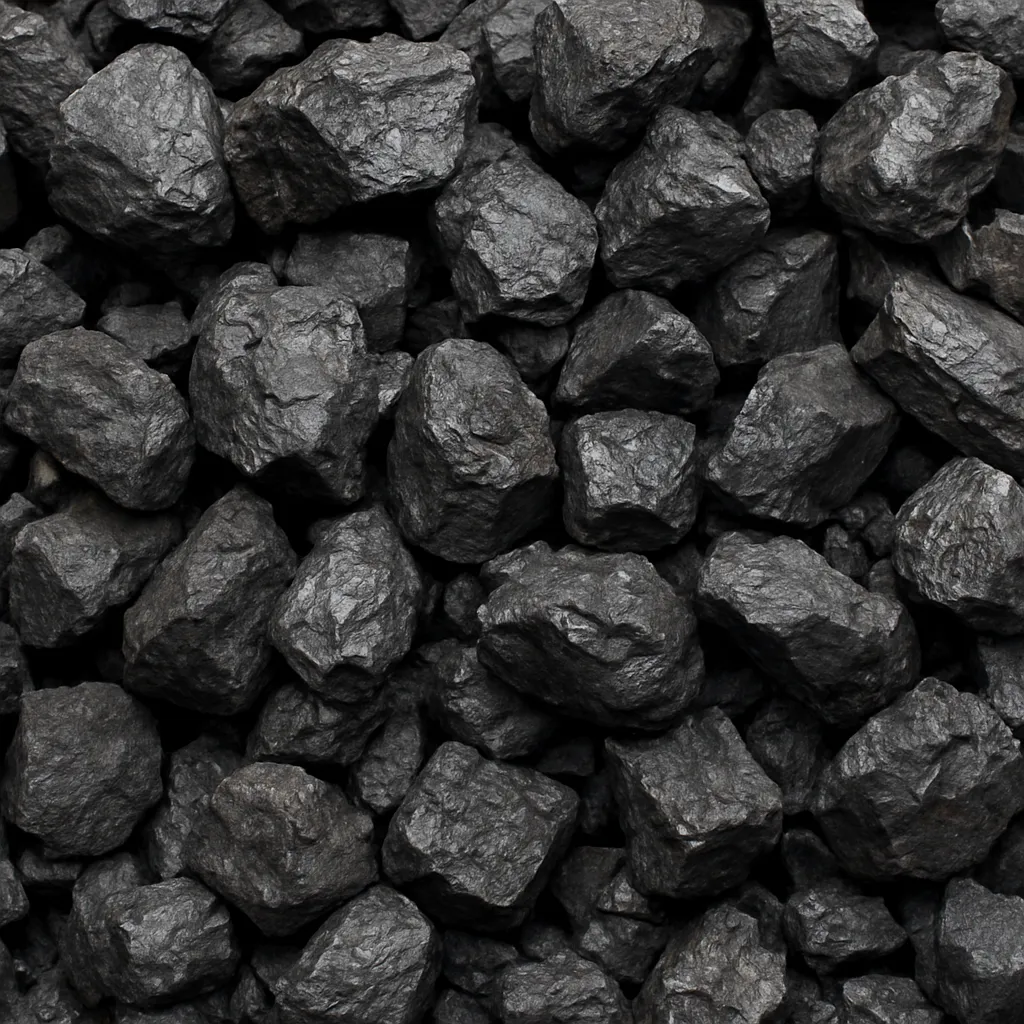
Bituminous briquettes are a form of processed coal that combine the properties of natural bituminous coal with mechanical compaction and, often, added binders to create a solid, uniform fuel product. Used for heating, industrial processes and, in some cases, as a feedstock for metallurgical applications, these briquettes serve as a way to valorize coal fines and improve handling, storage and combustion characteristics. This article examines the geological occurrence and mining regions of bituminous coal used for briquetting, the manufacturing and economic aspects of briquettes, available statistical information, their industrial significance and environmental considerations, and provides additional interesting facts.
Characteristics, Composition and Common Uses
Bituminous briquettes are produced from bituminous coal or blends of coals and coal fines (middlings and tailings) that are compressed into a dense, regular shape. The compaction process increases the energy density per unit volume compared with loose fines, reduces dust, improves transportability and enables predictable combustion behavior.
Physical and chemical properties
- Calorific value: Bituminous coal used for briquettes typically has a gross calorific value in the range of approximately 24–35 MJ/kg. Finished briquettes often deliver between about 18–28 MJ/kg on a net basis, depending on moisture, binder type and coal quality.
- Fixed carbon and volatile matter: Bituminous coals usually contain appreciable volatile matter (10–40%) and a moderate to high fixed carbon fraction. This balance influences ignition characteristics and flame stability.
- Ash and sulfur: Ash content for bituminous coal used in briquetting can vary widely (5–20% typical), while sulfur content might range from under 0.5% in low-sulfur seams to over 3% in some deposits. Briquette manufacturers select feedstocks and processing conditions to meet local emissions and quality requirements.
- Mechanical strength: Proper briquetting yields units with sufficient compressive strength for handling and transport; strength depends on pressure, particle size and binder selection.
Uses and advantages
- Domestic and commercial heating: Briquettes are used as a solid fuel in stoves and boilers where uniform size and consistent burn characteristics are valued.
- Industrial fuel: Small- and medium-scale industries, bakeries, food processing and brick kilns may use briquettes as a controllable and dense fuel source.
- Metallurgy: Certain briquettes, especially when produced from coking-grade bituminous coal or blended with coke fines, can be used as a part of metallurgical processes; however, high-quality coke remains the primary reductant in steelmaking.
- Resource efficiency: Briquetting enables the utilization of coal fines and waste, converting low-value residues into marketable fuel and reducing disposal costs and environmental hazards from dusty stockpiles.
Key words: bituminous briquettes, bituminous coal, energy density, calorific value, binders, emissions, metallurgy, reserves, mining regions, sustainability
Occurrence, Geology and Major Mining Regions
Bituminous coal is formed from plant material that was buried and subjected to heat and pressure under geological conditions that lie between those producing lower-rank lignite/sub-bituminous coals and higher-rank anthracite. Its widespread occurrence and geological distribution underpin the global supply chains for briquettes.
Geological settings
- Bituminous coals are typically found in sedimentary basins with historic peat-forming environments. They occur in seams of varying thickness associated with sandstone, shale and other basin-fill strata.
- Rank and quality vary across basins depending on burial depth and thermal maturity; richer, lower-sulfur seams are most desirable for briquetting and clean combustion.
Major producing regions relevant to briquette feedstock
Certain coalfields and countries are particularly significant as sources of bituminous coal suitable for briquettes:
- China: The world’s largest coal producer and consumer, with extensive bituminous deposits in Shanxi, Shaanxi, Inner Mongolia and other provinces. China also has a large domestic briquette and processed coal industry to serve its heating and industrial needs.
- United States: Appalachian coalfields (e.g., Pennsylvania, West Virginia), the Illinois Basin and other regions produce bituminous coal historically used for power generation, industrial uses and coal products.
- Russia: Large reserves in Kuzbass (Kemerovo), the Pechora and other basins supply both domestic industry and export markets; bituminous grades are common in these regions.
- Australia: Major exports of thermal and metallurgical coals originate from basins such as the Bowen and Sydney Basins; Australian coals are widely used in Asia and for processed coal products.
- India: Significant bituminous coal resources in Jharkhand, West Bengal, Odisha and Chhattisgarh; briquetting is practiced locally for domestic heating and industrial fuel.
- Poland and the Czech Republic: Central European bituminous coal deposits (Upper Silesia, Ostrava–Karviná) have long traditions of briquette production for domestic and industrial use.
- South Africa: Witbank and Highveld basins provide bituminous and medium-rank coals; local industries produce briquettes for domestic and small industrial markets.
Proximity to markets and existing infrastructure (rail, ports) strongly influence whether coal fines are turned into briquettes at mine sites, at nearby processing plants, or closer to demand centres.
Production, Manufacturing Processes and Technology
Briquette manufacturing transforms loose coal fines into dense pieces using mechanical pressure and sometimes thermal treatment or binders. The choice of technology depends on feedstock, desired product quality and economic considerations.
Common manufacturing routes
- Cold briquetting: Mechanical compression at ambient temperatures using binders such as molasses, starch, cement, pitch or specialized polymers. This method is energy-efficient and suitable for a wide range of fines.
- Hot briquetting: Heating the coal or binder to improve plasticity and bonding; used where higher-strength briquettes are required.
- Hydraulic and piston presses: Produce high-density briquettes with good mechanical strength, often used for industrial quality products.
- Roll presses and extrusion: Continuous processes where fines are compacted through dies to produce logs, which are then cut to length.
- Coking and agglomeration: In some metallurgical applications, briquettes can be formed from coking coals and then carbonized, producing a higher-grade solid fuel or metallurgical agglomerate.
Binders and additives
Binders improve cohesion and strength. Traditional binders include coal tar pitch and residual oils from coal processes; increasingly, organic binders (starches, sugars) and inorganic binders (lime, cement) are used to meet emissions and sustainability criteria. Additives can modify ignition, ash fusion behavior and sulfur capture.
Quality control and standards
Producers test calorific value, moisture, ash, sulfur and mechanical durability. Standards and labelling (in some jurisdictions) ensure briquettes meet consumer and industrial expectations for burn time, emissions and ash handling.
Economic Importance and Market Dynamics
Bituminous briquettes occupy a niche between raw coal and higher-value coal products. Their economic role stems from adding value to low-cost feedstock, providing an alternative to firewood and lower-grade fuels, and supplying specific market segments.
Value creation and cost drivers
- Feedstock cost: Briquetting converts fines and waste into salable fuel, improving mine economics by reducing waste disposal costs.
- Processing and capital: Investment in briquetting plants and presses is required; economies of scale matter for cost-competitiveness.
- Transport and logistics: Because briquettes are denser and less dusty, they can be transported more economically per unit of energy, especially over short to medium distances.
- Local demand: In regions where biomass is scarce or expensive, coal briquettes remain competitive for residential and small-industry heating.
Market segments
- Household heating in colder climates or areas without gas grids.
- Small industrial operations and kilns where uniform combustion and ease of fueling are important.
- Export products in regions with established coal-processing industries.
Competition and substitution
Briquettes compete with raw coal, charcoal, wood pellets and gas. Policy drivers (air quality regulations, carbon pricing, fuel subsidies) can dramatically affect briquette demand. In some markets, cheaper or cleaner alternatives have eroded briquette consumption; in others, briquettes persist due to price and supply considerations.
Statistical Overview and Trends
While most global coal statistics refer to unprocessed coal production and consumption, briquettes represent a smaller, specialized portion of the solid fuel market. Nevertheless, understanding broader coal trends helps contextualize the briquette sector.
Global coal production and consumption (early 2020s)
- Approximate global coal production in the early 2020s was on the order of 7.5–8.5 billion tonnes per year (all grades combined), with year-to-year variation due to demand and policy changes.
- China has historically accounted for roughly half of global production and consumption, with annual coal production in the range of 3.5–4.1 billion tonnes in recent years.
- Other large producers include India, the United States, Indonesia, Australia and Russia; each produces hundreds of millions of tonnes annually.
Briquette-specific figures
Reliable global totals for coal briquette production are less commonly reported as a distinct category. In Europe and parts of Asia, national statistics may record processed coal and briquette volumes. Observed patterns include:
- In Central and Eastern Europe, briquette production historically supplied households and local industry; volumes have declined in many countries since the 1990s due to fuel switching, but remain meaningful in certain local markets.
- In China and India, processed coal products (including briquettes, coal balls and packaged coal) continue to serve local heating and industrial niches, with significant regional production capacity.
- A substantial share of briquettes is produced from mine-site fines; the exact tonnages depend on mine size, fines generation rates and investment in processing.
Reserves and long-term availability
Proven coal reserves worldwide have been estimated in the low thousands of billions of tonnes (on the order of 1,000–1,200 billion tonnes) at the start of the 2020s. At prevailing consumption rates, these reserves suggest multiple decades to over a century of supply, although the distribution of reserves is uneven and subject to economic and environmental constraints.
Environmental, Regulatory and Health Considerations
Coal briquettes, like other solid fossil fuels, raise environmental and health issues that influence their acceptability and future role.
Air pollution and emissions
- Combustion of bituminous briquettes emits particulate matter (PM), sulfur oxides (SOx), nitrogen oxides (NOx) and CO2. The magnitude depends on coal quality (sulfur and ash), combustion technology and use of emission controls.
- Compared with raw dusty fines, briquettes can reduce fugitive dust emissions during handling. However, stack emissions from burning remain a concern for urban air quality.
Climate and carbon footprint
CO2 emissions per unit energy from bituminous coal and briquettes are substantial compared with most renewables and natural gas. Carbon pricing, emissions trading systems and national climate targets increasingly affect the economics of coal-derived products, encouraging efficiency improvements, fuel switching and, in some cases, the phase-out of coal for power and heat.
Regulations and market response
- Many countries restrict the sale or use of high-sulfur coal and require labeling or emissions controls for solid fuels sold to households.
- In places with strong air quality regulations, briquette manufacturers have adapted by blending low-sulfur coals, improving combustion characteristics and exploring co-briquetting with biomass to lower net carbon intensity.
Mitigation and cleaner options
Technological measures can reduce environmental impacts: improved combustion devices (high-efficiency stoves and boilers), flue-gas cleaning, sulfur capture additives in briquettes and partial substitution with biomass or recycled materials. Nevertheless, long-term decarbonization policies will continue to reduce the relative role of fossil-based briquettes in many markets.
Industrial Significance and Practical Considerations
In industrial contexts, bituminous briquettes offer practical benefits — consistent feeding rates, predictable heat output and simplified storage. They are particularly valuable where small- or medium-scale heat sources require a solid fuel that is easier to handle than loose coal.
Application examples
- Brick and tile kilns: Consistent combustion can improve product quality and firing efficiency.
- Food processing and bakeries: Reliable heat control and reduced ash handling compared with raw coal fines.
- Rural heating and small boiler plants: Where gas infrastructure is absent, briquettes provide a compact alternative to firewood and raw coal.
Operational tips
- Store briquettes in dry conditions to preserve combustibility and reduce spontaneous heating risks.
- Match briquette size and calorific output to burner or stove specifications to maximize combustion efficiency and minimize emissions.
- Monitor ash composition to manage slagging and fouling in industrial furnaces.
Interesting Facts, Innovations and Future Outlook
Although the long-term trajectory for coal is constrained by climate policy, briquetting technology and market niches evolve in response to local conditions and innovation.
- Valorization of waste: Briquetting is an effective circular-economy practice at mines and processing facilities, turning otherwise difficult-to-manage fines into a saleable product.
- Co-briquetting with biomass: Blending coal fines with biomass residues can reduce net fossil carbon per unit energy and help meet regulatory thresholds in some jurisdictions.
- Low-emission formulations: Development of low-sulfur, low-ash briquettes and use of cleaner binders aims to reduce both local pollution and lifecycle environmental impact.
- Off-grid resilience: In areas with unstable gas or electricity, briquettes remain an economic and logistical option for heating and small-scale industry.
- Technological modernization: Automation, continuous presses and quality control instrumentation have improved production efficiency and product uniformity in recent decades.
Looking ahead, the future of bituminous briquettes will be shaped by the balance between local energy needs, environmental regulation and the pace of transitions to cleaner energy sources. In regions where coal remains abundant and substitutes are costly or unavailable, briquettes will likely continue to play a role — albeit a transforming and increasingly regulated one. Where climate commitments tighten and affordable low-carbon alternatives proliferate, briquettes are more likely to decline or be reformulated (e.g., with biomass co-processing) to remain viable.
Summary
Bituminous briquettes represent a pragmatic solution for converting coal fines into a useful, denser and more manageable fuel form. Their production is tied closely to the distribution of bituminous coal in major mining regions such as China, the United States, Russia, Australia, India and parts of Europe. Economically, briquetting adds value by reducing waste and improving transport and handling economics, while providing predictable heat output for domestic and industrial users. Environmentally, briquettes pose challenges typical of fossil fuels — emissions of particulates, sulfur and CO2 — prompting innovation in binders, combustion technology and blends with renewable feedstocks. Statistically, briquettes are a smaller segment of the broader multi-billion-tonne global coal market, whose production in the early 2020s ranged roughly between 7.5 and 8.5 billion tonnes per year, with proven reserves sufficient for many decades at current consumption levels.
For businesses and policymakers, the decision to produce or promote bituminous briquettes involves weighing local fuel economics, air quality and climate obligations, and the potential to innovate (for example, via co-briquetting with biomass) to improve environmental performance while preserving economic value from coal-processing residues.