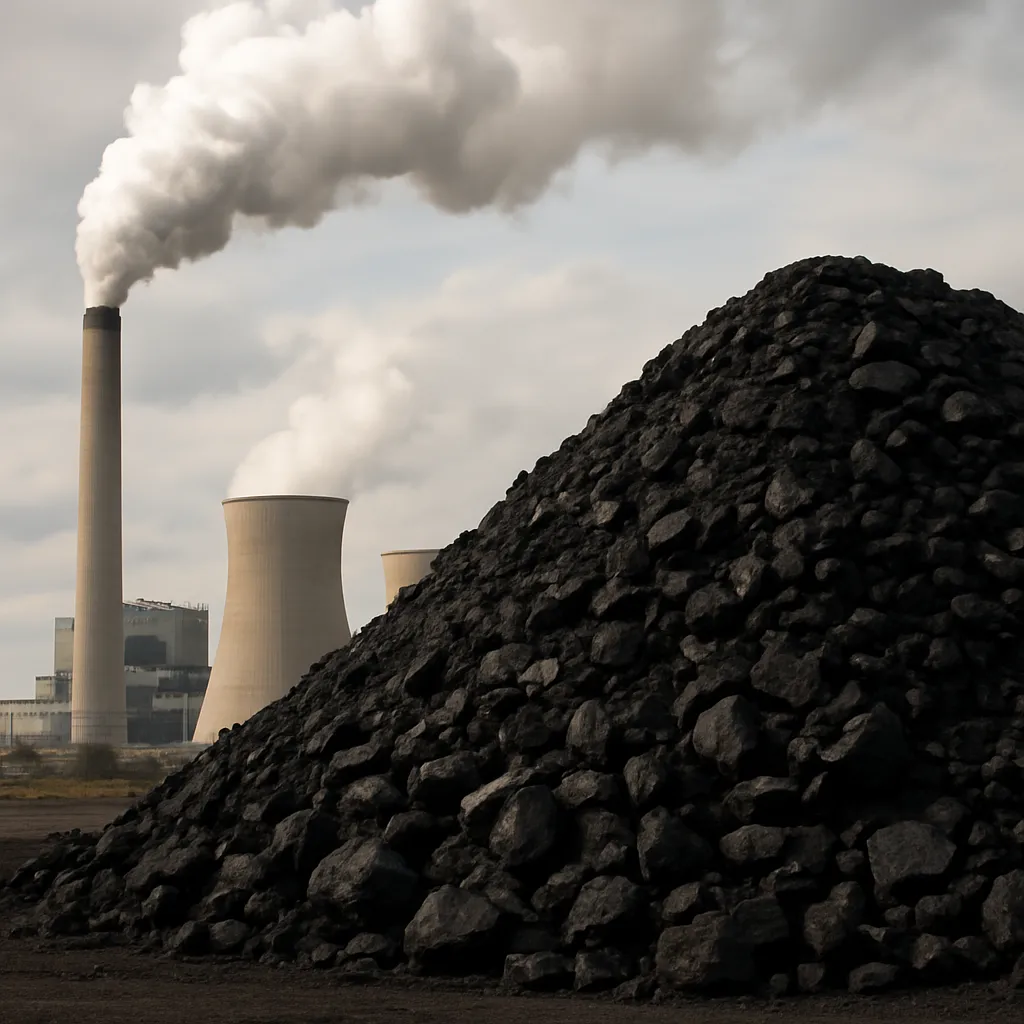
This article explores the concept commonly called emission-reduction coal — coal that is managed, processed or combined with technologies and practices to produce lower greenhouse-gas and pollutant emissions than conventional raw coal when used for energy or industry. The subject covers geological occurrence, mining regions, technological pathways to lower emissions, economic and market dynamics, industrial importance and a range of statistical and policy-related observations. The aim is to present a comprehensive overview that balances geological facts with engineering solutions and economic realities.
What is emission-reduction coal and why it matters
Emission-reduction coal is not a fundamentally different mineral species but rather a set of approaches and product grades intended to reduce the environmental footprint of coal use. These approaches include producing and using coals with inherently lower levels of ash and sulfur, pre-combustion treatments such as coal washing, blending coals to improve calorific value, co-firing with biomass, and coupling coal combustion with technological mitigation systems such as flue-gas scrubbers and CCS (carbon capture and storage). On the generation side, higher thermal efficiency plants — notably ultra-supercritical (USC) boilers — reduce CO2 emitted per unit of electricity by extracting more energy from the same mass of coal.
The concept is central to debates about the short- and medium-term pathways to decarbonization in energy systems that remain dependent on fossil fuels. While many jurisdictions are phasing down coal use completely, large parts of the world — particularly in Asia and some industrial sectors — still rely on coal for electricity, heat and metallurgical processes. Thus, emission-reduction coal strategies are often framed as transitional measures to reduce immediate harm while alternative energy and industrial solutions scale.
Geological occurrence and major mining regions
Coal formed from ancient plant material in swamps and peatlands and was buried, compressed and heated over geological time. The most common coal types are peat, lignite (brown coal), sub-bituminous, bituminous and anthracite. The carbon and energy content increases from lignite to anthracite; sulfur and ash contents vary by deposit. Emission-reduction efforts frequently focus on selecting coals with higher energy content and lower impurity levels because they produce less CO2 and fewer pollutants for the same energy output.
Global distribution
- Asia: China is the largest producer and consumer of coal by a substantial margin, followed by India, Indonesia and other Southeast Asian producers.
- Oceania: Australia is a leading exporter of high-quality thermal coal and metallurgical coal.
- North America: The United States and Canada produce significant volumes, with the U.S. coal mix including both thermal and metallurgical grades.
- Europe and Russia: Large reserves exist in Russia, Poland, Ukraine and other Eastern European countries, though extraction and use patterns vary.
- Africa and South America: South Africa and Colombia are notable regional producers and exporters, with Colombia a major supplier to global thermal-coal markets.
Rough production figures to indicate scale: global coal production and consumption in recent years have hovered around several billion tonnes per year. China alone has accounted for roughly half of global coal demand and production. Other major producers such as India, the United States, Indonesia, Australia and Russia together make up a substantial portion of remaining output. These broad patterns matter because the distribution of high-quality, low-impurity coals — the raw material that best supports lower-emission coal use — is uneven globally.
Mining methods and how they affect emissions
Mining technique influences both direct emissions from the extraction process and the quality of the coal recovered. Two broad classes of mining dominate: surface (open-pit) mining and underground mining. Surface mines typically recover large volumes of near-surface coal with lower mining costs and different profiles of methane release compared with deep mines.
- Surface mining: Lower extraction costs per tonne, but can involve large land disturbance and particulate emissions. Surface-mined coal is often amenable to extensive coal washing to remove impurities.
- Underground mining: Greater potential for fugitive methane emissions, greater safety and ventilation energy requirements, and often yields coals with different impurity and ash characteristics.
Mitigations at the mine level include methane capture for power generation, dust controls, reclamation to reduce land-use impacts, and on-site processing to increase the fuel quality prior to transport. Captured mine methane can both reduce greenhouse-gas emissions and provide a commercial energy stream.
Technologies and practices for cutting emissions from coal use
Emission reductions can be achieved at each stage: mining, fuel preparation, combustion/processing, and post-combustion treatment. Key technical pathways include:
- Coal washing and processing: Removes ash and mineral impurities, increasing calorific value per tonne and reducing particulate emissions and SOx per unit of energy.
- High-efficiency boilers (supercritical and ultra-supercritical): Operate at higher temperatures and pressures to achieve greater thermal efficiencies, thereby reducing CO2 per MWh.
- Flue-gas treatment: Technologies such as flue-gas desulfurization (FGD), selective catalytic reduction (SCR) for NOx, and fabric filters or electrostatic precipitators for particulates are standard for pollutant control.
- Co-firing: Partial substitution of coal by biomass or waste-derived fuels reduces net CO2 emissions if the substitute feedstock is considered carbon-neutral over the relevant accounting period.
- Carbon capture, utilization and storage (CCUS): Captures CO2 from flue gases or pre-combustion streams and stores it geologically or uses it in industrial processes. CCUS is the most direct route to deep reductions from coal combustion but adds cost and complexity.
- Process electrification and fuel switching in industrial heat applications where alternative fuels (e.g., hydrogen) can replace coal over time.
Operational measures also help: optimizing combustion control for complete burn, heat-recovery systems, and reducing auxiliary electricity consumption at plants. The combined effect of these engineering and operational measures determines how close a coal-based system can come to modern environmental standards.
Economic and market aspects
Coal markets are shaped by demand for electricity, industrial heat (notably cement and steel), export routes, and policy signals such as carbon pricing. Several economic themes are relevant for emission-reduction coal:
- Price volatility: Coal prices can spike during energy supply disruptions or when alternative fuel prices rise, making short-term economics sometimes favorable for coal redeployment.
- Export dependence: Countries that export high-quality coal (e.g., Australia, Indonesia, Colombia) benefit economically but also face market risk as global demand evolves.
- Cost of abatement: Technologies such as ultra-supercritical boilers and flue-gas scrubbing require capital investment. CCUS adds substantially to capital and operational costs; the levelized cost of electricity with CCUS is typically higher than unabated coal and often higher than many renewable options unless supported by policy incentives.
- Policy and finance: Carbon pricing, emissions regulations and investor divestment trends push many financial institutions away from coal-related projects in some regions, raising the finance cost for emissions-reduction upgrades.
From a macroeconomic perspective, regions dependent on coal for employment and local revenues face transition risks. Investment in emission-reduction measures can preserve jobs and revenues longer than an abrupt closure, but often requires public policy support to be financially viable. Conversely, regions investing early in alternatives may reduce long-term exposure to carbon price risk.
Statistical snapshot and trends
Concrete statistics give scale to the discussion: in recent years global coal production and consumption have been measured in the range of several billion tonnes annually. China alone consumes and produces roughly half of global thermal coal; India is the second-largest consumer. Major exporters include Australia, Indonesia and Russia. Global coal demand declined in many developed economies in the 2010s but surged in parts of Asia; periodic price volatility (notably in 2021–2022) highlighted the commodity’s sensitivity to supply and policy shocks.
Other statistical observations:
- Coal’s share of global electricity generation has been falling in many advanced economies due to renewables and gas, but in absolute terms coal still provides a significant share of electricity worldwide.
- Methane from coal mines contributes a non-trivial portion of global anthropogenic methane emissions; capturing this methane can be a cost-effective emission-reduction measure.
- Installed capacity of high-efficiency coal plants (supercritical, USC) has grown in parts of Asia as newer plants replace older, inefficient units; this improves emissions intensity in the short to medium term.
Because coal remains a major fuel for electricity and industry, policies that influence its cost of use — carbon pricing, emissions standards, and technology incentives for CCUS — materially affect its market trajectory. The long-term expectation among many international agencies is for coal use to decline in scenarios consistent with stringent climate targets, but the pace varies widely by region.
Industrial significance and uses beyond power generation
Coal’s role is not limited to electricity. Metallurgical (coking) coal is essential for traditional blast-furnace steelmaking, and alternative steelmaking pathways (direct reduced iron, hydrogen-based routes) are emerging but still scale-limited and costly. Cement, chemicals, and various high-temperature industrial processes also use coal or coal-derived products. Emission-reduction strategies in these sectors include fuel switching, increased efficiency and CCUS applied to process emissions.
For sectors where coal is hard to substitute in the short term, emission-reduction coal practices and technologies can significantly lower near-term greenhouse-gas intensity and air-pollution impacts. This is particularly relevant in fast-growing economies where industrial output is expanding.
Policy, finance and social dimensions
Implementing emission-reduction coal measures intersects with social and policy choices. Key considerations include:
- Just transition: Protecting workers and communities dependent on coal while shifting investments to cleaner industries is a central social policy challenge.
- Regulatory frameworks: Emission standards, technology mandates, and carbon pricing create incentives or disincentives for adopting mitigation technologies.
- International finance: Lenders and development banks increasingly condition financing on environmental criteria, which affects the ability of some countries to fund clean-coal investments.
Economic incentives such as subsidies for CCUS, tax credits, or direct public investment can make emission-reduction projects feasible in regions where markets alone would not support them. Conversely, stringent carbon pricing without transitional supports can accelerate coal retirement and associated economic dislocations.
Other interesting facts and emerging directions
– Mine-mouth power plants reduce transport emissions and losses but concentrate local impacts.
– Advanced coal-based chemicals and gasification pathways can produce hydrogen and synthetic fuels; if coupled with CCUS, these can offer low-carbon products for hard-to-electrify sectors.
– Digitalization and process optimization (AI-driven combustion control, predictive maintenance) improve plant efficiency and lower emissions in existing coal fleets.
– Co-benefits: many emission-control measures aimed at CO2 also lower local air-pollutant emissions (SO2, NOx, particulates), with immediate health benefits for local populations.
Conclusions and outlook
Emission-reduction coal represents a pragmatic, if transitional, set of strategies to lower the environmental footprint of coal where coal remains part of energy and industrial systems. At the technical level, a combination of higher-quality fuel selection, pre-combustion processing, high-efficiency conversion technologies, pollutant controls and CCUS can yield substantial reductions in CO2 and local pollutants per unit of energy or product. Economically, the viability of these approaches depends on capital costs, fuel markets, carbon pricing and access to finance. Socially and politically, the balance between preserving livelihoods and accelerating a longer-term energy transition will shape how widely and quickly emission-reduction coal practices are adopted.
In short, while the long-term global trajectory for deep decarbonization implies a declining role for coal, emission-reduction coal measures provide a toolkit for reducing immediate harms and smoothing transitions in regions and industries where coal remains essential for the near future. The scale and success of those measures will depend on technological deployment, economic incentives, and policy choices at national and international levels.