Douglas Colliery is one of the many coal mining sites that form the backbone of South Africa’s fossil-fuel industry. Located within the country’s extensive coalbearing basins, the mine contributes to local employment, regional energy security and the national economy through supply to power stations, industry and export markets. This article examines the location and geology of Douglas Colliery, the types and quality of coal produced, its economic and industrial significance, environmental and social considerations, and the outlook for the operation and the broader coal sector in South Africa.
Location and geological setting
Douglas Colliery is situated within one of South Africa’s principal coal provinces. South Africa’s productive coalfields are concentrated mainly in the provinces of Mpumalanga, Limpopo and parts of KwaZulu-Natal, with the Highveld and Waterberg basins forming the principal coal-bearing regions. The geological context of Douglas Colliery is characteristic of these basins, where Permian-age sedimentary sequences host multiple coal seams interbedded with shales and sandstones.
The coal seams in this part of South Africa formed in extensive coastal and fluvial swamp systems during the late Palaeozoic and early Mesozoic eras. Over geological time these organic-rich peat layers were buried, compressed and thermally matured to form coal of varying rank. In the Highveld area, where many collieries are concentrated, the coal rank typically ranges from low- to medium-volatile bituminous, with calorific values appropriate for thermal power generation and certain industrial applications.
Coal types, quality and reserves
Douglas Colliery primarily produces coal destined for power generation and industrial use. The typical product from collieries in the region is thermal coal with calorific values commonly in the range of about 18–28 MJ/kg (depending on the seam, treatment, and reported basis). Coal quality parameters that matter commercially include moisture content, ash, volatile matter, fixed carbon and sulfur. Mines in these basins often produce coal with moderate ash and variable sulfur, requiring beneficiation (washing) to meet the specifications of domestic power stations or export customers.
Publicly available, mine-specific reserve and production figures for Douglas Colliery are limited in open-source literature. Where specific numbers are not in the public domain, estimates can be evaluated through company reports or government mining registers. In general, collieries in South Africa report reserves measured in millions of tonnes, with mine lives that can range from a few years for small opencast operations to several decades for large underground complexes. The term reserves is used here to denote economically recoverable coal under current conditions, while total resources include material not presently extractable due to technical or economic constraints.
Mining methods and operations
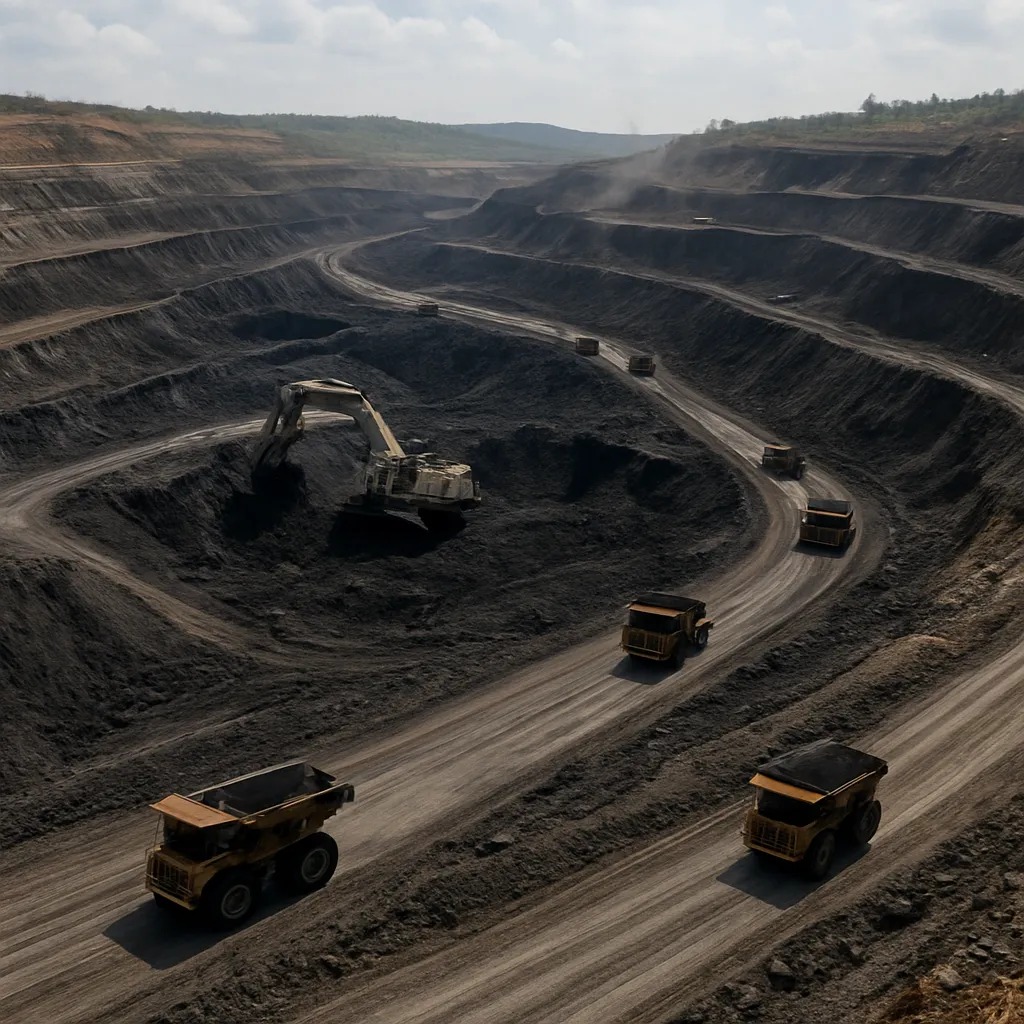
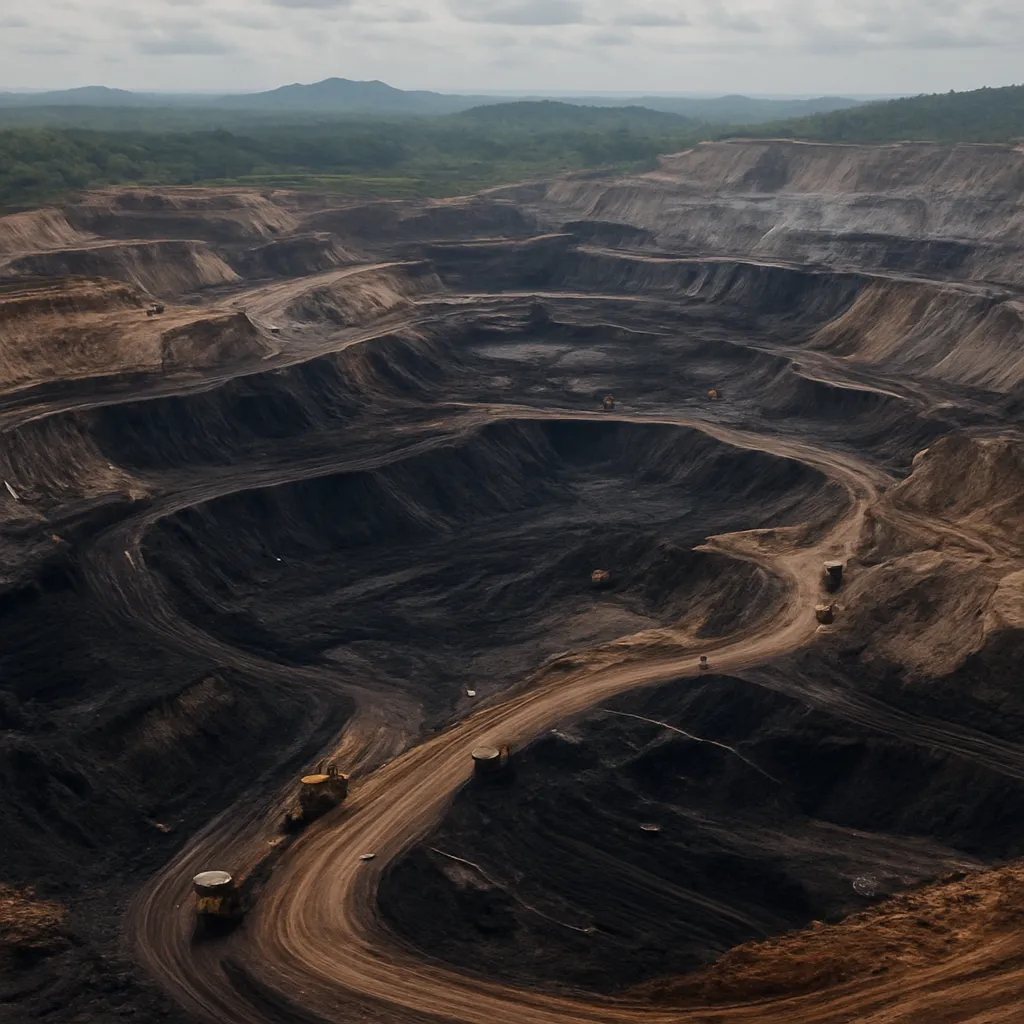
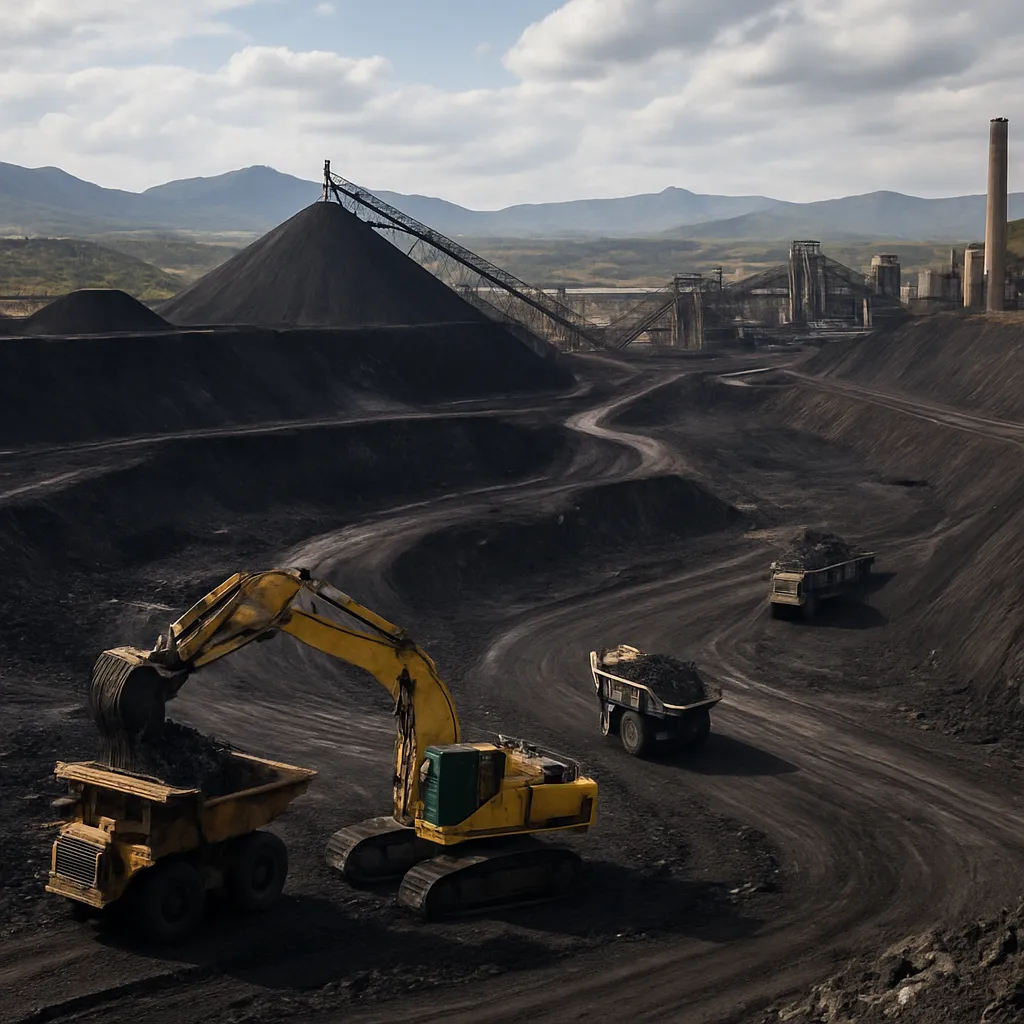
Mining methods in the South African coalfields include both open-pit (opencast) and underground techniques. The choice depends on seam depth, thickness and geotechnical conditions. Opencast mining is generally used where coal seams are near-surface and allow economical removal of overburden. Underground methods—such as bord-and-pillar (room-and-pillar) and longwall in some contexts—are applied where seams are deeper. Typical processing on site may include crushing, screening and coal washing to improve ash and sulfur characteristics before sale.
Douglas Colliery, like many mines in the region, interfaces with transport infrastructure — notably rail arteries and road links — that are critical for moving coal to inland power stations and ports for export. Efficient logistics are essential; rail capacity and port loading capability are frequent constraints for South African coal producers when trying to access international markets.
Economic significance and statistics
Coal mining is a major economic activity for South Africa. Nationally, South Africa produces approximately 250 million tonnes of coal annually (this figure can fluctuate year to year; recent values have been within the 230–260 Mt range). The coal sector supports thousands of direct and indirect jobs and supplies feedstock to electricity generation, synthetic fuels (notably SASOL operations), metallurgical processes and export markets.
The province of Mpumalanga is the heart of South African coal production and historically supplies the majority of the country’s coal — often cited as roughly 70–80% of national output. A significant share of that coal is consumed domestically by Eskom power stations, which are the dominant electricity generator, while the remainder is sold to domestic industry or exported through ports such as Richards Bay and Durban.
For Douglas Colliery specifically, the mine’s economic footprint is felt locally through employment, procurement from local suppliers, and contributions to municipal revenues through taxes and royalties. Coal mines typically employ a mix of skilled and semi-skilled workers, contract labour for services, and local communities for ancillary services. While a single mid-sized colliery may employ hundreds to a few thousand people directly, the exact employment level depends on mine size, mechanization level and whether operations are surface or underground.
On exports, South Africa has been a significant global coal exporter, with annual export volumes often in the range of tens of millions of tonnes. Exports support the national trade balance and provide foreign exchange, but they also require reliable transport corridors. Coal price cycles, currency fluctuations and global demand dynamics (notably in Asia and Europe) directly influence revenue streams for collieries.
Role in energy and industrial supply chains
Douglas Colliery’s coal primarily serves three types of markets: large-scale power generation, industrial users (steel, cement and other industries), and the export market. Domestic electricity generation is the predominant end-use; Eskom’s fleet of coal-fired power plants depends heavily on stable deliveries from nearby collieries. Interruptions in coal supply can have immediate and severe impacts on grid reliability.
Additionally, some coal is processed and used as feedstock for synthetic fuel and chemical production (notably by petrochemical and fuel companies in South Africa), where coal quality (e.g., calorific value, ash and sulfur) and consistency are crucial. For export markets, coal must meet strict specifications for calorific value, ash content and sizing; this often necessitates beneficiation and careful blending.
Environmental and social impacts
Coal mining brings a range of environmental and social challenges. Key environmental concerns include dust and particulate emissions, water usage and contamination risks, acid mine drainage where sulfide-bearing rocks are exposed, and the release of greenhouse gases from both mining operations and the combustion of coal. Local air quality can be affected by dust from mining and haul roads, as well as by combustion products at downstream power stations.
Modern regulatory frameworks require mines to conduct environmental impact assessments, implement systems to control dust and water pollution, manage waste rock and tailings, and put in place environmental management plans. Rehabilitation obligations are a legal requirement: when a mine is closed, operators must restore the landscape and manage long-term environmental liabilities. Effective rehabilitation includes regrading, topsoil replacement, revegetation with indigenous species and ongoing monitoring of water quality.
On the social side, coal mines influence local communities through job creation, local procurement and social investment programs (schools, clinics, housing). However, mining also creates social change and potential conflict — displacement, altered livelihoods for agricultural communities, and health impacts related to air and water contamination. Companies often engage in community development initiatives and stakeholder engagement processes to address local concerns and to build social license to operate.
Regulation, safety and labour relations
South African mining is governed by a comprehensive regulatory framework that addresses safety, environmental protection, mineral rights and labour relations. The Mine Health and Safety Act mandates safety systems and reporting, and the Department of Mineral Resources and Energy oversees licensing and oversight. Mining safety remains a priority; South Africa has made progress over decades, but underground coal mining continues to pose risks such as methane, roof falls and dust-related lung disease.
Labour relations in the sector have historically been robust and occasionally contentious. Wage negotiations, strikes and issues of retrenchment or hiring can affect production. Effective engagement between mine operators, unions, government and communities aims to reduce disruptions and ensure fair labour practices while balancing economic viability.
Statistics and public data related to Douglas Colliery and the sector
While mine-specific publicly released statistics for Douglas Colliery may be limited depending on ownership structure and reporting practices, several authoritative public statistics illuminate the context in which the mine operates:
- South Africa’s annual coal output: roughly 230–260 million tonnes in recent years, with year-to-year variation due to demand and operational factors.
- Mpumalanga’s share of national coal production: typically around 70–80%.
- Coal employment: the mining sector directly employs tens of thousands of people; the coal subsector accounts for a large proportion of those jobs (estimates often cite around 80,000 jobs across coal mining, though this fluctuates).
- Export volumes: South African coal exports commonly sit in the tens of millions of tonnes annually, subject to global demand.
To obtain precise, up-to-date production, reserve and employment figures for Douglas Colliery itself, one should consult company annual reports, the Department of Mineral Resources and Energy’s mining registers, or industry data providers that compile mine-by-mine statistics.
Environmental mitigation, rehabilitation and community development
Operators of modern collieries are expected to implement a suite of mitigation measures. These include dust suppression systems, water treatment plants to manage process and runoff water, methane monitoring and ventilation in underground operations, and progressive rehabilitation of disturbed areas. Closure plans and financial provisions for rehabilitation are required so that the burden of environmental management does not fall on the state.
Community development is another key area. Mining companies commonly invest in local infrastructure, education, healthcare and small-business development. These programs are intended both to create long-term benefits for communities and to foster cooperative relationships that reduce social risk. Transparent reporting and partnership with municipalities and civil society improve outcomes.
Challenges and the future outlook
The future of Douglas Colliery is tied both to local operational factors and to broader trends in South Africa and global energy markets. Key influencing factors include:
- Domestic electricity demand and the operational state of coal-fired power stations: stable demand and predictable offtake from power stations support continued coal production.
- Global coal demand and prices: international markets determine the attractiveness of exporting coal versus selling domestically.
- Regulatory and environmental pressures: decarbonization policies and commitments to reduce emissions may reduce demand for coal over the medium and long term, accelerating the need for diversification and just transition planning.
- Operational viability: seam quality, mining costs, logistics (rail and port capacity) and labour relations all affect profitability.
There is growing emphasis on a managed transition in South Africa: balancing the social and economic importance of coal-dependent communities with the need to move toward lower-carbon energy sources. For Douglas Colliery and mines like it, prudent planning includes investing in cleaner mining practices, diversifying local economies, and ensuring robust rehabilitation and worker-transition programs.
Interesting facts and broader context
Certain aspects of the coal sector and regional mining culture are noteworthy:
- Coal remains central to South Africa’s electricity system; despite the rapid growth of renewables, coal-fired generation accounts for a substantial share of the country’s baseload supply.
- Coal quality varies substantially even within a single basin; this drives extensive coal testing, blending and beneficiation at the mine and at intermediary stockyards.
- Logistics bottlenecks (especially rail and port throughput) have at times constrained the ability of South African collieries to capitalize fully on export demand, making local transport investments strategically important.
- Technology improvements — such as improved coal-washing circuits, methane capture, and automation in mining operations — have incrementally raised productivity while presenting workforce transition challenges.
Concluding remarks
Douglas Colliery plays a role typical of South African coal mines: supplying energy and industrial feedstock, supporting local employment and contributing to regional economic activity, while also facing environmental, social and market challenges. Accurate, mine-specific statistics are best obtained from company disclosures and government mining registers, but the broader context is clear: coal mining remains economically important in South Africa even as the global and national energy landscape evolves. The path forward for Douglas Colliery, as for other collieries, will depend on managing environmental responsibilities, ensuring safe and fair labour practices, maintaining economic competitiveness, and participating in a just transition that supports workers and communities as the energy transition advances.